How Many Cups a Ninety Pound Cane Corso Gets
It can be incredibly frustrating to try and figure out the right amount of food for your Cane Corso, especially when you're aiming for a healthy weight like 90 pounds. It feels like every bag of kibble has a generic chart that doesn't quite fit your dog, or you hear conflicting advice from different sources. This guide will walk you through how to properly assess your 90-pound Cane Corso's caloric needs and translate that into the right number of cups for their meals, ensuring they stay healthy and well-fed without over or under-eating.
Understanding Your Cane Corso's Nutritional Needs at 90 Pounds
When we talk about a 90-pound Cane Corso, it's important to remember that this is a specific weight that some females or smaller males might hit, while many larger males will comfortably exceed it. The goal isn't just to feed them enough to reach that number, but to maintain a lean, healthy body condition once they are there. These are powerful, muscular dogs, and their diet needs to support that physique without encouraging excessive growth in puppies or unnecessary fat gain in adults. Their nutritional needs are complex, going far beyond just filling a bowl.
Why a Fixed "Cup" Number Isn't Always the Answer
One of the biggest traps owners fall into is looking for a magic number of cups. "My 90-pound Cane Corso gets X cups per day." While this sounds simple and appealing, it completely ignores the vast differences between dog foods and individual dogs. A cup of one kibble might contain 300 calories, while a cup of another, more nutrient-dense food, could pack 500 calories. If you're blindly following a "cups" recommendation without knowing the caloric content of your specific food, you could be significantly over- or under-feeding your dog.
Beyond the food itself, your Cane Corso is an individual. Their metabolism, activity level, age, and even the climate they live in all play a role in how many calories they burn each day. A working Cane Corso who spends hours training or exercising will need far more fuel than one who enjoys a more sedentary life on the couch. Puppies also have different requirements, needing specific nutrients for proper growth, which we explore in The Growth Curve a Cane Corso Follows to Nineteen Months. So, while we'll talk about how to estimate cups, the real secret lies in understanding the underlying caloric needs and adjusting accordingly.
The Importance of Lean Body Condition
For a large, rapidly growing breed like the Cane Corso, maintaining a lean body condition is paramount. Extra weight puts undue stress on their developing joints and can exacerbate conditions like hip and elbow dysplasia. Even as adults, a lean dog generally experiences fewer health issues and a longer, more comfortable life. A 90-pound Cane Corso should ideally have a visible waist when viewed from above, and you should be able to easily feel their ribs with a light touch, without them being visibly prominent. If you can't feel their ribs, or if they have a saggy belly, they're likely carrying too much weight. This isn't about vanity; it's about their long-term health and mobility. We emphasize this because a Why a Lean Cane Corso Keeps Its Hips Longer is a healthier Cane Corso.
Calculating the Daily Ration: More Than Just a Number
Instead of focusing on arbitrary "cups," a more accurate way to determine your Cane Corso's daily food intake is to calculate their caloric needs and then divide that by the caloric density of their specific food. This might sound complicated, but it's a straightforward process that empowers you to feed your dog precisely.
Estimating Your Cane Corso's Basal Metabolic Rate
First, we need to estimate how many calories your 90-pound Cane Corso needs to maintain their weight and basic bodily functions. This is often referred to as their Resting Energy Requirement (RER) or Basal Metabolic Rate (BMR). A common formula used by vets is:
RER (kcals/day) = 70 * (Body Weight in kg)^0.75
Let's break that down for a 90-pound Cane Corso:
- Convert pounds to kilograms: 90 pounds / 2.2 lbs/kg = approximately 40.9 kg.
- Calculate 40.9^0.75: This is a bit tricky without a scientific calculator, but many online pet calorie calculators can do this for you. Alternatively, you can use an approximate multiplier. For large dogs, a rough estimate for daily caloric needs can be around 20-30 calories per pound of body weight, but the RER formula is more precise.
- Example Calculation: Using an online RER calculator for a 40.9 kg dog gives us an RER of approximately 1350-1400 calories per day. This is just for resting.
This RER is then multiplied by a "lifestyle factor" to get their actual daily caloric needs. For an adult, neutered/spayed dog, this factor might be 1.4-1.6. For an intact adult, it could be 1.6-1.8. For a highly active or working dog, it might be 2.0 or even higher. Let's say your 90-pound Cane Corso is a moderately active adult:
- Estimated Daily Caloric Needs: 1375 (RER) * 1.6 (Activity Factor) = 2200 calories per day.
This 2200 calories is your target number. Now you look at your dog food bag to find its caloric density, usually listed as "kcal/cup" or "calories per cup." For example, if your food has 400 kcal/cup, then your Cane Corso would need 2200 / 400 = 5.5 cups per day. This is a much more accurate approach than a generic recommendation. This target amount aligns with what we often discuss in The Daily Ration an Adult Cane Corso Actually Needs.
Reading Your Dog Food Label for Calorie Content
Every quality dog food bag should list the caloric content, usually in kilocalories per kilogram (kcal/kg) and often also per standard measuring cup (kcal/cup). This number is crucial. If it's not readily apparent, check the manufacturer's website. Without this information, you're essentially guessing, and that can lead to problems. Remember that "cups" are standard measurements; don't use a random coffee mug! A proper measuring cup for pet food is usually 8 fluid ounces.
Here's a simplified table comparing different food densities and how they impact "cups" for a hypothetical 90-pound Cane Corso needing 2200 calories/day:
| Food Caloric Density (kcal/cup) | Daily Caloric Need (kcal) | Cups Per Day (approx.) | Example |
|---|---|---|---|
| 350 | 2200 | 6.3 | Lower density kibble |
| 400 | 2200 | 5.5 | Average large breed kibble |
| 450 | 2200 | 4.9 | High quality, denser kibble |
| 500 | 2200 | 4.4 | Performance/Working dog food |
As you can see, the difference between 350 kcal/cup and 500 kcal/cup is nearly two full cups of food per day! This is why knowing your food's specific caloric density is non-negotiable for accurate feeding. You can find a wide range of these foods, from economical options to premium brands, on platforms like Chewy, which often provide detailed nutritional breakdowns.
Factors That Influence Food Portions for a 90-Pound Cane Corso
The 90-pound target weight and our initial caloric calculation are great starting points, but they are just that – starting points. A Cane Corso's life isn't static, and neither should their diet be. Several factors will necessitate adjustments to their daily food intake.
Age and Life Stage Considerations
A 90-pound Cane Corso puppy, even if they hit that weight temporarily during a growth spurt, has different needs than a 90-pound adult. Growing puppies require more calories and a specific calcium-to-phosphorus ratio to support healthy bone development without growing too fast. Feeding too much or the wrong type of food can contribute to orthopedic issues. If your Cane Corso is still technically a puppy (under 18-24 months), their 90-pound frame will still require food formulated for large-breed puppies, not necessarily just an adult portion. Conversely, an older, senior Cane Corso at 90 pounds might have a slower metabolism and require fewer calories to maintain their weight, or they might need softer food and specific supplements to support aging joints. Regularly monitoring their weight and body condition is crucial as they transition through these life stages.
Activity Level and Exercise Regimen
This is perhaps the biggest variable in a Cane Corso's caloric needs. A 90-pound Cane Corso who gets an hour of brisk walking and some playtime each day will burn significantly more calories than one whose exercise consists primarily of backyard lounging. If your dog participates in protection sports, long hikes, or other demanding activities, their caloric needs will soar.
Consider these scenarios:
- Low Activity: A Cane Corso that gets short, leisurely walks and mostly indoor activity. They might be closer to the lower end of the calculated caloric needs, or even slightly below if their metabolism is slow.
- Moderate Activity: Your average Cane Corso, enjoying daily walks, yard play, and maybe a trip to the dog park (if appropriate for their temperament, see A Cane Corso at the Dog Park). Their caloric needs align well with the "moderately active" factor we used in our calculation.
- High Activity/Working Dog: A Cane Corso involved in competitive obedience, agility (though less common for the breed due to size), protection training, or regular strenuous exercise like running with you. They will need a substantial increase in calories, potentially requiring food specifically formulated for active or working dogs.
You need to be honest about your dog's activity level. It's easy to overestimate how much exercise they truly get. Over time, you'll learn to correlate their activity with their body condition and adjust food accordingly.
Health Status and Special Dietary Needs
A 90-pound Cane Corso dealing with certain health conditions will have altered dietary requirements.
- Sickness or Recovery: A dog recovering from surgery or illness might have a temporarily reduced appetite or need a more nutrient-dense, easily digestible food to regain strength.
- Chronic Conditions: Conditions like hypothyroidism, which can lead to weight gain, might require a reduction in calories. Conversely, some diseases might increase metabolic demands.
- Allergies: If your Cane Corso suffers from skin allergies or gastrointestinal upset, they might need a specific diet, such as a limited ingredient or hydrolyzed protein food. These specialized foods might have different caloric densities that you'll need to account for. You might even consult with a fresh food delivery service like Ollie, which can customize meal plans based on your dog's specific needs and sensitivities.
- Weight Management: If your 90-pound Cane Corso starts to gain or lose weight unintentionally, their diet needs immediate review. If they're gaining too much, it's time to cut back on the cups and maybe increase exercise. If they're looking too thin, more food is in order. Learning to Checking a Cane Corso's Ribs With Your Hands regularly is a simple, effective way to stay on top of their body condition. For a Cane Corso struggling with weight, adjusting the number of cups is just one piece of the puzzle; understanding Slimming an Overweight Cane Corso Safely involves a holistic approach of diet and exercise.
Always consult with your veterinarian before making significant dietary changes, especially if your Cane Corso has an underlying health condition.
Practical Feeding Strategies for a Healthy 90-Pound Cane Corso
Once you've calculated the caloric target and figured out the approximate number of cups, it's time to implement a feeding strategy that supports your Cane Corso's health and well-being. It's not just what they eat, but how and when they eat that matters.
Establishing a Consistent Feeding Schedule
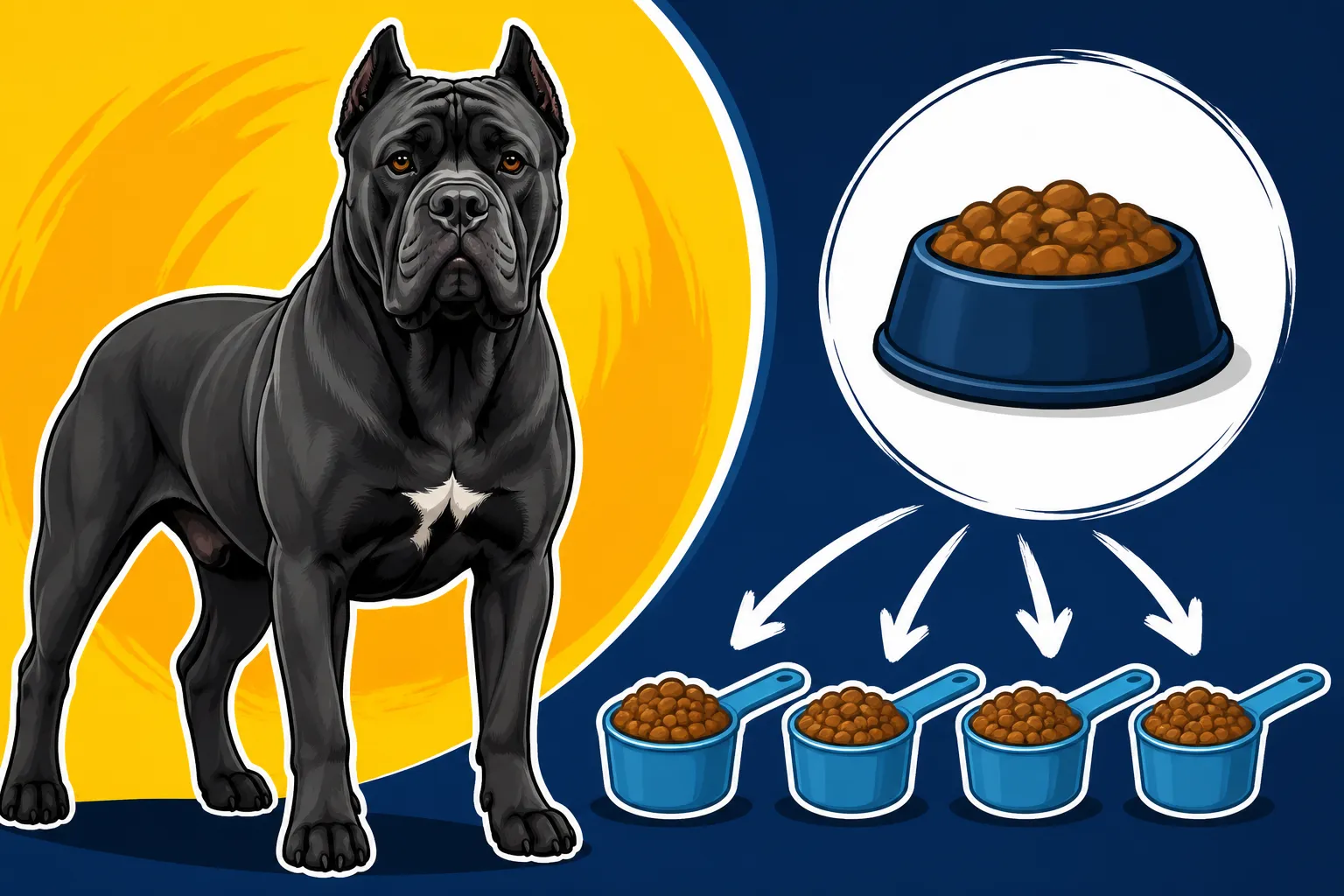
Consistency is key for any dog, but especially for large, deep-chested breeds like the Cane Corso. Dividing their daily ration into two separate meals is highly recommended to help prevent bloat, a life-threatening condition where the stomach twists. You can learn more about this in Why a Cane Corso's Ration Is Split in Two. Feeding twice a day also helps stabilize blood sugar levels and can make house training easier for puppies.
Aim for roughly 12-hour intervals between meals. For example, if breakfast is at 7 AM, dinner would be around 7 PM. Stick to this schedule as much as possible, even on weekends. Dogs thrive on routine, and knowing when their meals are coming helps reduce anxiety and improve digestion. Avoid feeding immediately before or after strenuous exercise; a good rule of thumb is to wait at least an hour before and after activity.
Choosing the Right Food Type and Quality
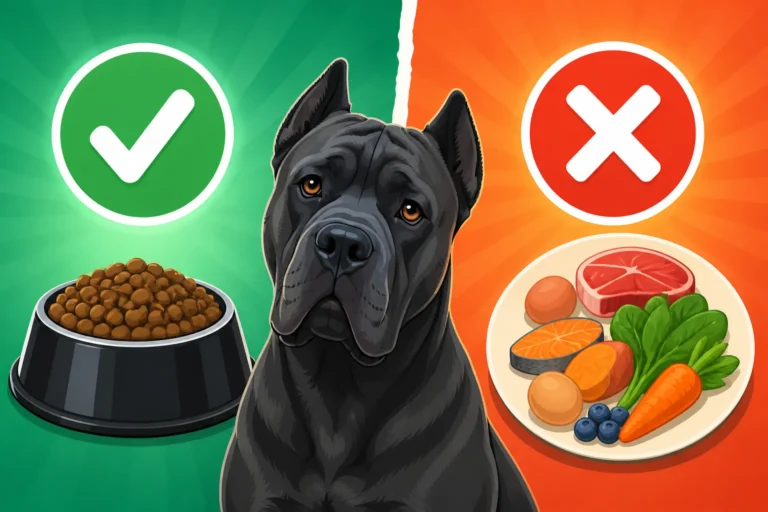
For a 90-pound Cane Corso, a high-quality, large-breed specific dog food is usually the best choice. These formulas are designed with the unique needs of large and giant breeds in mind, often containing controlled levels of calcium and phosphorus for joint health, and appropriate protein-to-fat ratios to support their musculature without encouraging excessive weight gain. Brands that focus on real meat as the first ingredient, without excessive fillers, are generally preferable.
While kibble is the most common option, you might also consider incorporating wet food, fresh food, or even a raw diet if you've thoroughly researched and are prepared for the commitment involved. Each has its pros and cons, and it's worth discussing options with your vet. Websites like Amazon offer a vast selection of dog foods, allowing you to compare ingredients and reviews to find a suitable option. However, no matter the food type, remember to always check its caloric density per cup (or per portion for fresh/raw). You can also explore options like Whether Kibble Alone Is Enough for a Cane Corso or Whether a Cane Corso Does Well on Raw to help inform your decision.
Monitoring Weight and Adjusting Portions Over Time
Your Cane Corso's body condition is your ultimate guide. Even with all the calculations, individual metabolism varies. You should regularly perform a "rib check" on your Cane Corso:
- Run your hands along their sides: You should be able to feel their ribs easily, but not see them prominently.
- Check their waist: From above, they should have a visible waistline that tucks in slightly before their hips.
- Observe their tummy tuck: From the side, their abdomen should tuck up, not sag down.
If you notice your 90-pound Cane Corso is starting to look a bit rounder, or you can no longer easily feel their ribs, it's time to slightly reduce their food portion, perhaps by 1/4 to 1/2 a cup per day, and increase their exercise. Conversely, if they're looking too lean or their ribs are becoming too visible, gradually increase their food by similar small increments. Make changes slowly, over several days to a week, and monitor the results.
It’s a constant dance between calories in and calories out, and your vigilance in monitoring their body condition is the most important tool you have. The journey to a perfectly fed 90-pound Cane Corso is one of observation, adjustment, and a deep understanding of their individual needs, ensuring they lead a long, healthy, and happy life by your side. Remember that What Extra Weight Does to a Cane Corso's Hips can significantly impact their quality of life, so keeping them lean is a gift you give them.
Disclaimer
This article is for general informational purposes only and does not constitute professional advice. Laws, prices and regulations vary by location and change over time. Consult a qualified professional for guidance on your specific situation.