Cruciate Tears in a Hundred Pound Cane Corso
Cruciate ligament tears are one of those terrifying diagnoses that can stop a Cane Corso owner in their tracks. The sheer size and power of these magnificent dogs mean that an injury like this isn't just painful and debilitating for them, it's also a massive emotional and financial burden for you. This guide will walk you through understanding cruciate tears in a hundred-pound Cane Corso, from spotting the subtle signs to navigating treatment options and ensuring the best possible long-term recovery for your beloved companion.
Understanding Cruciate Ligament Tears in Cane Corsos
When your big, strong Cane Corso suddenly starts limping, your heart sinks. You know these dogs are built like tanks, so a significant lameness is always worrying. Understanding what’s happening inside their knee joint, and why it's so common in breeds of this stature, is the first step toward finding a solution.
The Anatomy of the Canine Stifle Joint
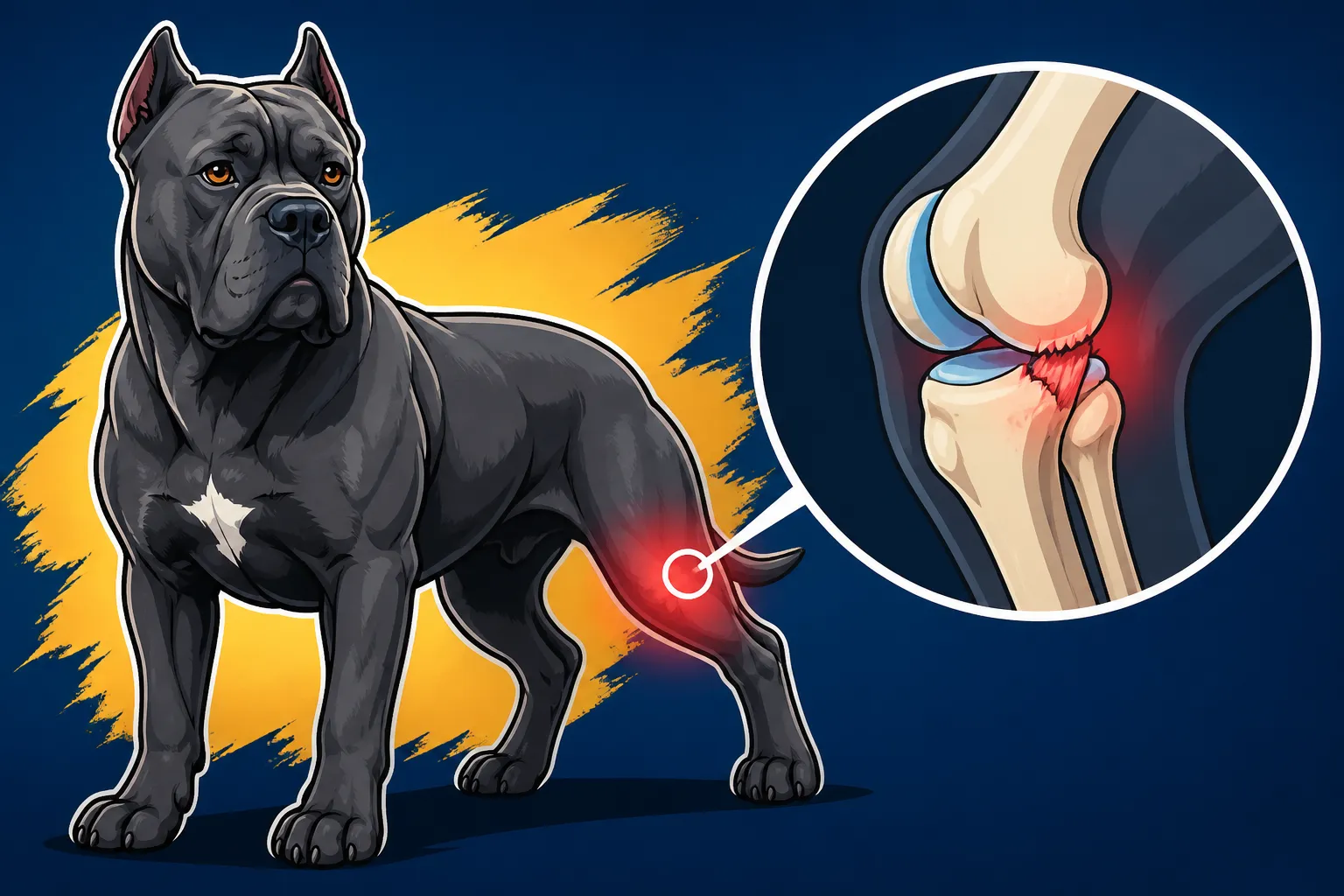
The knee joint in dogs, often called the stifle, is a complex hinge joint that relies on a network of ligaments for stability. Among these, the cranial cruciate ligament (CCL), often simply called the cruciate ligament, is paramount. It connects the femur (thigh bone) to the tibia (shin bone), preventing the tibia from sliding forward excessively relative to the femur and limiting internal rotation of the tibia. Think of it like a vital rope holding two large pieces of wood together, constantly under tension with every step, jump, and turn. When this ligament tears, that critical stability is lost, leading to pain, inflammation, and degenerative changes in the joint.
For a massive dog like a Cane Corso, carrying upwards of 100-120 pounds or more, the forces exerted on this joint are immense. Their athleticism, combined with their sheer bulk, places extraordinary stress on the CCL. Unlike in humans, where an ACL (anterior cruciate ligament) tear is often a sudden, traumatic event, in dogs, especially large breeds, it’s more commonly a degenerative process. The ligament weakens over time, fraying bit by bit, until a seemingly innocuous movement—a slight misstep, a quick turn, or a jump—causes it to fully rupture.
This progressive weakening means that often, by the time a full tear occurs, the joint has already been experiencing instability and low-grade inflammation for a while. The structures around the joint, like the menisci (cartilage pads that act as shock absorbers), can also be damaged when the instability allows excessive motion. It’s a cascading problem, and for a Cane Corso, whose structural integrity is so vital for their immense presence and working ability, a cruciate tear is a profound setback that requires serious attention.
Why Cane Corsos Are Prone to Cruciate Injuries
It feels unfair, doesn't it? You get a powerful, robust breed like the Cane Corso, known for its strength and resilience, only to discover they're particularly susceptible to injuries like cruciate tears. The reality is that their very size and rapid growth contribute to this vulnerability. Large and giant breeds, including Cane Corsos, Great Danes, Rottweilers, and Labrador Retrievers, have a higher incidence of CCL ruptures compared to smaller dogs. There's a strong genetic component suspected, meaning if a Cane Corso's parents or close relatives had CCL issues, the puppy might be predisposed.
Beyond genetics, several factors play a role. Obesity is a huge culprit, adding extra stress to already burdened joints. We've all seen those slightly chunky Corsos, and while they might look cuddly, that extra weight does terrible things to their joints over time, similar to what What Extra Weight Does to a Cane Corso's Hips applies to their knees and overall skeletal system. Then there's their activity level – while they need exercise, sudden, high-impact movements, quick stops, and sharp turns can be risky, especially if their conditioning isn't consistent or if they're coming off a period of inactivity. Think of a big dog trying to suddenly change direction in a slippery yard; that twisting motion can be devastating to a weakened ligament.
Furthermore, the anatomical conformation of a Cane Corso's stifle joint can also play a role. Some theories suggest that certain angles and biomechanics within the joint in larger breeds might inherently place more strain on the CCL. It's not just one thing; it's often a perfect storm of genetics, weight, activity, and subtle anatomical nuances that make these magnificent dogs more susceptible to what feels like an inevitable injury for many owners. It’s a frustrating truth, and one that requires proactive management from puppyhood.
Common Scenarios Leading to a Tear
You might imagine a dramatic incident—a dog falling from a great height or getting hit by a car—but often, a cruciate tear in a Cane Corso isn't quite so spectacular. More often than not, it's something mundane that acts as the final straw for an already compromised ligament. I’ve heard countless stories: a Corso happily playing fetch, making a quick pivot, and suddenly letting out a yelp. Or one slipping on wet grass, or even just jumping off the couch. These are the kinds of everyday occurrences that can lead to a full rupture.
Consider a typical scenario: your robust, energetic Cane Corso, let’s call him Brutus, is tearing around the yard with his favorite squeaky toy. He’s been a bit less enthusiastic about his walks lately, maybe a slight stiffness after getting up, but nothing you could really pinpoint. Then, he makes a sharp turn at full speed, misjudges a patch of uneven ground, and suddenly you see him pull up, holding one back leg off the ground, looking confused and in pain. That quick twist, combined with his weight and momentum, was all it took for the already frayed cruciate ligament to give way completely.
Another common one is a "weekend warrior" syndrome. If your Cane Corso usually gets moderate exercise but then has an intense, long play session after a period of lower activity, their joints might not be prepared for the sudden surge in stress. This is particularly relevant when considering The Age a Cane Corso Can Start Real Exercise, ensuring a gradual build-up. The cumulative stress from years of carrying a heavy body, coupled with these seemingly minor missteps, culminates in a significant injury. It’s a stark reminder that even the toughest-looking dogs have vulnerable points.
Recognizing the Signs and Getting a Diagnosis
Spotting a cruciate tear can be tricky because the initial signs might be subtle, especially in a stoic breed like a Cane Corso. You need to be vigilant and know what to look for.
Initial Symptoms and Changes in Gait
When your hundred-pound Cane Corso suddenly starts limping, it's impossible to miss. But what about the earlier, more subtle signs that can precede a full tear? This is where an observant owner truly shines. Initially, you might notice your dog "toe-touching," meaning they put just the tip of their paw down, trying to avoid weight-bearing. This often appears after intense activity or first thing in the morning after resting. As the injury progresses, this can turn into a more pronounced limp, where they carry the leg completely or are reluctant to put weight on it at all.
You might also observe subtle changes in their posture or how they sit. A dog with a cruciate injury often avoids fully flexing the affected knee, leading to an awkward "sit-to-the-side" where they hold the injured leg out rather than tucking it neatly under them. They might also show reluctance to jump into the car, climb stairs, or even get up from a lying position. Imagine your powerful Cane Corso, who usually leaps onto the bed, now hesitating or needing help. These are significant red flags that something is amiss in their hindquarters.
The lameness can sometimes appear to improve with rest, only to return or worsen with activity. This on-again, off-again limping can be deceptive, making you think it's just a sprain that will heal on its own. However, with a cruciate tear, especially a complete one, the instability in the joint will persist and often worsen without intervention. Don’t ignore these signs, even if they seem minor; early detection can sometimes influence treatment choices and recovery outcomes.
The Veterinary Examination and Diagnostic Steps
Once you suspect a cruciate injury, a trip to the veterinarian is non-negotiable. Your vet will conduct a thorough physical examination, focusing on the affected limb. The hallmark diagnostic test for a CCL tear is the "cranial drawer test" and the "tibial compression test." These tests involve manipulating the knee joint to check for abnormal forward movement of the tibia relative to the femur, which indicates instability caused by a torn ligament. If your Cane Corso is particularly muscular or tense, or if they're in a lot of pain, these tests might require sedation to get an accurate result.
Beyond the physical manipulation, X-rays are usually recommended. While X-rays don't directly show the ligament (ligaments are soft tissue), they are crucial for several reasons. They can reveal secondary signs of a cruciate tear, such as fluid accumulation in the joint, osteophytes (bone spurs) indicating osteoarthritis which develops rapidly after a tear, and changes in the bone structure itself. More importantly, X-rays help rule out other serious conditions that can cause similar lameness, like fractures, bone tumors, or other joint diseases. Your vet might also want to conduct further imaging like an MRI in more ambiguous cases, though this is less common for straightforward CCL tears.
Getting a definitive diagnosis is key, not just to confirm the cruciate tear but also to understand the extent of the damage and to identify any concurrent issues, such as meniscal tears. The meniscus is frequently injured when the cruciate ligament ruptures due to the abnormal motion within the joint. Knowing this upfront helps your vet recommend the most appropriate and effective treatment plan for your giant companion.
Ruling Out Other Causes of Lameness
It's easy to jump to conclusions when a big dog like a Cane Corso starts limping, especially with all the talk about hip and elbow issues in the breed. However, a good vet will systematically rule out other potential causes of hindlimb lameness before settling on a cruciate tear diagnosis. Sometimes, what looks like a classic cruciate injury could be something entirely different, and missing that could delay proper treatment.
For instance, hip dysplasia is a common concern in Cane Corsos, and its symptoms, such as reluctance to move, bunny-hopping, or lameness, can overlap with a cruciate tear. A thorough Hip Dysplasia in a Fast Growing Cane Corso examination and X-rays of the hips are essential to differentiate between these conditions. Similarly, a muscle strain, sprain, or even nerve issues can mimic some aspects of a cruciate injury. Sometimes, even something as simple as a thorn in the paw or an abscess can cause severe limping that looks more serious than it is.
Less common but serious conditions like bone cancer (osteosarcoma), especially in a large breed, must also be considered and ruled out. This is why a comprehensive workup, including a physical exam, specific manipulation tests for the cruciate, and X-rays of both the stifle and potentially the hips, is so important. You want to ensure that your Cane Corso isn't just getting treated for the most common issue, but for the correct issue, whatever that may be. A good vet won't hesitate to investigate thoroughly, even if it means a few extra tests, to ensure your big dog gets the right care. This due diligence also ties into understanding things like The Age a Cane Corso Can Be Hip Scored to build a complete picture of their orthopedic health.
Treatment Options and Recovery for a Large Breed
Once a cruciate tear is confirmed, you'll be faced with tough decisions regarding treatment. Given the Cane Corso's size and powerful build, these choices are often critical for their long-term comfort and mobility.
Surgical Solutions: TPLO, TTA, and Lateral Suture
When faced with a cruciate tear in a Cane Corso, especially a complete rupture, surgery is almost always the recommended course of action for the best long-term outcome. Trying to let a hundred-pound dog heal a torn ligament on its own, with all that weight and power, is often an exercise in futility, leading to chronic lameness and severe arthritis. There are several primary surgical techniques, each with its own approach to stabilizing the joint.
The most common and highly effective procedures are Tibial Plateau Leveling Osteotomy (TPLO) and Tibial Tuberosity Advancement (TTA). Both involve cutting and reshaping the tibia bone to change the biomechanics of the stifle joint, essentially making the torn ligament irrelevant by altering how forces are distributed. TPLO is particularly popular for large, active dogs like Cane Corsos because it provides excellent long-term stability and faster recovery of function. TTA is another strong option, often chosen based on the surgeon's preference and the dog's specific anatomy. These are complex orthopedic surgeries, typically performed by board-certified veterinary surgeons, and they often come with a significant price tag, which is why having a plan for The Surgeries Every Cane Corso Owner Should Budget For is so important.
A third option, often considered for smaller or less active dogs, is the Lateral Suture (Extracapsular Repair). This involves placing a strong suture material outside the joint to mimic the function of the torn ligament. While less invasive and generally less expensive, it may not provide the same level of long-term stability for a large, powerful breed like a Cane Corso. The decision on which surgery is best for your Cane Corso will be made in consultation with your veterinary surgeon, taking into account your dog's size, age, activity level, and the surgeon's expertise. Regardless of the choice, the goal is to restore stability and minimize the progression of debilitating osteoarthritis. And don't forget to discuss the Anesthesia Risk in a Deep Chested Cane Corso with your vet prior to any procedure.
Conservative Management for Partial Tears
While surgery is generally the gold standard for full cruciate ruptures in large breeds, conservative management might be considered in very specific circumstances, primarily for partial tears or in cases where surgery is absolutely not an option due to other health concerns or financial constraints. Conservative management typically involves strict rest, anti-inflammatory medications (NSAIDs), pain management, and a controlled exercise program, often combined with physical therapy.
The challenge with conservative management for a partial tear in a Cane Corso is their size and activity level. Keeping a powerful, energetic dog strictly rested is a Herculean task for any owner. Even a partial tear, if not managed meticulously, can quickly progress to a full rupture due to the continued strain on the weakened ligament. Imagine trying to keep a curious, intelligent Cane Corso calm for weeks on end; it's mentally exhausting for both dog and owner. The idea is to allow the existing ligament to heal as much as possible and to strengthen the surrounding muscles to compensate for some of the instability.
However, even with diligent conservative management, the long-term prognosis for a large breed with a significant partial tear is often guarded. Without surgical stabilization, the joint will continue to experience abnormal motion, leading to faster and more severe development of osteoarthritis. For some owners, Managing Arthritis in a Hundred Pound Cane Corso for the rest of its life, which will likely require daily medication and ongoing supportive care, might even be more costly and challenging than the initial surgery. It’s a tough decision, and one that demands an honest assessment of your dog's temperament, your lifestyle, and your financial resources.
The Rehabilitation Journey After Surgery
The surgery itself is just the first step; the real work for you and your Cane Corso begins with rehabilitation. This is a critical phase that dictates the success of the procedure and your dog's return to full function. Post-operative care involves a strict regimen of confined rest, gradual increases in controlled exercise, and often, professional physical therapy. For the first 6-8 weeks, your Cane Corso will need to be leash-walked only for potty breaks, often in a sling to support their weight, and absolutely no running, jumping, or rough play. This restriction is immensely difficult for such an active breed, but it's vital for bone healing and graft integration.
Professional physical therapy plays an enormous role in optimizing recovery. A certified canine rehabilitation therapist will design a program tailored to your Cane Corso's needs, incorporating exercises like passive range of motion, therapeutic exercises to rebuild muscle mass, hydrotherapy (underwater treadmill), and massage. These sessions help reduce pain and swelling, improve flexibility, strengthen muscles, and re-educate your dog on proper weight bearing and gait. The costs for Physical Therapy Prices for a Cane Corso After Surgery can add up, but the benefits are undeniable, often preventing compensatory issues in other limbs or secondary injuries.
The entire rehabilitation process can take 4-6 months, sometimes longer, before your Cane Corso is cleared for more strenuous activity. It requires immense patience, consistency, and dedication from you. Skipping steps or rushing the process can lead to complications, re-injury, or a less-than-optimal outcome. It’s a marathon, not a sprint, and you'll become incredibly familiar with your dog's nuances during this time. Regular follow-up appointments with your surgeon and rehab therapist are crucial to monitor progress and adjust the plan as needed.
Prevention and Long-Term Management
Preventing joint issues and managing them effectively long-term can significantly improve your Cane Corso's quality of life. It’s about being proactive and consistent from day one.
Maintaining Ideal Weight and Muscle Mass
One of the most impactful things you can do for your Cane Corso's joint health, and overall longevity, is to maintain them at a lean, healthy weight. Every extra pound on a hundred-pound frame translates to exponentially more stress on their joints, particularly the knees and hips. It’s a simple equation: less weight equals less wear and tear. I cannot stress enough the importance of preventing them from becoming overweight, because What Extra Weight Does to a Cane Corso's Hips applies equally to their knees and overall skeletal system.
Regularly assess your Cane Corso's body condition score. You should be able to easily feel their ribs without pressing hard, see a distinct waist when viewed from above, and have an abdominal tuck when viewed from the side. If they look barrel-chested or you can't feel those ribs, it's time to adjust their diet and exercise. This might mean meticulously measuring their food portions, choosing a high-quality, calorie-appropriate diet, and being mindful of treats. Remember, a fit Cane Corso has a better chance of avoiding joint problems and recovering more successfully if an injury does occur.
Beyond just weight, maintaining strong muscle mass around the stifle joint is crucial for stability. While no amount of muscle can fully compensate for a torn ligament, strong quadriceps and hamstrings provide dynamic support. This comes from consistent, appropriate exercise and good nutrition. Think about how much walking a Cane Corso puppy should do, building that foundation slowly and steadily, and continuing that disciplined approach throughout their adult life.
Smart Exercise Routines for Joint Health
A Cane Corso is a powerful, active breed that needs regular exercise to thrive, but the type of exercise matters immensely when it comes to joint health. Haphazard, high-impact activities can do more harm than good, especially as they get older or if they are predisposed to joint issues. Instead of sporadic bursts of intense activity, aim for consistent, moderate exercise. This means daily structured walks, perhaps with some trotting on soft surfaces like grass or dirt trails, which are far kinder to their joints than pavement.
Avoid activities that involve sudden stops, sharp turns, or repetitive jumping, particularly on hard surfaces. Frisbee and agility might be fun, but they can be high-risk for a heavy dog with susceptible joints. Instead, consider activities like swimming, which is fantastic for building muscle without impact, or controlled leash walks up and down gentle inclines. Mental stimulation through scent work or obedience training can also burn energy without stressing joints. The goal is to build and maintain muscle, flexibility, and cardiovascular fitness without creating undue stress on the ligaments and cartilage.
It’s also crucial to remember that a Cane Corso puppy’s joints are still developing, so over-exercising them too early can lead to long-term problems. Understand The Age a Cane Corso Can Start Real Exercise, and build up intensity gradually. Always ensure a proper warm-up before exercise and a cool-down afterward, just like an athlete. Paying attention to these details can make a significant difference in delaying or preventing joint issues.
The Role of Supplements and Proactive Care
Many Cane Corso owners wonder if joint supplements are truly effective, and the answer is nuanced but generally positive, especially as a preventative or supportive measure. While supplements won't fix a torn ligament, they can play a role in maintaining joint health, reducing inflammation, and potentially slowing the progression of osteoarthritis. Key ingredients often include glucosamine, chondroitin, MSM, and Omega-3 fatty acids (like fish oil). These compounds are believed to support cartilage health, reduce inflammation, and improve joint lubrication.
There are many products on the market, but not all are created equal. Look for reputable brands with good quality control and studies to back their efficacy. Consult with your veterinarian before starting any supplement regimen to ensure it's appropriate for your individual Cane Corso and won't interact with any other medications or conditions. Some owners begin these supplements proactively when their Cane Corso is relatively young, especially if there's a family history of joint problems. You might ask, Whether a Cane Corso Benefits From Joint Supplements, and for many, the answer is a cautious yes, as part of a holistic approach to joint care.
Beyond supplements, proactive care includes regular veterinary check-ups to catch any subtle signs of lameness early, ensuring good nail care (long nails can alter gait and stress joints), and providing Orthopedic Beds Rated for a Cane Corso's Weight for comfortable resting, especially for heavier breeds. Consider adding Ramps for a Cane Corso That Cannot Jump Up into trucks or onto tall furniture to avoid high-impact jumps, minimizing daily joint stress. Every little bit of proactive care adds up to a more comfortable, healthier life for your big dog.
Preparing for the Unexpected: Pet Insurance
Let's be brutally honest: the cost of a cruciate repair surgery for a hundred-pound Cane Corso is substantial. Depending on the type of surgery, the cost can range from $3,000 to $7,000 or more per knee, and often, if one cruciate tears, the other one follows within a year or two due to compensatory strain. This financial reality can be incredibly stressful for owners, especially when faced with an emergency. This is where pet insurance can be a true lifesaver.
Having a good pet insurance policy can alleviate much of the financial burden, allowing you to focus on getting your Cane Corso the best possible care without worrying about crippling vet bills. Look for policies that cover orthopedic surgeries, rehabilitation, and long-term medication for arthritis. Be mindful of waiting periods and pre-existing conditions; it’s best to get insurance when your Cane Corso is a puppy, before any signs of lameness or joint issues appear. Companies like Healthy Paws are often praised for their comprehensive coverage, though it’s always wise to research various providers and read the fine print to understand What a Cane Corso Policy Pays on Hip Surgery or knee surgery.
Imagine the relief of knowing that a significant portion of that $5,000 surgery bill is covered, reducing your out-of-pocket expense to a manageable deductible and co-pay. Without insurance, many owners are forced into heartbreaking decisions or taking on substantial debt. Investing in a good policy from Healthy Paws or another reputable provider is not just a financial decision; it's an investment in your peace of mind and your Cane Corso's long-term health. Don't wait until disaster strikes; explore your options while your magnificent companion is still healthy and young. Planning ahead is the smartest move any Cane Corso owner can make, helping to balance those Monthly Pet Insurance Premiums on a Cane Corso against potential catastrophic costs.
Table: Common Surgical Options for Cruciate Tears in Cane Corsos
| Surgical Technique | Description | Pros | Cons | Recovery Time (Typical) | Suitability for Cane Corso |
|---|---|---|---|---|---|
| TPLO (Tibial Plateau Leveling Osteotomy) | Involves cutting and rotating the top of the tibia bone to change the angle, neutralizing tibial thrust and stabilizing the joint. | Excellent long-term stability, often faster return to function. | Invasive bone cut, higher cost, requires specialized surgeon. | 4-6 months | High (Gold standard) |
| TTA (Tibial Tuberosity Advancement) | Involves cutting the tibial tuberosity and moving it forward, altering patellar ligament angle to reduce tibial thrust. | Good stability, often less invasive than TPLO. | Can be higher risk for certain anatomies, moderate cost. | 4-6 months | High (Excellent alternative) |
| Lateral Suture (Extracapsular Repair) | Places a strong nylon or monofilament suture material outside the joint, mimicking the torn ligament's function. | Less invasive, lower cost, quicker procedure. | Less stable for very large/active dogs, higher risk of suture failure or stretching, more arthritis long-term. | 3-5 months | Low to Moderate (Less ideal for large, active dogs) |
Disclaimer
The information provided in this article is intended for general knowledge and informational purposes only, and does not constitute veterinary advice. Always consult with a qualified veterinarian or animal health professional for any health concerns or before making any decisions related to your Cane Corso's health and treatment. Individual circumstances may vary, and only a licensed professional can provide accurate diagnoses and personalized recommendations.