Weighing a Cane Corso You Cannot Lift
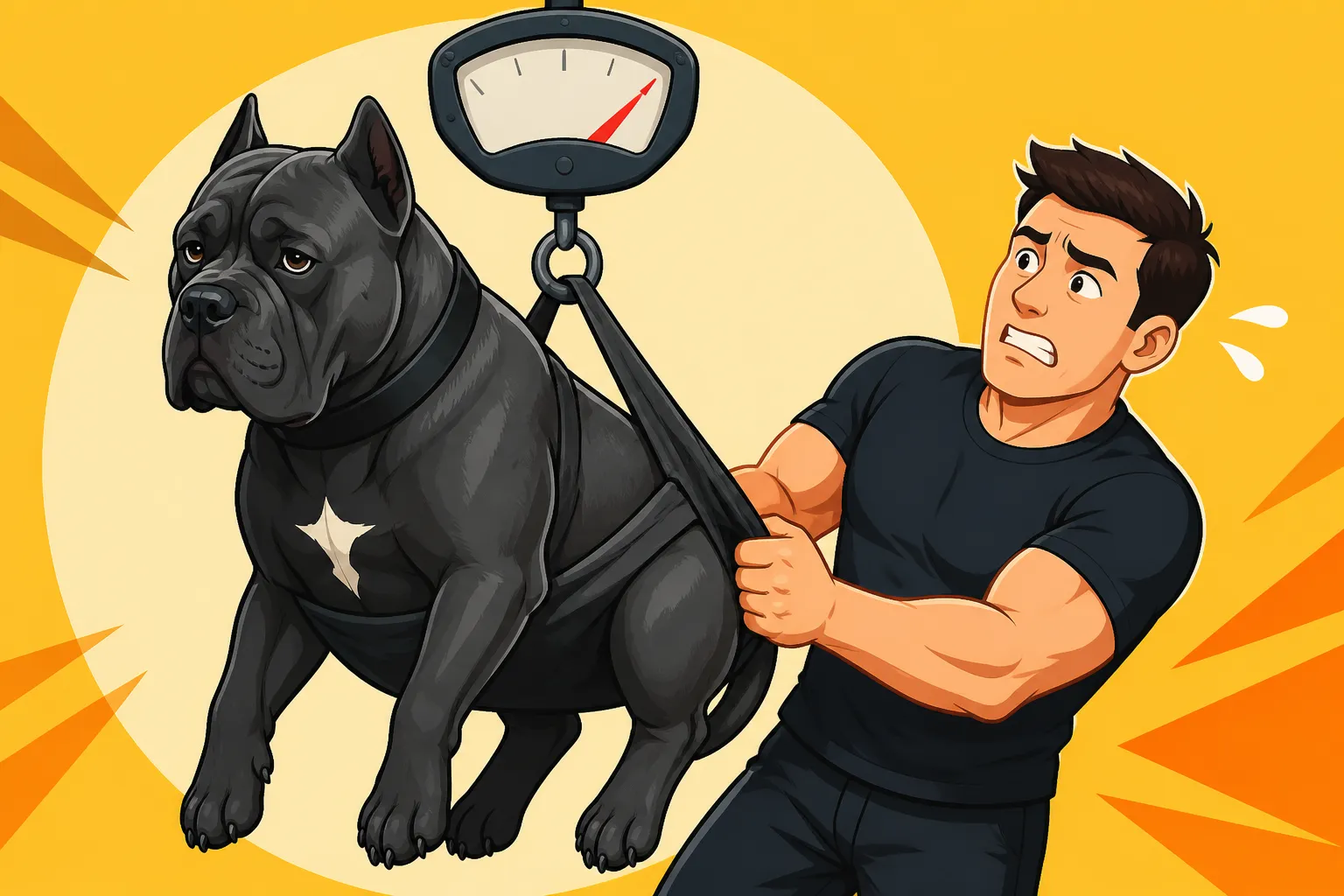
As Cane Corso owners, we often find ourselves in situations that simply don't apply to folks with smaller breeds. One of the classic dilemmas? How on earth do you get an accurate weight on a majestic, hundred-plus-pound Cane Corso when lifting them onto a standard bathroom scale is out of the question, or frankly, just dangerous? This guide is here to walk you through practical, safe, and surprisingly effective methods to weigh your substantial companion, ensuring you can monitor their health without risking your back or their comfort.
The Challenge of Weighing a Giant Breed Dog at Home
It’s easy enough to scoop up a Chihuahua or a beagle and hop on the bathroom scale. For us Cane Corso guardians, that’s just not a realistic option. These dogs are impressive in size and strength, and trying to lift a fully grown Corso can lead to injuries for both you and your dog. Beyond the sheer logistics, getting an accurate weight is critical for their health, diet management, and medication dosages, so just guessing isn't good enough.
Why Your Bathroom Scale Just Won't Cut It
Most standard home scales are designed for human weight, usually topping out around 300-400 pounds. While your Cane Corso might not exceed that alone, the act of you trying to hold them perfectly still while balancing on a small, often wobbly surface is a recipe for disaster. The display might be too small to read, the dog might shift, or they might simply refuse to cooperate. Imagine trying to get a wiggly 120-pound adolescent on a 12×12 inch surface – it's a circus act you don't need in your life. Even if you manage it, the accuracy can be wildly off. These scales are calibrated for a certain weight distribution, and a large, moving dog is definitely not that.
Many of us try the old trick: weigh yourself, then weigh yourself holding your dog, and subtract. With a Cane Corso, this method becomes impossible very quickly. Once they hit even 60-70 pounds as a pup, attempting this can strain your back, lead to a dropped dog, or result in a struggle that makes the reading useless. This isn't just about weight; it's about control and safety for both of you.
The Importance of Accurate Weight for Cane Corsos
Monitoring your Cane Corso's weight isn't just a quirky chore; it's a fundamental part of responsible ownership, especially for a large, fast-growing breed prone to certain health issues. An accurate weight measurement directly impacts several critical areas of their well-being.
Firstly, medication dosages are almost always weight-dependent. Whether it's a routine flea and tick preventative, antibiotics for an infection, or pain relief for an injury, too little medication can be ineffective, and too much can be dangerous. A vet relies on your dog's current, accurate weight to prescribe the correct dose. If your Cane Corso weighs 110 pounds, but you're guessing they're 95, you could be under-dosing them significantly.
Secondly, diet and nutrition are deeply tied to weight. How Many Cups a Ninety Pound Cane Corso Gets is a common question, and the answer heavily relies on their exact weight, activity level, and body condition. Too much food leads to obesity, which puts immense strain on their joints, heart, and other organs. Too little, and they won't thrive. For puppies, monitoring weight gain is crucial for healthy development. The Growth Curve a Cane Corso Follows to Nineteen Months is a delicate balance; growing too fast can exacerbate orthopedic issues like hip and elbow dysplasia. Maintaining Why a Lean Cane Corso Keeps Its Hips Longer is a lifelong goal, and you can only do that if you know their starting point and track their progress accurately.
Lastly, weight fluctuations can be an early indicator of underlying health problems. A sudden, unexplained weight loss could signal anything from dental issues making eating difficult, to kidney disease, or even cancer. Conversely, rapid weight gain might point to a thyroid issue, fluid retention, or simply an overfeeding problem that needs to be addressed before it becomes a major health concern. Regular, accurate weigh-ins help you spot these subtle changes before they become emergencies. What Starts Failing in a Cane Corso After Eight often begins with changes in metabolism and body composition, making senior weight monitoring even more vital.
Practical At-Home Weighing Methods for Large Dogs
While you might not be hoisting your adult Cane Corso onto a small scale, there are clever ways to get a good estimate or even an accurate reading at home. These methods require a bit of patience and sometimes a second set of hands, but they are far safer and more practical than attempting to lift a massive dog.
The "Subtract Your Weight" Method with a Large Scale
Yes, I just said the "subtract your weight" method doesn't work for lifting, but it can work if you have access to a heavy-duty, digital platform scale. These aren't your typical bathroom scales; they're often larger, sturdier, and designed for shipping or industrial use. Some pet supply stores, like those you might find products from on Chewy or Amazon, now sell large, low-profile digital pet scales specifically for this purpose.
The trick is to first weigh yourself on the scale. Get a precise reading and note it down. Then, encourage your Cane Corso to stand on the scale with you. This might take some training, especially if they are wary of new surfaces. Use high-value treats and positive reinforcement. Once both of you are calmly standing on the scale, note that combined weight. Subtract your individual weight from the combined weight, and you'll have your Corso's weight. This method requires a dog that is comfortable standing still for a moment, and a scale large enough for both of you to fit comfortably and safely. Practice makes perfect here. If your Corso is hesitant, start by just having them put two paws on, rewarding heavily, and gradually work up to all four paws, then eventually you joining them.
Utilizing Body Condition Scoring
While not a precise numerical weight, Body Condition Scoring (BCS) is an invaluable tool for monitoring your Cane Corso's overall health and can tell you if their current weight is appropriate. It’s a visual and tactile assessment that helps you understand if your dog is too thin, just right, or overweight. Vets often use a 1-5 or 1-9 scale, where 3/5 or 5/9 is ideal.
To perform a BCS on your Cane Corso, feel along their ribs. You should be able to feel their ribs easily, like the knuckles on your hand, without seeing them overtly poking out. If you can’t feel them at all without firm pressure, they might be overweight. If you can see every rib clearly without trying, they might be too thin. Next, check their waist. From above, your Cane Corso should have a noticeable waistline behind their ribs. It shouldn’t be a straight line from chest to hips, nor should it be overly cinched. From the side, they should have an abdominal tuck – their belly should go up from their chest, not hang down.
By regularly performing a BCS, you can detect trends even without a scale. If your Cane Corso starts to lose their waistline or you can't feel their ribs as easily, it's a sign they're gaining weight and their diet might need adjustment. Conversely, if ribs become too prominent, it's time to assess if they are getting enough food or if there's an underlying health issue. This method is particularly helpful between vet visits and complements numerical weigh-ins. Checking a Cane Corso's Ribs With Your Hands is a skill every owner should master.
The Measuring Tape Estimation Method
For those times when a scale simply isn't an option, you can estimate your Cane Corso's weight using a simple tailor's tape measure. While not perfectly accurate, it can give you a ballpark figure and allow you to track relative changes over time. This method involves two key measurements:
- Chest Girth: Measure the circumference of your Cane Corso's chest at its widest point, just behind their front legs. Make sure the tape is snug but not tight, and parallel to the floor.
- Length: Measure from the base of their neck (where it meets the shoulders) to the base of their tail.
Once you have these measurements, you can use various online calculators or formulas designed for large breeds to get an estimated weight. These formulas usually involve multiplying the chest girth squared by the length and dividing by a breed-specific factor. Again, this is an estimation, but it can be surprisingly close and is excellent for tracking if your dog is gaining or losing. Consistency in where and how you measure is key to getting comparable results. If you measure in a slightly different spot each time, your results will be meaningless.
Regular tracking of these measurements, even if not perfect weight, can still indicate trends. If the chest girth or length decreases significantly without a change in diet, it's a flag that something might be amiss. Many owners find this method useful for young, growing Cane Corsos, as it's less stressful than trying to balance them on a scale.
| Method | Pros | Cons | Accuracy (Estimate) | Ease of Use |
|---|---|---|---|---|
| Large Platform Scale (with owner) | Highly accurate, safe for both dog and owner. | Requires purchasing a specialized scale, dog must cooperate. | High | Medium |
| Body Condition Scoring (BCS) | No equipment needed, always available, good for trends. | Not a precise numerical weight, subjective. | Medium | High |
| Measuring Tape Estimation | Simple equipment, good for tracking relative changes. | Less precise, relies on formulas, consistency is key. | Medium | Medium |
| Vet Office Visit | Most accurate, vet staff handles the process. | Requires a trip to the vet, not for daily monitoring. | Very High | Low |
| Feed Store/Farm Scale | Good accuracy, accessible without a vet visit. | May require travel, public environment, dog comfort. | High | Medium |
Professional Options for Weighing Your Cane Corso
Sometimes, despite your best efforts, you just need a professional weigh-in. Or perhaps you're just looking for the most accurate method possible. Thankfully, there are several convenient options outside of your home that can accommodate even the largest Cane Corso.
Your Veterinarian's Office
This is by far the most straightforward and often the most accurate way to weigh your Cane Corso. Every veterinary clinic has a large, floor-level scale designed for animals of all sizes, from tiny kittens to giant breeds like ours. Most modern vet scales are digital, providing a precise readout. The vet staff are also skilled at encouraging dogs onto the scale gently and safely.
You don't always need a full appointment just for a weigh-in. Many clinics are happy for you to pop in during business hours for a quick "weight check" at no charge. It's always a good idea to call ahead to confirm their policy and ensure the scale is available. This also serves as a positive, low-stress visit to the vet for your Cane Corso, helping to build good associations with the clinic. Regular visits for just a weigh-in can make full appointments less stressful down the line. It's an essential step in How Often a Healthy Cane Corso Sees the Vet and helps ensure Yearly Bloodwork on an Adult Cane Corso is interpreted against accurate metrics.
Agricultural or Feed Supply Stores
Surprisingly, a great option for weighing your big dog can be found at local agricultural or feed supply stores. These establishments often have large, heavy-duty scales used for weighing livestock feed, hay bales, or even farm animals themselves. These scales are built to handle significant weight and are usually large enough for your Cane Corso to stand on comfortably.
The staff at these stores are typically very understanding and often pet owners themselves. Again, a quick phone call can confirm if they have a scale accessible to the public and if they allow dogs inside. Some stores even have dedicated pet sections where these scales are more common. It's a fantastic, often free, resource for getting an accurate weight, especially if your vet is a bit of a drive or if you just happen to be running errands in that direction.
Pet Stores and Grooming Salons
While not as common as vet offices or feed stores, some larger pet stores and dedicated grooming salons might have large pet scales available. Upscale pet boutiques, or chains that offer full-service grooming, sometimes invest in these scales for their clientele. It's less common, but certainly worth inquiring about if you frequent such establishments for food, toys, or grooming services.
Similar to vet visits, this can be a good way to get an accurate weight and also exposes your Cane Corso to different environments and people, which is excellent for continued socialization. Just remember to always call ahead to confirm availability and policy, as not all locations will have suitable equipment or allow dogs specifically for weigh-ins.
Tracking Your Cane Corso's Weight Over Time
Getting an accurate weight is just the first step; the real value comes from consistent tracking. Much like humans, a Cane Corso's weight isn't static. It fluctuates based on age, activity, diet, and overall health. Keeping a diligent record allows you to identify trends, catch potential problems early, and adjust their care proactively.
Establishing a Regular Weigh-In Routine
Consistency is key. Decide on a frequency that works for you and your Cane Corso – whether it's once a month, every two months, or even quarterly. Mark it on your calendar or set a reminder on your phone. For growing puppies, you might want to do it more frequently, perhaps every two weeks, to monitor their growth curve and ensure they are not growing too rapidly, which can impact joint health. For an adult Cane Corso, monthly or bi-monthly is usually sufficient, unless you're actively managing their weight due to health concerns or a diet change.
Choose a method and stick with it. If you're using the "subtract your weight" method with a large platform scale at home, use the same scale. If you're going to the vet, try to go to the same clinic. This minimizes variables and ensures your data points are comparable. Record the date, the weight, and any relevant notes (e.g., "after morning walk," "before dinner," "felt a bit thinner this month"). This context can be incredibly valuable when reviewing the data.
Utilizing Digital Tools and Apps
Gone are the days of scribbling numbers on a paper calendar that inevitably gets lost. Embrace technology! There are numerous pet management apps available for smartphones that allow you to log your dog's weight, alongside other health metrics like food intake, exercise, and medication. These apps often provide graphs and charts, making it easy to visualize trends over time.
Even a simple spreadsheet on your computer or a note-taking app can work wonders. The goal is to have a centralized, easily accessible record. Some pet food subscriptions, like those offered by Ollie, often prompt owners to track weight, as precise feeding amounts are crucial for their tailored plans. Logging your Cane Corso's weight in these platforms can offer insights into how their diet is impacting their body composition. Amazon also has a plethora of digital scales that integrate with apps, which might be an option if you choose to invest in a home scale.
Interpreting Weight Fluctuations and Trends
Don't panic over a pound or two of fluctuation. Just like humans, a Cane Corso's weight can vary slightly day-to-day based on hydration, recent meals, and bowel movements. It's the trends you're looking for.
- Steady Gain in a Puppy: This is expected and healthy, provided it's within the normal range for their age. What a Cane Corso Should Weigh at Six Months and The Weight a Female Cane Corso Settles At are important benchmarks. If a puppy is gaining too fast, it might indicate overfeeding, which can stress developing joints. Why a Chunky Cane Corso Puppy Risks Its Elbows is a serious concern.
- Stable Weight in an Adult: This is ideal. A consistent weight, paired with a good body condition score, suggests their diet and exercise are balanced.
- Unexplained Weight Loss: A significant drop in weight (5% or more of their body weight) without a change in diet or exercise is a red flag. It warrants a call to your vet. It could be anything from dental pain making eating uncomfortable to serious internal illness.
- Unexplained Weight Gain: If your adult Cane Corso is steadily putting on pounds despite a consistent diet and activity level, it could be a sign of a metabolic issue, like hypothyroidism. Or, more simply, it could mean their caloric intake needs to be adjusted, especially after neutering. Cutting a Cane Corso's Cups After Neutering is often necessary. An overweight Cane Corso is at higher risk for joint problems, heart disease, and a shorter lifespan. Slimming an Overweight Cane Corso Safely is a process that benefits from accurate tracking.
By diligently tracking your Cane Corso's weight, you become a more informed advocate for their health, able to spot potential issues early and provide your vet with valuable data to ensure your magnificent companion lives their longest, healthiest life.
Disclaimer
This article is for general informational purposes only and does not constitute professional advice. Laws, prices and regulations vary by location and change over time. Consult a qualified professional for guidance on your specific situation.