What the Standard Says a Cane Corso Should Look Like
It's completely understandable to feel a bit overwhelmed when trying to understand what an "ideal" Cane Corso should look like. There's a lot of information out there, and separating the true breed standard from personal preferences or even trends can be tough. This guide is here to walk you through the official breed standard, clarifying exactly what makes a Cane Corso a Cane Corso, from their powerful head to their characteristic gait.
Why a Breed Standard Matters Beyond the Show Ring
When we talk about a breed standard, it's not just about what a dog looks like when it's stacked in a show ring. It's truly a blueprint, a detailed description of the ideal specimen that embodies the breed's historical function, health, and temperament. For a magnificent and formidable breed like the Cane Corso, understanding this standard is paramount, whether you're a prospective owner, a seasoned enthusiast, or even just curious.
Guiding Responsible Breeding
The breed standard serves as a critical guide for ethical breeders. It helps them make informed decisions about which dogs to breed, aiming to produce puppies that not only conform to the desired physical traits but also possess the inherent working abilities and sound temperament for which the Cane Corso is known. Without a standard, a breed can quickly drift, losing its defining characteristics and, more importantly, its health and functionality. Breeders strive to produce dogs that are structurally sound enough to perform the tasks their ancestors did, and the standard lays out the ideal framework for that. This isn't just about pretty faces; it's about ensuring future generations can live full, healthy lives as true examples of the breed. It also informs health testing, as certain physical attributes within the standard may correlate with better long-term health, such as proper angulation reducing joint strain.
Preserving Function and Health
The Cane Corso was originally developed for specific jobs: guarding property, hunting large game, and driving cattle. Every aspect of its physical structure, from its muscular build to its strong jaws, was honed for these demanding tasks. The breed standard reflects this history, detailing a robust, athletic dog capable of powerful, enduring work. When a dog deviates significantly from the standard, especially in terms of structure, it can compromise its ability to perform these functions and, more critically, its overall health. For instance, an overly heavy or poorly angulated dog might be more prone to joint issues. The Roman War Dog Behind the Cane Corso hints at this functional heritage, explaining how their physical traits were shaped by the demands of their historical roles. The standard is a tool to safeguard these functional qualities, ensuring that the Cane Corso remains a capable and healthy working dog, not just a handsome one. Ignoring the standard can lead to exaggerated features that, while perhaps visually striking to some, can be detrimental to the dog's well-being and longevity.
Understanding Your Cane Corso's Heritage
For owners, knowing the breed standard deepens their appreciation and understanding of their own dog. While your Cane Corso might not be a show champion, knowing what the standard outlines helps you see the subtle ways your dog embodies its ancient heritage. You might recognize the proud carriage, the intelligent gaze, or the powerful stride that links your beloved companion back to its Italian ancestors. It helps you understand why they move a certain way, why they have a particular head shape, or why their coat is a specific texture. This knowledge fosters a stronger connection to the breed's history and purpose, transforming your pet into a living piece of history. It can also help you anticipate certain needs or tendencies, such as their protective instincts, which are also part of their inherited character.
Overall Impression: The Cane Corso's Commanding Presence
The first impression a Cane Corso makes is usually one of imposing power, elegance, and nobility. They carry themselves with an air of quiet confidence, always alert and ready, yet never overly aggressive without cause. This overall impression is a cornerstone of the breed standard, encompassing their size, proportions, and how they present themselves to the world. It’s not just about individual features but how they all come together to create that undeniable Cane Corso presence.
Size, Substance, and Proportion
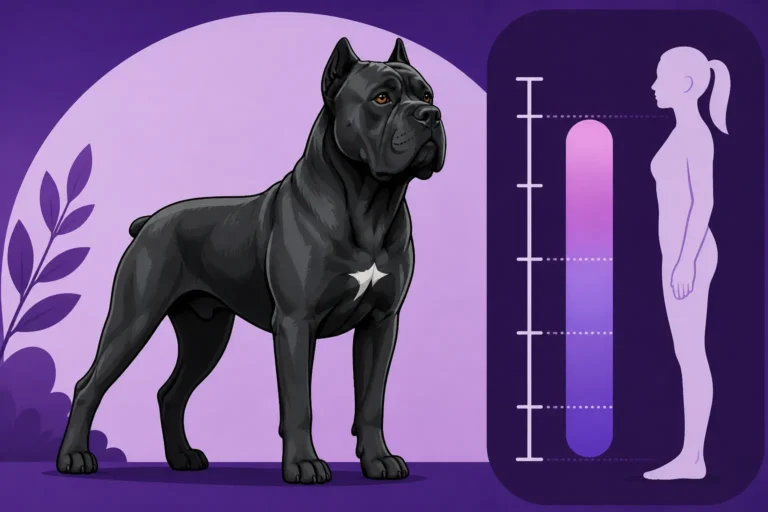
A Cane Corso is a powerfully built dog, robust and athletic, but never chunky or overly refined. The standard calls for a dog that is well-muscled and substantial, reflecting its working heritage. Males typically stand taller and are heavier than females, creating a clear sexual dimorphism. When you observe a Cane Corso, the ideal proportion is slightly longer than tall, meaning the length of the body, measured from the point of the shoulder to the point of the buttocks, should be slightly greater than the height at the highest point of the shoulder (withers). This slight rectangularity contributes to their agile yet powerful frame. An excessively long or short back can impact movement and potentially spinal health. The Height a Cane Corso Should Measure gives a good sense of the specific ranges the standard outlines for this impressive breed. Their substance comes from strong bone and dense muscle, giving them a formidable appearance without being cumbersome or clumsy. They should exude strength, but also have a lean, athletic quality that speaks to their endurance and speed.
The Importance of a Balanced Build
Balance is key in a Cane Corso. Every part of the dog should be in harmony with the others, contributing to a fluid, efficient movement and an aesthetically pleasing outline. Think of it like a well-engineered machine where every component serves a purpose and works seamlessly with the rest. Their head should be proportionate to their body, neither too large nor too small. Their neck should flow smoothly into well-laid-back shoulders, leading to a deep chest and a strong, level back. Angulation in both the front and rear legs should match, allowing for a powerful, effortless stride. A balanced dog is not only more beautiful to behold but is also more functional and less prone to injury or structural issues. An imbalance, such as overly steep shoulders or hindquarters, can lead to an inefficient gait and undue stress on joints over time. This balance is what gives the Cane Corso its characteristic power and agility, allowing it to spring into action or cover ground with equal ease.
Head, Muzzle, and Jaw: The Defining Features
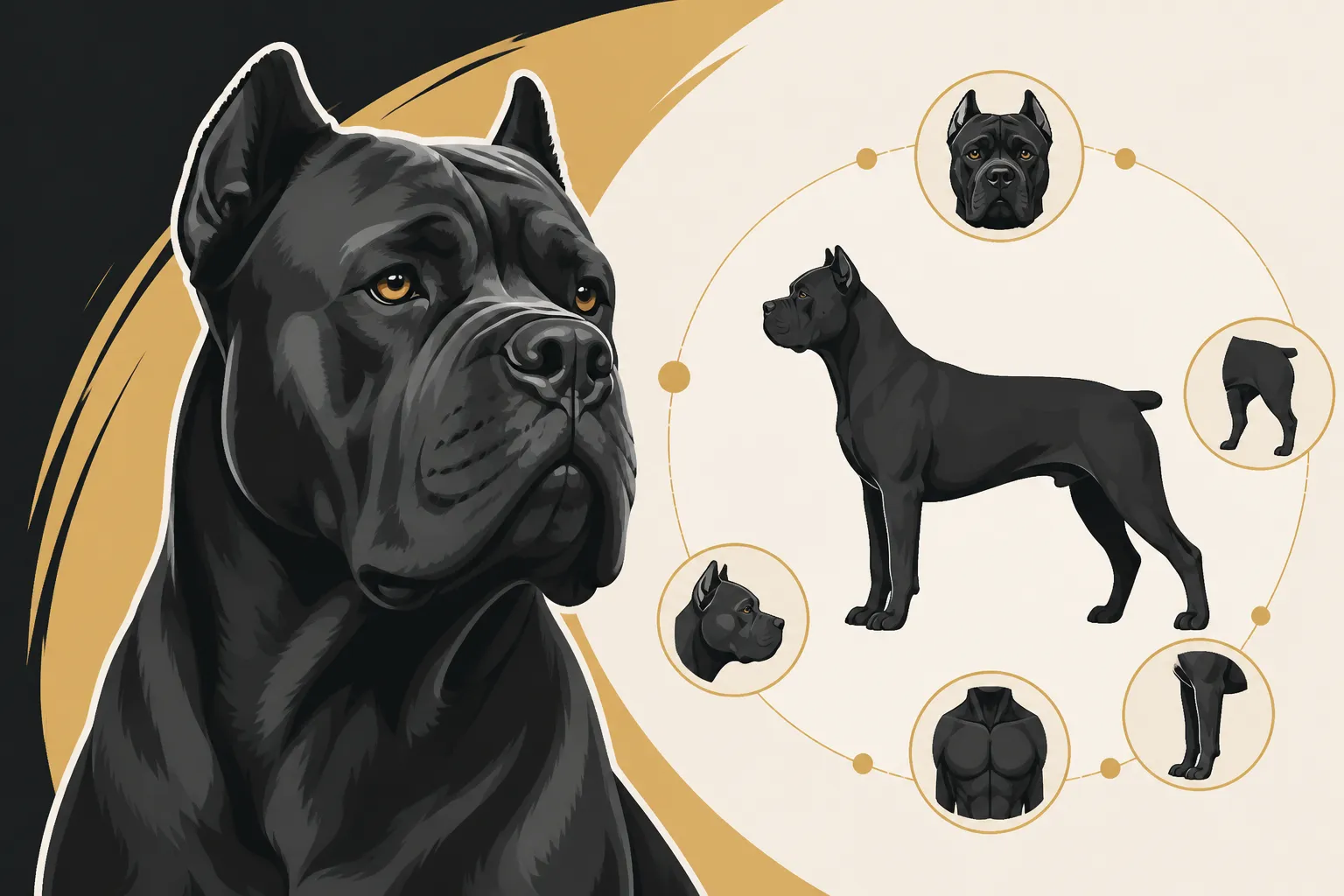
The head of the Cane Corso is arguably its most distinctive feature, embodying intelligence, power, and a serious demeanor. It’s often the first thing people notice, and the standard dedicates significant detail to its correct formation, from the shape of the skull to the set of the ears. A correct head is crucial not just for breed type but also for the dog's ability to utilize its powerful bite effectively.
The Expressive Eyes and Their Color
A Cane Corso's eyes are often described as medium-sized, set nearly straight, and expressing an intelligent, alert, and keen look. They are rarely round or bulging, but rather almond-shaped, reflecting a watchful nature. The color of the eyes is also important, typically as dark as possible, corresponding to the coat color. For black, gray (often called blue), or brindled dogs, dark brown or even amber eyes are common and acceptable. Lighter eyes, particularly yellow or bird-of-prey eyes, are generally considered a fault, as they can soften the dog's intense and commanding expression. However, in fawn or red dogs, lighter shades of brown or amber are permitted as they blend with the coat. The pigment around the eyes, known as the haws, should also be as dark as possible, tight, and not excessively loose, which can contribute to eye problems. The Loose Eyelids Nearly Every Cane Corso Owner Meets addresses challenges sometimes seen with lid structure. A tightly pigmented eye rim helps protect the eye and maintains the desired stern yet intelligent expression.
Ears: Cropped or Natural?
Historically, Cane Corso ears were typically cropped for functional purposes, to minimize injury during working tasks. The standard acknowledges both cropped and natural ears. If cropped, they are usually cut to a short equilateral triangle. This gives the head a more square, formidable appearance and is often favored in the show ring in regions where cropping is permitted. However, an increasing number of Cane Corsos are left with their natural ears, which are medium-sized triangles, hanging close to the cheeks, not reaching beyond the jawline. Whether cropped or natural, the ears should be set high on the skull, not too low, and should not be overly large or small in proportion to the head. The choice between cropped and natural ears is largely aesthetic and personal preference, but the standard does ensure that either presentation is acceptable, provided the ear set is correct. Whether an Uncropped Cane Corso Can Win in the Ring delves deeper into this discussion, illustrating how attitudes are shifting.
The Powerful Jaws and Scissor/Level Bite
The muzzle of a Cane Corso is broad, deep, and slightly shorter than the skull, contributing to its powerful head type. It should be strong, not pointed or weak, tapering only slightly towards the nose. The nose itself should be large, with open nostrils, and always black, regardless of coat color. The lips should be firm, not excessively pendulous, though some slight looseness is typical for the breed. The lower jaw should be strong and deep, designed for an incredibly powerful bite. The standard prefers a slight undershot bite, where the lower incisors slightly protrude beyond the upper incisors, but a level bite (where the incisors meet edge-to-edge) is also acceptable. Any significant overshot or undershot bite beyond a certain degree is considered a fault, as it can compromise the effectiveness of the jaws and the dog’s ability to grip. The Head a Cane Corso Judge Wants to See emphasizes the importance of these features in judge's evaluations. This powerful jaw structure is a hallmark of the Molosser type, enabling the Cane Corso to perform its guarding and working duties with formidable strength.
Body and Structure: Built for Work
The Cane Corso's body is a testament to its working heritage. It's a structure built for strength, agility, and endurance, allowing the dog to move with purpose and respond swiftly. Every aspect of its physique, from the neck to the tail, contributes to its overall functionality and imposing presence.
Neck, Topline, and Chest Depth
The neck of a Cane Corso should be powerful, muscular, and slightly arched, flowing smoothly into the shoulders without abruptness. It should be of moderate length, allowing for good reach and flexibility, and should not appear too short and thick or too long and thin. The topline, running from the withers to the tail, should be straight and solid, with a slight rise over the loin. A roached or sway back is considered a structural fault as it can indicate weakness. The chest is broad and well-developed, reaching to the elbow, indicating good lung capacity vital for stamina. Its depth is particularly notable, but it should not be so broad as to interfere with proper movement. The ribs should be well-sprung, but not barrel-chested, allowing for a deep, powerful breath. This deep chest is a defining characteristic, though it also brings certain health considerations, like the risk of bloat. Bloat and What a Cane Corso's Deep Chest Costs explores this in detail. A well-constructed chest provides ample space for vital organs, supporting the dog's athletic capabilities.
Forequarters: Strength and Angulation
The front assembly of a Cane Corso is designed for immense power and stability. The shoulders should be long, muscular, and well laid back, forming a good angle with the upper arm. This correct angulation is crucial for allowing efficient forward motion and absorbing impact. The forelegs themselves should be straight, strong, and parallel when viewed from the front, with powerful bone. The elbows should be close to the body, neither turning in nor out, ensuring a clean, efficient stride. The pasterns (the area just above the foot) are strong, flexible, and slightly sloping, acting as shock absorbers. The feet are well-arched, compact, and cat-like, with hard pads and dark nails, providing good traction and durability. Poor angulation or weak pasterns can lead to inefficient movement, increased stress on joints, and potential lameness over time, affecting the dog's ability to perform its duties. This robust front end is essential for absorbing the shock of powerful movements, enabling the dog to turn, stop, and accelerate with control.
Hindquarters: Drive and Power
The hindquarters of the Cane Corso are equally muscular and powerful, providing the drive and propulsion for their movements. The upper thigh is long and broad, with well-developed muscles. The stifles (knees) are well-bent, and the hocks (ankles) are strong, low to the ground, and parallel when viewed from the rear, ensuring maximum power transfer. Like the forequarters, correct angulation in the hindquarters is paramount for efficient, sustained movement. Over-angulation or insufficient angulation can hinder their powerful stride and lead to structural weakness. The rear feet are similar to the front feet – compact, well-arched, with hard pads and dark nails. The tail is set rather high, thick at the base, and typically docked to about one-third of its natural length in regions where it's permitted. If undocked, it should not be carried too high over the back, especially when the dog is moving or alert; ideally, it is carried like a saber, curving slightly upwards. The Chest and Body a Cane Corso Standard Describes further elaborates on the importance of these physical attributes. The powerful hindquarters are what allow the Cane Corso to leap, push off, and accelerate, making them incredibly effective in their traditional roles.
| Body Part | Ideal Standard Description | Common Faults |
|---|---|---|
| Overall Build | Robust, athletic, powerful, slightly longer than tall, substantial but not coarse. | Overly heavy or too refined, square body (as tall as long), frail bone, awkward movement. |
| Head | Large, broad skull, defined stop, broad deep muzzle, black nose. | Narrow skull, no stop, pointed or weak muzzle, pink nose, snipy (pointed) muzzle. |
| Eyes | Medium, almond-shaped, dark (matching coat), tight eyelids, intelligent expression. | Round or bulging, light or yellow eyes, excessively loose eyelids (entropion/ectropion). |
| Bite | Slight undershot or level bite; strong, deep jaws. | Severely overshot or undershot, weak jaw, misaligned teeth. |
| Neck | Strong, muscular, slightly arched, flowing into shoulders. | Weak, too short, too long, ewe neck (concave on top). |
| Topline | Straight and solid, slight rise over loin. | Sway back (dipped), roached back (arched), weak loin. |
| Chest | Broad, well-developed, deep to elbow, well-sprung ribs. | Shallow, narrow, barrel-chested, flat ribs. |
| Forequarters | Straight, strong bone, muscular, well laid back shoulders, firm pasterns. | Bowed legs, weak pasterns, straight shoulders, splayed feet. |
| Hindquarters | Muscular, long upper thigh, well-bent stifles, low hocks, parallel from rear. | Straight stifles, cow-hocked (hocks too close), sickle hocks (over-angulated). |
| Tail | High set, thick at base, saber-shaped (if natural), docked to 1/3 (if cropped). | Low set, fine, carried curled tightly over back, incorrect length if docked. |
Coat and Color: More Than Just Aesthetics
The Cane Corso's coat and approved colors are not just about beauty; they are also about functionality and protection. The standard defines these traits to ensure the breed retains its characteristic appearance and the practical benefits that its coat provides.
Acceptable Colors and Patterns
The Cane Corso sports a short, stiff, dense, and glossy coat with a light undercoat that becomes thicker in cold weather. This protective coat requires minimal fuss, but keeping it in good condition is important for skin health, and good nutrition, often sourced from reputable suppliers like Chewy, plays a role here. The standard permits a range of beautiful colors, including black, gray (often referred to as blue), fawn, and red. Brindling is also acceptable in all these colors (e.g., black brindle, gray brindle, fawn brindle, red brindle). Essentially, a brindle pattern is stripes of a darker color over a lighter base. Every Color a Cane Corso Is Allowed to Be provides a full breakdown of the nuances within these color categories. While these colors are diverse, all should be clear and distinct. Any other color, or a lack of clarity in these approved colors, can be considered a fault. The density and texture of the coat are more important than often given credit for, as it provides insulation and protection from the elements.
The Crucial Role of the Mask
A defining feature for many Cane Corsos, especially those of fawn or red coloring, is the mask. The standard dictates that fawn and red dogs must have either a black or gray mask on the muzzle, and this mask should ideally not extend beyond the eyes. The presence and color of this mask are important for breed type. For black and gray dogs, a mask is not usually discernible as their base coat color already provides the deep pigment. However, a clear mask on fawn and red dogs accentuates their serious expression and is considered a hallmark of the breed. Dogs lacking this mask entirely, or having a mask that is too extensive, are often considered less desirable in the show ring. The Mask a Cane Corso Is Required to Carry details why this facial feature is so significant to the breed's identity and appearance. It's more than just a splash of color; it's a structural pigment that enhances the powerful appearance of the head.
Coat Texture and Care
The Cane Corso's short, coarse, and dense coat, while seemingly low-maintenance, still requires appropriate care. Its density helps to protect the dog from various weather conditions, from heat to cold, and against minor scrapes it might encounter while working. While they don't require elaborate grooming sessions, regular brushing helps to remove loose hair, distribute natural oils, and keep the coat healthy and shiny. During shedding season, typically twice a year, brushing becomes even more important to manage the volume of hair. Despite being a short-coated breed, they can still shed quite a bit! Bathing should be done as needed, using a high-quality dog shampoo, but not so frequently as to strip the natural oils from their skin. A well-nourished diet also contributes significantly to a healthy coat, with many owners finding quality food and supplements on platforms like Chewy to support skin and coat health. Beyond aesthetics, the coat's texture is a functional trait, providing a degree of self-cleaning and weather resistance for a dog that was historically meant to spend time outdoors.
Movement and Temperament: The Living Standard
A Cane Corso is not just a static sculpture; it's a living, moving being, and its movement and temperament are just as critical to the breed standard as its physical appearance. These aspects speak to the dog's functionality, health, and its true nature as a guardian.
The Characteristic Gait
The Cane Corso's movement should be free, powerful, and flowing, yet always purposeful. It's often described as a long-strided, ground-covering trot. They should move with strength and elegance, displaying excellent reach in the front and strong drive from the rear. Their back should remain firm and level while in motion, without any rolling or swaying. When viewed from the front or rear, the legs should move in parallel, converging slightly towards the center line as speed increases. Any clumsiness, stiffness, or lack of coordination is a serious fault, as it indicates poor structure or health. A correct gait demonstrates that all the individual parts of the dog are working together in harmony, just as the standard intends. This efficient movement is vital for a dog that needed to cover ground quickly and powerfully, whether chasing down game or patrolling a large estate. It’s a reflection of their physical fitness and inherent athleticism.
Temperament: The Unseen Standard
While not a physical trait, temperament is perhaps the most crucial aspect of the Cane Corso standard, and arguably the most misunderstood by the general public. The standard describes the Cane Corso as "loyal, protective, and intelligent." They are calm, confident, and highly intelligent dogs with a naturally watchful nature. They should be approachable by their family and those they know well but reserved and suspicious of strangers. This is not aggression, but a discerning, watchful instinct. A true Cane Corso should be stable, not overtly shy or fearful, nor randomly aggressive. They should possess a strong guardian instinct, making them natural protectors of their home and family. The Character a Cane Corso Judge Expects in the Ring emphasizes that a Cane Corso must display a stable, confident, and balanced temperament. This inherent temperament makes them wonderful companions for experienced owners who understand and respect their protective nature. They are not typically boisterous or indiscriminately friendly with everyone they meet, and this reserved nature is a key part of their breed character, not a flaw.
Common Deviations and Faults: What to Look For and Avoid
Understanding the ideal standard also means recognizing what falls outside of it. Breeders, judges, and responsible owners all need to be aware of the common deviations and faults that can occur in the Cane Corso. These can range from minor aesthetic imperfections to serious structural issues that impact a dog's health and ability to function.
Disqualifying Faults in the Standard
Certain deviations from the standard are considered so severe that they lead to disqualification from the show ring and often indicate a significant departure from the breed's ideal. These are not merely cosmetic issues but often reflect fundamental problems with health, temperament, or breed type. Examples of disqualifying faults include extreme undershot or overshot bites (where the jaw misalignment is severe), a completely pink nose, blue eyes (except in very specific and rare circumstances that may not even be accepted in some registries), an absence of a mask on fawn or red dogs, and a shy or overtly aggressive temperament. Severely long or short coats are also disqualifying, as are certain colors like fawn or red without a mask, or colors not listed in the standard (e.g., solid white, chocolate, black and tan). These faults are in place to preserve the integrity and health of the breed, preventing characteristics that would make the dog unfit for its historical purpose or prone to health problems. Faults That End a Cane Corso's Show Career provides a deeper dive into the specific reasons a dog might be disqualified, illustrating the strictness of the standard.
Understanding Minor and Major Faults
Beyond disqualifications, the standard also outlines minor and major faults. Minor faults are typically cosmetic and don't significantly impact the dog's health or function, but they are still deviations from the ideal. Examples might include a slightly open eye rim, a less-than-perfect ear set, or a tail carried too high. These dogs can still be excellent companions and often have wonderful temperaments. Major faults, however, are more significant, impacting the dog's health, structure, or ability to perform. These could include structural issues like poor angulation, a roached or sway back, weak pasterns, or an incorrect bite that isn't severe enough for disqualification but is still problematic. Temperamental issues, such as marked shyness or inappropriate aggression (not tied to guardian instinct), would also fall under major faults. While dogs with major faults might still be good pets, they should ideally not be used in a breeding program as these faults can be passed on to offspring. Knowing the difference between these types of faults helps owners appreciate the nuances of the breed and encourages responsible breeding practices. Even reputable sources like Chewy that offer a wide array of products often emphasize the importance of choosing healthy, well-bred dogs, as it directly impacts their long-term well-being and the need for specialized care.
Disclaimer
This article is for general informational purposes only and does not constitute professional advice. Laws, prices and regulations vary by location and change over time. Consult a qualified professional for guidance on your specific situation.