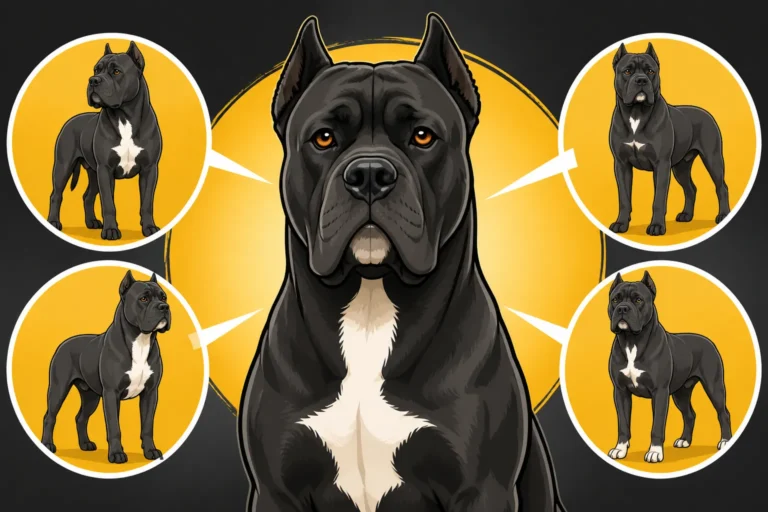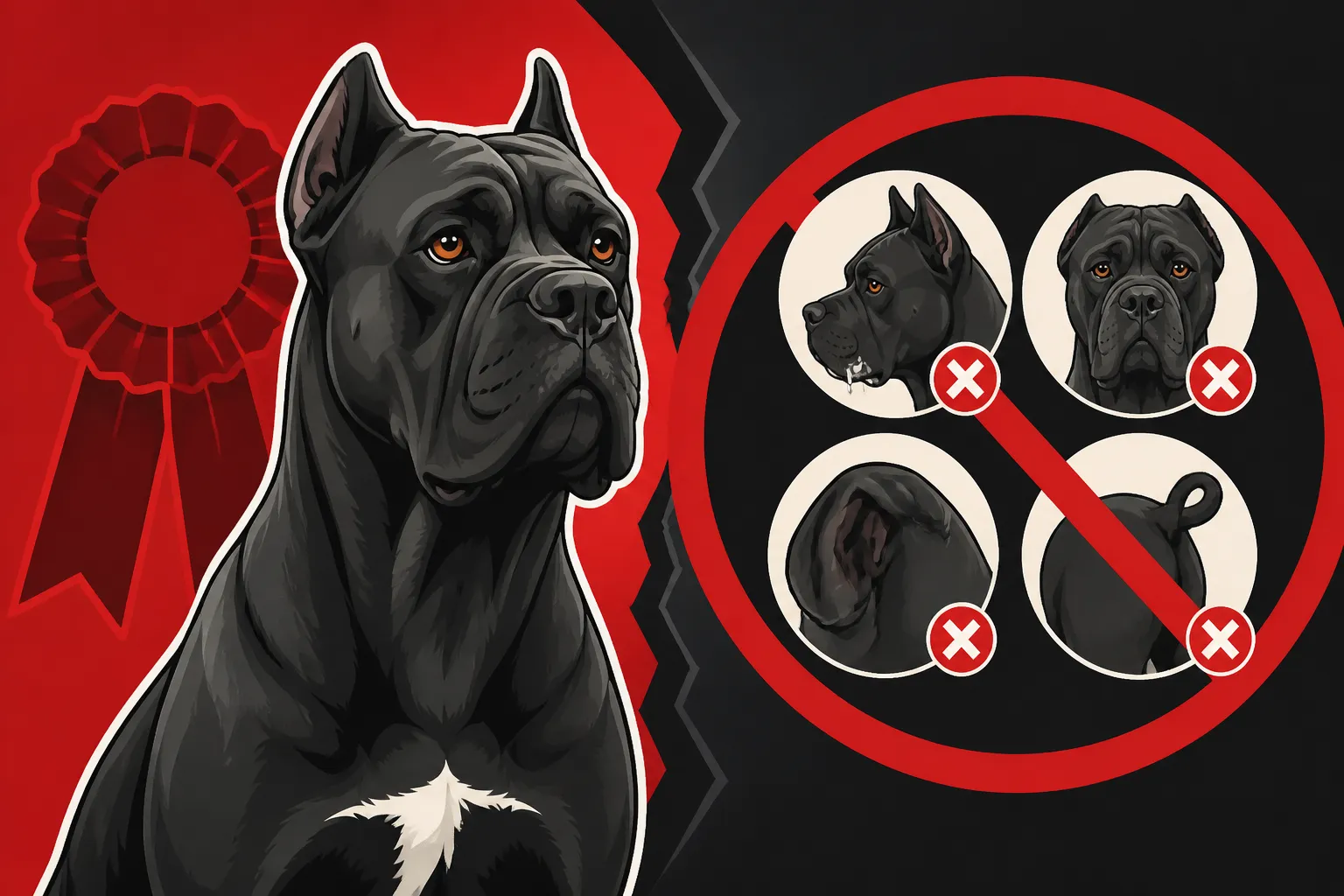
Faults That End a Cane Corso’s Show Career
It's heartbreaking to pour your heart and soul into raising a magnificent Cane Corso, dreaming of their moment in the spotlight, only to find out that a subtle characteristic, one you might not even have noticed, could abruptly halt their show career. Many passionate owners face this exact frustration, unaware of the strict rules governing the breed standard. This guide is here to walk you through the various faults and disqualifications that can end a Cane Corso's journey in the show ring, offering a realistic look at what judges are looking for and what they absolutely won't accept.
Understanding the Cane Corso Breed Standard
When you envision a Cane Corso, you likely picture a powerful, majestic dog with an undeniable presence. But for those hoping to enter the conformation ring, that vision must align perfectly with the breed standard. This isn't just about personal preference; it's a meticulously crafted blueprint that defines the ideal representation of the breed.
Why the Standard Exists for Show Dogs
The breed standard isn't just a set of arbitrary rules; it's the very foundation upon which the breed's health, temperament, and functional purpose are preserved. For the Cane Corso, a breed with a rich history as a The Roman War Dog Behind the Cane Corso and a working farm dog, the standard ensures that traits essential for its historical roles — guarding, herding, and even hunting — are maintained. Judges use this document as their sole guide, assessing each dog's structure, movement, temperament, and overall appearance against this ideal. It's about maintaining consistency and preventing the breed from drifting too far from its original purpose and form. Without a standard, breeders could aim for whatever traits they personally found appealing, potentially diluting the very essence of the Cane Corso over time. It’s a serious commitment to the breed's future.
Major Versus Minor Faults
Not all imperfections are created equal in the show ring. Judges differentiate between "faults" and "disqualifications," and understanding this distinction is crucial. A "minor fault" might be a slight deviation from the ideal, perhaps a less-than-perfect ear set or a somewhat lighter eye color than preferred. These faults accumulate, and a dog with too many minor faults will simply be placed lower than one with fewer. They reduce a dog's overall score but don't kick them out of the ring entirely.
However, a "major fault" or "disqualification" is an entirely different beast. These are serious departures from the standard that immediately render a dog ineligible for placement, or even for competing. Think of it like this: a minor fault might be a scratch on a perfectly polished car, while a disqualification is a missing engine. For a Cane Corso, these severe faults often relate directly to its ability to perform its historical duties or indicate significant health issues that could impact the breed's future. This is where dreams of ribbons can quickly come to an end, and it’s why understanding What the Standard Says a Cane Corso Should Look Like is paramount.
Physical Faults That Disqualify a Cane Corso
The Cane Corso's physique is its calling card, a testament to its strength and utility. Therefore, any major deviation from the prescribed physical attributes can quickly lead to disqualification in the show ring. Judges scrutinize everything from nose to tail, seeking that perfect balance and power.
Structural and Movement Issues
One of the most critical aspects a judge assesses is a Cane Corso's structure and how it moves. A dog might look impressive standing still, but its true conformation is revealed in motion. The Cane Corso should move with power, grace, and fluidity, demonstrating efficiency and strength. Issues like poor angulation in the front or rear can disrupt this balance, leading to an awkward, inefficient gait. For instance, a dog with overly straight rear legs might have a stiff, choppy stride, which is a significant fault. Conversely, too much angulation can lead to a "sickle hock" appearance, reducing drive and endurance.
More severe structural problems, particularly those indicative of genetic health conditions, can be immediate disqualifications. This includes clear signs of lameness, which can point to issues like Hips and Elbows a Cane Corso Must Be Cleared On. A dog that is limping or moves with an obvious lack of coordination demonstrates a fundamental flaw that compromises its working ability and overall health. Judges are trained to spot these subtle irregularities, knowing they can impact the dog’s longevity and quality of life. Even if a dog isn't actively limping, an observable weakness or instability in its gait, especially in a breed meant for demanding physical tasks, can quickly end its run in the ring.
Head and Bite Anomalies
The Cane Corso's head is often described as its unique fingerprint, conveying its power, intelligence, and protective nature. Judges pay very close attention to its specific dimensions, proportions, and features. The standard dictates The Head a Cane Corso Judge Wants to See, including the width of the skull, the length of the muzzle, and the stop (the indentation where the muzzle meets the forehead). A head that is too narrow, too long, or too short in the muzzle can be a significant fault. For example, a muzzle that is excessively long or refined would deviate from the powerful, blocky appearance desired, signaling a loss of breed type. Conversely, a muzzle that is too short can hinder breathing and impact the bite.
The bite is another critical feature. The Cane Corso standard typically calls for a slight undershot bite (reverse scissor) or a level bite. Any severe deviation, such as a markedly overshot bite (where the upper teeth extend far beyond the lower teeth) or a significantly pronounced undershot bite, can be a serious fault or even a disqualification. Missing teeth, other than those specified as acceptable (sometimes specific premolars), can also be a disqualification. Teeth are not just for aesthetics; they are functional tools for a working dog. A faulty bite can affect a dog’s ability to grip, hold, and even eat effectively. These aren't just cosmetic issues; they directly reflect the dog's ability to fulfill its ancestral duties. Remember, The Muzzle Length a Cane Corso Standard Requires is precise for a reason – it ensures proper jaw strength and function.
Coat and Color Disqualifications
While the Cane Corso's short, dense coat is generally straightforward, specific colors and markings are either preferred or outright forbidden in the show ring. The standard lists Every Color a Cane Corso Is Allowed to Be, which typically includes black, gray (often called blue), fawn, and red, along with various brindle patterns. Minor white markings are usually allowed on the chest, chin, and toes. However, excessive white, particularly if it extends beyond these approved areas or forms a large patch, is often considered a disqualification. This is because significant white markings can sometimes be associated with genetic issues, or simply dilute the characteristic appearance of the breed.
Furthermore, certain colors that might appear in a litter but are not recognized by the standard are immediate disqualifications. This means a beautiful dog with a unique coat color, such as an Isabella (lilac) or a pure solid white (beyond minimal markings), cannot compete. These "rare" colors, while attractive to some pet owners, are considered fundamental deviations from the breed's established genetic blueprint and phenotype. Judges are looking for purity of breed type, and unapproved colors signal a departure from that. It’s not about personal taste; it's about adhering to the documented lineage and appearance that defines the Cane Corso. Potential show dog owners need to be very well-versed in these specific color requirements before ever stepping foot in a ring.
Temperament Faults in the Show Ring
Beyond physical appearance, a Cane Corso's demeanor in the show ring is incredibly important. This breed is known for its confident, steady, and protective nature. A show dog must demonstrate a stable temperament, reflecting the breed's intended character.
Extreme Shyness or Aggression
The Cane Corso is meant to be self-assured and discerning. In the show ring, this translates to a dog that is attentive, responsive to its handler, and tolerant of being examined by a stranger (the judge). Any display of extreme shyness—cowering, pulling away, or outright fear of the judge or environment—is a serious fault. A fearful dog is not a confident guardian, and this trait undermines the breed's core essence. It suggests a lack of proper socialization or an inherent genetic predisposition that goes against the stable temperament required.
On the other end of the spectrum, overt aggression towards the judge, handler, or other dogs is an immediate disqualification. While the Cane Corso is a protective breed, it should never be indiscriminately aggressive. A show dog must be under control, allowing the judge to approach, examine its mouth, and feel its structure without displaying hostility. A snarl, a lunge, or a snap will instantly remove a dog from contention. The standard explicitly states The Character a Cane Corso Judge Expects in the Ring: one of dignified confidence, not unwarranted aggression or debilitating fear. This is particularly crucial for a breed of this size and power; maintaining a stable temperament is paramount for public safety and breed reputation. Even mild growling or a fearful tucked tail can be enough for a judge to dismiss a dog from consideration.
Unmanageable Behavior
Even if a Cane Corso isn't overtly shy or aggressive, a general lack of control or unmanageable behavior can still lead to a poor showing or even dismissal. A dog that is constantly pulling on the leash, jumping up on its handler, refusing to stand still for examination, or attempting to leave the ring without permission demonstrates that it is not properly trained or under the handler's command. Judges expect a dog to be gaiting gracefully at its handler's side, standing attentively for examination, and generally being a cooperative participant.
This type of behavior indicates a significant lack of training, impulse control, or a temperament that is too strong-willed for the show environment. While some breeds might get away with a little exuberance, the Cane Corso's size and strength demand impeccable manners and focus. A dog that is a handful in the ring distracts from its physical qualities and signals that it might be a challenging companion outside of it. It’s not just about winning; it’s about showcasing a well-rounded example of the breed. Many owners invest heavily in training their dogs, often purchasing supplies like durable leashes and treats from retailers like Chewy, to ensure their Cane Corso is a calm and focused participant.
Size and Proportionality Faults
The Cane Corso's imposing presence is a hallmark of the breed, and that presence is intrinsically tied to its prescribed size and proportions. Deviations from these guidelines are not just minor quibbles; they can fundamentally alter the breed's functional ability and aesthetic appeal in the eyes of a judge.
Being Oversized or Undersized
The breed standard provides a specific height range for both male and female Cane Corsos. For example, a male might be expected to stand between 25 and 27.5 inches at the withers, with females slightly smaller. While slight variations might be overlooked in a pet, in the show ring, being significantly outside this range is a serious fault, often leading to disqualification. A Cane Corso that is too tall might lose the compact, powerful build that defines the breed, potentially looking lanky or less substantial. Conversely, one that is too short might lack the imposing stature and reach needed for its working heritage.
Weight is also a factor, though typically expressed as proportional to height and build, rather than a fixed number. A dog that is too heavy might be considered obese and unhealthy, which can also impact its movement and overall presentation. On the other hand, an underweight dog, or one that lacks sufficient bone and substance, will appear frail and unable to perform its duties. The goal is a powerful, muscular, and athletic physique. This is why The Height a Cane Corso Should Measure is so precisely defined; it's a key element of its breed type. Dogs that don't fit these parameters, whether over or under, simply don't embody the ideal representation.
Incorrect Body Proportions
Beyond just height, the overall balance and proportion of the Cane Corso's body are critical. The standard describes a dog that is slightly longer than it is tall, with a powerful, deep chest, well-sprung ribs, and a strong, level back. Any significant departure from these proportions can be considered a major fault. For instance, a dog that is too long in the body might appear weak in the loin or have a less efficient gait. A short-backed dog might lack the flexibility and reach required.
Similarly, the depth and width of the chest are important. A shallow chest can indicate a lack of lung capacity and overall substance, while an overly narrow chest can hinder proper movement. The ideal Cane Corso should be a picture of robust strength and athleticism, without any part of its body appearing disproportionate or out of balance with the rest. Judges are looking for a cohesive, powerful outline. A lack of breed type, often manifesting as an incorrect silhouette or an overall "weedy" or "clunky" appearance, directly impacts a dog's show potential. For instance, a dog with legs that are too short for its body, or a body that is too long for its leg length, breaks the desired athletic profile.
Other Disqualifying Factors and Owner Responsibilities
Showing a Cane Corso isn't just about the dog's inherent qualities; it's also about the owner's commitment to responsible breeding, health, and presentation. There are several other areas where a dog can be disqualified, even if it has an otherwise stellar appearance.
Health Test Failures
For many responsible breeders and certainly within the discerning world of conformation showing, a Cane Corso's health clearances are as important as its physical appearance. Disqualifications in this realm are often not visible to the naked eye but are crucial for the long-term health of the breed. Dogs entering the ring, especially those vying for championship titles, are often expected to have specific health clearances. These typically include certifications for hips and elbows, often through organizations like OFA (Orthopedic Foundation for Animals) or PennHIP, which assess for dysplasia. Judges want to see sound, healthy animals, and a dog with known severe hip or elbow dysplasia might be penalized, or if rules permit, disqualified.
Beyond orthopedic health, cardiac health is also paramount for a large breed like the Cane Corso. Many breed clubs and parent organizations recommend or require The Cardiac Exam Behind a Cane Corso's Clearance, often an echocardiogram performed by a veterinary cardiologist, to screen for heart conditions. Eye certifications, such as those from the Canine Eye Registry Foundation (CERF) or its current iteration (OFA Eye Certification), are also crucial to screen for hereditary eye diseases. While a judge in the ring won't typically review these papers unless specified by the show rules, the ethos of responsible breeding demands healthy animals. Judges implicitly prefer dogs from health-tested lines, and major, observable health issues will certainly impact a dog's placement. Owners committed to their dog's well-being often find comprehensive health testing information and advice through online resources, and sometimes even products related to canine health and nutrition available at reputable sites like Chewy. Having What a Cane Corso CHIC Number Actually Certifies demonstrates a commitment to health.
Alterations and Presentation
The presentation of a Cane Corso in the show ring is highly specific, and certain alterations or a lack of proper grooming can lead to disqualification or significant penalties. Ear cropping and tail docking are traditional for the Cane Corso, reflecting its historical working functions. In many countries and some show circuits, cropped ears and a docked tail are still the norm and even preferred, while in others, they are banned or an uncropped, undocked dog is perfectly acceptable. The rules on this vary significantly by region and organization. For instance, in some parts of Europe, a cropped or docked dog cannot be shown. In contrast, in the US, an uncropped Cane Corso may be shown, and Whether an Uncropped Cane Corso Can Win in the Ring often comes down to the judge's interpretation and emphasis on functional appearance versus tradition.
Any other form of cosmetic alteration, such as coloring the coat, excessive trimming not permitted by the standard, or any surgical procedure to correct a fault (beyond the traditional cropping/docking where allowed) would be an immediate disqualification. Judges are looking for a natural representation of the breed. Furthermore, a dog that is poorly groomed—dirty coat, overgrown nails, or neglected teeth—will always be at a disadvantage. While not necessarily a disqualification, poor presentation reflects negatively on the handler and suggests a lack of care, which can absolutely influence a judge's perception of the dog's overall quality. Nails that are too long, for example, can impact a dog's gait, making it appear less sound than it actually is.
Summary of Key Disqualifiers
To give you a quick overview, here are some of the most common and definitive disqualifiers for a Cane Corso in the show ring:
| Category | Specific Disqualifying Fault | Impact on Show Career |
|---|---|---|
| Temperament | Overt aggression (snapping, growling, lunging) | Immediate dismissal |
| Extreme shyness or fearfulness (cowering, refusing examination) | Immediate dismissal | |
| Physical | Being outside the specified height range (too tall or too short) | Ineligibility for placement/DQ |
| Overshot bite, or severely pronounced undershot bite | Disqualification | |
| Unrecognized coat colors (e.g., Isabella, solid white) | Disqualification | |
| Excessive white markings on coat | Disqualification | |
| Long, silky, or fringed coat | Disqualification | |
| Missing teeth (other than specified premolars) | Disqualification | |
| Albinism | Disqualification | |
| Structural/Health | Lameness or unsoundness affecting gait | Major fault, often leads to DQ |
| Cryptorchidism (undescended testicles in males) | Disqualification (for males) | |
| Alterations | Any unapproved cosmetic surgery or alteration (other than traditional cropping/docking where allowed) | Disqualification |
This table highlights the areas where judges are particularly strict. While a dedicated breeder and handler can often rectify issues of presentation or training, inherent genetic faults or unapproved physical alterations are irreversible show-stoppers. For any owner aspiring to the show ring, a deep understanding of the Cane Corso standard, available from breed clubs, is your most vital tool.
Disclaimer
This article is for general informational purposes only and does not constitute professional advice. Laws, prices and regulations vary by location and change over time. Consult a qualified professional for guidance on your specific situation.