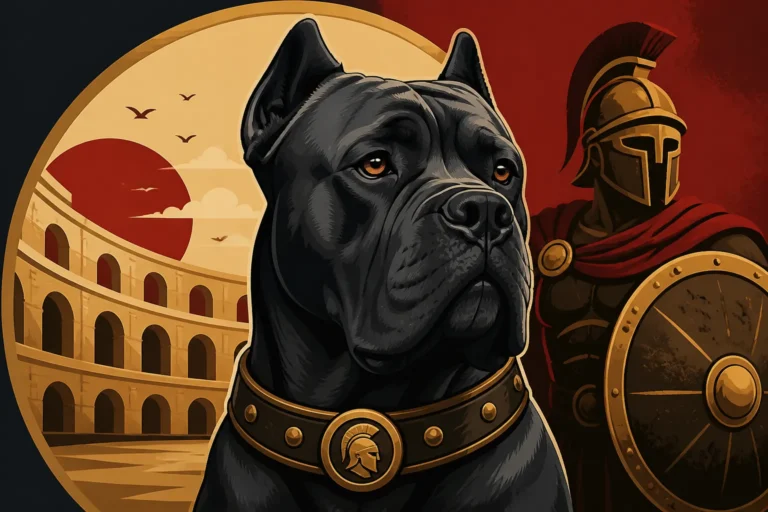
Whether an Uncropped Cane Corso Can Win in the Ring
Many Cane Corso enthusiasts find themselves wrestling with a tough decision: to crop or not to crop their dog's ears, especially when they dream of stepping into the show ring. There's a persistent myth that uncropped Cane Corsos can't win, and it can feel incredibly disheartening if you prefer the natural look, or if you live somewhere where cropping is illegal. This guide will explore whether an uncropped Cane Corso truly can achieve success in the competitive dog show world, and what factors really matter to judges.
The Evolution of Cane Corso Ear Cropping and Show Standards
For generations, the image of a Cane Corso has often included those strong, erect, cropped ears, giving them an unmistakable powerful and alert presence. This wasn't just about aesthetics; it was deeply rooted in their history as working dogs. Understanding this history helps us grasp why the perception of cropped ears persists, even as attitudes shift globally.
Function Over Aesthetics: Why Ears Were Cropped Traditionally
Historically, the Cane Corso was a working breed in Italy, primarily used for guarding property, livestock, and hunting large game like wild boar. When a dog is facing down a wild boar or confronting a potential threat, floppy ears can be a significant liability. They can easily be torn, bitten, or used as a handle by an aggressor, leading to painful injuries and infections. Cropping the ears minimized this risk, allowing the dog to perform its duties with fewer vulnerabilities. It was a practical, functional modification for a rugged working dog.
Beyond protection, cropped ears were also believed to enhance the dog's ability to hear, preventing debris from entering the ear canal, and even communicating a more formidable appearance to potential threats. For a breed tasked with protecting its family and farm, every advantage mattered. This utilitarian practice became deeply ingrained in the breed's image and cultural perception, solidifying the cropped look as the "traditional" Cane Corso. When you see old photographs or paintings of their ancestors, the Molosser types, it’s often with that distinctive cropped profile.
The Shift in Modern Kennel Club Standards
Fast forward to today, and the world of dog showing and breed standards has evolved. While the historical reasons for cropping were practical, many modern kennel clubs and veterinary associations now view ear cropping as a cosmetic procedure, with growing ethical concerns about elective surgery for aesthetic purposes. This has led to bans or restrictions on cropping in many parts of the world, particularly in Europe and some other countries.
The American Kennel Club (AKC), for instance, still allows cropped ears for breeds where it is traditional, including the Cane Corso. However, it's crucial to understand that their breed standard explicitly states that "ear cropping is optional." This is a significant detail, confirming that a natural-eared Cane Corso is not penalized in the AKC show ring purely because its ears are uncropped. The emphasis is meant to be on the dog's overall conformation, health, and temperament, rather than a cosmetic alteration. Other international federations, like the FCI (Fédération Cynologique Internationale), also acknowledge that dogs from countries where cropping is prohibited must be shown with natural ears, and these should not be discriminated against. Whether an Uncropped Cane Corso Can Win in the Ring really depends on the judge's interpretation of the standard and their personal bias, but the rules are clear.
Understanding Show Ring Standards: Cropped Versus Natural Ears
Navigating the nuances of breed standards and judge expectations can feel like a labyrinth, especially when something as visible as ear presentation is concerned. While the AKC standard is explicit, the practical realities of the show ring can sometimes present a different picture.
What the AKC Standard Says
The AKC Cane Corso breed standard is quite clear: "Ears may be cropped or uncropped. If cropped, they are a blunt inverted 'V' shape with a slightly rounded tip and in proportion to the head. If uncropped, they are medium sized, triangular, carried tight to the cheeks, and not reaching beyond the throat muscles." This statement is a powerful reassurance to owners who choose to leave their Cane Corso's ears natural. It means that, officially, a natural ear is not a fault. What is judged is how well those natural ears conform to the description – "medium sized, triangular, carried tight to the cheeks." They shouldn't be excessively large, heavy, or flying ears, as that might detract from the desired head shape and expression.
So, while the cropped ear creates a certain silhouette that many are accustomed to, a well-set, clean, natural ear should be equally acceptable. The standard emphasizes balance and proportion above all else. A judge should be assessing the entire dog against What the Standard Says a Cane Corso Should Look Like, looking for proper bone structure, a strong topline, powerful movement, and the characteristic head, rather than focusing solely on the ears. This means a natural-eared Cane Corso with impeccable conformation and temperament should theoretically stand on equal footing with a cropped one.
The FCI Perspective
The Fédération Cynologique Internationale (FCI), which governs many European and international dog shows, has taken a different approach to ear cropping. In many FCI member countries, cropping is either entirely banned or heavily restricted due to animal welfare concerns. Consequently, dogs shown in these countries must have natural ears. The FCI breed standard for the Cane Corso allows for both cropped and uncropped ears, but explicitly states that uncropped dogs must not be penalized in countries where cropping is illegal. This creates a global showing environment where natural ears are not just tolerated, but expected and celebrated in many regions.
This means that internationally, there's already a strong precedent for uncropped Cane Corsos to win. Judges in these regions are well-versed in evaluating natural-eared dogs and understand that the ears are only one small part of the overall picture. For an American owner considering showing their natural-eared Cane Corso, looking at how the breed performs under FCI rules can offer valuable insight and encouragement. It demonstrates that judges can and do look past the ear presentation to the dog's underlying quality.
Judging an Uncropped Cane Corso: Focus on Overall Conformation and Temperament
When an uncropped Cane Corso steps into the ring, the judge's focus should shift to the complete package. The ears are simply one small aspect of the head, which itself is only one component of the entire dog. Judges are looking for adherence to the breed standard in terms of The Height a Cane Corso Should Measure, weight, structure, movement, and overall balance. A dog with a beautiful, powerful head, a deep chest, strong bone, and fluid movement will always command attention, regardless of its ear presentation.
What becomes paramount for an uncropped Cane Corso is its temperament. The Cane Corso is known for its confident, self-assured, and noble demeanor. The Character a Cane Corso Judge Expects in the Ring includes being alert and composed, never shy or aggressive. A dog that moves with purpose, carries itself proudly, and has excellent ring presence, displaying its inherent working drive and intelligence, will impress. A nervous or poorly socialized dog, cropped or uncropped, will certainly not succeed. Therefore, solid socialization and training are absolutely non-negotiable, and you can find great resources and even specialized training aids on Chewy to help with this journey. Ensuring your dog is well-adjusted and confident will let its natural beauty and quality shine, irrespective of ear style.
Competing with Confidence: Strategies for Uncropped Cane Corsos in the Ring
While the official standards support natural ears, the reality of dog shows often involves historical preferences and unconscious biases. However, with the right strategy and a truly excellent dog, an uncropped Cane Corso can absolutely stand out.
Overcoming Perceptual Biases
It's true that many judges, especially those who have been involved with the breed for decades, might have a strong mental image of the cropped Cane Corso. This isn't malice, but simply a long-standing association. To overcome this, your uncropped Cane Corso needs to be undeniably exceptional in all other aspects. Its structure, movement, and temperament must be so outstanding that the ears become an afterthought. The dog needs to "wow" the judge the moment it enters the ring. This means meticulous grooming, a perfect gait, and a confident, attentive attitude from the dog.
For handlers, it's about presenting the dog with the same pride and confidence as if it were cropped. Don't apologize for the natural ears, highlight them as part of a magnificent animal. Some handlers find success in discussing the breed's history and the standard with judges during informal moments, politely reinforcing that natural ears are permissible. Education, combined with a stellar dog, is your best weapon against any latent perceptual biases.
Highlighting Other Virtues
Since the ears are a non-issue according to the standard, your focus should be on exaggerating the dog's other virtues. Does your Cane Corso have an exemplary head piece, strong bone, and powerful muscles? Does it move with the effortless, ground-covering gait the breed is known for? Is its topline strong and level? These are the elements that truly define a quality Cane Corso, and they are what judges are supposed to be looking for.
Ensure your dog is in peak physical condition – lean, muscular, and well-exercised. Its coat should be gleaming, its nails perfectly trimmed. A healthy, fit Cane Corso makes a powerful statement. Reading an Italian Cane Corso Pedigree and knowing your dog's lineage can also help you understand its inherent strengths, allowing you to highlight those qualities to the judge. The goal is to make the judge see a superb example of the breed, a dog that epitomizes the Cane Corso's protective spirit and athleticism, regardless of ear style.
Preparation and Presentation: Grooming and Handling Natural Ears
Presenting an uncropped Cane Corso requires specific attention to detail, particularly in grooming and handling. Natural ears need to be impeccably clean and free of any dirt, wax, or debris. Regular cleaning is essential to prevent infections and keep them looking their best. You can find excellent ear cleaning solutions and cotton pads on Chewy to keep your dog's ears pristine. The hair on and around the ears should be neat and trimmed, if necessary, to present a clean silhouette that doesn't detract from the head.
Proper handling in the ring is also vital. You want the dog to hold its head high, with a confident, alert expression. The natural ears should be carried symmetrically and ideally lie close to the cheeks, as described in the standard. A handler who can encourage their dog to present its best profile, demonstrating its sound structure and powerful presence, will gain an advantage. Practicing stacking and gaiting with natural ears in mind can help refine your presentation, making sure the ears complement the dog's overall look rather than distracting from it.
The Broader Movement Towards Natural Ears
Beyond the show ring, there's a significant and growing trend among Cane Corso owners and enthusiasts to embrace natural ears. This movement is driven by a combination of ethical considerations, legal changes, and a deepening appreciation for the dog's innate beauty.
Ethical and Welfare Concerns
For many, the decision to leave a Cane Corso's ears uncropped stems from ethical considerations regarding animal welfare. Ear cropping is a surgical procedure that involves pain, recovery time, and potential complications. While performed under anesthesia, it is an elective surgery purely for cosmetic reasons. A growing number of pet owners and advocates believe that such procedures are unnecessary and potentially harmful, preferring to avoid any non-essential surgery for their beloved companions. This mirrors the broader debate around tail docking and other traditional modifications.
This ethical stance isn't about criticizing those who choose to crop, but rather about advocating for the dog's comfort and well-being. It's a personal decision, but one that is increasingly leaning towards preserving the dog's natural state. Owners who choose natural ears often feel a sense of pride in presenting their Cane Corso exactly as nature intended, allowing its full, expressive range of ear movements to be visible.
Legal Restrictions and Cultural Shifts
The legal landscape surrounding ear cropping has changed dramatically in many parts of the world. In numerous European countries, the UK, Australia, and certain provinces in Canada, ear cropping is outright illegal, often viewed as animal cruelty. This means that Cane Corsos bred and shown in these regions must have natural ears. These legal shifts reflect a broader cultural change in how societies view animal welfare and cosmetic alterations.
Even in places where it remains legal, like the United States, there is increased pressure from veterinary associations and animal welfare groups to end the practice. This means that judges, even in the AKC, are becoming more accustomed to seeing and evaluating natural-eared Cane Corsos. The breed's journey, from How the Cane Corso Nearly Disappeared After the War to its global recognition, has seen many adaptations, and the ear style is just one more example of evolution. As the breed gains popularity, especially after The 2010 AKC Recognition of the Cane Corso and How the Cane Corso Reached the AKC Working Group, more diverse presentations are inevitable.
Personal Preference and Natural Beauty
Ultimately, for many owners, the choice to keep their Cane Corso uncropped simply comes down to personal preference and an appreciation for the dog's natural beauty. An uncropped Cane Corso has a softer, often more approachable look, while still retaining its impressive presence and noble bearing. The natural ears add to the dog's expressiveness, allowing for a wider range of communication through ear position – from alert, forward-facing ears to relaxed, dropped ones.
Owners often feel that the natural ear offers a truer representation of the breed, celebrating its inherent form rather than an altered one. They see the beauty in the full, velvety ears that frame the face, giving the dog a slightly different, yet equally striking, appearance. This personal connection to the natural look often fuels their determination to show and succeed with their uncropped Cane Corso, proving that beauty and breed quality are not defined by a cosmetic choice.
A Comparative Look: Cropped vs. Uncropped in the Show Ring
To further clarify the considerations for each ear type in the show ring, here's a helpful comparison:
| Feature | Cropped Ears | Uncropped (Natural) Ears |
|---|---|---|
| Traditional View | Often seen as the "classic" Cane Corso look | Less traditional, but gaining acceptance |
| AKC Standard | "Optional" – fully permissible, judged on proportion | "Optional" – fully permissible, judged on set and carry |
| FCI Standard | Permissible, but may be restricted in some countries | Permissible, encouraged/required where cropping is banned |
| Judge Bias | Can sometimes benefit from ingrained preference | May need a truly exceptional dog to overcome bias |
| Appearance | Sharp, alert, powerful, formidable silhouette | Softer, more expressive, elegant, natural silhouette |
| Grooming Needs | Minimal ear grooming post-healing | Regular cleaning to prevent infections, neat trimming |
| Ethical Aspect | Elective cosmetic surgery, debated welfare | No surgical intervention, aligns with natural approach |
| Winning Potential | High, if dog meets standard and presented well | High, if dog meets standard and presented exceptionally well |
Conclusion
So, can an uncropped Cane Corso win in the show ring? The answer is a resounding yes, absolutely. While the traditional image of a Cane Corso often features cropped ears, major kennel club standards, including the AKC's, explicitly state that ear cropping is optional and that natural ears are permissible. What truly matters in the show ring is the dog's overall adherence to the breed standard: its conformation, movement, temperament, and health.
An uncropped Cane Corso that is sound in structure, moves with purpose, and exudes the confident, stable temperament characteristic of the breed, can and does achieve great success. While some judges might carry a historical bias towards cropped ears, a truly exceptional natural-eared dog, presented with confidence and precision, will always rise to the top. Owners choosing natural ears are part of a growing movement that values welfare and natural beauty, proving that the magnificence of the Cane Corso shines through, regardless of cosmetic alterations. Focus on quality, dedication, and impeccable presentation, and your natural-eared Cane Corso can certainly make its mark.
Disclaimer
This article is for general informational purposes only and does not constitute professional advice. Laws, prices and regulations vary by location and change over time. Consult a qualified professional for guidance on your specific situation.