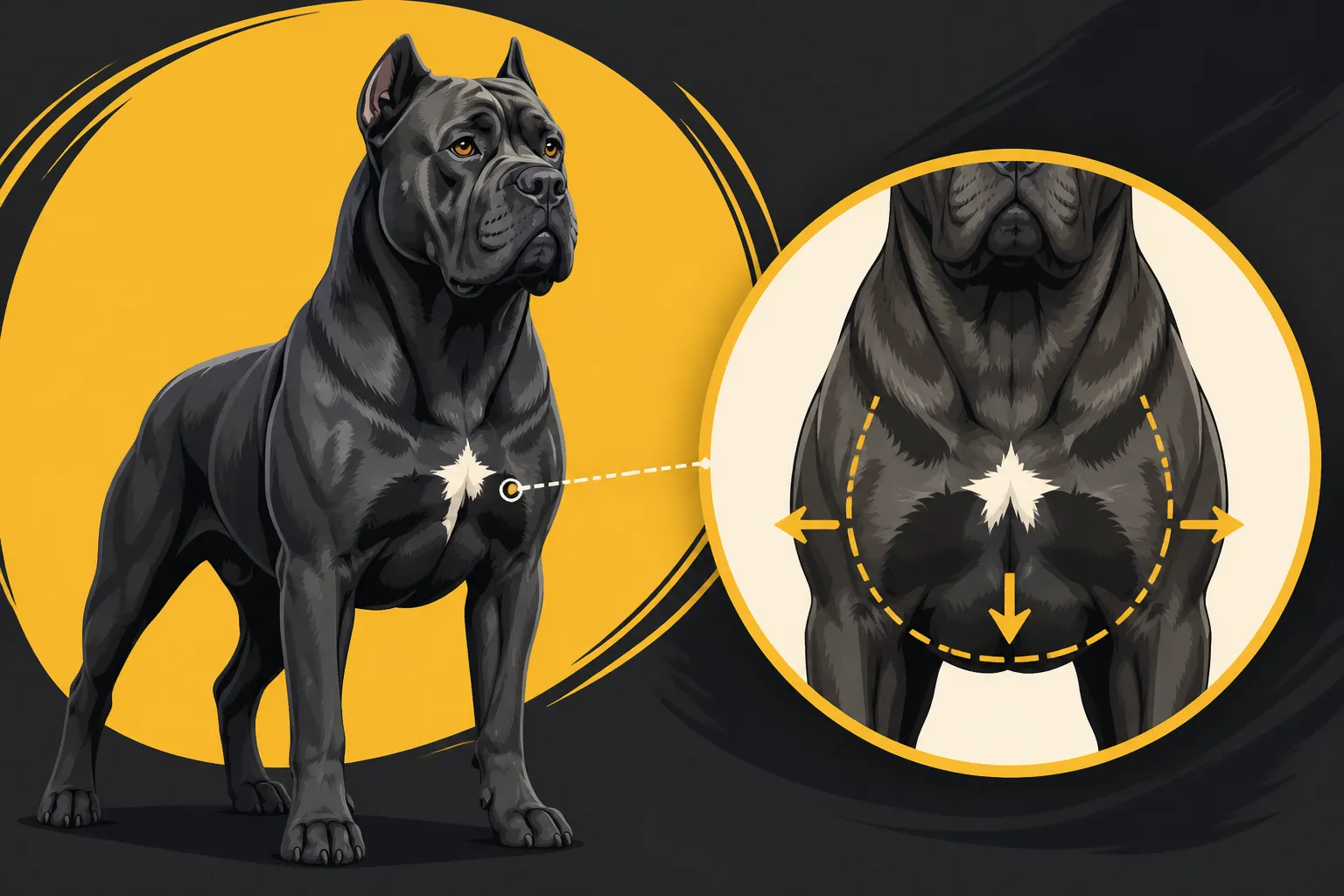
The Chest and Body a Cane Corso Standard Describes
It can be incredibly challenging to sift through breed standards, trying to visualize what a few technical sentences mean for a living, breathing dog. Many prospective Cane Corso owners find themselves scratching their heads, wondering if the impressive dog they’re looking at truly embodies the ideal. This guide aims to demystify the official description of the Cane Corso's chest and body, helping you understand not just the words, but the functional significance behind every detail.
Understanding the Breed Standard's Importance
When we talk about a breed standard, we're not just discussing some arbitrary beauty contest. These documents are living blueprints, painstakingly developed by dedicated breeders and enthusiasts who want to preserve the unique characteristics and working abilities of a particular breed. For the Cane Corso, understanding its standard means appreciating its history as a capable working dog from Italy, designed for strength, agility, and endurance.
Why Standards Exist
Breed standards serve as a guide for breeders, judges, and anyone interested in the breed's ideal form and function. They outline the physical traits, temperament, and movement that define a purebred Cane Corso. Without a standard, breeders could stray from the breed's core identity, leading to a loss of the very qualities that make a Cane Corso, well, a Cane Corso. It ensures consistency across generations and helps maintain the health and soundness necessary for the tasks these dogs were historically bred to perform. Think of it as the ultimate reference manual for what a truly well-bred Cane Corso should be.
Beyond the "Looks Good" Test
It's easy to look at a majestic Cane Corso and simply think, "Wow, that's a beautiful dog!" But a breed standard goes much deeper than aesthetic appeal. Every physical attribute, from the set of its ears to the angulation of its hindquarters, is described because it contributes to the dog's overall functionality and well-being. A deep chest isn't just for show; it's vital for lung capacity, enabling stamina during work. Strong, well-muscled legs aren't just powerful; they support the dog's substantial weight and allow for fluid, efficient movement. What the Standard Says a Cane Corso Should Look Like is all about ensuring the dog can do what it was bred to do, whether that's guarding property or driving livestock, without breaking down physically.
How Judges Evaluate
For those involved in conformation shows, judges use the breed standard as their definitive rubric. They aren't looking for personal preference; they are assessing how closely each dog aligns with the written ideal. This involves a hands-on examination, feeling the bone structure, the depth of the chest, the spring of the ribs, and the firmness of the muscle. They observe the dog's movement, or gait, to ensure it's efficient and powerful, directly correlating to its body structure. A judge's job is to identify dogs that not only look impressive but are structurally sound and capable of performing the historical duties of the breed, a critical aspect of breed preservation.
The Cane Corso's Thoracic Structure: Chest and Ribs
The chest and rib cage are foundational to the Cane Corso's powerhouse physique. These elements aren't just about appearance; they are critical for vital organ protection and the dog's athletic capabilities. When you feel a Cane Corso's chest, you should immediately understand it's built for power and endurance.
Depth and Width of the Chest
The Cane Corso's standard calls for a chest that is deep and well-developed. This means it should extend down to the elbow, providing ample room for the heart and lungs. A deep chest is synonymous with good lung capacity, which is essential for a dog that was historically expected to work long hours. You want to see a powerful, well-sprung rib cage, not a narrow or shallow one. Imagine a barrel: it should have a good roundness, not be slab-sided like a plank. This depth and width contribute to the dog's impressive stance and formidable presence. However, this deep chest also comes with certain health considerations, such as the increased risk of bloat, making it crucial for owners to understand Bloat and What a Cane Corso's Deep Chest Costs.
A common misconception is that "deeper" is always better, but it needs to be proportionate. An excessively deep chest that hangs too low can impede movement and create an awkward gait. Similarly, a chest that is too narrow doesn't allow for adequate lung and heart space, compromising stamina and overall health. The ideal is a balance that supports robust organ function while allowing for uninhibited, powerful movement. When you're feeding your Cane Corso, especially if you're buying large bags of kibble from a place like Chewy, remember that a proper diet supports this critical growth and development.
The Rib Cage and Its Spring
Following on from the depth and width, the rib cage itself must be "well-sprung," meaning the ribs should curve out from the spine, then flatten slightly as they approach the sternum. This provides maximum volume for the internal organs without creating a cumbersome, overly round appearance that might hinder agility. Think of a strong arch; it allows for both strength and flexibility. A flat, underdeveloped rib cage (often called "slab-sided") indicates poor bone structure and insufficient organ protection, which can lead to reduced stamina and a less robust constitution.
Conversely, a rib cage that is too round or "barrel-chested" can also be problematic. While it might suggest volume, it can interfere with proper shoulder placement and movement, making the dog less agile and more prone to fatigue. The ideal "spring" of rib allows for the powerful musculature of the chest and shoulders to attach correctly, facilitating the broad, ground-covering strides that are characteristic of a healthy, functional Cane Corso.
Forechest and Sternum
The forechest refers to the part of the chest that extends forward in front of the front legs. The Cane Corso standard specifies a well-developed forechest, indicating strong musculature and good bone. When viewed from the side, you should see a discernible projection of the sternum (breastbone) beyond the point of the shoulder. This forechest is crucial for powerful forward drive and provides balance to the dog's overall structure. Without a proper forechest, the dog can appear weak in the front, lacking the imposing presence that is a hallmark of the breed.
The sternum itself should be long and deep, aligning with the overall depth of the chest. A short sternum can lead to a less capacious chest, impacting lung and heart function. The development of the forechest and sternum are often indicative of the overall bone structure and muscle development throughout the dog's front assembly. This strong foundation is what allows a Cane Corso to stand with such an air of confidence and strength, ready for any task.
Body Proportions and Overall Silhouette
Beyond the chest, the entire body contributes to the Cane Corso's distinctive silhouette. The standard emphasizes a balanced, substantial, and athletic build, reflecting its history as a versatile working dog. Each part of the body flows into the next to create a picture of controlled power.
Length of Body vs. Height
A critical aspect of the Cane Corso's silhouette is its body length in relation to its height. The standard dictates that the body should be slightly longer than the height at the withers (the highest point of the shoulder blades). This "slightly longer than tall" proportion gives the Cane Corso its rectangular outline and contributes to its agile yet powerful movement. It's not a square dog like some other mastiff types, but rather one built for a dynamic stride. If a dog is too square, it might lack the flexibility needed for quick turns or extended periods of movement.
Conversely, a dog that is excessively long in body can appear weak in the back, be prone to back problems, and have an ungainly gait. A dog that is too short or compact for its height might lack the necessary reach and drive in movement. Finding that sweet spot where the length is just right, offering both power and agility, is what breeders strive for. This proportion also heavily influences the overall impression of the dog – a truly balanced Cane Corso is a sight to behold. Understanding these proportions is key when considering The Height a Cane Corso Should Measure and how it relates to its overall structure.
Topline and Croup
The topline of a Cane Corso, when standing, should be level and firm, starting from the withers and continuing to the loin. There should be a slight rise over the loin, flowing into a gently sloping croup. The topline should not be roached (arched over the loin) or swaybacked (sinking in the middle), as these indicate structural weaknesses that can impede movement and lead to back issues. A strong, level topline is crucial for transmitting power from the hindquarters through the body.
The croup is the section from the hip bones to the base of the tail. The standard specifies a long, broad, and slightly sloping croup. A steep croup can affect the dog's hindquarters angulation and its ability to drive powerfully, while a flat croup might suggest a lack of proper muscle development. The correct angle of the croup is essential for efficient movement, allowing the hind legs to extend well behind the body and provide strong propulsion. It's these subtle but critical details that differentiate a truly functional Cane Corso from one that might just look big.
Underline and Tuck-up
The underline of the Cane Corso should be powerful yet refined. Starting from the bottom of the deep chest, it should gently curve upwards, with a moderate tuck-up at the flank. The tuck-up refers to the indentation where the belly meets the loin. This isn't an exaggerated greyhound-like tuck-up, nor should it be a completely flat, slab-sided appearance. A moderate tuck-up signifies good abdominal muscle tone and contributes to the dog's athletic appearance and agility.
An absence of tuck-up, where the belly appears heavy or pendulous, can indicate being overweight or a lack of muscle condition. Conversely, an overly extreme tuck-up might suggest the dog is underweight or lacks sufficient body mass for its frame. The ideal underline complements the powerful chest and level topline, completing the picture of a strong, athletic, and well-conditioned dog. Maintaining this lean condition is also a critical factor in a dog's long-term health, as discussed in Why a Lean Cane Corso Keeps Its Hips Longer.
Musculature and Condition
The Cane Corso is a breed renowned for its powerful build, and a significant part of this comes down to its musculature and overall physical condition. It's not just about size; it's about strength, tone, and the lean athleticism that allows them to perform their traditional roles.
Defining Muscle Mass
The Cane Corso standard calls for powerful, well-defined muscles throughout the body. This is especially evident in the shoulders, back, and hindquarters. You should be able to feel solid muscle beneath the skin, not just fat or loose flesh. The muscles should appear firm and well-developed, giving the dog a sculpted, impressive look. A Cane Corso's musculature isn't about being bulky like a bodybuilder; it's about functional strength and endurance.
Imagine The Roman War Dog Behind the Cane Corso – those dogs needed robust muscles to endure battle, drive livestock, or protect property. This heritage is still reflected in the modern breed. Muscles allow for explosive bursts of speed, powerful bites, and the stamina to work for extended periods. When you purchase quality food for your Cane Corso, perhaps from a reputable online store like Chewy, you're investing in the fuel needed to build and maintain this essential muscle mass.
The Importance of Lean Condition
Maintaining a lean, fit condition is paramount for a Cane Corso's health and longevity. The standard implicitly demands this through its descriptions of a powerful but athletic body. You should be able to easily feel your Cane Corso's ribs when you run your hands over its sides, without them being visibly prominent. There should be a noticeable waist when viewed from above, and a moderate tuck-up from the side. An overweight Cane Corso is a Cane Corso at higher risk for a multitude of health problems, including joint issues like hip and elbow dysplasia, heart strain, and even a greater susceptibility to bloat.
It can be tempting to want a "bigger" dog, but often, bigger simply means fatter. This puts immense strain on a large dog's joints, leading to conditions like Hip Dysplasia in a Fast Growing Cane Corso becoming more severe or developing earlier. Responsible ownership means ensuring your Cane Corso stays at a healthy weight, which might mean resisting the urge to overfeed and ensuring they get adequate exercise. A fit Cane Corso moves with grace and power, whereas an overweight one will be sluggish and prone to injury.
Fat vs. Muscle: A Critical Distinction
It’s crucial to understand the difference between fat and muscle on a Cane Corso. A large dog can still be fat and unhealthy. You might think your dog looks imposing, but if that "bulk" is primarily fat, it's detrimental. Muscle feels firm and dense; fat feels soft and squishy. A truly well-conditioned Cane Corso will have visible muscle definition when it moves, especially across its shoulders, thighs, and along its spine.
To assess your dog's condition, use a hands-on approach. Run your hands along their sides: you should feel the ribs easily, but not see them protruding. Feel along their spine and hips: you should feel the bone structure, but again, without sharp prominence. This objective assessment, rather than just looking, helps you distinguish between a powerful, muscled physique and an unhealthy, overweight one. It takes discipline to keep such a powerful dog lean, but it’s one of the best things you can do for their long-term health and mobility.
Differences from Other Molossers
The Cane Corso is often grouped with other mastiff-type dogs, or "Molossers," but its body structure sets it apart, reflecting its unique history and purpose. While all Molossers share a common ancestry, the Cane Corso developed for a specific set of tasks that demanded a different physical build.
The Cane Corso vs. Neapolitan Mastiff
Perhaps one of the most stark comparisons can be made between the Cane Corso and the Neapolitan Mastiff. While both hail from Italy and share ancient Roman ancestors, their body types evolved for different functions. The Neapolitan Mastiff is significantly heavier-boned, with a looser, more abundant skin, especially around the head and neck, creating extensive wrinkles and dewlap. Its body is massive, often described as ponderous or slow-moving, built for sheer intimidation and static guarding.
The Cane Corso, by contrast, is a dog of more moderate bone and tighter skin. While powerful, it's lighter on its feet, more agile, and built for speed and endurance rather than brute force alone. Its body is rectangular, longer than tall, allowing for a more athletic gait. The Cane Corso's musculature is meant for active work, like driving cattle or hunting boar, which requires a much different body structure than the Neapolitan's protective, watchful role. For a deeper dive into these differences, see The Cane Corso Against the Neapolitan Mastiff.
The Cane Corso vs. Bullmastiff
Another common comparison is with the Bullmastiff, a breed developed in England. The Bullmastiff is also a powerful guardian, but its body is typically more square in proportion – as tall as it is long. It has a slightly lower center of gravity and a broader, more compact build than the Cane Corso. While muscular, the Bullmastiff often carries more body mass and is known for its "gamekeeper's night dog" heritage, bred to silently track and hold poachers.
The Cane Corso, with its longer, more athletic frame, is designed for a wider range of activities, including active pursuit and sustained effort. Its body facilitates a longer stride and greater agility. While both are formidable guardians, the Cane Corso's body speaks to a more active, versatile working history compared to the Bullmastiff's focused role of guarding and holding. These subtle differences in body shape are direct reflections of their historical purposes.
Functional Differences in Body Shape
Ultimately, the differences in body shape among Molosser breeds are directly tied to their functional history. The Cane Corso's chest and body are a testament to its past as a "jack of all trades" working dog on Italian farms – guarding property, herding and driving livestock, and even hunting large game. This required a body that was powerful but also agile, with good stamina.
The well-sprung ribs, deep chest, moderate tuck-up, and slightly longer-than-tall body all contribute to an athletic machine capable of both bursts of speed and sustained effort. Other Molossers might excel in specific areas – sheer mass for static guarding, extreme strength for fighting, or compact power for short bursts – but the Cane Corso's body is a finely tuned balance of all these elements, emphasizing versatility and a robust, enduring physique.
| Feature | Cane Corso | Neapolitan Mastiff | Bullmastiff |
|---|---|---|---|
| Body Shape | Rectangular (slightly longer than tall) | Massive, ponderous, very heavy-boned | Square (as tall as long), compact |
| Skin | Tight, moderate wrinkles, especially on head | Loose, abundant wrinkles (dewlap, facial folds) | Moderate wrinkles, generally tighter than Neos |
| Bone | Moderate to heavy | Very heavy, substantial | Heavy, dense |
| Chest | Deep, well-sprung, extends to elbow | Very deep, broad, powerful | Broad, deep, well-sprung |
| Tuck-up | Moderate, athletic | Minimal to none | Moderate |
| Movement | Powerful, fluid, agile, ground-covering | Slow, rolling, cumbersome | Powerful, purposeful, less agile |
| Historical Role | Versatile farm dog, guardian, hunter | Static guardian, intimidating presence | Gamekeeper's night dog, silent trailer |
Why a Correct Body Matters
Understanding the Cane Corso's body standard isn't just about winning ribbons in a show ring; it's profoundly important for the dog's health, temperament, and ability to live a full, active life as a companion and guardian. A dog that deviates too far from the standard often suffers in practical ways.
Impact on Health and Longevity
The physical structure described in the breed standard directly correlates with the dog's health and potential lifespan. A correctly built Cane Corso has joints, bones, and muscles that are designed to support its substantial weight and active lifestyle without undue strain. For instance, proper angulation in the legs helps distribute impact forces evenly, protecting against conditions like hip and elbow dysplasia. A well-sprung, deep chest allows for efficient respiration and cardiac function, contributing to stamina and overall cardiovascular health.
When breeders prioritize extreme traits – whether that's excessive size, a particularly massive head, or a shorter-than-standard back – they often inadvertently introduce health risks. A dog that is too heavy for its frame, or has disproportionate limbs, will struggle with mobility and be more prone to injuries and degenerative conditions later in life. Ensuring your Cane Corso has a structurally sound body, which starts with choosing a reputable breeder who health tests their stock, is critical for their long-term well-being and helps them age gracefully, as discussed in What Changes in a Cane Corso After Its Eighth Birthday.
Athleticism and Work Capability
The Cane Corso was, and still is, a working dog at heart. Its body is designed for athleticism: the ability to move with power, agility, and endurance. A correct body allows for that fluid, ground-covering gait described in the standard, enabling the dog to patrol a property, respond quickly to perceived threats, or engage in demanding activities like protection sports or obedience trials. The Movement a Cane Corso Should Show in the Ring isn't just about beauty; it's about efficient function.
An incorrectly built dog, one with a poor topline, weak pasterns, or improper angulation, will struggle with these tasks. It will tire more easily, be less effective in its duties, and be at a higher risk of injury during physical exertion. For an owner who wants to engage their Cane Corso in any kind of activity beyond casual walks, a sound body is non-negotiable. Even if your Cane Corso's "job" is simply being a family guardian and companion, its natural athleticism will shine through daily walks and play, making for a happier, healthier dog.
Breed Preservation
Finally, adherence to the breed standard, particularly concerning the chest and body, is fundamental to breed preservation. When breeders consistently produce dogs that meet the standard's physical descriptions, they are ensuring that the unique characteristics and functional integrity of the Cane Corso are maintained for future generations. This is especially vital for a breed like the Cane Corso, which nearly went extinct and was brought back through dedicated efforts to find and breed dogs true to the original working type. The 1976 Article That Started the Cane Corso Revival highlights how close the breed came to disappearing and underscores the importance of thoughtful breeding practices.
Every Cane Corso born that closely embodies the standard's description of its chest and body is a testament to those who understand the breed's history and future. It's about respecting the dog's heritage and ensuring that the powerful, athletic, and intelligent guardian of Italian farms continues to thrive. As owners, supporting responsible breeders who prioritize sound structure and health, rather than chasing fads or exaggerations, is how we contribute to the long-term vitality of this magnificent breed.
Disclaimer
This article is for general informational purposes only and does not constitute professional advice. Laws, prices and regulations vary by location and change over time. Consult a qualified professional for guidance on your specific situation.