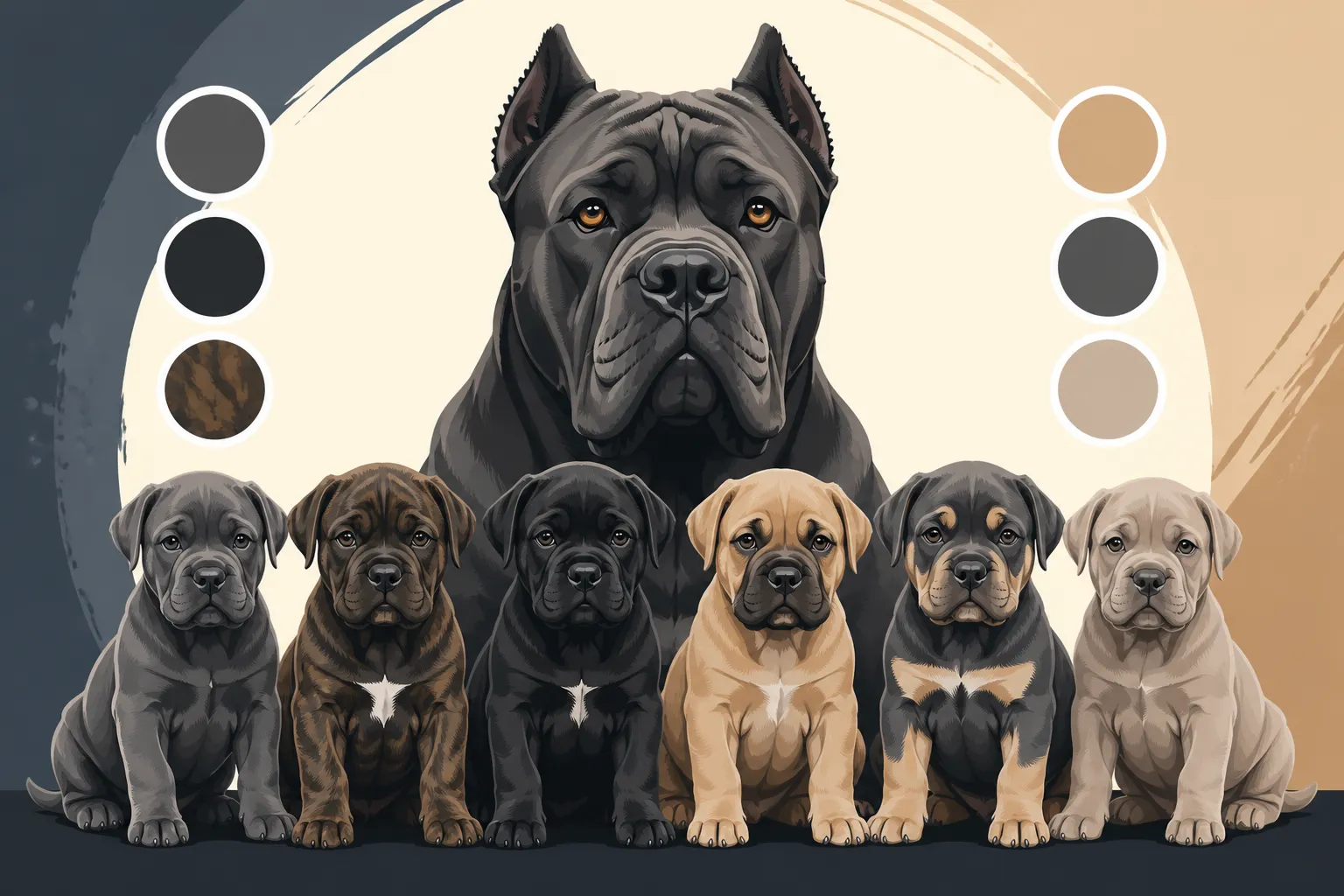
What Colors a Cane Corso Litter Can Throw
A Cane Corso litter can include puppies that look surprisingly different from one another, even when they share the same parents. Coat color depends on the genes each puppy inherits, and a dog’s visible color does not reveal every gene it carries. This guide explains the colors a litter may produce, why littermates vary, and what to ask a breeder before choosing a puppy.
Cane Corso colors and patterns at a glance
Cane Corsos are commonly seen in black, gray, fawn, and red, with brindle patterns possible on fawn or red coats. A litter may contain more than one color, but the exact combinations depend on the parents’ genetic makeup. Seeing a color in one parent does not, by itself, tell you what all their puppies will look like.
The breed’s accepted colors and markings are described in Every Color a Cane Corso Is Allowed to Be and Black, Gray, Fawn and Red Cane Corsos. Those descriptions are useful when you’re sorting out a normal variation from a color a breeder is advertising as unusually rare.
| Coat appearance | What it generally looks like | What could appear in a litter |
|---|---|---|
| Black | A solid black coat, sometimes with a small permitted white marking | Black puppies, or puppies with other colors if the parents carry genes for them |
| Gray | A dilute shade that may look like light or dark gray | Gray puppies if the necessary inherited color factors come together |
| Fawn or red | A range from pale tan or beige to deeper reddish shades | Fawn or red puppies, sometimes with brindle patterning |
| Brindle | Dark stripes over a lighter base coat | Brindle puppies if the parents pass on the relevant pattern genes |
| Formentino | A diluted fawn appearance, often with a grayish mask | Possible when the relevant color factors are inherited from both sides |
| White markings | Small areas may appear on parts of the chest, throat, chin, or toes | Markings can vary among littermates and may be absent |
Black, gray, fawn, and red coats
Black is one of the colors people most readily recognize, but a black Cane Corso can still carry genetic variants that are not visible in its coat. The same principle applies to a fawn or red dog: its appearance is only part of the story. A breeder may have a black adult and a fawn adult and still need genetic information about both dogs to make a well-founded prediction about their puppies.
Gray coats are often called blue in casual conversation. The shade can vary, and the word “blue” does not necessarily mean the dog has a different breed identity. It usually describes a gray-looking coat resulting from pigment dilution. For a closer look at how color terms are used, see Why Breeders Call a Gray Cane Corso Blue.
Fawn and red cover a range of shades rather than one exact color. One puppy may look pale beige, while another has a deeper reddish tone. Lighting, age, and the individual coat can affect how the color appears in photographs, so a picture alone may not give you a dependable idea of a puppy’s final shade.
Brindle and white markings
Brindle is a pattern, not a separate base color. It typically appears as darker stripes over a lighter fawn or red background. The stripes can be obvious or subtle, and puppies in the same litter may show different amounts of contrast. Some brindle coats look densely striped; others show a lighter pattern that is easier to miss in a quick photo.
Small white markings may appear on areas such as the chest, throat, chin, or toes. Their size and placement can differ among littermates, even when both parents have similar markings. A breeder should be able to explain how the puppy’s markings fit the breed standard rather than presenting every white patch as a special or rare feature.
Brindle coloring can prompt questions about whether the pattern affects health or temperament. Coat color alone does not establish either. If you’re weighing a brindle puppy against a solid-colored littermate, focus on health records, temperament, and the breeder’s practices—not on a claim that one color is automatically healthier or better suited to your home. For more on color and breed expectations, see How to Tell a Brindle Cane Corso From a Solid One.
Formentino and other color labels
Formentino is commonly used for a dilute fawn appearance, often paired with a grayish mask. It is a color description, not a guarantee of special qualities. A puppy advertised as formentino should still be considered on the same practical grounds as any other Cane Corso: health screening, stable temperament, sound structure, and responsible breeding.
Some sellers also use labels such as chocolate, Isabella, or other “rare color” terms. Those names can refer to coat appearances outside the colors described in the breed standard. A striking shade may attract attention, but attention is not evidence of quality. Learn how the terms are used in What Formentino Means on a Cane Corso, Whether a Chocolate Cane Corso Is Purebred, and Whether an Isabella Cane Corso Is Registerable.
A color label also does not settle questions about registration, pedigree, or breeding ethics. If a seller is emphasizing rarity while saying little about health tests or the parents’ behavior, pause and ask for documentation. The broader concerns around marketing unusual shades are covered in Why Rare Color Cane Corsos Worry the Breed Club.
Why puppies in one litter can look different
Each puppy inherits a combination of genes from both parents. The visible coat is the result of how those inherited factors interact, which is why a litter can include multiple colors or patterns. Even puppies with the same parents receive different combinations, much as siblings in a human family can differ in appearance.
A breeder can sometimes make a more informed prediction with complete knowledge of the parents’ pedigrees and appropriate genetic tests. But a parent’s visible color alone cannot show every hidden variant it may pass on. That is why a confident promise about an entire litter’s exact colors deserves careful questions.
Inherited genes do not show up in a simple color chart
Coat color involves several genetic factors. Some influence whether dark pigment is expressed, some affect the distribution of pigment, and others can dilute a color or shape a pattern. These factors interact, so it is easy to oversimplify the genetics by saying, for example, “two black dogs only produce black puppies” or “a fawn dog must have fawn puppies.”
A dog can carry a color-related variant without visibly showing it. If both parents pass on the relevant inherited factors, a puppy may have a coat appearance that neither parent seems to display. Conversely, two parents with similar-looking coats can produce puppies that vary in shade or pattern, depending on what they carry.
That does not mean a litter’s colors are random. Inheritance follows biological patterns, but making a reliable prediction requires more than looking at photographs. A breeder who has tested or carefully documented the parents’ color genetics may be able to describe possibilities more clearly, while still acknowledging that individual puppy coats can vary.
What a breeder can and cannot predict
A responsible breeder should be able to discuss the colors seen in the parents and, where known, in earlier generations. They may also explain which outcomes are plausible based on genetic information. That is different from promising that every puppy will be a particular shade or that one color is guaranteed to be healthier, calmer, or more valuable.
Ask whether the breeder has documentation for the claims they make. If they say a color is possible because a parent carries a particular gene, ask what supports that explanation. If they claim that two parents can only produce one color, ask how they reached that conclusion. Straightforward answers are a good sign; pressure to pay quickly because a color is “rare” is not.
It is also fair to ask about health testing separately from color genetics. A color test does not replace screening for inherited health concerns or a discussion of the parents’ temperament and veterinary history. If color is the only topic a breeder wants to discuss, you may not be getting the fuller picture you need to choose a puppy responsibly.
Why siblings may change in appearance as they grow
Puppy coats can look different under indoor lighting, outdoors, or in photographs. Brindle markings may be more visible in strong daylight, while subtle stripes can disappear in a dim image. A puppy’s coat may also look less or more intense as it grows and sheds its baby coat. Do not assume every shift in appearance means the breeder misrepresented the puppy, but do ask for recent, well-lit photos and a clear description.
Facial masks, small markings, and the contrast between stripes and base coat can also be easier to judge at different ages. The mask is a feature breeders may describe when discussing fawn or red dogs; The Mask a Cane Corso Is Required to Carry explains why it matters in breed descriptions. Remember that a puppy’s coat appearance is only one part of its overall development.
When comparing littermates, look beyond the coat. Notice how each puppy responds to ordinary handling, new sounds, and the people around them. Ask the breeder what they have observed about each puppy’s confidence, recovery after a startle, and ability to settle. Those everyday observations are more useful for matching a puppy to your household than choosing by color alone.
Choosing a puppy without getting distracted by color
It is completely normal to have a preferred look. You may have pictured a black Cane Corso for years, or you may be drawn to a particular brindle pattern. The practical challenge is making sure that preference does not push more important questions out of view. Color can help you choose among suitable puppies, but it should not be the only reason you choose a breeder or a dog.
Questions to ask before placing a deposit
Before committing, ask the breeder to explain the parents’ colors, the expected range in the litter, and whether the prediction is based on documented genetics or on appearance alone. Ask what health screening has been completed and whether you can review the records. You can also ask how the breeder evaluates puppy temperament and how they match puppies with homes.
Be cautious if a seller describes a puppy as rare and uses that claim to avoid ordinary questions. A rare-looking coat does not make a puppy automatically sound, well-bred, or suitable for your household. If the price or urgency is tied to the color, take time to assess the breeder’s practices instead of letting scarcity marketing make the decision for you.
It can help to write your questions down before visiting or speaking with the breeder. In the excitement of seeing a litter, it is easy to forget what you planned to ask. A simple checklist can cover health records, parent temperament, puppy socialization, contract terms, and what support the breeder offers after the puppy goes home.
What matters more than a specific shade
A puppy’s future depends on much more than coat appearance. Health history, careful early care, temperament, and the household’s ability to provide training and structure all deserve attention. A lovely coat will not make the day-to-day responsibilities of raising a powerful, large dog any easier.
Consider your routines and experience honestly. Who will handle walks, training, veterinary visits, and household rules? How will you manage introductions to visitors and other animals? A breeder should welcome questions about your home and help you think through whether a particular puppy is a sensible match.
Color-related claims can also distract from the importance of sound breeding practices. The breed’s color descriptions are useful reference points, but they do not tell you whether a puppy has been raised thoughtfully. Read The Cane Corso Against the Neapolitan Mastiff only if you are also comparing breeds; for an individual puppy, the more important discussion is the breeder’s evidence, not a dramatic sales label.
Coat care is much the same across colors
Most color differences do not require a special grooming routine. Regular brushing, checking the skin, keeping nails in good condition, and getting a puppy comfortable with handling are useful habits across coat colors. A dark coat may show loose pale hairs on furniture, while light hairs can be more noticeable on dark clothing, but that is a housekeeping frustration rather than a reason to choose one color over another.
If you are preparing for a puppy, everyday supplies such as a suitable brush, washable bedding, and cleaning materials can make the first weeks easier. Retailers such as Chewy carry general pet-care supplies, but the right choice depends on your dog’s coat, size, and tolerance for grooming. Ask the breeder what the puppy is already used to, then introduce new tools gently rather than turning brushing into a wrestling match.
For a short-coated dog, a simple, consistent routine is usually more useful than buying a shelf full of specialized products. You can find basic grooming supplies through retailers such as Chewy, but let your veterinarian or groomer guide you if you notice persistent itching, hair loss, or irritated skin. Coat color alone is not a diagnosis, and a change in the skin or coat deserves attention for its own sake.
When budgeting for the puppy’s arrival, focus on reliable essentials and a plan for training and veterinary care. Chewy may be one convenient place to browse ordinary puppy supplies, but no shopping list can replace thoughtful breeder selection and a realistic plan for the dog’s lifelong needs.
Disclaimer
This article is for general informational purposes only and does not constitute professional advice. Laws, prices and regulations vary by location and change over time. Consult a qualified professional for guidance on your specific situation.