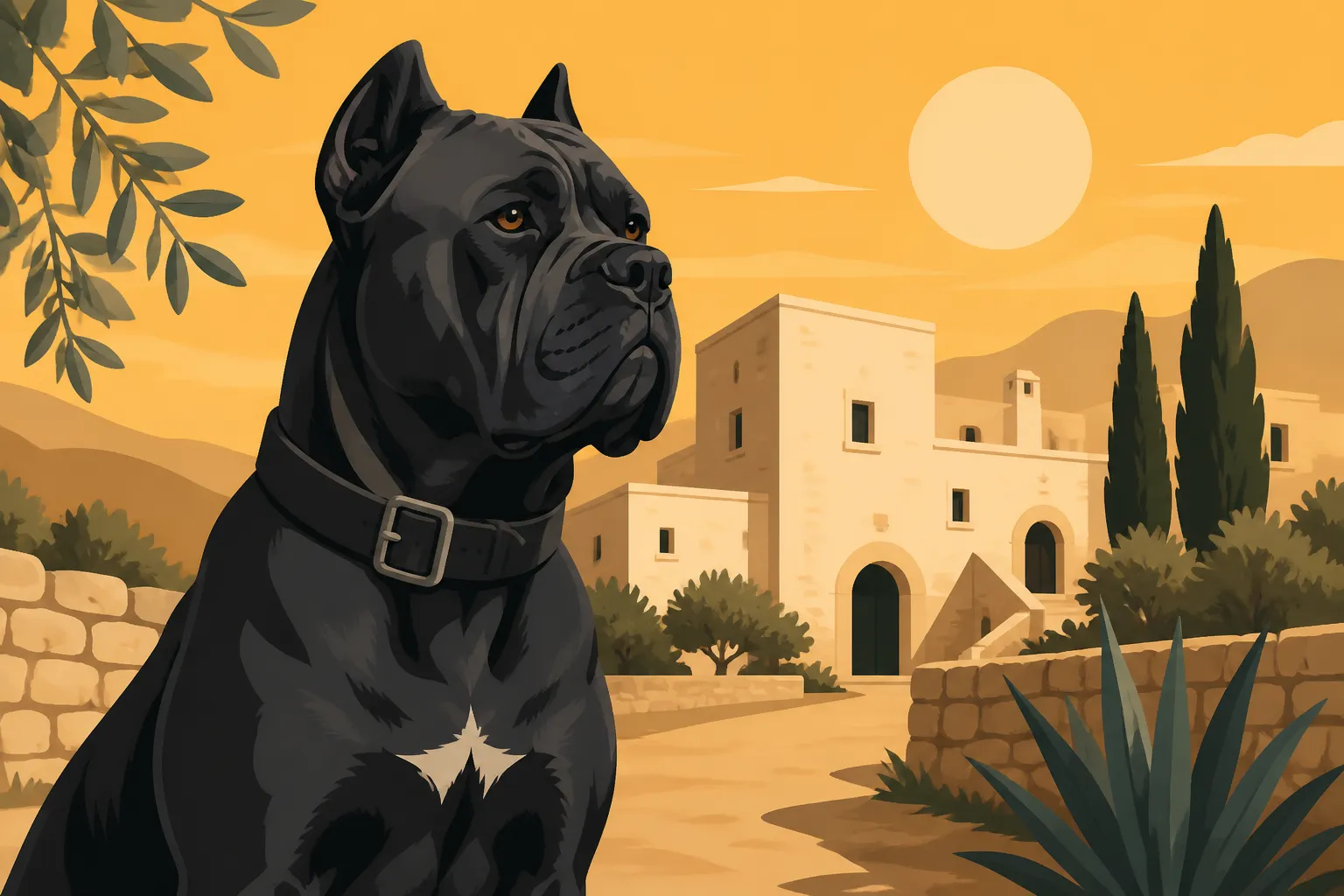
Guarding the Masseria in Southern Italy
Many people wonder about the true historical roots of the Cane Corso, often hearing tales of them as ancient guardians. It's true, these magnificent dogs weren't just pets; they were integral to the survival and prosperity of families in a very specific, demanding environment. This guide will take you deep into the heart of Southern Italy, exploring the "Masseria" – the fortified farmsteads where the Cane Corso forged its formidable reputation, and how its very existence was intertwined with protecting these vital, often isolated, communities.
The Historical Landscape of Southern Italy
To truly appreciate the Cane Corso, we have to travel back in time to Southern Italy, particularly regions like Puglia and Basilicata. This wasn't the bustling, connected Italy we know today, but a largely agrarian society where self-sufficiency was key, and threats were a constant reality. The landscape itself shaped the dogs needed by the people.
Understanding the Masseria: A Self-Sufficient World
Imagine vast, often isolated estates in the countryside, far from towns or cities. These were the Masserie – fortified farmhouses and their surrounding lands. They weren't just homes; they were entire mini-ecosystems designed for self-sustenance, where families lived and worked, raising livestock, growing crops, and producing everything they needed to survive. Think of thick stone walls, sometimes even watchtowers, all designed to protect against a world that could be harsh and unforgiving. Life on a Masseria was one of constant vigilance, and every resource, every animal, and every family member was precious. This self-contained world needed a guardian that was equally self-sufficient and utterly dependable.
The Threats That Faced Rural Life in Puglia
The beautiful, sun-drenched landscapes of Southern Italy held hidden dangers. For the Masseria owners, threats came in many forms. There were wild predators – wolves were a significant concern, preying on sheep, goats, and even cattle. But perhaps even more dangerous were human threats: bandits, rustlers, and petty thieves who saw the isolated Masserie as easy targets. A successful raid could wipe out a family's livelihood overnight, leaving them destitute. This constant exposure to real, tangible dangers meant that a dog's role was not just for companionship; it was a matter of economic survival and personal safety. The Cane Corso had to be more than just brave; it had to be intelligently protective, capable of discerning friend from foe, and acting decisively when necessary.
The Role of Dogs in Rural Italian Communities
Dogs, particularly working dogs, were never considered mere pets in these communities; they were essential members of the workforce. They had jobs, and their performance directly impacted the family's well-being. From herding and droving to guarding, dogs earned their keep. The Molosser-type dogs, from which the Cane Corso descends, were highly valued for their strength, courage, and protective instincts. They weren't just part of the Masseria; they were its living alarm system, its first line of defense, and often, its most loyal protector. This historical context helps us understand why a Cane Corso, even today, carries such a deep-seated instinct to guard and protect its home and family. It’s not just a trained behavior; it’s woven into their very DNA. You can learn more about The Roman War Dog Behind the Cane Corso and its broader ancestry.
The Cane Corso's Innate Guardian Instincts
The Cane Corso wasn't just chosen for the Masseria by chance; their inherent traits perfectly matched the demanding requirements of such a lifestyle. These dogs possessed a combination of temperament and physical prowess that made them ideal protectors.
Temperament Tailored for Vigilance and Protection
What truly set the Cane Corso apart was their nuanced temperament. They weren't reckless aggressors; they were calculated protectors. A well-bred Cane Corso has a natural inclination to be watchful, alert, and observant of its surroundings. They possessed a remarkable ability to distinguish between normal activity and genuine threats, which was crucial on a Masseria where visitors, shepherds, or even traveling merchants might arrive. They were wary of strangers by nature, but not inherently aggressive without cause. Their job was to observe, alert, and, if necessary, deter. This meant a calm, confident presence that could quickly switch to decisive action if the situation demanded it. This inherent vigilance is a hallmark of the breed, a direct result of generations spent guarding. What a Cane Corso's Guardian Instinct Actually Is delves deeper into this fascinating aspect of their character.
Physical Attributes for a Demanding Role
Beyond temperament, the Cane Corso's physical build was perfectly suited for the rigors of Masseria life. They are powerful, athletic dogs – not cumbersome or slow. Their muscular frame, strong bones, and incredible stamina allowed them to patrol large areas, endure harsh weather, and engage with potential threats effectively. They needed to be able to outmaneuver a wolf or stand their ground against a human intruder. Their imposing size alone was often enough to deter many threats, but if deterrence failed, they possessed the strength and agility to back up their warning. They had a dense, short coat that offered protection from the elements but didn't hinder their movement, and a powerful bite for a formidable defense.
The Bond with the Family: A Crucial Element of Guarding
For a guardian dog to be truly effective, it needed an unwavering loyalty to its family. On the Masseria, the Cane Corso was not just a tool; it was a cherished member of the household, living alongside and bonding deeply with the people it was sworn to protect. This bond was fundamental. It instilled a personal stake in their guarding duties, making them fiercely protective. They understood their role within the family structure, recognizing family members as "their" people and the Masseria as "their" territory. This deep connection meant they would put their own lives on the line without hesitation. This profound loyalty is why, even today, a Cane Corso forms such an intense bond with its chosen family, sometimes to the point of being a "Velcro dog" around the house.
Daily Life and Responsibilities on the Masseria
Life on a Masseria was a never-ending cycle of work, and the Cane Corso was right there, integrated into every aspect of it. Their day wasn't structured around walks and playtime in the modern sense; it was defined by their duties.
Protecting Livestock from Predators and Thieves
One of the primary duties of the Cane Corso was the protection of livestock. Sheep, goats, and cattle were the lifeblood of the Masseria, providing food, wool, and income. Losing even a few animals to a wolf pack or a band of rustlers could be devastating. The Cane Corso would patrol the pastures, often working in pairs or small groups, standing sentinel. They learned to identify the subtle signs of approaching danger, whether it was the scent of a predator on the wind or the distant sound of human intruders. Their job was to intercept and drive away threats, sometimes barking furiously to alert the human occupants, other times confronting the danger directly with an intimidating display. This constant exposure to real-world threats honed their instincts and made them incredibly resilient and resourceful.
Patrolling the Perimeter: The Invisible Fence
Unlike modern homes with physical fences, the boundaries of a Masseria could be vast and open. The Cane Corso acted as an "invisible fence," constantly patrolling and marking the territory. They understood the perimeter of their charge, often patrolling it tirelessly, establishing their presence. Imagine a dog walking the fence line, stopping at strategic points, scent-marking, and surveying the horizon. This wasn't a passive role; it was an active declaration of ownership and protection. Any breach of this invisible boundary would be met with an immediate, assertive response. This vigilance meant that a Cane Corso rarely missed an unusual sound or movement, providing early warning for the family. This inherent territoriality is why even a modern Cane Corso will often take it upon themselves to patrol your yard and know every inch of its boundaries.
Alerting the Family to Intruders
Perhaps the most common and vital function was their role as an alarm system. Their deep, resonant bark was a clear signal that something was amiss. Unlike smaller dogs that might bark indiscriminately, a well-trained Masseria Corso learned to differentiate between a passing stranger and a genuine threat. When an alarm bark went out, the family knew to take it seriously. This gave them precious time to prepare, gather their own defenses, or investigate the disturbance. The Cane Corso wouldn't just bark; it would position itself between the perceived threat and its family, ready to defend. This ability to assess, alert, and then act is a sophisticated form of protection, demonstrating their intelligence and dedication.
Beyond Livestock: Protecting Family and Property
While livestock protection was crucial, the Cane Corso's role extended far beyond just the animals. They were guardians of the entire Masseria, which inherently included the most precious asset of all: the human family.
The Cane Corso as a Family Protector
The close living arrangements on the Masseria meant that the Cane Corso was constantly in proximity to the family. They were not kennelled away; they were part of the domestic scene. This fostered an unwavering loyalty to every member, especially children. They were watchful protectors, always having an eye on the vulnerable. If a stranger approached too closely to a child, or if an argument escalated, the Cane Corso would be there, a silent, imposing presence, ready to intervene if needed. This intimate bond made them acutely sensitive to the family's safety, and their protective instincts were always primed. This deep-seated desire to protect their family is why a Cane Corso often makes such a loyal and dedicated companion, sometimes to the exclusion of strangers. However, it's why Why a Cane Corso Is Not a First Dog is a critical read for potential owners.
Guarding Resources: Food, Tools, and Homes
Every item on the Masseria had value, from stored grains and fresh produce to tools, equipment, and personal belongings. These were the fruits of hard labor and essential for survival. The Cane Corso's territorial instinct extended to these inanimate but vital assets. They might rest near a storeroom door, keep watch over tools left out in the yard, or position themselves strategically to observe access points to the main house. Thieves were not just after livestock; they were after anything they could carry away. The dogs provided a living deterrent, making the Masseria a much less attractive target for those looking to plunder. This aspect of their historical role highlights their comprehensive understanding of "their" property.
A Watchful Eye Over Children and Vulnerable Members
Children on the Masseria grew up with Cane Corsos as constant companions and protectors. These dogs learned to be gentle with their young charges, understanding their fragility, while simultaneously remaining fiercely protective of them. If a child wandered too far, the dog might subtly guide them back or alert an adult. If an unfamiliar person approached, the dog would insert itself between the child and the stranger. Similarly, elderly or infirm family members often had a Cane Corso assigned as a close companion, providing a sense of security and a physical barrier against potential harm. This sensitivity to vulnerability is a testament to their intelligence and their profound dedication to the family unit.
The Decline of the Masseria and the Breed's Near Loss
The world changes, and even the most ingrained traditions and lifestyles are eventually swept away by progress. The Masseria, and with it, the traditional role of the Cane Corso, began to fade, pushing the breed to the brink of extinction.
Changing Agricultural Practices and Modernization
The mid-20th century brought significant changes to agriculture in Italy. Modern farming methods, mechanization, and improved infrastructure meant that large, isolated, self-sufficient Masserie became less common. The need for dogs to drive cattle or protect against wolves diminished as farming became more centralized and organized. Fewer families lived in such remote, vulnerable circumstances, and the specific, intense guarding role of the Cane Corso gradually became less necessary in its traditional form. This shift meant fewer Cane Corsos were bred for their working ability, and their numbers began to dwindle as their "job" disappeared. This period was a dark time for many working breeds, including our beloved Cane Corso.
The Impact of World Wars on Rural Breeds
The two World Wars had a devastating impact on many European dog breeds, and the Cane Corso was no exception. During wartime, resources were scarce, and feeding a large dog became an unsustainable luxury for many struggling families. Dogs were often lost to starvation, disease, or simply had to be abandoned. Breeding programs collapsed, and the focus shifted from preserving working lines to sheer survival. The chaos and destruction of war meant that the meticulous record-keeping and intentional breeding that sustained breeds were impossible. This period significantly reduced the genetic pool and overall numbers of the Cane Corso, pushing them closer to being a forgotten breed.
How Few Cane Corsos Were Left in the 1970s
By the 1970s, the situation was dire. The Cane Corso was on the verge of extinction, known only to a handful of dedicated enthusiasts and scattered rural families in the deepest parts of Southern Italy. Many believed the breed was already gone. There were perhaps only a few dozen true specimens left, unrecorded and unappreciated outside of their immediate surroundings. It was a perilous time, a true bottleneck for the breed. If not for the passionate efforts of a few dedicated individuals, the Cane Corso would likely be a footnote in history books today. You can read about The 1976 Article That Started the Cane Corso Revival and the incredible story of its rescue.
Legacy of the Masseria: The Modern Cane Corso
Thankfully, the Cane Corso was brought back from the brink, but its Masseria past continues to define it, influencing its temperament and making it the remarkable companion we know today.
The Enduring Guardian Traits in Today's Dogs
Even generations removed from the Masseria, the inherent guardian traits of the Cane Corso persist. They still possess that profound loyalty, the watchful eye, and the deep protective instinct. They are naturally territorial, often wanting to be aware of everything happening in their home and yard. This isn't aggression; it's an ingrained sense of duty. They thrive when they have a job, even if that job is simply "family protector" in a suburban home. Owners often describe them as "living alarms" or "shadows," always close by, observing. This connection to their historical role means that socialization and consistent training are absolutely paramount to ensure these strong instincts are channeled appropriately in a modern environment. For instance, finding durable chew toys on sites like Chewy that can stand up to a Cane Corso's powerful jaw helps channel natural behaviors.
Responsible Breeding and Preserving the Instinct
Today, responsible breeders of Cane Corsos are dedicated to preserving these working instincts while ensuring sound temperament and health. They understand that a Cane Corso is not merely a large dog; it is a working breed with specific needs and drives. This involves careful selection of breeding stock, extensive health testing, and a deep understanding of the breed's history. The goal isn't to create an aggressive dog, but a confident, stable, and protective one that honors its heritage. New owners must also take responsibility for understanding these traits. It's not enough to admire their imposing looks; one must be prepared to manage and nurture their profound guardian instincts. Understanding The Enthusiasts Who Searched Southern Italy for Cane Corsos helps appreciate this preservation work.
Channeling the Guardian Drive in Contemporary Homes
For modern Cane Corso owners, understanding their dog's Masseria heritage is key to providing a fulfilling life. Their guardian drive needs an outlet. This isn't about training them for protection work unless that's a dedicated path with experienced trainers. Instead, it's about providing clear structure, consistent leadership, and appropriate mental and physical stimulation. Activities like obedience, scent work, or even just consistent "place" training can give them a sense of purpose. Early and continuous socialization helps them understand the difference between normal modern life and actual threats. Providing robust enrichment, such as interactive toys or long-lasting chews, easily found on platforms like Chewy, can also satisfy their need for engagement. It's about respecting their history and working with their inherent nature, rather than trying to suppress it. You'll find that a well-adjusted Cane Corso, whose instincts are understood and channeled, is one of the most loyal and rewarding companions you could ever wish for.
| Characteristic | Cane Corso on the Masseria | Modern Cane Corso |
|---|---|---|
| Primary Role | Livestock & property guardian, family protector | Family guardian, companion |
| Environment | Isolated, rural, self-sufficient farmsteads | Diverse homes, suburban, sometimes urban |
| Threats | Wolves, bandits, rustlers, harsh elements | Unfamiliar visitors, perceived intruders, other dogs |
| Living Space | Largely outdoors, integrated with working family | Primarily indoors, with outdoor access |
| Training Needs | Instinctive, practical, often learned by observation | Structured, consistent obedience and socialization |
| Daily Exercise | Constant patrolling, working livestock | Daily structured walks, mental stimulation |
| Diet | Whatever was available, often scraps/farm by-products | High-quality large breed kibble, raw, or fresh diets |
Disclaimer
This article is for general informational purposes only and does not constitute professional advice. Laws, prices and regulations vary by location and change over time. Consult a qualified professional for guidance on your specific situation.