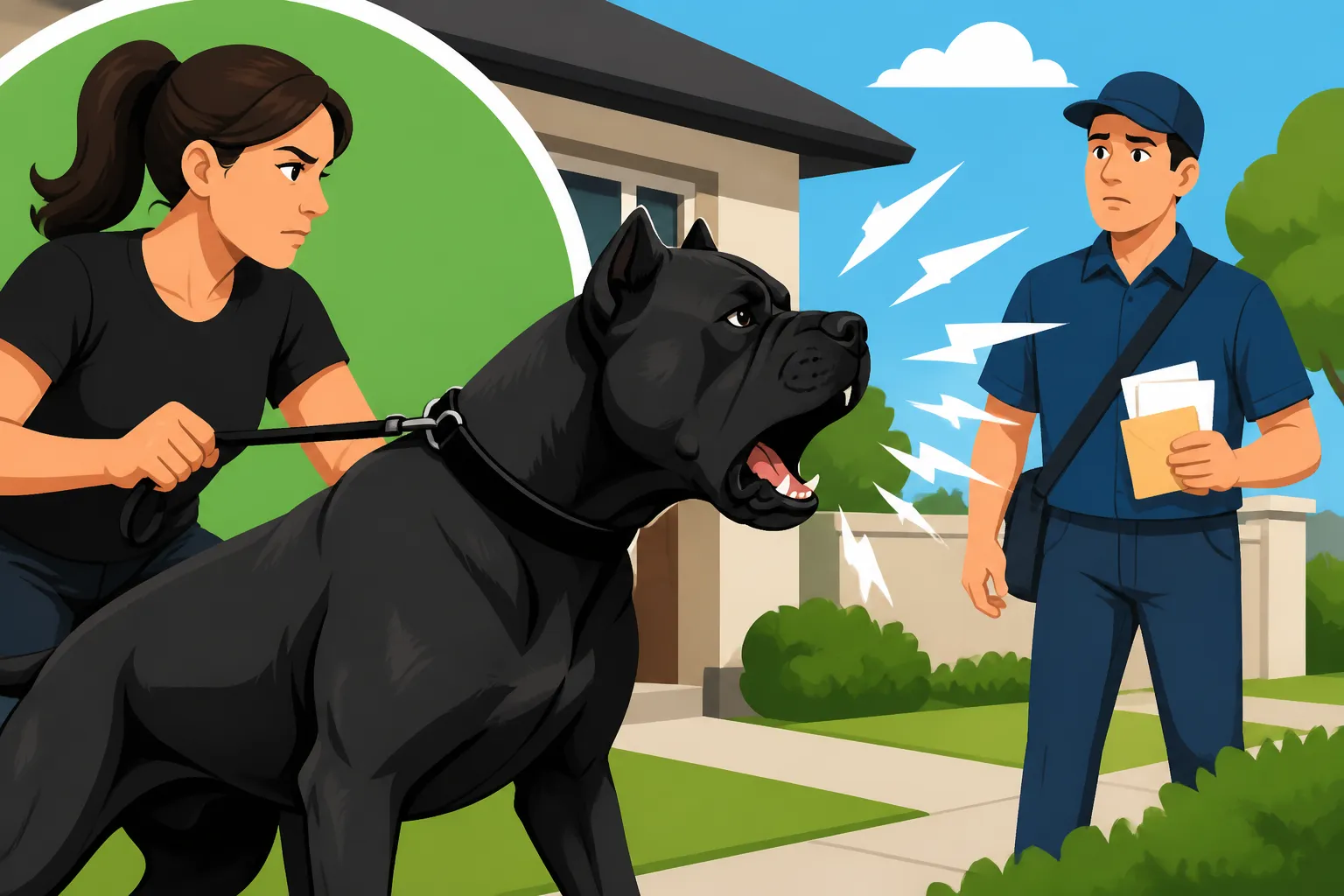
Stopping a Cane Corso From Barking at the Mailman
That sudden, thunderous bark erupting from your Cane Corso as the mailman approaches is enough to make anyone jump out of their skin. It's not just a loud noise; it's a signal of deep-seated instinct or learned behavior that can be incredibly frustrating, not to mention a source of stress for your dog and potential conflict with your postal carrier. This guide will help you unpack why your magnificent companion sees the mailman as a personal affront and provide actionable strategies to teach them a calmer, more appropriate response.
Why Your Cane Corso Sees the Mailman as a Daily Intruder
When your powerful Cane Corso erupts into a barking frenzy at the sight of the mailman, it can feel like a personal attack on your sanity. But for your dog, it's rarely about being "naughty." Understanding the root cause of this intense reaction is the first step toward finding a lasting solution. They aren't doing it to annoy you; they're responding to deeply ingrained instincts or learned patterns.
Instinctual Guardian Behavior
Let's be real: Cane Corsos were bred for a serious job. Their ancestors guarded vast Italian properties, livestock, and families, making snap judgments about who belonged and who didn't. That instinct to protect their perceived territory and family is alive and well in your modern Cane Corso. The mailman, to them, isn't just a friendly face delivering bills; he's an outsider who approaches their "den," deposits something, and leaves without ever fully interacting or being "approved." This transient presence can trigger that ancient guardian drive, leading to an alarm bark that's meant to say, "Hey! I see you! Stay away!" It's their way of alerting you to a potential threat, even if you know it's just Gary with the junk mail.
Consider the mailman's routine: a person approaches, stops, places something near the house, and then retreats. From a Cane Corso's perspective, their barking worked! The "intruder" came, saw their powerful display, and then left. This unknowingly reinforces the behavior every single day. Your dog perceives their barking as successful in "warding off" the perceived threat, making them more likely to repeat it tomorrow. They are, after all, very smart dogs, and they learn quickly what actions get results.
This isn't just about protecting the property itself; it can extend to protecting the "pack," meaning you and your family inside the house. If they see you relaxing or seemingly unaware, their instinct might compel them to take on the role of primary protector, barking fiercely to ensure everyone within their care is safe from this regular, albeit harmless, visitor. For a breed so devoted and protective, this reaction is less about aggression and more about intense vigilance, though it can certainly sound aggressive to outsiders.
Lack of Positive Exposure or Socialization
Many Cane Corsos, especially those with limited early exposure, haven't had the chance to form positive associations with novel people or situations, particularly those that happen routinely but without direct engagement. The mailman is a prime example. If your puppy wasn't properly socialized during their critical early weeks – typically up to 16 weeks – to a wide variety of people, sounds, and experiences, they might default to suspicion or over-excitement when facing the unfamiliar. The Socialization Window a Cane Corso Puppy Gets is a short but crucial period.
It's not just about meeting a lot of different people; it's about making those encounters positive and uneventful. If every time the mailman came, it was a chaotic event involving barking and you trying to quiet your dog, that simply reinforces the stressful nature of the interaction. Your dog isn't learning that the mailman is a neutral or even pleasant part of the day; they're learning that his arrival signals high tension and noise. This can lead to a reactive response, where barking becomes a self-soothing mechanism or a way to vent their anxiety.
Furthermore, a lack of neutral socialization means they don't have a broad mental library of "normal" people and scenarios. The mailman becomes a distinct, often jarring, experience rather than just another person passing by. Without a clear understanding that this person poses no threat, their powerful guardian instincts kick in, fueled by either fear, over-excitement, or a desire to control the situation. Their world becomes smaller, and anything outside that small, known world can trigger an alarm.
Learned Behavior and Reinforcement
As mentioned, dogs learn what works. If your Cane Corso barks at the mailman and the mailman eventually leaves, your dog sees that as a win. This is called negative reinforcement for the mailman (he leaves, which is good for the dog) and positive reinforcement for the dog (their barking made the mailman go away). It's a tricky cycle to break because the "reward" is built into the mailman's job. This is why addressing the behavior quickly and consistently is key, before it becomes a deeply ingrained ritual.
Sometimes, we inadvertently reinforce the barking. Do you rush to the window and scold your dog? Even negative attention can be a form of attention. Do you try to calm them with soothing words or treats while they're barking? This can accidentally teach them that barking gets them what they want. It’s a very common mistake. Your dog isn't necessarily thinking, "Oh, I'm getting a treat for barking!" but rather, "When the mailman comes, I bark, and then something good (attention, treat) happens." Breaking this cycle requires interrupting the behavior before it escalates and rewarding calmness instead.
Even your own anxiety about the mailman's arrival can play a role. Dogs are incredibly attuned to our emotions. If you tense up or show signs of stress when you hear the mail truck approaching, your Cane Corso will pick up on that. They might interpret your tension as a signal that there is something to be concerned about, further justifying their protective barking. Reading a Cane Corso's Body Language at a Distance can help you understand how your dog interprets your subtle cues. Your calm demeanor, therefore, is an important part of teaching them to be calm.
Foundation Training: Setting the Stage for Success
Before you can tackle the specific "mailman problem," your Cane Corso needs a solid foundation in general obedience. Without these bedrock commands, you're trying to build a house on sand. This isn't just about control; it's about communication and trust, giving your dog clear expectations for how they should behave in various situations, including when the mailman arrives.
Building a Solid "Place" Command
The "place" command is absolutely invaluable for a large, protective breed like the Cane Corso. It teaches them to go to a specific spot (a mat, a dog bed, a raised cot like those from a company you might find on Amazon) and remain there until released. This isn't just a static "stay"; it's a command that requires mental discipline and holds a significant amount of duration. Imagine the peace of mind knowing you can send your dog to their "place" as the mail truck pulls up, confident they will stay there quietly. The Place Command That Saves a Cane Corso Household outlines the steps for this crucial skill.
Start teaching "place" in a low-distraction environment. Lure your dog onto their mat, mark the behavior with a verbal cue like "yes!" or a clicker, and reward generously. Gradually increase the duration they must stay on their place, and then slowly introduce distractions. The goal is for your Cane Corso to be able to hold their "place" even with the doorbell ringing, people walking by the window, or, eventually, the mailman arriving. This provides a safe, comfortable, and predictable space for your dog to be when triggers appear, helping them manage their excitement or anxiety rather than reacting overtly.
The beauty of a strong "place" command is that it gives your Cane Corso a job during a stressful time. Instead of feeling the need to patrol and bark, they are being asked to perform a specific, rewarded task. This redirection of energy and focus is incredibly powerful. Once they're proficient, you can practice sending them to their place proactively when you know the mail is coming, giving them a constructive outlet for their attention instead of allowing them to fixate on the window or door.
Teaching "Quiet" and "Thank You"
Teaching your Cane Corso to bark on cue ("speak") and then to stop barking on cue ("quiet") is a fantastic way to gain control over their vocalizations. It makes barking a conscious behavior they perform for you, rather than an uncontrolled reaction. Once they understand "speak," you can then teach "quiet" by luring them with a treat to stop barking, or simply waiting for a pause and rewarding the silence. The "thank you" command builds on this, giving them a release from their "quiet" command, essentially acknowledging their alert without allowing it to escalate.
Practice these commands regularly, starting with low-level triggers like a knock on an internal door, then gradually moving to external noises. When the mailman comes, you can proactively use your "quiet" command before the barking really ramps up, rewarding immediately for even a moment of silence. Over time, your Cane Corso will learn that "quiet" means it's time to cease the ruckus and that their "thank you" means you've heard their alert and are taking over. This shifts the responsibility from them to you, reducing their need to incessantly bark.
For many Cane Corso owners, the challenge isn't just stopping the bark, but communicating to their dog that they've acknowledged the perceived threat. The "thank you" command does exactly that. Once your dog barks a few times, you can step in, give a firm "thank you," and then immediately redirect them to their "place" or another calm activity. This tells your dog, "I hear you, I've got this, now stand down." It respects their guardian nature while establishing you as the one in charge of managing external stimuli.
Desensitization to the Mailman's Arrival
Desensitization involves gradually exposing your Cane Corso to the mailman's routine in a controlled way, at a level where they don't react, and then slowly increasing the intensity. This is about changing their emotional response from excitement/anxiety to neutrality or even positive anticipation. You want them to eventually see the mailman as a predictor of good things, not a reason for alarm.
Start by working far away from the trigger. If your dog barks when the mail truck is two blocks away, begin training when it's three blocks away. Reward them for not reacting, for looking at you, or for simply being calm. You might need to set up scenarios with a friend dressed as a "fake" mailman at varying distances from your house. As your dog remains calm, you slowly shorten the distance or increase the intensity of the trigger (e.g., mailman approaching the door, dropping mail in the slot). The key is to stay below their "threshold" – the point where they start to react. If they react, you've gone too fast, and need to dial it back.
Pairing the mailman's arrival with high-value rewards is crucial. As soon as you hear the mail truck, give your Cane Corso a really special treat or toy. The goal is to create a positive emotional association. "Mailman means delicious treats!" This is called counter-conditioning. You want to change their internal feeling about the mailman from something negative or alarming to something positive. Teaching a Cane Corso to Ignore the Doorbell uses similar principles, expanding their ability to remain calm despite common household triggers.
Management Strategies: Keeping the Peace While You Train
Training takes time, consistency, and patience. In the meantime, you need management strategies to prevent the barking from happening, or at least to minimize it. Every time your Cane Corso practices barking at the mailman, the behavior gets stronger. Effective management breaks that cycle, giving you space to train without constant reinforcement of the unwanted behavior.
Controlling the Environment
One of the easiest ways to manage the mailman barking is to control what your Cane Corso sees and hears. If they can't see the mailman, they're less likely to react. Close curtains or blinds during the mail delivery time. Consider installing window film on lower panes that still allows light in but obscures the view, or even strategically placed furniture. White noise machines or playing music can help mask the sounds of the mail truck approaching, which often acts as an early trigger. You can find many options for window film and white noise machines on Amazon.
Another effective strategy is to physically remove your Cane Corso from the trigger zone during delivery. If you know the mail comes at 2 PM, take your dog to a back room, a crate in a quiet area, or even outside for a potty break before the mail arrives. This prevents them from practicing the barking behavior and gives you a chance to reset. A strong Crate Training a Cane Corso That Outgrows Every Crate can be incredibly helpful here, providing a safe, quiet den for them during peak trigger times.
Think about the routine. Does the mailman always come around the same time? Can you schedule a walk during that period, perhaps using a Whether a Prong Collar Is Needed on a Cane Corso or Whether a Front Clip Harness Stops a Cane Corso Pulling if they're particularly strong on leash? The goal is to make it impossible or very difficult for them to engage in the unwanted behavior. This is not a long-term solution, but a vital short-term strategy to give your training efforts a fighting chance.
Using Tools for Temporary Relief
While training is ongoing, certain tools can help manage the situation and keep everyone safer and calmer. A long line can be useful for practicing "place" or "recall" in a larger area without giving your dog full freedom to charge a perceived threat. You can practice Recall Training a Cane Corso in an Open Field to reinforce their responsiveness, which is essential if they happen to slip past your management efforts.
A basket muzzle, like those you can find on Amazon, might seem extreme, but it's a responsible tool for a powerful dog, especially if you have any concerns about safety or if their barking is accompanied by lunging. Why Every Cane Corso Should Be Muzzle Trained Early emphasizes the importance of making the muzzle a positive experience, not a punishment. It allows you to expose your dog to triggers more safely during desensitization, giving them a chance to learn without the ability to react aggressively. It also offers peace of mind when the mailman is right at your door.
For some dogs, calming aids can take the edge off their anxiety during particularly stressful times. These could be thundershirts, diffusers, or even vet-prescribed anxiety medication for extreme cases. Consult your veterinarian about appropriate options. These aren't magic bullets, but they can lower your Cane Corso's overall arousal level, making them more receptive to training and less prone to reacting explosively to triggers like the mailman.
Enlisting Help from Family or Trainers
You don't have to tackle this alone! If you have family members who live with you, ensure everyone is on the same page with the training plan. Inconsistency is a barker's best friend. If one person allows barking while another tries to stop it, your Cane Corso will be confused and the behavior will persist. Make sure everyone knows the commands, the rewards, and the management strategies. Teaching Every Family Member the Same Cane Corso Cues is vital for consistency.
If you're struggling, don't hesitate to reach out to a professional dog trainer or behaviorist. A qualified professional, especially one experienced with guardian breeds, can observe your specific situation and provide tailored advice. They can help you identify the precise triggers, teach you advanced techniques, and guide you through the process effectively. What a Behaviorist Charges for a Reactive Cane Corso can give you an idea of the investment, but the peace of mind and improved relationship with your dog are often worth it.
Consider enrolling in Group Classes Versus Private Work for a Cane Corso. While group classes can be great for general obedience and controlled socialization, private sessions might be more effective for a specific, reactive behavior like mailman barking, as it allows the trainer to focus entirely on your dog's unique needs and your home environment. A good trainer can even help set up controlled "mailman" scenarios with an assistant to safely practice desensitization and counter-conditioning.
Advanced Techniques and Consistency for Lasting Peace
Once your Cane Corso has a solid foundation and you've implemented effective management strategies, you can move on to more advanced techniques. The key here is consistency and patience. Changing a deeply ingrained behavior takes time, especially with a breed as intelligent and driven as the Cane Corso.
Counter-Conditioning the Mailman
Counter-conditioning is about changing your dog's emotional response to the mailman from negative (fear, excitement, territoriality) to positive. This involves consistently pairing the presence of the mailman (or the sounds/sights associated with him) with something your Cane Corso absolutely loves. This is where high-value treats, like boiled chicken, cheese, or special chews, come into play.
Start by having these treats ready well before the mail is due. The moment you hear the mail truck, or see the mailman approaching in the distance, immediately start feeding your Cane Corso a continuous stream of these amazing treats. Keep feeding until the mailman is completely out of sight. The goal is for your dog to associate the mailman's presence with getting delicious food, not with barking. If they're focused on eating, they can't bark. If your dog is too distracted to eat, you're too close to their threshold, and you need to create more distance or use a stronger treat.
This isn't about rewarding the barking; it's about shifting their emotional state. Over time, your Cane Corso should start looking at you with anticipation when they hear the mailman, rather than rushing to the window to bark. The mailman becomes a predictor of good things from you, the owner, rather than a trigger for their guardian instinct. This can be combined with their "place" command – send them to their place, and then begin the treat bombardment as the mailman approaches.
Practicing with a "Fake" Mailman
Once your dog is doing well with the real mailman and you've established some basic calmness, it's incredibly beneficial to set up practice sessions with a "fake" mailman. This allows you to control the variables: the approach, the duration, the distance, and the intensity. Enlist a friend or family member who doesn't normally visit your house around mail time to play the role. They should ideally wear a uniform or hat to mimic the real mailman's appearance.
Have your "fake" mailman approach your property, mimicking the actual mailman's routine. Start at a distance where your Cane Corso is comfortable and doesn't react. As your friend approaches, practice your "place" command, or simply reward your dog for remaining calm and quiet. Gradually, over several sessions, have your friend get closer, drop off a "package," or even approach the door. Always reward your dog for appropriate behavior and ensure they stay below their reactivity threshold. Working an Epileptic Cane Corso Safely talks about the importance of managing arousal and stress, which is very relevant to reactive barking as well.
These controlled practice sessions allow you to proactively train and reinforce desired behaviors without the pressure of the real mail delivery. You can stop, reset, and repeat as needed. It's an excellent way to generalize the training, ensuring your Cane Corso understands that the new rules apply to anyone performing the mailman's routine, not just the actual postal worker. Remember, consistency across all situations is what truly solidifies new behaviors.
Maintaining Calmness Through Routine
Cane Corsos thrive on routine and clear expectations. A predictable schedule provides security and reduces anxiety, which can often be an underlying factor in excessive barking. Ensure your dog receives consistent exercise – Ninety Minutes a Day and a Cane Corso's Mind is a good guideline for mental and physical stimulation – regular feeding times, and structured training sessions every day. A tired, mentally stimulated Cane Corso is a much calmer Cane Corso.
Incorporate regular, short training bursts throughout the day, focusing on commands like "place," "sit," "stay," and "quiet." This reinforces your leadership and keeps your dog mentally engaged. Practice impulse control exercises, such as waiting for their food bowl, waiting at doorways, and leaving dropped items. Impulse Control Work for a Cane Corso strengthens their ability to manage their urges, which is vital when a high-value trigger like the mailman appears.
Finally, remember that you are your Cane Corso's leader and advocate. Stay calm and confident during mail delivery times. Your energy will reflect onto your dog. If you react with frustration or anxiety, they will too. By consistently implementing these training and management strategies, you're not just stopping an annoying bark; you're building a stronger bond with your powerful companion, teaching them to navigate their world with more confidence and less stress.
| Strategy | Description | Benefit |
|---|---|---|
| Environmental Control | Close blinds, use window film, play white noise. Physically move dog to another room. | Prevents dog from seeing/hearing trigger, reducing opportunity to bark. |
| "Place" Command | Teach dog to go to a designated spot and stay there, even with distractions. | Provides a calm, structured activity during trigger events. |
| "Quiet" Command | Teach dog to bark on cue, then stop barking on cue. | Gives owner control over vocalizations, acknowledges alert without escalation. |
| Counter-Conditioning | Pair mailman's arrival (sight/sound) with high-value treats or favorite toys. | Changes dog's emotional association from negative to positive. |
| Desensitization | Gradual, controlled exposure to mailman/related triggers at sub-threshold levels. | Reduces sensitivity to the trigger over time. |
| Professional Help | Consult a certified professional dog trainer or behaviorist, especially for persistent issues. | Tailored advice, safe practice sessions, advanced techniques. |
Disclaimer
This article is for general informational purposes only and does not constitute professional advice. Laws, prices and regulations vary by location and change over time. Consult a qualified professional for guidance on your specific situation.