Reading a Cane Corso’s Body Language at a Distance
It can be incredibly nerve-wracking to encounter a large, powerful dog like a Cane Corso, especially if you're not sure how to interpret their body language from a distance. Their imposing size and often stoic expression can make them seem unapproachable, leaving you wondering if they're friendly, indifferent, or potentially defensive. This guide will walk you through the key signals a Cane Corso sends, helping you understand their demeanor from afar and giving you confidence in how to react responsibly.
Understanding the Cane Corso's Baseline Demeanor
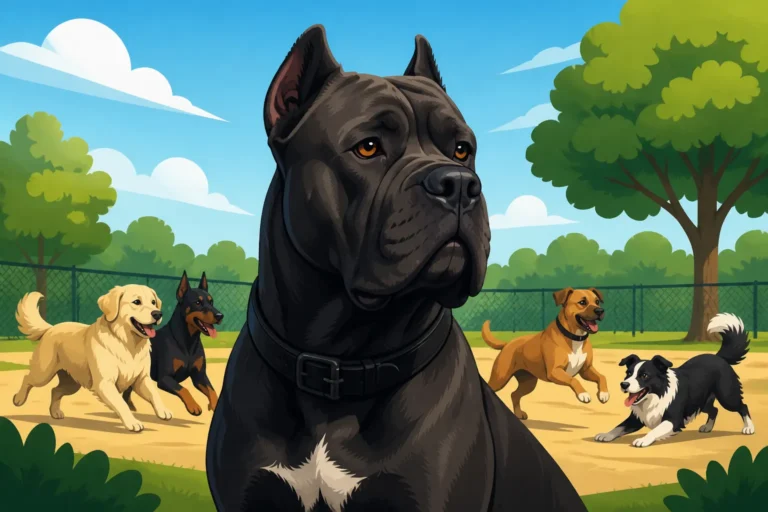
Before we delve into specific signals, it's important to grasp what a "neutral" or relaxed Cane Corso typically looks like. These aren't golden retrievers whose tails are constantly wagging; their baseline can appear quite serious to an untrained eye. Their ancestral role as guardians means they often carry themselves with a natural gravitas.
Posture and Stance
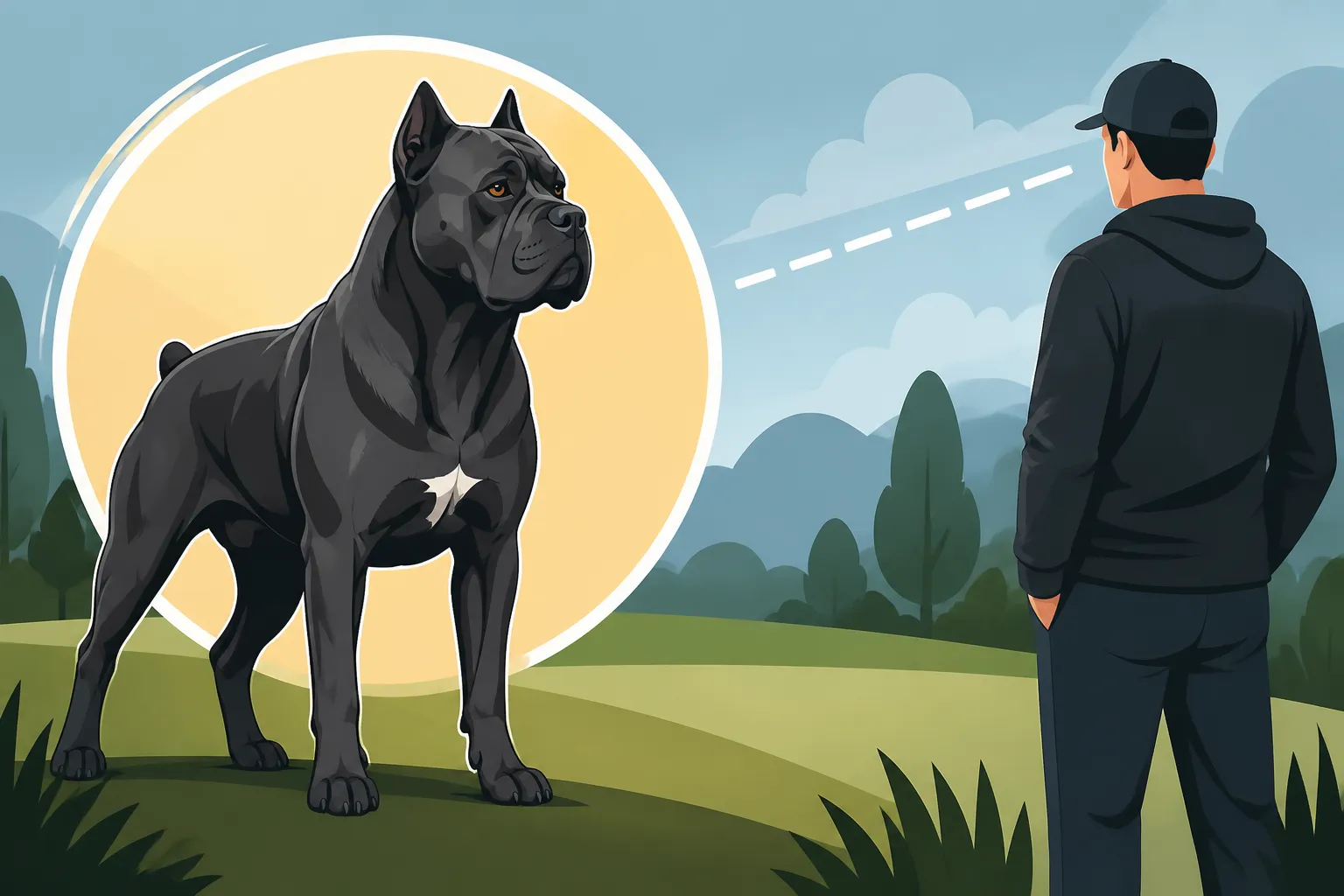
A Cane Corso in a neutral state will typically stand or sit with a balanced, confident posture. Their weight will be evenly distributed, and their muscles won't appear overly tensed or coiled. Think of a strong, watchful stance rather than a rigid, ready-to-pounce one. Their head might be held high, surveying their surroundings, which is a natural part of their guardian instinct. This isn't necessarily a sign of aggression; it's often just their way of taking in their environment.
If you observe them, you'll see a stillness, a sense of being grounded. They might shift their weight subtly, but there won't be any frantic movements or an immediate 'leaning in' or 'backing away' from an interaction. This calm, observant posture is a hallmark of a well-adjusted Cane Corso. It speaks volumes about their confidence and their innate understanding of their role, whether on their own property or out on a walk with their handler.
What you're looking for is an absence of tension. Are their shoulders relaxed, or are they hunched? Is their neck fluid, or does it look stiff? A relaxed Cane Corso carries its powerful frame with an easy grace. They aren't trying to make themselves look bigger or smaller, they simply are. If they're on a leash, a neutral dog won't be straining against it or trying to pull in any particular direction, indicating they're not overtly stressed or intensely interested in something just yet.
Tail Carriage and Movement
The tail can be one of the most misunderstood indicators in any dog, and particularly so with a Cane Corso. Many are docked, which can make reading their subtle tail signals even harder for people not familiar with the breed. If the tail is natural, it's often carried in a slight curve over their back or hangs down with a gentle curve, neither tucked tightly between the legs nor held stiffly high like a flag. A truly neutral tail will move with the dog's body, a natural extension of its spine.
A gentle, loose wag, sometimes just the tip moving, can indicate mild interest or friendliness. It’s not usually the frantic, full-body wag you might see from a Labrador. A lower tail wag, sweeping slowly, is often a sign of calm pleasure or acknowledgment. However, if the tail is held very stiffly, either high or straight out, or if it's tucked tightly, these are often signs of tension, fear, or readiness to react, not friendliness. The context of the entire body is critical here. The Tail Injury a Cane Corso Gives Itself can sometimes affect their natural carriage, so always consider the whole picture.
For a docked tail, you'll need to pay closer attention to the base of the tail and the hindquarters. Even a short stump will show some movement. A relaxed wag, even just a slight tremor at the base, can still convey interest or a friendly disposition. Conversely, a stiff, motionless docked tail, or one tucked tightly into the body, signals unease. It’s about observing the effort and fluidity of the movement, not just the angle.
Facial Expression and Ear Position
A Cane Corso's face, especially their eyes, muzzle, and ears, can tell you a lot, even from a distance. In a relaxed state, their eyes will appear soft, perhaps slightly almond-shaped, without intense focus or a hard stare. Their brows will be smooth, not furrowed. The muzzle will be relaxed, and if their mouth is open, it might be a soft, open-mouthed pant with no tension around the lips. Their ears, whether cropped or natural, will be held in a relaxed, forward-facing or slightly to the side position.
A hard stare, where the eyes are wide, unblinking, and fixed on something, is a significant warning sign that the dog is concerned or focused, and not necessarily in a friendly way. What a Cane Corso's Hard Stare Means is something every owner should understand deeply. Similarly, a tightly closed mouth, pulled-back lips, or a furrowed brow indicate tension or stress. Even if they are just observing, their face should show a certain "softness" if they are truly neutral or comfortable.
When their ears are pinned flat against their head, it often signals fear or anxiety. If they're pricked forward with great intensity, it means they are highly alert and focused on something, which could be positive (like a treat coming) or negative (like a perceived threat). It's the degree of tension and focus that matters. A relaxed Cane Corso might glance around, but their gaze won't be locked on anything for extended periods without a reason, and their facial muscles will remain relatively loose.
Signs of Approachability and Interest
While Cane Corsos might not always greet you with effusive wiggles, they do show clear signs when they are open to interaction or are simply interested in their surroundings in a friendly way. Learning these can help you confidently assess a situation.
Relaxed Signals
A Cane Corso showing relaxed signals will often have a loose, fluid body posture. Their head might be slightly lowered or tilted, indicating curiosity rather than challenge. You might see a gentle, rhythmic tail wag, usually a medium-low carriage with a soft swish. Their eyes will be soft and often blink, breaking any intense gaze. Their mouth might be slightly open in a relaxed pant, often with the corners of their lips relaxed or even slightly turned up, a "soft mouth" expression.
When a Cane Corso is truly relaxed and open, they may even yawn or stretch in your presence. These are displacement behaviors, sure, but in a non-stressful context, they signify a comfort level. They might turn their body slightly to the side, presenting less of a direct confrontation, or even lean gently into their owner. This isn't a bold invitation to run up and hug them, but it’s a strong signal that they are at ease and not perceiving you as a threat.
If they make eye contact, it will be brief and soft, not prolonged or challenging. They might also wrinkle their nose slightly, sniffing the air, showing general interest in scents around them, rather than intensely focusing on you. These subtle signs are often missed but are crucial indicators of a dog that is comfortable and in a good frame of mind. Observing their owner's interaction with them can also offer clues; if the owner is relaxed and engaging, the dog is likely mirroring that calm energy.
Engagement Cues
When a Cane Corso wants to engage, they might initiate a subtle movement or gesture. This could be a soft nudge with their nose, a gentle paw tap, or even just turning their head to look at you directly with those soft, curious eyes. They might offer a soft, low "woo-woo" sound, which is a common friendly vocalization for many dogs. A truly engaged dog might also shift its weight forward slightly, indicating readiness to move, but without tension.
They might perform a slow "approach and retreat," coming a little closer, then backing off slightly, inviting you to engage on their terms. This is a common canine social signal. For dogs that aren't overly effusive, a calm, inviting gaze followed by a slight head tilt can be their way of saying, "Hey, what are you up to?" If they respond positively to a soft verbal greeting from you (assuming the owner gives permission and is close by), that’s a good sign. Don’t mistake a lack of a frantic welcome for a lack of interest – a Cane Corso’s interest can be quite understated.
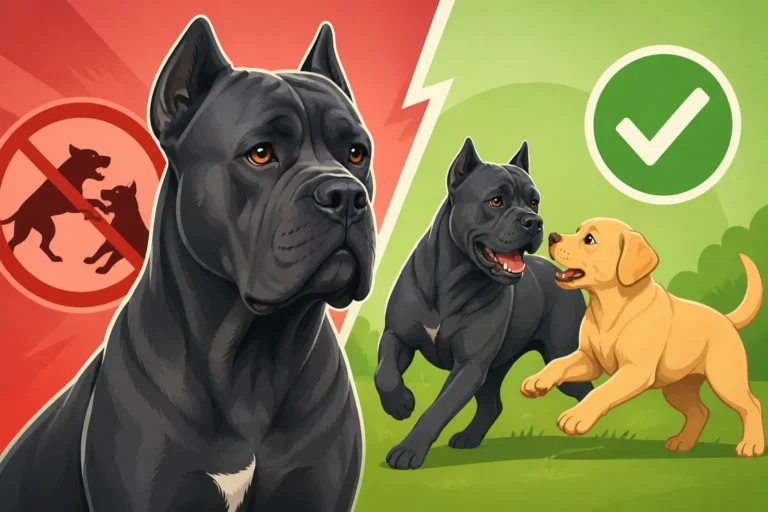
If they are interested in interacting with another dog, their posture will be loose, and they might offer a play bow (front end down, rear end up, tail possibly wagging loosely) or a soft sniff. However, How a Cane Corso Behaves Toward Other Dogs can vary greatly depending on their socialization history. A young, well-socialized Cane Corso might be more outwardly playful, whereas an older, more reserved one might prefer a polite sniff and then go about its business. Always defer to the owner's guidance when judging interaction with other animals.
Play Bows and Invitations
A play bow is one of the clearest invitations to play across the canine world. The dog lowers its front end, keeping its rear end up, often with a wagging tail and an eager, open-mouthed expression. For a Cane Corso, this might be a bit more subtle than with a smaller, more exuberant breed, but the intention is the same. It's a clear signal: "Let's have some fun!" They might also lunge playfully, then quickly retreat, inviting a chase.
Another play invitation might involve a dog bringing you a toy, dropping it at your feet, and then backing up slightly, waiting for you to engage. They might also "mouth" you gently with an open mouth, a soft, non-pressured interaction meant to mimic puppy play. These are signals that they view you as a potential playmate and are comfortable enough to initiate interaction. However, always remember their size and power; even playful nips can be intimidating or accidentally forceful.
Some Cane Corsos, especially those with strong working drives, might invite play with a "prey" type of posture: a lowered head, a wiggling rear, and a sudden dash, as if initiating a game of chase. This is often accompanied by soft, happy body language overall. If you're unsure, observing their handler's cues is paramount. A good online training platform like BAXTER & Bella often highlights how to interpret these types of play signals in a way that respects your dog’s natural instincts.
Warning Signs and Discomfort
Recognizing when a Cane Corso is uncomfortable, stressed, or potentially defensive is crucial for everyone's safety. Their size means that even subtle signs of discomfort should be taken seriously and respected by giving them space.
Stiffening and Freezing
One of the most significant warning signs is a dog that suddenly stiffens or "freezes." Their body becomes rigid, their weight might be shifted slightly forward or back, and their muscles appear tensed. Their head might be held still, with a fixed gaze. This isn't neutral observation; it's a dog preparing to react, often in defense. They might also become completely still, sometimes called "whale eye," where you see the whites of their eyes around the iris. This is a clear sign of high stress and discomfort.
A dog that is stiffening might also stop breathing momentarily or take very shallow breaths. This tension indicates that they are highly aroused and processing a perceived threat. This could be due to fear, a feeling of being cornered, or guarding a resource or person. Whatever the reason, a stiff, frozen posture means that the dog has gone past simply being alert and is now in a state where a sudden movement from you could trigger a stronger reaction.
In these moments, a Cane Corso might also lower its head slightly and stare intently, almost like a predator. Their ears might be pricked forward or slightly flattened, but held rigidly. Their lips might be tight, perhaps showing a flicker of teeth or a slight wrinkle on the muzzle. This entire body posture is a clear message: "Do not approach." Ignoring these signals is extremely dangerous, as it often precedes an escalation.
Hard Stares and Mouth Tension
As mentioned before, a hard stare is a critical warning. This is not a casual glance; it's an unwavering, intense focus where the dog's eyes are wide, unblinking, and fixed directly on the source of their concern. Combined with a rigid body, this is a clear signal that the dog is assessing a threat and may be preparing to defend. What a Cane Corso's Hard Stare Means is one of the most important behaviors to learn from this breed.
Mouth tension also speaks volumes. If a Cane Corso's mouth is tightly closed, lips pulled back, or the muzzle is wrinkled, it indicates stress. You might see a slight lift of the lips, exposing teeth, which is an undeniable warning. Even if no teeth are shown, a tightly closed jaw or heavy panting with rigid facial muscles suggests anxiety or aggression. A dog might also lick its lips excessively, not due to thirst, but as a stress signal, especially if other signs of tension are present.
Another sign of mouth tension can be excessive drooling beyond what's normal for the breed, or conversely, a very dry mouth. Pay attention to how the corners of their mouth are held. Are they loose and soft, or are they pulled back tightly, almost making a straight line? These subtle shifts in facial expression, combined with a hard stare, indicate a dog that is seriously uncomfortable and potentially ready to escalate its defensive behavior if ignored.
Subtle Distance-Increasing Behaviors
Before outright aggression, dogs will often try to create distance through subtle signals. These are known as "calming signals" or "appeasement gestures" and are meant to communicate discomfort and a desire for space without confrontation. These can include turning their head away, looking away, sniffing the ground intently, or even walking in an arc rather than a direct line. A Cane Corso might also try to put its owner between itself and the perceived threat.
Another common signal is a half-moon eye, or "whale eye," where you can see the whites of the dog's eyes. This means they are uncomfortable with what they are looking at but are trying to avoid a direct stare. They might also suddenly start to scratch, yawn, or excessively lick themselves – these are displacement behaviors, attempts to cope with stress, and they indicate the dog is feeling uneasy. Ignoring these early signs pushes the dog past its coping mechanisms.
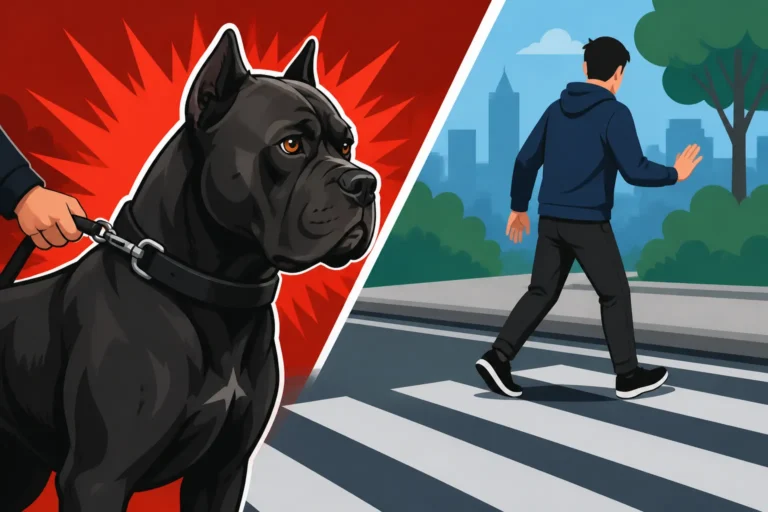
If you notice a Cane Corso doing any of these things, it's their polite way of saying, "I'm not comfortable, please give me space." It's imperative to respect these signals immediately by stopping your approach, turning sideways, and slowly moving away. Many incidents occur because these early, subtle warnings are missed or misinterpreted. The importance of understanding these signs cannot be overstated, particularly with a powerful guardian breed.
The Escalation Ladder
Understanding the "escalation ladder" of dog aggression is vital. Dogs typically start with subtle signals, and if those are ignored, they escalate.
- Subtle signs: Lip licking, yawning, head turning, sniffing ground, half-moon eye.
- More obvious signs: Freezing, stiffening, low growl, hard stare, ears back/forward with tension.
- Direct warnings: Growling, snarling, showing teeth, air snapping (snapping in the air near the target).
- Contact: Nipping, biting (with varying intensity).
The goal is to recognize and respond to the earliest signs on this ladder to prevent escalation. A Cane Corso, due to its size and power, has a lower threshold for error. If they are showing any signs of discomfort from the middle to the top of this ladder, you are already in a potentially dangerous situation. This is why paying attention to the subtle cues is so crucial. A resource like a good dog behavior book available on Amazon or an online course from BAXTER & Bella can provide even deeper insights into this hierarchy of communication.
Common Misconceptions About Cane Corso Body Language
Because of their unique appearance and role, some of the general rules for reading dog body language can be misunderstood when applied to a Cane Corso. It’s important to clarify these.
The "Friendly" Tail Wag
One of the most pervasive myths is that any tail wag equals a friendly dog. While a loose, medium-to-low wag often indicates friendliness, a stiff, high-held tail wag can signal arousal, agitation, or even an impending challenge. A Cane Corso's tail can be held high and wagging just before they decide to confront something they perceive as a threat. It’s not about the wag itself, but the context: the speed, amplitude, and especially the carriage of the tail relative to the rest of the body.
If the wag is fast and shallow, especially when combined with a stiff body or a hard stare, it means the dog is highly stimulated and potentially not in a friendly way. It's often referred to as an "alert wag" or "excitement wag," and it’s a far cry from a happy greeting. Think of a human tapping their foot impatiently while staring intently – it’s not an invitation to a warm chat. The same applies to a Cane Corso.
The key is to look at the entire picture. Is the tail wagging because the dog is loose, relaxed, and greeting its owner with a soft face? Or is it stiff, high, with a hard stare and tight mouth? If it's the latter, that wag is a red flag, not an invitation. Never approach a Cane Corso based solely on tail movement; always assess the dog's full body language.
The "Submissive" Look
Sometimes, a Cane Corso might flatten its ears, lower its head, or even try to make itself smaller. For some breeds, this might be seen as pure submission and a clear sign of a friendly, albeit timid, dog. For a Cane Corso, these can also be signals of fear or extreme anxiety, which can unfortunately lead to defensive aggression if they feel cornered or threatened. A truly submissive dog will often avert its gaze, perhaps lick its lips, and avoid direct eye contact, but without the underlying tension of fear.
A fearful Cane Corso that feels it has no escape can become very dangerous. Its instinct to guard and protect, combined with fear, can lead to a quick, unexpected lunge. It’s not a dog that wants to fight, but one that feels it has to. So, while these signals might look like submission, they can also indicate a dog that is highly stressed and could react poorly if pushed. What an Anxious Cane Corso Looks Like often involves these kinds of subtle, appeasement-turned-defensive postures.
If you see these signals, particularly a dog trying to shrink or hide while still keeping an eye on you, it’s best to give them ample space. Don't try to reassure them or force interaction. They are communicating that they are uncomfortable, and respecting that boundary is paramount. Never assume a dog that looks "submissive" is necessarily safe to approach, especially a large guardian breed that might be trying to mitigate a perceived threat.
Putting It All Together: A Quick Reference Guide
To help you quickly assess a Cane Corso from a distance, here's a table summarizing key body language signals. Remember, context is always key, and these should be read in conjunction with each other.
| Signal | Interpretation (Generally) | Action to Take |
|---|---|---|
| Relaxed/Neutral | ||
| Body Posture | Loose, balanced, no tension | Observe, proceed with caution if approaching owner |
| Tail Carriage | Medium-low, soft, gentle wag, or relaxed hang | Friendly or indifferent, but still cautious |
| Eyes | Soft, blinking, no hard stare | Good sign, but still give space |
| Mouth | Softly open, relaxed pant, no tension | Comfortable, low stress |
| Ears | Relaxed, slightly forward or to side | Attentive, but not overly aroused |
| Approachability/Interest | ||
| Body Posture | Leaning in slightly, soft play bow | Potentially open to friendly interaction |
| Tail Carriage | Wags loosely at medium height | Friendly interest, soft invitation |
| Eyes | Soft, direct gaze, but breaks contact | Inviting attention |
| Mouth | Open, soft corners, maybe soft vocalization | Curiosity, playfulness |
| Ears | Slightly forward, relaxed | Engaged and interested |
| Warning/Discomfort | ||
| Body Posture | Stiff, frozen, weight forward/back | Serious warning – STOP & create distance |
| Tail Carriage | Stiff high wag, tucked, or rigid | High arousal/fear – severe warning |
| Eyes | Hard stare, wide, "whale eye" | Direct threat assessment – severe warning |
| Mouth | Tightly closed, snarling, teeth bared, lip licking | Stress/aggression – severe warning |
| Ears | Pinned back, or rigidly pricked forward | Fear/alertness – severe warning |
Remember, the goal is always to avoid putting yourself or the dog in a stressful situation. When in doubt, always err on the side of caution. Give the Cane Corso and its owner space. Effective Socializing a Cane Corso Puppy Before Its Shots Finish and Neutral Socialization for a Cane Corso at Twelve Weeks are vital for a dog to learn appropriate public behavior, but you as an observer also have a role to play in respecting their boundaries.
Disclaimer
This article is for general informational purposes only and does not constitute professional advice. Laws, prices and regulations vary by location and change over time. Consult a qualified professional for guidance on your specific situation.