Recall Training a Cane Corso in an Open Field
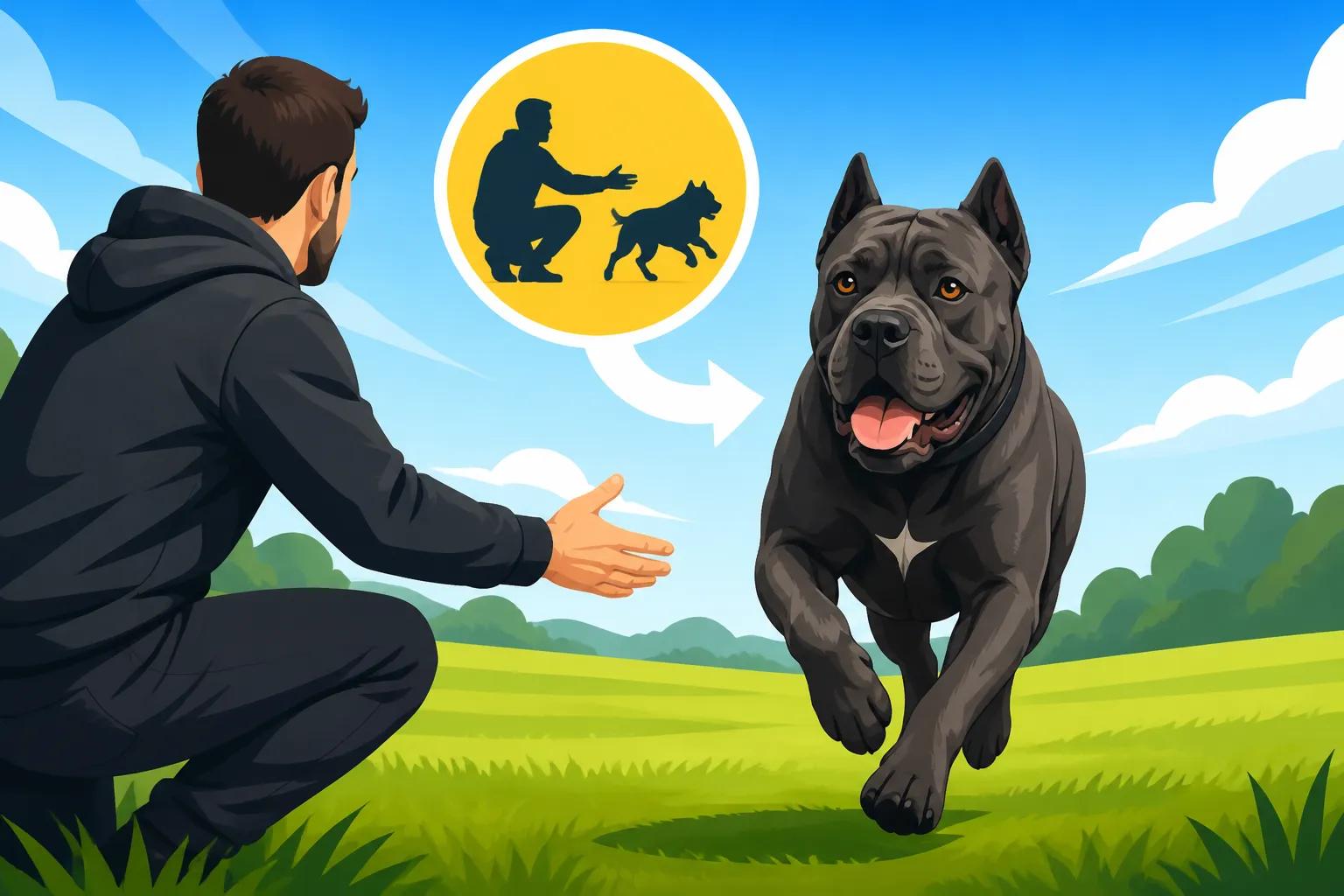
It’s a dream many Cane Corso owners share: letting their powerful, devoted companion run freely in a wide-open space, reveling in their joy, only to be met with the cold splash of reality when "come" becomes an optional suggestion. The frustration of watching your majestic dog ignore you as they chase a distant squirrel, or greet a person you didn't see, is incredibly real. This guide is here to walk you through the careful, consistent steps needed to build a rock-solid recall, even in the most tempting open-field environments, ensuring safety and freedom for both you and your incredible Cane Corso.
Understanding the Challenge of Open Field Recall
Let’s be honest, asking a Cane Corso to recall instantly when they’re immersed in a world of enticing smells, distant movements, and newfound freedom is a massive ask. These aren't golden retrievers whose primary goal is to please. Cane Corsos are intelligent, independent, and possess a strong prey drive, making open fields a particularly challenging training ground. It’s not about them being disobedient; it’s about their inherent instincts and the sheer volume of high-value distractions.
Why Open Fields Are Different for a Cane Corso
An open field, whether it's a vast park, a hiking trail, or just a large, unfenced area, presents a unique set of challenges for recall training with a Cane Corso. First off, there's the sheer novelty and expanse. Your Cane Corso might be perfectly behaved in your backyard or a familiar, fenced dog park, but put them in a truly open space, and their world expands exponentially. The smells carried on the wind, the distant figures, the sensation of boundless freedom – all these can be incredibly intoxicating for a dog bred for intelligence and independent work. They're built to cover ground, to assess their surroundings, and to make decisions based on what they perceive, often independently.
Then there's the undeniable prey drive. A Cane Corso, even one from a well-bred line without a strong working history, carries a genetic blueprint for guarding and, yes, pursuing. That rabbit darting across the field, the distant deer, or even a leaf blowing just right can trigger an instinctual chase response that is incredibly difficult to override with a simple verbal cue. They get tunnel vision, and suddenly, you're not the most interesting thing in their world. This isn't a fault in your dog; it's a characteristic of their breed that requires understanding and careful management.
The Foundation of a Reliable Recall
You wouldn't try to build a skyscraper on a shaky foundation, and the same principle applies to recall training. You absolutely cannot expect a reliable open-field recall if your Cane Corso doesn’t have a bulletproof recall in less distracting environments first. This means starting in your home, then a fenced yard, then a quiet park on a long line. Consistency is key, and every successful recall, no matter how small, builds a layer of trust and understanding.
Think of it like this: every time your Cane Corso comes when called, they're getting a clear message that coming to you is awesome. This message needs to be reinforced hundreds, if not thousands, of times before it becomes a default behavior, especially when the siren song of a squirrel is louder than your voice. High-value rewards are non-negotiable here. A dry piece of kibble might work in your living room, but in an open field, you'll need something truly spectacular – think boiled chicken, cheese, or a favorite squeaky toy that only comes out for recall practice. For a deep dive into starting strong, check out Building a Cane Corso's Recall From Eight Weeks.
Building Recall in High-Distraction Environments
Once your Cane Corso is consistently recalling in low-distraction environments, it's time to slowly increase the difficulty. This isn't about throwing them into the deep end; it's about carefully measured exposure. You want to set them up for success, not failure, so that every experience builds confidence in their ability to choose you over distractions. This stage is crucial for bridging the gap between your backyard and that wide-open park.
The Long Line Method
The long line is your absolute best friend when working on recall in increasingly distracting environments. It provides safety and control, allowing your Cane Corso to experience a sense of freedom while still giving you the ability to intervene if they "forget" their manners. You can find excellent quality long lines of various lengths (15, 30, even 50 feet) on platforms like Amazon. Make sure it's a sturdy, well-made line that can handle the power of a Cane Corso.
Start in a moderately distracting area, perhaps a quiet corner of a park or an empty school field. Let your Cane Corso explore on the long line. When you call their name and "Come!", reel them in gently if they don't respond immediately. The moment they start moving towards you, even if you’re pulling them, praise them enthusiastically and reward them heavily when they reach you. The goal isn't to yank them back every time, but to use the line as a gentle reminder and a safety net. Over time, you'll find yourself using the line less and less, as their response becomes more ingrained. This method teaches them that the recall cue means they will come back, one way or another, and that coming willingly is far more rewarding. Learning how to manage this safely is a topic covered in Using a Long Line With a Cane Corso.
Incremental Exposure and Proofing
Proofing your recall means practicing it in a wide variety of places, with different distractions, and under varying circumstances. You can’t just go from your backyard to a bustling park and expect perfection. It's a gradual process, like climbing a ladder one rung at a time.
Start with very mild distractions. Perhaps a friend walks past at a distance, or a family member sits on a bench while you practice. Once your Cane Corso consistently recalls with these minor distractions, you can increase the intensity. Try practicing near a walking path where people are passing, then near other dogs on leashes, and eventually, in an open field when there are a few distant dogs or people. The key is to never progress to a new level of distraction until your Cane Corso is at least 90% reliable at the current level. If they fail, go back a step. Always set them up for success. This slow and steady approach is what builds true reliability and helps them generalize the "come" cue to any environment. For help when your dog is seriously distracted, consider the advice in Calling a Cane Corso Back Once It Has Locked On.
Strategies for Real-World Success in Open Spaces
Even with all the foundational work, an open field can still present unforeseen challenges. Having specific strategies in place for real-world scenarios is what truly differentiates a good recall from a truly reliable one. This is where you leverage your bond, their motivations, and your observational skills.
High-Value Rewards and Engagement
When your Cane Corso is out in a field, feeling the wind in their fur and taking in a thousand smells, a polite "Good dog!" and a piece of kibble just won't cut it. You need to be the most exciting, rewarding thing in their environment. This means pulling out the big guns: treats they adore, toys they go crazy for, and an enthusiastic play session that makes them forget all about that distant jogger or squirrel. Experiment to find out what truly motivates your particular Cane Corso. Is it a game of tug? A chase with their favorite ball? Super stinky, delicious treats like dried liver or cheese?
Your reward strategy should be varied and unpredictable. Sometimes it's a treat, sometimes it's a quick game, sometimes it's both. This keeps them guessing and eager to find out what wonderful thing awaits them when they come bounding back to you. Remember, the reward isn't just about the treat; it's about the positive interaction and reinforcing that you are the source of all good things, even when they could be off exploring. Consistency in this makes a huge difference in how your Cane Corso views the act of returning. The kind of rewards that truly capture their focus are explored further in The Reward a Cane Corso Actually Values.
Emergency Recall Cues
Beyond your standard "Come" cue, it's incredibly smart to train an "emergency recall" – a completely different word or sound that is only used for critical situations and always, always results in the absolute best rewards. This cue should be unique, something you don't use in daily conversation, and something that carries an immense amount of positive association. Some owners use a whistle, others a specific word like "HERE!" or "NOW!" This emergency cue is not for casual use; it's for when your Cane Corso is heading towards a busy road, an unknown dog, or any situation where their safety is paramount.
To build this, practice it in a completely distraction-free environment first, showering them with their absolute favorite treats and praise every single time they respond. Then, introduce it in gradually more distracting environments, always making it a spectacularly positive experience. The idea is that this cue becomes so powerful that it overrides almost any distraction, because they've learned it means "come NOW for the best thing EVER!" Training programs, like those offered by BAXTER & Bella, often incorporate such advanced recall techniques to build this kind of reliability from the ground up, ensuring owners are equipped for any scenario.
Reading Your Cane Corso's Environment and Body Language
Knowing when to trust your Cane Corso off-leash in an open field is just as important as the training itself. This comes down to developing a keen awareness of both the environment and your dog's body language. Before unhooking that leash, scan the area. Are there other dogs? Children? Wildlife? Potential hazards? How busy is it? If your Cane Corso has a strong prey drive, a field full of rabbits is probably not the place to practice off-leash recall, at least not yet.
Also, pay close attention to your Cane Corso. Are they overly stimulated? Are their ears perked, eyes locked on a distant object, body tense? These are signs that they're entering a state where recall might be compromised. Learn to recognize their "lock-on" signals. If you see them freeze, stare intently, or stiffen before they bolt, that’s your cue to interrupt before they act, or decide it’s safer to keep them on a long line. Responsible ownership means knowing your dog's limits and putting safety first. For more on how much focus your Cane Corso can manage, consider The Length of a Cane Corso's Attention Span.
Here's a quick comparison of recall training stages:
| Stage | Environment | Key Characteristics | Goal |
|---|---|---|---|
| Phase 1: Foundation | Home, quiet backyard | Minimal distractions, controlled space | 100% reliable recall indoors, immediate response |
| Phase 2: Transition | Fenced park, quiet trail (long line) | Moderate distractions (people, leashed dogs) | Consistent recall with increasing distractions, gentle long-line guidance |
| Phase 3: Real-World | Open field, busy park (long line then off-leash) | High distractions (wildlife, off-leash dogs, unknown scents) | Reliable off-leash recall, even with strong temptations, handler awareness |
Successfully achieving open-field recall with a Cane Corso requires patience, consistency, and a deep understanding of what makes your powerful companion tick. It’s a journey that builds a stronger bond and allows both of you to enjoy the freedom of open spaces with confidence.
Disclaimer
This article is for general informational purposes only and does not constitute professional advice. Laws, prices and regulations vary by location and change over time. Consult a qualified professional for guidance on your specific situation.