Calling a Cane Corso Back Once It Has Locked On
It’s a heart-stopping moment many Cane Corso owners know all too well: your powerful, protective companion spots something – a squirrel darting across the park, another dog rounding the corner, a stranger entering your property – and they lock on. Their body tenses, their gaze fixes, and suddenly, your voice seems to vanish into thin air. This guide is here to help you understand why this happens and, more importantly, how to build a recall strong enough to break that intense focus and bring your Cane Corso back to you, safely and reliably.
Understanding the "Lock On" Phenomenon in Cane Corsos
When your Cane Corso fixates on something, it's not just them being stubborn or disobedient; it’s a deep-seated instinct kicking in. These dogs were bred for specific roles, and those ancient drives are still very much alive within them. Understanding what is driving that intense focus is the first step to mitigating it.
The Instinctual Drive Behind the Fixation
Cane Corsos are direct descendants of Roman war dogs, and later, integral farm and property guardians in rural Italy. This isn't a breed that casually notices things; they are observers, protectors, and once their attention is piqued, their focus becomes incredibly intense. They were bred to assess threats, track movement, and react decisively.
Think about their historical job: guarding livestock or property against predators or intruders. That job demanded absolute focus. A Cane Corso couldn't afford to be easily distracted when a wolf was threatening the flock or a stranger was approaching the farm. This deep-seated instinct manifests today as that powerful "lock-on." Whether it's a small prey animal like a rabbit, another dog that they perceive as a challenge or an unknown entity, or even a person they're evaluating, their entire being narrows down to that single point of interest. This isn't a flaw; it's a feature of the breed, but one that needs careful management in a modern world. It's why What a Cane Corso's Guardian Instinct Actually Is is so important to understand.
Why Traditional Recall Fails in High-Stimulus Moments
You might have a perfectly good "come" command in your backyard, but the moment you're in a busy park and your Cane Corso locks onto a fleeing deer, it's like you never taught them anything. Why? Because the value of the distraction suddenly outweighs the value of your command and whatever reward you might offer.
Traditional recall often relies on your voice and a reward, like a treat or praise. In a low-distraction environment, your voice is the most interesting thing happening, and the treat is a high motivator. But when your Cane Corso sees a "threat" or a "prey animal," their brain is flooded with primal hormones – adrenaline, cortisol – and their focus becomes incredibly narrow. Your voice, even if familiar, simply cannot compete with that intense biological drive. It’s akin to trying to talk someone out of a burning building with a promise of a cookie when their life feels threatened. The stakes are too high in their mind. This is why just repeating "come, Fido, come!" louder and louder rarely works. It actually makes you sound less confident and less in control, which is the last thing you want with a strong-willed guardian breed.
Foundational Training for a Reliable Recall
Building a recall that stands a chance against a Cane Corso's "lock on" moments requires more than just teaching a word. It demands a robust foundation of trust, consistent reinforcement, and incremental exposure to distractions.
Building a Bulletproof "Come" from Day One
The journey to a reliable recall starts the moment you bring your Cane Corso puppy home. Don't wait until they're older and already displaying independent tendencies. Begin with extreme positivity and high-value rewards in a distraction-free environment, like your living room or a securely fenced yard. Make "come" the most exciting, rewarding word they know. Every single time your puppy comes to you, celebrate it like they just won the lottery.
Use a happy, enthusiastic tone and follow through with a truly fantastic reward – not just kibble, but perhaps a piece of cooked chicken, cheese, or a favorite squeaky toy. Practice this multiple times a day, keeping sessions short and fun. Never use your recall command to scold your dog or do something unpleasant like nail trims (unless you immediately reward them heavily afterwards). The goal is to create an overwhelmingly positive association. Imagine calling your puppy and, instead of rushing to you, they hesitate. That hesitation is a crack in your foundation. Make sure your rewards are always worth their while; after all, you need to know The Reward a Cane Corso Actually Values. For some dogs, a favorite tug toy from Amazon might be a higher motivator than any treat.
The Power of a Long Line and Consistent Practice
Once your Cane Corso has a solid recall in a confined space, it’s time to introduce the long line. This is a critical tool for safely practicing recall in progressively more distracting environments without risking your dog running off. A 15 to 30-foot long line allows your dog some freedom to explore while giving you control to enforce the recall if they get too distracted.
Start in a quiet, open area, like a secluded park or a large field. Let your Cane Corso explore on the long line. When you call them, if they hesitate or start to wander, gently reel in the line while still giving your recall command in a happy, encouraging tone. The moment they start moving towards you, release tension on the line and praise them enthusiastically. When they reach you, reward them handsomely. This teaches them that "come" means they must return, but it does so without punishment, associating your call with positive outcomes. Using a Long Line With a Cane Corso extensively is key to building this muscle memory. Ensure the long line is sturdy enough for a Cane Corso's strength, and always use a well-fitting harness, not a neck collar, to prevent injury if they hit the end of the line.
Proofing Recall Against Mounting Distractions
This is where the real work begins, and it's a marathon, not a sprint. Proofing means practicing your recall in every conceivable environment with increasing levels of distraction. Start small:
- Level 1: Controlled Distractions: Have a family member walk by with a toy, or roll a ball a short distance. Call your dog away from it.
- Level 2: Environmental Distractions: Practice in your yard with birds singing, then a quiet park where other people are walking, but at a distance.
- Level 3: Moderate Distractions: Move to areas with more foot traffic, distant dogs, or children playing. Keep your dog on a long line, and stay vigilant.
- Level 4: High Distractions: This is the toughest. Think busy parks with off-leash dogs (if allowed and safe), busy walking trails, or locations with small animals.
The key is to set your Cane Corso up for success. Don't throw them into a high-distraction scenario if they're not consistently succeeding at lower levels. If you call and they don't respond, you've asked too much too soon. Reel them in with the long line, reward, and go back to a less distracting environment. The goal is 100% success, even if it means starting incredibly slow. Every successful recall builds confidence in your dog that coming to you is always the best choice, no matter what else is happening.
Strategies for Breaking a Cane Corso's Fixation
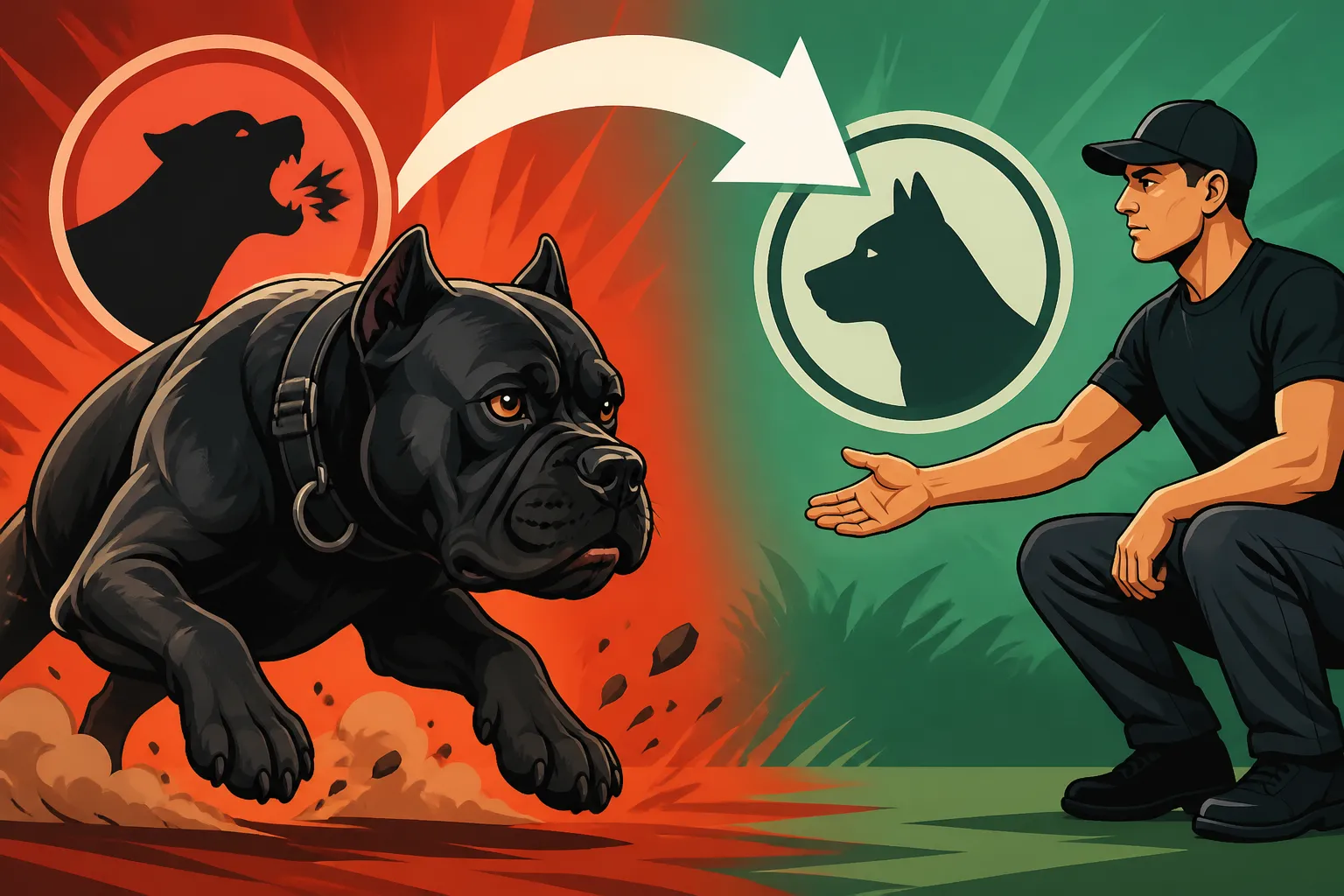
When your Cane Corso has already "locked on," you need more than a polite request. You need a strategy to break their focus and redirect it to you. This is where emergency recall, redirection techniques, and judicious physical interruption come into play.
Interrupting the Stare with High-Value Interventions
Once that intense stare begins, your normal "come" command is likely to be ignored. This is the time for your emergency recall. This should be a distinct, unique command or sound that you never use for anything else. It could be a specific whistle, a unique word like "NOW!", or a combination of words. The training for this command needs to be done with the absolute highest value rewards you can imagine.
Think about what your Cane Corso values most in the world. Is it a squeaky tennis ball? A piece of hot dog? A dollop of peanut butter? Whatever it is, that's what you reserve exclusively for emergency recall. Practice this by surprising your dog with the emergency cue and instantly, jubilantly rewarding them. The goal is that this cue instantly breaks their concentration, even when they're highly engaged. You want them to think, "Oh my gosh, what AMAZING thing is happening with my human right now?" The reward must be so spectacular that it overrides the current distraction. For some Cane Corsos, a particularly smelly, high-fat treat from a brand like Amazon's Zuke's Mini Naturals might do the trick. Remember, Whether Food Motivates a Cane Corso often depends on the quality of the food.
Redirecting Focus to You
Beyond an emergency recall, active redirection can be incredibly effective if you catch them early in the "lock on" phase, before their focus is fully cemented. The idea is to quickly shift their attention from the distraction to something engaging you are doing.
- Sudden Movement: Instead of passively calling, suddenly change direction and jog a few steps in the opposite direction. Many dogs have a natural instinct to follow their human. As they turn, immediately praise and reward them for re-engaging with you.
- Engaging Noise/Toy: Carry a specific toy that your Cane Corso loves and only gets during training or high-stakes recall. A sudden squeak or the rustle of their favorite tug toy can sometimes break the trance. The moment their head snaps towards you, you've got an opening.
- Quick, Known Command: Ask for a rapid-fire, easy command they know perfectly, like "sit!" or "touch." The act of performing a command requires a cognitive shift that can interrupt the instinctual stare. Reward the command, then immediately try your recall.
Online training platforms, like those offered by BAXTER & Bella, often provide excellent resources and structured games specifically designed to build this kind of intense focus on the handler, which is invaluable for redirecting a Cane Corso's attention. The more engaged your Cane Corso is with you generally, the easier it will be to redirect their focus in challenging situations.
When to Use a Physical Interruption (and When Not To)
Sometimes, despite your best efforts, your Cane Corso is fully locked on, and you need to intervene physically for safety. This is where proper equipment and timing are paramount.
- Leash Pressure: If your Cane Corso is on a leash or long line, a firm, consistent (but not violent) pull on the leash can break their focus. The moment they turn their head or take a step towards you, immediately release the pressure and reward. The goal is to make the leash uncomfortable but not painful, and to teach them that releasing the tension comes from re-engaging with you. Avoid yanking or repetitive jerking, as this can cause injury and fear.
- Body Blocking: If your Cane Corso is off-leash (only in a safely enclosed area or if you have an extremely reliable recall), and you see them starting to fixate, you can sometimes physically step between them and the object of their focus. This is done by turning your body sideways, stepping into their path, and subtly guiding them away with your leg or hip. This isn't about pushing or kicking, but about calmly intercepting their line of sight and movement. This must be done confidently and calmly, as hesitation can be interpreted as weakness. This method is best for dogs that respect your personal space and direction.
- Avoid Forceful Methods: Never resort to hitting, yelling, or otherwise punishing your Cane Corso during a lock-on. This will only erode trust, potentially make them fearful or defensive, and won't actually solve the underlying issue. They might learn to avoid you when they're focused, which is the opposite of what you want for a reliable recall. Physical interruption should always be about redirection and safety, not punishment.
Troubleshooting and Advanced Recall Work
Even with the best training, Cane Corsos can present unique challenges. Addressing these effectively means constantly evaluating your methods and your dog's responses.
Recognizing and Respecting Your Cane Corso's Threshold
Every Cane Corso has a "threshold" – a point beyond which they cannot process information, and their instinct takes over. This threshold varies from dog to dog, and even for the same dog, it can change based on their mood, energy levels, or the intensity of the distraction. A tired or stressed Cane Corso might have a lower threshold than a well-rested, calm one.
Your job as an owner is to become a master at Reading a Cane Corso's Body Language at a Distance. Watch for subtle signs of fixation before they fully lock on:
- Ear position: Pricked forward, swiveling towards the distraction.
- Body tension: Stiffening of the body, tail held rigid (not wagging).
- Head turn: A subtle turn of the head towards the interest.
- Stiff gait: Walking with a deliberate, sometimes slow, stiff pace.
If you intervene at these early stages, before they cross their threshold, your chances of a successful recall or redirection are much higher. If they're already growling, lunging, or ignoring everything, you've likely missed your window, and your focus needs to shift to safe management of the situation rather than training. Always try to work below their threshold, gradually exposing them to more intense stimuli as they gain confidence and responsiveness.
Maintaining Consistency Across the Household
A Cane Corso thrives on consistency and clear expectations. If one family member uses a different command for recall, or allows the dog to ignore them sometimes, it can completely undermine all the hard work everyone else is doing. Imagine your dog hearing "come" from one person, meaning a treat, and "come" from another, meaning nothing. How confusing!
It is absolutely crucial that everyone in the household uses the same recall word, the same hand signal (if applicable), and consistently rewards every single successful recall. Hold family meetings to ensure everyone is on the same page. Children, in particular, need to understand the importance of this. Teaching Every Family Member the Same Cane Corso Cues reinforces the command from all angles and prevents your Cane Corso from learning that they only need to listen to one person. This also applies to visitors or anyone who interacts with your dog regularly. The more consistent the entire environment is, the more reliable your Cane Corso's recall will become.
Seeking Professional Guidance
There will be times when, despite all your efforts, you feel stuck. This is perfectly normal, especially with a powerful and intelligent breed like the Cane Corso. Don't hesitate to seek help from a qualified professional dog trainer or behaviorist.
Look for trainers who specialize in large breeds, guardian breeds, or have experience with behavioral issues like fixation or reactivity. Avoid anyone who promotes harsh, punitive methods, as these are counterproductive for a Cane Corso and can damage your bond. A good trainer will observe your dog's behavior, identify triggers, help you refine your techniques, and provide personalized strategies for your specific situation. They can also help you understand What to Look For in a Cane Corso Trainer. Sometimes, an outside perspective and expert guidance are exactly what you need to break through a plateau and build that truly bulletproof recall. They might even introduce tools like e-collars, but only as part of a comprehensive, positive reinforcement-based training program, and always with proper, professional instruction to ensure humane and effective use.
Here's a quick comparison of recall types:
| Recall Type | Description | Ideal for | Potential Drawbacks |
|---|---|---|---|
| Basic Recall | "Come" with consistent praise/treats, low distractions. | Daily interactions, low-stakes environments, reinforcing good habits. | Fails in high-stimulus situations if not proofed. |
| Emergency Recall | Unique cue (whistle/word) with highest value rewards. | Urgent situations, breaking strong fixation. | Requires careful, infrequent use; value can diminish if overused. |
| Redirection | Engaging the dog with movement, toys, or quick commands. | Early stages of fixation, preventing full lock-on. | Requires handler proactivity; may not work if fixation is too strong. |
| Physical Interruption | Leash pressure, body blocking to break focus and guide. | Safety when other methods fail, on-leash management. | Can be misused, leading to fear or reactivity if not done correctly. |
Disclaimer
This article is for general informational purposes only and does not constitute professional advice. Laws, prices and regulations vary by location and change over time. Consult a qualified professional for guidance on your specific situation.