The Place Command That Saves a Cane Corso Household
Few things are more frustrating than having a hundred-pound Cane Corso underfoot, especially when guests arrive, dinner is on the table, or you simply need a moment of peace. These magnificent dogs are loyal and affectionate, but without clear boundaries, their size and enthusiasm can quickly turn chaotic. This guide is all about mastering the "place" command, a game-changer that can bring calm and control to your Cane Corso household, giving your dog a designated spot where they can relax and you can regain your space.
Understanding the "Place" Command for Your Cane Corso
The "place" command is one of the most vital tools in a Cane Corso owner's training arsenal. It's not just about getting your dog to sit still; it's about teaching them to go to a specific, designated spot and remain there until released. For a powerful and often protective breed like the Cane Corso, this command provides essential structure and an "off-switch" that can prevent many common behavioral issues.
Why "Place" Is More Than Just a Bed
When we talk about "place," we're not just telling your Cane Corso to lie down on their dog bed. It's a command with a much deeper meaning and expectation. Unlike a simple "stay" or "down," which might mean a temporary pause in their current location, "place" instructs your dog to move to a specific object or area and settle there for a potentially extended period, ignoring distractions, until you give them a release cue.
Imagine your Cane Corso charging to the door every time the doorbell rings, barking and jumping at visitors. With a solid "place" command, you can direct them to their designated spot, such as a sturdy dog cot in the corner of the living room. They learn that when you say "place," they go to that spot, lie down, and patiently wait. This isn't just about obedience; it's about mental conditioning, teaching them to self-regulate and understand boundaries within the home. It’s a powerful tool for managing a large, imposing dog that needs clear direction.
The Core Benefits of a Solid Place Command
The benefits of a well-taught "place" command for a Cane Corso are numerous and far-reaching, transforming the dynamics of your home. It moves beyond basic obedience to establish a profound sense of structure and safety for everyone involved. Without it, the inherent guarding instincts of a Cane Corso can become overwhelming, making everyday interactions stressful rather than harmonious.
Firstly, "place" creates immediate boundaries, significantly reducing household chaos. No more jumping on guests, no more begging at the dinner table, and no more tripping over your giant companion as you move about. Your Cane Corso learns to settle and observe from a distance, understanding that certain areas or times require their calm presence elsewhere. This clear expectation can greatly diminish unwanted behaviors driven by excitement or over-arousal.
Secondly, it provides invaluable mental stimulation for your intelligent Cane Corso. Holding a "place" command, especially amidst household activity or distractions, requires significant focus and impulse control. This mental effort is often more tiring and satisfying for a dog than physical exertion alone. It gives them a job, even if that job is simply to "be calm and wait," which is incredibly important for a working breed that thrives on purpose.
Finally, mastering "place" builds immense confidence and trust between you and your Cane Corso. Your dog learns to trust your directions, even when their instincts tell them to react. It reinforces your leadership in a calm, consistent way, showing them that you have situations under control. This command is absolutely essential for a guardian breed like the Cane Corso, enabling them to be a protective presence without being a disruptive one, ensuring they can be reliable and well-mannered in a variety of situations.
Step-by-Step Training: Teaching Your Cane Corso "Place"
Teaching your Cane Corso the "place" command effectively requires patience, consistency, and the right approach. Remember, you're building a foundation for a lifetime of good behavior and calm household dynamics, so taking your time now will pay dividends down the road. Don't rush through the steps, especially with a breed as impressionable and physically powerful as the Cane Corso.
Choosing the Right "Place" and Tools
The first step is selecting the ideal "place" for your Cane Corso. This needs to be a designated object or area that is clearly defined and comfortable. For a Cane Corso, durability is key. We're talking about a heavy, strong dog, so flimsy beds won't cut it. Many owners find success with raised dog beds or cots, often available on platforms like Amazon, because they elevate the dog and are generally very sturdy and easy to clean. You could also use a large, thick bath mat or a specific rug. The important thing is that it's distinct from the rest of the floor and large enough for your Cane Corso to lie down comfortably.
Once you have your designated "place," you'll need a few other tools. High-value treats are non-negotiable – think small pieces of cooked chicken, cheese, or specialized training treats that your Cane Corso absolutely loves. These will be your primary motivators. For initial guidance, a leash can be incredibly helpful to gently direct your dog. Some owners find structured online training programs useful, such as those offered by BAXTER & Bella, which provide step-by-step guidance on core obedience commands like "place" from puppyhood through adulthood.
The Foundation: Luring and Rewarding
Now, let's get into the actual training. Start in a quiet area with minimal distractions. With your Cane Corso on a leash, stand near their chosen "place."
- Lure onto Place: Hold a high-value treat in your hand, letting your Cane Corso sniff it. Use it to lure them onto the "place." As their front paws step onto the object, say "Place." Continue to lure them until all four paws are on the "place."
- Mark and Reward: The moment all four paws are on the "place," immediately mark the behavior with a verbal marker (like "yes!") or a clicker, and then reward them with the treat. Many dogs naturally lie down once they're on their "place." If yours does, great! If not, use the treat to lure them into a down position while they are on the "place," and then mark and reward.
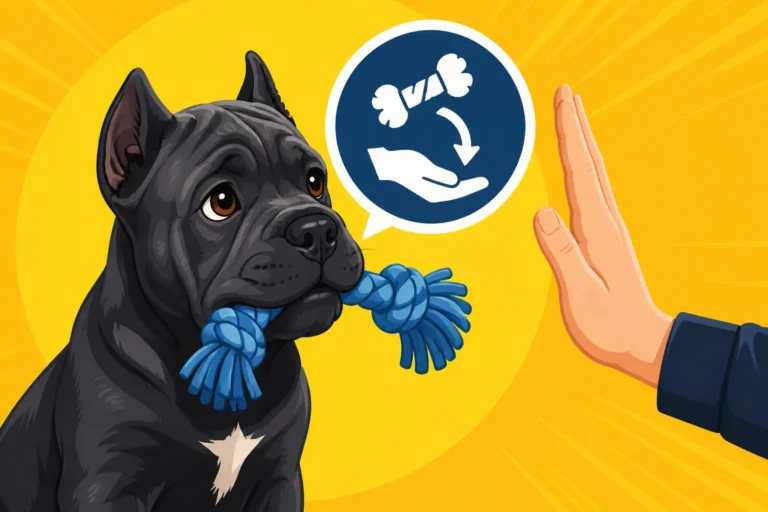
- Repeat and Release: Practice this several times. Once they are on their "place" and settled, give them a release cue like "Okay!" and toss a treat off the "place" to encourage them to get off. This teaches them that they are only done when you say so. This "release" is just as important as the "place" command itself. You don't want your Cane Corso deciding when the command is over. The Length of a Cane Corso's Attention Span can vary, so keep early sessions short and positive.
At this stage, the goal is simply to get your dog to understand that "place" means "go to this specific spot." Don't worry about duration or distractions yet. Focus on smooth transitions onto and off the place, making it a positive and rewarding experience every time. Consistency in your cues and rewards will help them connect the dots quickly.
Adding Distance and Distractions
Once your Cane Corso reliably goes to their "place" and lies down when cued, it's time to build duration, distance, and introduce distractions. This is where the command truly becomes functional in a busy household.
- Building Duration: Start by increasing the time they spend on "place." After they're settled, wait one second before marking and rewarding. Gradually increase to two seconds, then five, ten, and so on. If they break position, calmly reset them by leading them back to "place," getting them to lie down, and starting over. Don't punish, just guide. Remember to vary the duration – sometimes they get released after a few seconds, sometimes after a minute. This keeps them guessing and reinforces that they must wait for your release cue.
- Adding Distance: Once they can hold "place" for a short duration, start taking a step or two away. Cue "place," wait for them to settle, then take one step back. If they hold, step forward, mark, and reward. Gradually increase your distance, always returning to them to deliver the reward, then releasing them. Eventually, you should be able to walk completely away, around the room, or even leave the room briefly. Getting a Cane Corso to Respond the First Time requires clear communication at this stage.
- Introducing Mild Distractions: This is crucial for a breed like the Cane Corso, who might otherwise get overstimulated. Start with very mild, predictable distractions. Have a family member walk calmly past you while your dog is on "place." Drop a soft toy quietly. Reward heavily if they hold. Slowly increase the level of distraction: maybe crinkle a bag of treats (not theirs), or walk across the room with their food bowl. If they break, go back to a level they can succeed at. Patience is paramount here, especially as your Cane Corso learns to ignore impulses.
Remember, every time your Cane Corso successfully holds their "place" despite a distraction or for a longer period, you are reinforcing their impulse control and building their confidence in understanding your expectations. This is the bedrock for managing a confident and sometimes strong-willed guardian.
Troubleshooting Common Cane Corso "Place" Challenges
Even with the best intentions and consistent effort, training the "place" command with a Cane Corso isn't always a smooth road. These are intelligent, powerful dogs with strong personalities and natural instincts that sometimes conflict with our desire for calm compliance. It's completely normal to hit a few bumps, but understanding how to troubleshoot these issues can make all the difference.
My Cane Corso Won't Stay on Place
This is perhaps the most common frustration. You've taught them to go to the spot, but as soon as you turn your back, they're off. There are a few key reasons why a Cane Corso might struggle with staying on "place":
- Duration Issues: You Went Too Fast: The most frequent culprit is progressing too quickly through the duration phase. If you asked your Cane Corso to stay for a minute when they could only reliably do ten seconds, you set them up for failure. Go back to basics. Can they hold it for five seconds? Great. Do that consistently, then move to six, then eight. Build in tiny increments. Always reward before they break, and then release them. If they break, it's not a failure, but information that you need to reduce the challenge.
- Insufficient Reward Value: Are the treats you're using truly high-value? For a Cane Corso, a piece of dry kibble might not cut it when faced with the excitement of the living room. Experiment with different treats. Cooked chicken, tiny pieces of hot dog, or special soft treats can dramatically increase their motivation to stay put. Remember, The Reward a Cane Corso Actually Values might change, so keep things interesting!
- Too Much Distraction Too Soon: Similar to duration, throwing your Cane Corso into a high-distraction environment before they're ready is a recipe for them breaking "place." If they can't hold it when you're just walking around the room, they certainly won't hold it when the kids are running by or the cat is teasing them. Gradually introduce distractions, one small step at a time, always setting them up for success.
- Importance of Proofing: Proofing means practicing the command in many different environments, with varied distractions, and different people giving the command. A command is not truly learned until it can be performed anywhere. This is why you need to practice in the kitchen, the bedroom, the yard, and eventually, even in public (if appropriate and safe).
My Cane Corso Breaks Place When Guests Arrive
This is a critical scenario for Cane Corso owners, as their natural guardian instincts kick in when new people enter their territory. A Cane Corso lunging or barking at the door, even if it's "friendly" jumping, can be intimidating and unsafe for visitors. Training "place" specifically for this situation is paramount. Teaching a Cane Corso to Ignore the Doorbell is a key component here.
- Controlled Introductions, Starting with Calm Guests: Don't wait for a surprise visitor. Arrange for a calm friend or family member to come over. Before they arrive, put your Cane Corso on "place" with a long-lasting chew or Kong, if they find those reinforcing. Have your helper enter calmly. If your dog holds "place," reward them heavily (and quietly). If they break, your helper should pause at the door or even step back outside while you calmly reset your dog on "place."
- Management Before Training: While you're training, don't rely solely on the "place" command for every visitor. Use management tools like baby gates or even keep your Cane Corso on a leash attached to your belt initially. This prevents them from rehearsing the unwanted behavior while you're still building the "place" foundation. It gives you control and prevents them from self-rewarding by rushing guests.
- Gradually Increasing Excitement: As your Cane Corso becomes more reliable, you can gradually introduce more exciting guests or scenarios. Start with people who are known to your dog and understand the training process. Have them ignore your Cane Corso while they are on "place." Once your dog is calm and settled for a good duration, you can then give the release cue and allow for a controlled, polite greeting. A Cane Corso Meeting Guests at the Front Door should be a structured event, not a free-for-all.
The "Place" Command as a Management Tool
Beyond formal training sessions, the "place" command is an incredibly versatile management tool that can integrate seamlessly into your daily life. It's not just for when things go wrong; it's for creating a predictable, calm environment for your Cane Corso.
Consider using "place" during:
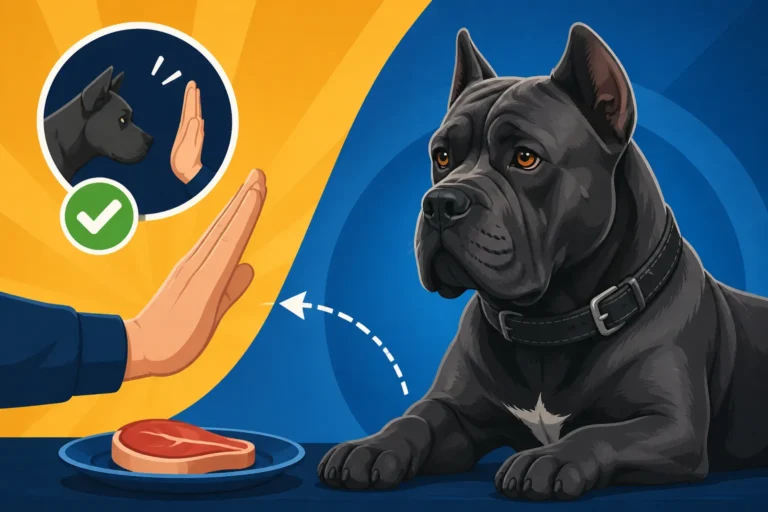
- Meal Times: Instead of having your Cane Corso underfoot while you cook or eat, send them to "place." They learn patience and respect for your space.
- Quiet Time: If you're working from home, reading a book, or watching TV, "place" can provide your dog with a structured "off-duty" time, preventing them from seeking constant attention or becoming bored and destructive. The Damage a Bored Cane Corso Does Indoors can be significant, and "place" can help provide mental work to prevent this.
- When You Need to Focus: If you have small children, or are doing something that requires your full attention, "place" provides a safe, out-of-the-way spot for your Cane Corso, ensuring they aren't accidentally tripped over or in the way.
It's crucial to remember that "place" should never be used as a punishment. It should always be a positive, reinforcing experience. If your Cane Corso associates "place" with being in trouble, they will develop a negative emotional response, making the command much harder to achieve. Instead, present it as a comfortable, rewarding alternative to being underfoot.
Integrating "Place" into Your Cane Corso's Daily Life
The true power of the "place" command unfolds when it becomes a natural, effortless part of your Cane Corso's everyday existence. It moves from being a formal training exercise to a practical, intuitive tool that enhances their well-being and the peace of your household. For a breed that thrives on routine and clear expectations, integrating "place" deeply into their routine is a gift.
Maintaining the Command and Preventing Extinction
Training a command isn't a one-and-done deal; it's an ongoing process, especially with a dog as intelligent and observant as a Cane Corso. You need to actively work to maintain the "place" command and prevent it from "extinguishing" – meaning your dog stops performing it reliably over time.
- Random Rewards, Varied Duration: Once your Cane Corso is proficient, you don't need to reward every single time they go to "place." However, you should still offer random, high-value rewards occasionally, even for holding it for an extended period. This keeps them motivated and reminds them that "place" can still lead to great things. Also, continue to vary the duration. Sometimes they're on "place" for two minutes, sometimes for twenty, sometimes for an hour. This ensures they always wait for your release cue, rather than anticipating an end.
- Practice in Different Environments: Don't just practice "place" in the living room. Take their cot or mat to different rooms, out to the backyard, and even to dog-friendly public spaces (if your dog is ready for that level of distraction). Each new environment is a chance to solidify the command and show your Cane Corso that "place" means "place," no matter where they are. Teaching Every Family Member the Same Cane Corso Cues is vital here, ensuring consistency across all environments and handlers.
- Keep It Fun and Positive: Training should always be a positive experience. If you notice your Cane Corso becoming reluctant or stressed, scale back, make it easier, and infuse more joy into the process. Use enthusiastic praise and keep sessions short and successful. A happy Cane Corso learns best.
The Long-Term Benefits for a Guarding Breed
For a Cane Corso, a breed known for its protective instincts and imposing presence, the "place" command offers profound long-term benefits that extend far beyond simply having a well-behaved dog. It actually enhances their role as guardians by providing them with an essential "off-switch" and building a calmer, more confident temperament.
When a Cane Corso understands "place," they learn to regulate their impulses. Instead of reacting instinctively to every doorbell, unfamiliar sound, or new person, they can be directed to their spot, where they learn to observe calmly. This teaches them discernment – not every new stimulus is a threat. It cultivates an inner calm, reducing their overall stress levels, because they know you have things handled and they don't always need to be on high alert. This is crucial for preventing What an Anxious Cane Corso Looks Like.
A Cane Corso with a solid "place" command is a more reliable and less reactive dog. They become confident in their ability to respond appropriately because they have learned self-control. This means you can enjoy your dog more fully, take them more places (where appropriate), and have a much more peaceful home environment. It builds a stronger bond based on mutual respect and understanding, creating a truly harmonious relationship between you and your magnificent Cane Corso. This daily routine provides The Structure a Cane Corso Needs Every Single Day, which is fundamental to their well-being.
| Scenario | Challenge Without "Place" Command | Benefit With "Place" Command |
|---|---|---|
| Guests Arrive | Jumping, barking, crowding the door | Dog goes to designated spot, observes calmly |
| Dinner Time | Begging, paws on table, constant presence underfoot | Dog settles quietly in their spot away from the table |
| Working from Home | Seeking attention, pacing, disrupting focus | Dog rests in their spot, providing mental "off-duty" time |
| Babies/Small Children | Accidental knocking over, overly enthusiastic play | Dog learns boundaries, provides safe distance for children |
| Vet Visits/Grooming | Over-excitement in waiting room, hard to manage | Dog can calmly wait on a mat, reducing stress for all |
| Doorbell Rings | Barking frenzy, rushing the door | Dog moves to place, allows owner to answer calmly |
Disclaimer
This article is for general informational purposes only and does not constitute professional advice. Laws, prices and regulations vary by location and change over time. Consult a qualified professional for guidance on your specific situation.