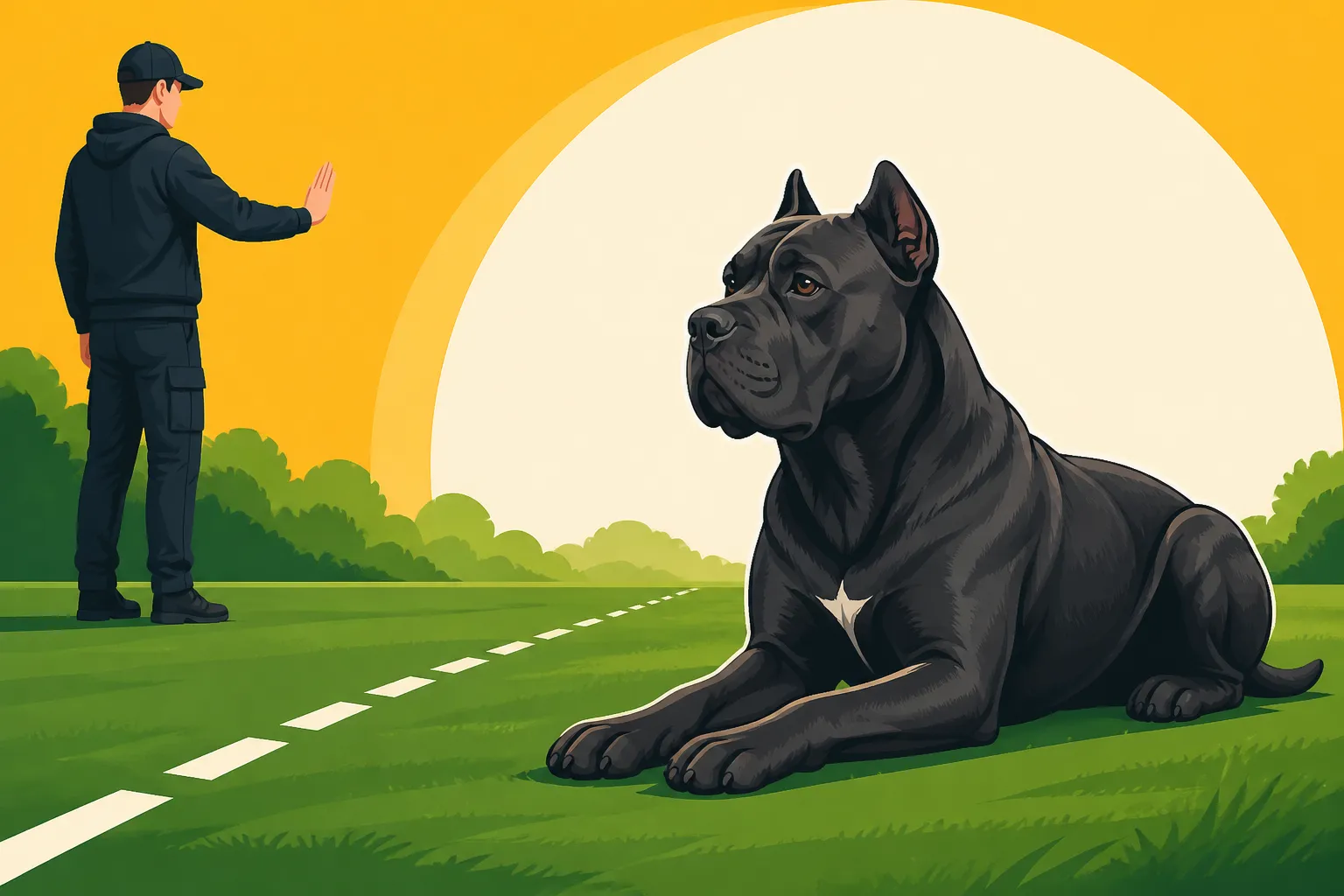
Teaching a Cane Corso to Down at Distance
One of the most valuable commands you can teach your Cane Corso is a reliable "down at distance." It’s not just about showing off; it's about real-world safety, giving you crucial control when your big, powerful dog might be distracted, or when getting physically close isn't an option. Many Cane Corso owners feel that sinking feeling in their stomach when their dog is halfway across the park, sniffing something interesting, and they know a simple "down" might not cut it. This guide is all about building that rock-solid, hands-free control, making sure your Cane Corso listens, no matter the distance or distraction.
Why 'Down at Distance' Is a Game Changer for Your Cane Corso
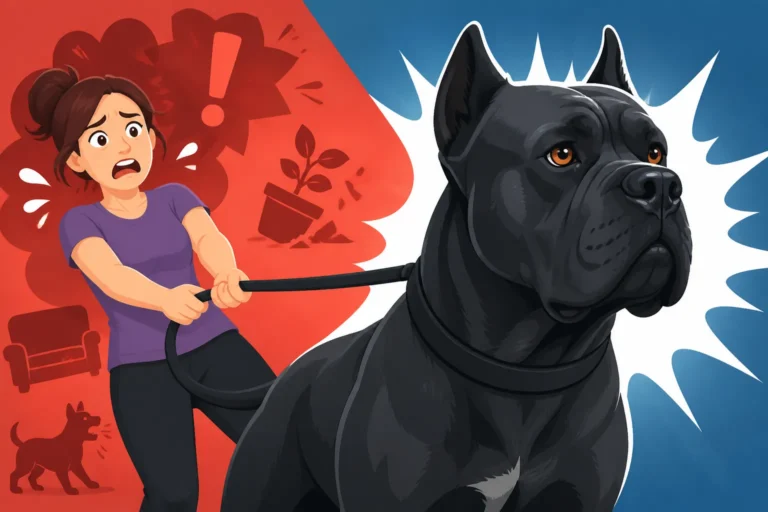
Let's be honest, living with a Cane Corso means managing a lot of dog. They're strong, intelligent, and possess a natural guarding instinct that means they're always alert. This combination, while wonderful in many ways, can also present challenges if you don't have absolute control. Imagine your Cane Corso spotting a squirrel across a busy street, or noticing another dog that causes them to get overly excited. In these moments, you need a command that immediately brings them under control, even if they're not right by your side. A "down at distance" isn't just a parlor trick; it's a critical safety net.
Think about the scenarios: a child running towards your dog, a loose dog approaching, or even just needing your Corso to settle down in a public space like a patio or a park. Being able to calmly tell your dog to "down" from several yards away, and have them immediately comply, is invaluable. It prevents potential conflicts, keeps your dog safe from hazards, and offers peace of mind. It truly embodies what it means to have a well-managed guardian breed. Without this kind of control, you might find yourself constantly worrying about what your Cane Corso might do, or worse, reacting physically when a verbal command should be enough. It allows you to protect your dog and others, maintaining their reputation as a noble, controlled companion, rather than an unruly giant. Why a Cane Corso Is Not a First Dog often points to the need for such advanced control.
Building the Foundation: A Solid 'Down' Up Close
Before you even think about distance, your Cane Corso needs to understand the "down" command perfectly when they are right next to you. This means they should be able to go into a down position, and stay there, for an extended period, regardless of minor distractions. We're talking about a down that's reliable for at least 30-60 seconds in a quiet environment before you start asking for more.
Start in a distraction-free zone, like your living room. Use a lure (a high-value treat) to guide your dog into a down position. As soon as their elbows hit the floor, mark the behavior with a verbal cue like "yes!" or a clicker, and reward them generously. Repeat this many, many times. Once they are consistently offering the down with a lure, start phasing out the lure and using just your verbal cue and a hand signal. You want them to perform the down promptly and enthusiastically. Make sure you are using a consistent cue, like "Down" or "Kneel." Keep those training sessions short, fun, and always end on a positive note. Remember, for a Cane Corso, the reward has to be worth it; The Reward a Cane Corso Actually Values could be anything from a special chew to exuberant praise.
Adding Duration and Distraction
Once your Cane Corso is reliably going into a down next to you, it's time to build duration. Ask for the down, mark and reward, but instead of releasing them immediately, wait a few seconds before marking again and rewarding. Gradually increase this time, aiming for several minutes. Practice this while you walk around them, step over them, and even leave the room for a moment. They need to understand that "down" means stay down until you release them.
Next, introduce mild distractions. Have a family member walk by, drop a toy, or make some soft noises. Each time your Cane Corso holds their down through the distraction, mark and reward. If they break, calmly reset them and try again. Never punish for breaking, simply guide them back to the correct position and try at a slightly lower level of distraction. This is a crucial step for setting up success when you eventually add distance. Many online programs, like those offered by BAXTER & Bella, emphasize building these foundational skills before moving on to more complex tasks, providing structured lessons that can be followed at your own pace.
Step-by-Step: Teaching 'Down at Distance'
Now for the exciting part – extending that reliable 'down' across space. This isn't a race; it's a careful progression that builds confidence and understanding for your Cane Corso. Rushing this stage often leads to frustration for both you and your dog. Remember, a Cane Corso needs clear, consistent communication, especially when you're not physically right there to guide them.
Taking the First Steps Back
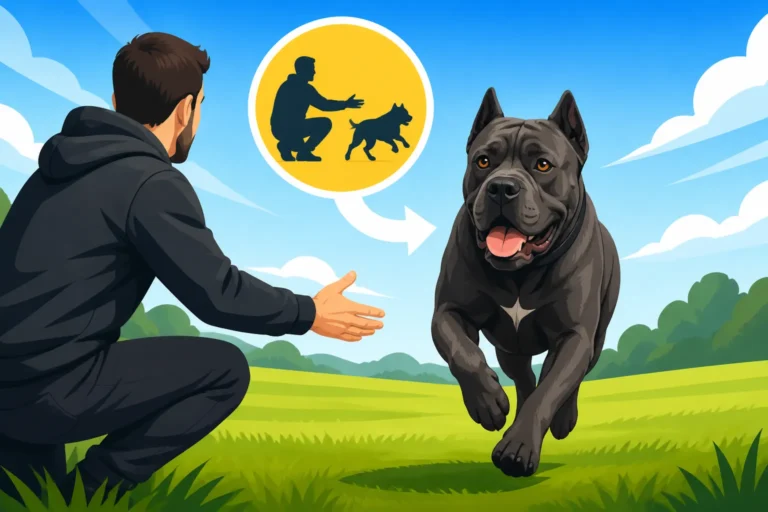
Start by having your Cane Corso in a familiar "down" position right next to you. Give your "down" cue and hand signal. Once they are down, take one small step backward. If your dog remains in the down, mark and immediately return to them to reward them enthusiastically. This is huge! You're telling them, "Yes! You held it even when I moved away!" Repeat this several times, always returning to reward at their side.
Once they are consistently holding for one step back, try two steps, then three. The key is to make it easy for them to succeed. If at any point they break the down, simply walk back, calmly put them back into position, and reduce the distance you're stepping away. Don't add frustration or make a big deal out of it. We're building a positive association with holding that position, no matter where you are. Think of it like a game of "Red Light, Green Light" for your dog's brain. For a powerful breed, Leash Manners Before a Cane Corso Hits Ninety Pounds also forms a crucial foundation for control, even if this specific exercise is off-leash.
Gradually Increasing Distance and Proofing
As your Cane Corso consistently holds their down for increasing steps, you can start asking for the down from a small distance. Stand a few feet away, give your verbal "down" cue and hand signal. As soon as they go down, walk over to them and reward. Don't make them wait. At this stage, the reward needs to be quick and direct. Gradually increase the distance from which you give the cue.
Once they are reliably going down when cued from a distance, then you can start adding duration at that distance. So, you cue them from ten feet away, they go down, you walk back to them, wait a few seconds, mark, then reward. Then increase the wait time, slowly, over many sessions. Introduce mild distractions again, now that you're working at a distance. Have a toy roll by, or a family member walk across their line of sight. Always ensure the distraction is manageable. You can even buy long lines or specialized training leads on Amazon to practice these extended distance commands safely in an open area, allowing your Cane Corso freedom while maintaining control. This proofing phase is where true reliability is built.
Troubleshooting Common Challenges
It’s completely normal to hit a few bumps in the road when teaching "down at distance" with a Cane Corso. They are intelligent dogs, but they are also independent and easily motivated by their environment.
Here’s a quick troubleshooting guide:
| Challenge | Possible Reason(s) | Solution(s) |
|---|---|---|
| Dog doesn't go down | Not strong enough on the verbal/hand cue; too much distance/distraction. | Go back to basics: practice "down" right next to you in a low-distraction environment. Ensure your cues are clear and consistent. Reduce the distance. Use a higher-value reward. |
| Dog goes down, but immediately gets up | Insufficient duration training; reward not strong enough; breaking the down is more rewarding. | Practice duration up close first. Gradually increase the time. Ensure your reward is very exciting. Only reward for staying down for the desired duration. If they break, calmly reset them. Make sure the release cue is clear. |
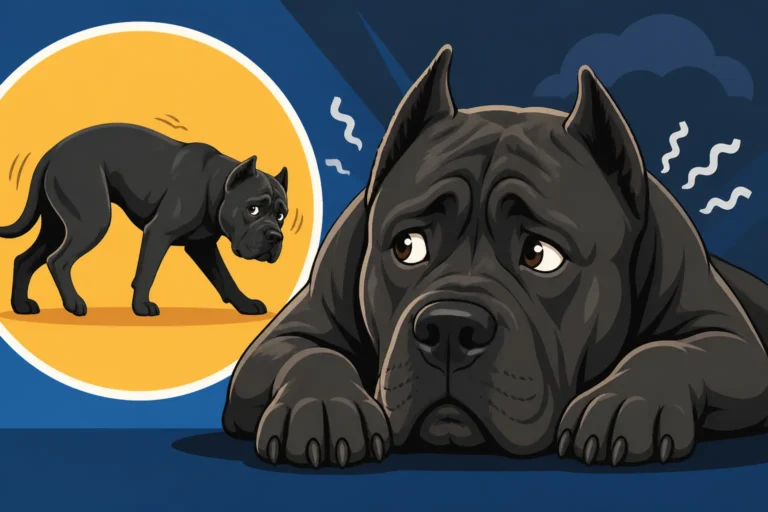
| Dog is distracted/doesn't respond | Environment too stimulating; reward value too low. | Reduce distractions. Try practicing in a quieter area before moving to busier spots. Use a genuinely high-value reward (e.g., boiled chicken, cheese, a favorite toy). Make sure you’re not asking too much too soon. The Length of a Cane Corso's Attention Span can vary, so keep sessions short and positive. |
| Dog anticipates command | Always practicing in the same spot/sequence. | Vary your training locations, times, and the order of your commands. Practice the "down at distance" in different environments and contexts. Use a Using a Long Line With a Cane Corso for practicing in open fields, giving them the illusion of freedom while you maintain a safety connection. |
Mastering the Skill: Consistency, Patience, and Real-World Application
Achieving a truly bomb-proof "down at distance" with your Cane Corso requires ongoing effort. It’s not a command you teach once and then forget about; it needs to be regularly practiced and reinforced in various environments to maintain its reliability. This is particularly true for a breed with a strong drive to observe and react to its surroundings.
Practice in Diverse Environments
Once your Cane Corso is proficient with "down at distance" in your yard or quiet park, gradually introduce more challenging environments. This is often called "proofing" the behavior. Take them to a slightly busier park, a pet-friendly store, or even just a friend's yard. Each new location presents fresh sights, sounds, and smells that will test their focus. Always start with a shorter distance and lower distraction level in a new environment, then slowly build up. You might even want to try a training program like BAXTER & Bella's that guides you through these progressive steps, ensuring you don't overwhelm your dog. The goal isn't just compliance, but understanding that "down" means "down," no matter where they are.
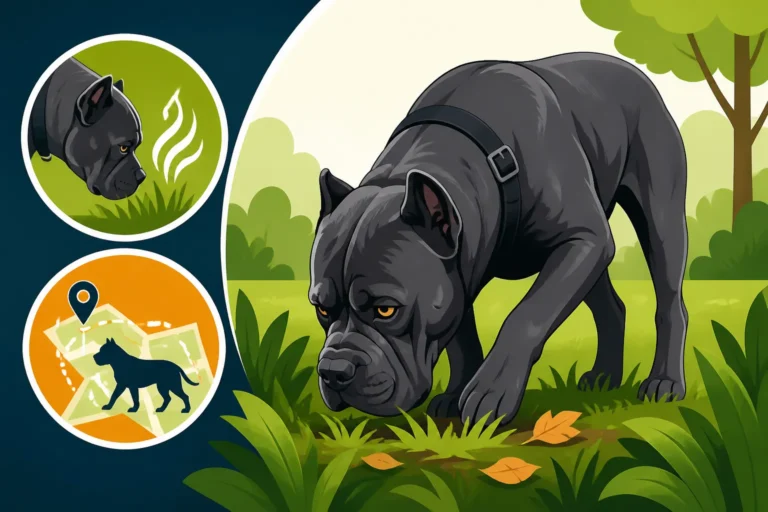
Remember that a Cane Corso's natural instincts are strong. They may be more inclined to respond to a perceived threat or interesting scent than to your command if that command isn't deeply ingrained. This is why consistent practice in varying scenarios is non-negotiable. You’re not just training a trick; you’re building a crucial communication bridge. What a Cane Corso's Guardian Instinct Actually Is means they are always taking in information, so your command needs to cut through that noise.
Generalization and Maintenance
Generalization means your Cane Corso understands that the "down" command applies everywhere, not just where you typically train. To achieve this, integrate "down at distance" into your daily life. Ask for it when you're preparing dinner and they're underfoot, when the mail carrier approaches and they're in the living room, or even just when you're relaxing on the patio and they're exploring the yard. These informal practice sessions are just as important as formal ones.
Don’t forget about the release cue! Always use a clear release word like "Okay!" or "Free!" to let your Cane Corso know they can get up. This helps reinforce the duration of the "down." If you stop practicing, or if you only ask for it in easy situations, the command will inevitably weaken. Consistency is paramount with a Cane Corso. They thrive on clear structure and knowing what's expected of them. The Structure a Cane Corso Needs Every Single Day applies to all training.
When to Seek Professional Help
If you’re finding it exceptionally difficult to teach "down at distance," or if your Cane Corso exhibits strong reactivity or anxiety that hinders training, don't hesitate to seek professional help. A certified professional dog trainer, especially one experienced with guardian breeds, can provide personalized guidance and help you troubleshoot specific issues. Sometimes, an extra set of eyes can identify subtle cues or environmental factors you might be missing. You can often find reputable trainers who offer What Six Private Sessions With a Cane Corso Trainer Cost or even group classes that can further challenge your dog in a controlled setting. Investing in professional guidance is investing in a safer, more harmonious future with your powerful companion.
Disclaimer
This article is for general informational purposes only and does not constitute professional advice. Laws, prices and regulations vary by location and change over time. Consult a qualified professional for guidance on your specific situation.