Impulse Control Work for a Cane Corso
Bringing a powerful, intelligent breed like the Cane Corso into your home is an incredible experience, but let's be honest, it comes with its own unique set of challenges. One of the biggest hurdles many owners face is managing their Corso's natural instincts and ensuring they don't act impulsively in high-stakes situations. This guide is dedicated to helping you understand and implement effective impulse control work, transforming your energetic pup into a thoughtful, well-behaved companion.
The Unique Impulse Control Needs of a Cane Corso
Owning a Cane Corso means living with a dog whose presence is undeniable. They are magnificent, strong, and deeply loyal, but these very traits, without proper guidance, can lead to impulsive behaviors that are simply not safe or manageable in a domestic setting. We're talking about a dog that can easily outweigh an adult, with a drive to protect and a history of working livestock. Ignoring these fundamental aspects of their breed would be a disservice to both you and your Corso.
Why Size and Power Demand Self-Control
Let's face it: a hundred-pound dog, or even a seventy-pound adolescent, has a profound impact when it moves without thought. A spontaneous lunge at a squirrel can wrench your arm out of its socket, sending you sprawling. An excited jump to greet a guest can knock them off their feet. This isn't just about minor inconveniences; it's about genuine safety for everyone involved. Imagine your Cane Corso, eyes locked on a perceived threat across the street, suddenly surging forward. Their strength is immense, and if they haven't learned to pause, to look to you for direction, the consequences can range from embarrassing to dangerous.
The sheer mass of a Cane Corso means that even a playful nudge can unintentionally injure a child or an elderly family member. Picture your Corso, full of youthful exuberance, seeing a ball roll past or hearing the distant bark of another dog. Without internal braking mechanisms, they might just decide to investigate at full speed, dragging you along, or worse, making an escape. It's not malice; it's simply a lack of impulse control in a body built for power, and it's why teaching them to think before they act is paramount from day one.
Breed Traits That Fuel Impulses
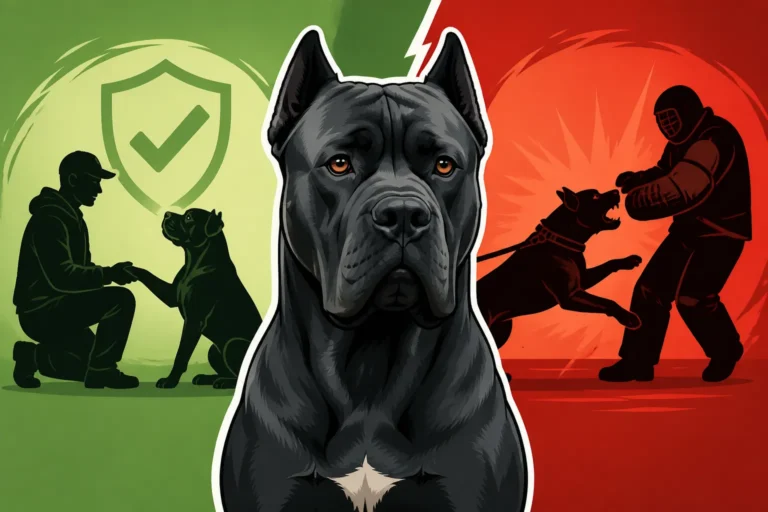
Cane Corsos were bred for a purpose: guarding property, livestock, and people. This guardian instinct is deeply embedded, and while it's one of their most admired qualities, it also means they are naturally inclined to react to what they perceive as threats or changes in their environment. That mailman approaching the door, the neighbor walking their dog, or even a sudden noise outside can trigger a strong, often impulsive, protective response. You want them to be discerning, not reactive. The Difference Between Guarding and Reacting in a Cane Corso
Beyond their protective nature, many Corsos possess a significant prey drive, a remnant of their boar hunting ancestry. That darting rabbit, a fleeing cat, or even a cyclist zooming by can ignite an immediate, instinctive chase response. This isn't something you can simply "train out" entirely, but you can absolutely teach your Corso to manage that impulse and defer to your commands. Without it, walks become a constant struggle, and off-leash safety is a pipe dream. High arousal situations, like the arrival of guests or the sound of the doorbell, can also lead to a burst of impulsive energy – jumping, barking, and general chaos. Understanding these inherent drives helps us tailor our impulse control training to their specific needs.
Starting Young: Foundation for a Well-Mannered Giant
The foundation for a well-controlled Cane Corso begins the moment they join your family. Just like building a skyscraper, the stronger the base, the more resilient the structure will be. For a breed of this magnitude, early, consistent, and positive training is not optional; it's essential for shaping their behavior and ensuring they grow into confident, calm, and controllable adults.
Early Socialization and Exposure
The world can be a noisy, chaotic, and sometimes scary place for a young puppy. Their critical socialization window, which closes around 16 weeks, is a precious time to expose them to a wide variety of sights, sounds, people, and environments in a positive and controlled manner. This isn't about letting your Cane Corso puppy run wild in the dog park; it's about teaching them to observe, process, and remain calm in the face of novel stimuli. A well-socialized Corso learns that most new things are not threats, reducing the likelihood of reactive, impulsive behaviors born out of fear or over-excitement.
Think about taking your puppy to a busy hardware store, a quiet park bench, or just sitting in your car watching the world go by. The goal is neutral exposure, rewarding calm observation rather than frantic greeting. Neutral Socialization for a Cane Corso at Twelve Weeks You want them to experience different floor textures, the rumble of passing trucks, the sound of children playing, and the sight of people with hats or umbrellas, all without feeling the need to lunge, bark, or hide. The more positively they encounter these things early on, the more confident and less impulsive they will be as adults. Read more about The Surfaces and Noises a Cane Corso Meets Before Sixteen Weeks to diversify their early learning experiences.
Basic Obedience as a Stepping Stone
Basic obedience commands are the backbone of impulse control. "Sit," "Stay," "Down," and "Come" aren't just parlor tricks; they are powerful tools that teach your Cane Corso to pause, listen, and follow your direction even when their instincts tell them to do otherwise. When your dog can reliably "sit" and "stay" even with distractions, you've already started building a strong foundation of self-control. These commands give you a way to redirect their attention and ask for a desirable behavior instead of an impulsive one.
Consistency is key. Short, frequent training sessions – think Five Minute Cane Corso Sessions Twice a Day – are far more effective than long, infrequent ones. Practice "Leave It" and "Drop It" from the very beginning with low-value items and gradually increase the challenge. These commands are invaluable for preventing everything from resource guarding to ingesting dangerous items. Every time your Cane Corso chooses to listen to your command over their immediate impulse, they are reinforcing those neural pathways for self-control.
Essential Exercises for Building Self-Control
Once you have a solid foundation in place, it's time to introduce specific exercises designed to supercharge your Cane Corso's impulse control. These aren't just abstract concepts; they are practical, everyday scenarios that will help your dog learn patience, respect boundaries, and ultimately, become a more enjoyable and safer companion.
The "Place" Command and Its Power
The "Place" command is arguably one of the most powerful impulse control tools you can teach a Cane Corso. It involves training your dog to go to a designated spot, like a raised cot or a mat, and remain there until released, regardless of what's happening around them. This command teaches them to settle, to be calm in the face of distractions, and to understand that sometimes, the best choice is to simply do nothing. For a large, often active breed, this ability to "turn off" on command is invaluable.
Imagine preparing dinner, and your Corso is politely waiting on their place cot in the corner, rather than underfoot or countertop surfing. Or picture guests arriving, and instead of a chaotic greeting at the door, your dog calmly watches from their place. Start by luring them onto the cot, rewarding them heavily for staying, and gradually increasing the duration and introducing minor distractions. Practice this multiple times a day. You can find excellent, sturdy cots designed for large breeds on platforms like Amazon, ensuring it can withstand your Cane Corso's weight and enthusiastic use. Learning Teaching a Cane Corso to Hold a Place Cot will transform your household.
"Leave It" and "Drop It" for Safety and Manners
These two commands are absolute non-negotiables for any large, powerful dog, and especially for a Cane Corso. "Leave It" teaches your dog to ignore something tempting on the ground or in someone's hand, preventing them from snatching food, chewing on inappropriate items, or engaging with something potentially dangerous. "Drop It" teaches them to release something they already have in their mouth. Both commands directly challenge a dog's natural impulse to grab or hold onto valuable items.
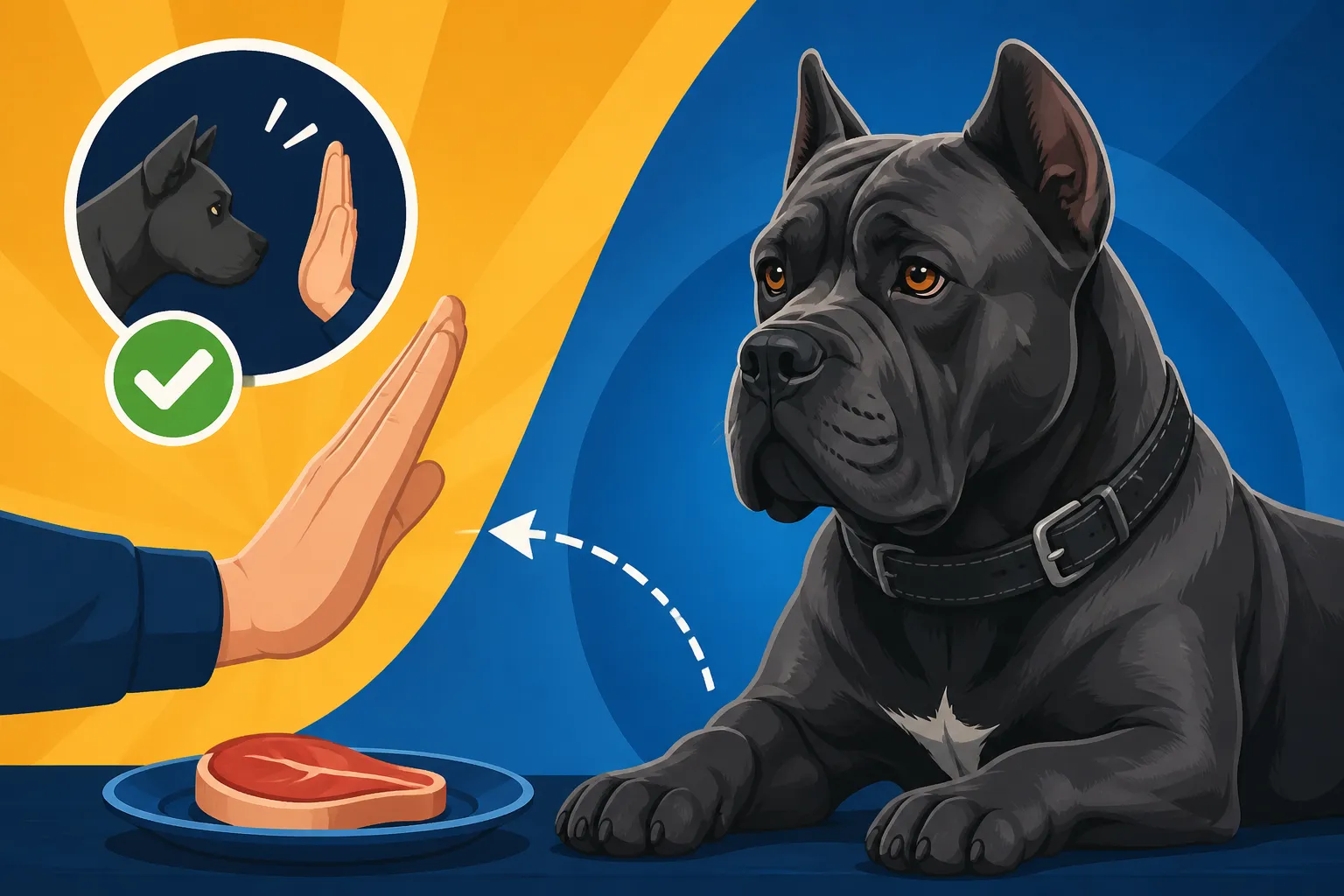
To teach "Leave It," start with a low-value treat in your hand. Say "Leave It" and cover the treat. The moment your dog backs away or looks at you, reward them with a higher-value treat from your other hand. Gradually progress to leaving treats on the floor, then walking past distractions outdoors. For "Drop It," offer a toy, then present a higher-value treat. As they drop the toy to take the treat, say "Drop It." Practice these constantly, increasing the value of the "leave it" item or the "drop it" item, making sure you always reward with something better when they comply. These commands are critical not only for manners but for their safety, preventing them from ingesting toxins or getting into fights over resources.
Waiting for Everything: Doors, Food, and Greetings
The concept of "waiting" is a fundamental cornerstone of impulse control. A Cane Corso who has learned to wait before accessing desired resources or opportunities is a Corso who respects boundaries and understands that good things come to those who are patient. This applies to so many everyday situations that often lead to impulsive behavior.
Begin with meal times. Instead of placing the bowl down and letting them gobble immediately, have them "sit" or "down" and "wait" while you place the bowl. Only release them with a clear "okay" or "break." This teaches incredible self-control around high-value food. Apply the same principle to doors: teach your Cane Corso to Teaching a Cane Corso to Wait at Every Door before going in or out, preventing them from barging through. For greetings, train them to sit politely rather than jumping on guests. Every time you ask them to wait, you're reinforcing the idea that calm, controlled behavior is what gets them what they want.
Navigating High-Distraction Scenarios
Real life is full of distractions, and your Cane Corso needs to practice impulse control in situations where their instincts are most likely to kick in. These scenarios are often the ones that cause the most frustration for owners, but with targeted training and consistent management, they can become opportunities to reinforce good behavior.
Mastering the Doorbell and Visitor Protocol
The doorbell is a notorious trigger for many dogs, and for a protective Cane Corso, it can send them into a frenzy of barking and lunging. The impulse to "guard" or "alert" can be overwhelming, making calm introductions impossible. The key is to establish a clear, consistent protocol well in advance of visitors arriving.
One highly effective strategy is to teach your Corso to go to their "Place" when the doorbell rings. Start with a mock doorbell ring, then immediately cue your dog to their mat, rewarding them for staying there as you "open the door" to a pretend guest. Gradually increase the realism, eventually having a friend ring the bell. This helps your Cane Corso associate the doorbell with going to their calm spot, rather than an explosion of excitement or territoriality. Teaching a Cane Corso to Ignore the Doorbell is a game-changer for a peaceful home. Reinforce this with high-value treats and praise every single time they comply. Over time, the impulse to rush the door will be replaced by the habit of going to their place.
Calmness Around Other Dogs and Animals
Managing a Cane Corso around other dogs and animals requires a careful balance of socialization, desensitization, and strong leash handling. For some Corsos, the impulse might be to chase (prey drive), while for others, it might be defensive or territorial reactivity. Allowing uncontrolled greetings or interactions can quickly escalate, especially with a dog of this size and power. Walking a Pair of Cane Corsos Past Another Dog requires careful planning.
Instead of letting your Cane Corso rush up to every dog they see, practice parallel walking at a distance where your dog can notice other dogs but remain calm. Reward heavily for calm observation. Play the "Look at That" game: when your dog sees another dog, mark and reward them for looking at you instead of fixating. Gradually decrease the distance as they show more composure. This teaches them that the presence of other dogs is a cue to check in with you, not to react impulsively. Sometimes, the best impulse control is simply avoiding situations that push your dog over their threshold. If your Cane Corso tends to lunge, it's often best to Crossing the Street to Avoid a Reactive Cane Corso Moment to keep everyone safe and reinforce positive habits.
Food and Toy Guarding Prevention
Resource guarding, where a dog becomes defensive over food, toys, or even space, stems from an impulse to protect what they perceive as their own. With a powerful breed like the Cane Corso, this behavior can be particularly dangerous. The good news is that it can often be prevented or managed with early, consistent, and positive training. A Cane Corso That Guards Its Bowl From the Family is a serious issue that needs attention.
Start by hand-feeding your Cane Corso puppy regularly, making your presence around their food bowl a consistently positive experience. Offer high-value treats while they are eating their regular meal. Practice "trade" games: offer a high-value treat in exchange for a toy they have, then give the toy back. This teaches them that humans approaching their resources means good things, not threats. Never punish growling, as this can suppress the warning sign and lead to a sudden bite. Instead, acknowledge the growl as communication and adjust your approach. The goal is to build trust and show them that they don't need to guard because their resources are safe and you might even make them better!
Leveraging Tools and Professional Help
Even the most dedicated owner can benefit from the right tools and, sometimes, the guidance of a professional. When you're working with a dog as powerful and intelligent as a Cane Corso, maximizing your effectiveness means utilizing every resource available to you.
Effective Training Aids
Choosing the right training aids can make a significant difference in your ability to manage and communicate with your Cane Corso, especially when working on impulse control. For strong pullers, a front-clip harness or a head halter can offer much more control than a standard collar, redirecting their power without causing discomfort. A sturdy, appropriately sized leash is non-negotiable, and having a long line can be a fantastic tool for practicing recall and "leave it" in a safe, open area, allowing your Corso to experience some freedom while still under your control. Many reputable brands offer these on Amazon, ensuring you get durable equipment designed for large breeds.
High-value treats are your best friend. For a Cane Corso, "high-value" often means something meaty and delicious – think small pieces of cooked chicken, cheese, or specialized training treats. These motivators help capture and hold their attention even in distracting environments. The Reward a Cane Corso Actually Values can be different for every dog, so experiment to find what truly motivates yours. Finally, muzzle training should be a positive experience introduced early on. A well-fitted basket muzzle, like those found on Amazon, is a safety tool, not a punishment. It allows your dog to pant, drink, and take treats, but provides peace of mind in high-stress situations or when working on specific behavioral challenges, letting you focus on the training. Knowing Why Every Cane Corso Should Be Muzzle Trained Early can prevent future problems.
When to Call in a Professional
It's absolutely okay to admit when you need extra help. Cane Corsos are not "easy" dogs, and their training can be complex, especially when dealing with deeply ingrained impulses or challenging behaviors. If you're feeling overwhelmed, frustrated, or simply not making progress, seeking professional guidance is a responsible and proactive step. A qualified dog trainer or behaviorist can offer tailored strategies, identify subtle cues you might be missing, and provide hands-on instruction.
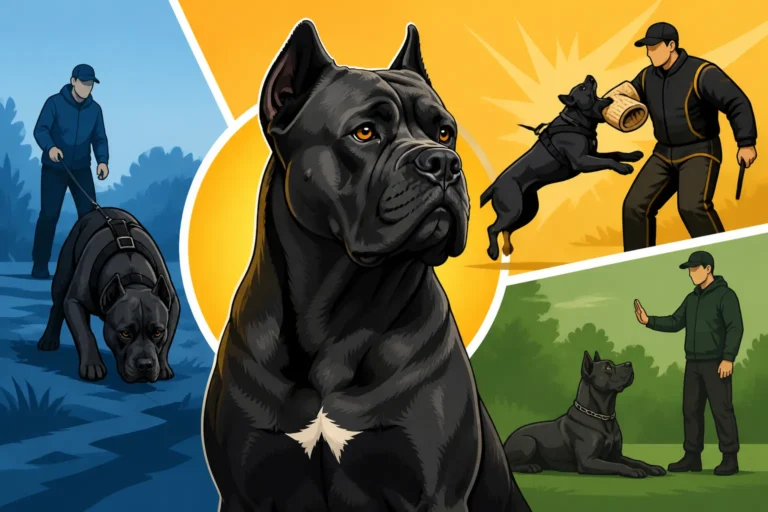
Look for trainers who specialize in large breeds or guardian breeds and utilize positive reinforcement and modern, force-free methods. Avoid anyone advocating for harsh corrections or dominance-based training, as these approaches can easily backfire with a powerful, sensitive breed like the Cane Corso, potentially leading to fear or aggression. Check out What to Look For in a Cane Corso Trainer for more detailed guidance. Online resources can also be incredibly helpful. Programs like BAXTER & Bella offer structured, step-by-step guidance through various training stages, which can be invaluable for busy owners or those who don't have access to local trainers. They often provide community support and video tutorials, making complex concepts easier to understand and apply.
Overcoming Common Roadblocks
Training a Cane Corso for impulse control is rarely a smooth, linear journey. There will be bumps, plateaus, and moments where you feel like you're taking two steps back for every step forward. Recognizing these common roadblocks and having strategies to navigate them is crucial for your success and your dog's continued progress.
Dealing with Adolescence and Regression
Just when you think you've got this whole dog training thing figured out, your Cane Corso hits adolescence. This "teenage" phase, typically between 6 months and 2 years, can feel like a sudden regression in all your hard-earned training. Your once-attentive puppy might suddenly become deaf to commands, test boundaries, and develop a newfound surge of confidence that can manifest as impulsive behaviors. The Adolescent Cane Corso That Stops Listening is a common, frustrating experience for many owners.
During this period, hormones are raging, and your dog's brain is still developing. It's not personal; it's biological. The best approach is to double down on your foundation training. Go back to basics, reinforcing commands in low-distraction environments before gradually increasing the challenge. Be patient, consistent, and persistent. Your Cane Corso isn't trying to be difficult; they're simply navigating a complex developmental stage. Continue with clear communication and consistent expectations, and remember that this phase will pass.
Managing High Arousal and Reactivity
High arousal and reactivity are close cousins to impulsive behavior. When your Cane Corso becomes overly excited, fearful, or frustrated, their ability to think rationally and respond to commands diminishes rapidly. This can lead to barking fits, lunging, spinning, or ignoring you completely. Understanding your dog's individual "threshold" – the point at which they can no longer cope calmly – is vital.
The key to managing high arousal is to work below that threshold. This means identifying the triggers (other dogs, strangers, certain sounds) and practicing impulse control at a distance or intensity where your dog can still remain calm and focused. Use desensitization and counter-conditioning: gradually expose them to the trigger while simultaneously associating it with something positive (like high-value treats). For example, if your Corso barks at passersby, practice "Place" with a window view at a distance where they are just noticing people but not reacting. Reward calm observation. Slowly, very slowly, decrease the distance or increase the exposure. Sometimes, the most effective strategy is management: avoiding known triggers altogether until training is solid.
Consistency Across All Family Members
One of the biggest silent saboteurs of impulse control training is inconsistency among household members. If one person enforces "wait" at the door and another allows the Cane Corso to barge through, the dog receives mixed signals. If one person uses "Leave It" and rewards, while another simply yells "No!" and takes the item, the lesson becomes confused. Your Cane Corso needs clarity and predictability, especially when learning self-control.
Gather everyone in the household and ensure they all understand the commands, expectations, and rules for your Cane Corso. Teaching Every Family Member the Same Cane Corso Cues is paramount. Agree on specific hand signals, verbal cues, and reward systems. Role-play scenarios, like how to handle the doorbell or a dropped piece of food, so everyone is on the same page. Without this unified approach, your Cane Corso will learn to only apply impulse control with certain people or in certain situations, which undermines the entire effort.
Here's a quick reference table for common impulse triggers and corresponding impulse control exercises:
| Common Impulse Trigger | Recommended Impulse Control Exercises | Key Takeaway |
|---|---|---|
| Doorbell/Visitors | "Place" command, "Wait" at the door, calm greeting practice | Associate arrival with calm stationing, not chaos. |
| Food/Treats | "Wait" before eating, "Leave It" (dropped food), "Drop It" (guarded items) | Patience and trust around resources. |
| Other Dogs/Animals (on walks) | "Look at That" game, parallel walking, "Leave It", U-turns, "Watch Me" | Redirect focus to handler, avoid over-threshold reactions. |
| People/Strangers (in public) | "Watch Me," "Sit/Stay," "Place" (in public), rewarding calm observation | Defer to handler for assessment and greeting protocols. |
| Fetch/Play Excitement | "Sit/Stay" before throwing toy, "Drop It" during play, waiting for release | Channel energy, prevent frantic over-arousal. |
| Exiting a Car/Crate | "Wait" before opening door/crate, calm exit upon release | Prevent sudden bursts of energy and potential escapes. |
The Lifelong Journey of Impulse Control
Impulse control isn't a training course you complete and then forget. For a Cane Corso, it's a lifelong commitment to reinforcement, management, and adapting to their changing needs. Your role as their leader is to consistently guide them, ensuring they remain a thoughtful, well-mannered companion throughout their years.
Continued Reinforcement and Practice
Just like any skill, if you don't use it, you lose it. Impulse control needs continuous reinforcement. Integrate your exercises into daily life. Ask your Cane Corso to "wait" before you put their leash on, "leave it" when you drop something in the kitchen, or go to "place" while you eat your dinner. These small, consistent demands for self-control keep the lessons fresh and strengthen the neural pathways associated with calm decision-making.
Beyond formal training, ensuring your Cane Corso gets adequate mental and physical stimulation is crucial. A bored Cane Corso is an inventive Cane Corso, and often, those inventions manifest as impulsive, destructive behaviors. Interactive toys, puzzle feeders, snuffle mats, and regular sniff walks engage their minds and burn off energy, reducing the likelihood of them seeking their own, often less-desirable, entertainment. Understanding The Damage a Bored Cane Corso Does Indoors can highlight the importance of this ongoing engagement.
Adapting Training as Your Cane Corso Ages
As your Cane Corso moves from puppyhood to adulthood and eventually into their senior years, their physical and mental capabilities will change, and your impulse control training may need to adapt. A rambunctious adolescent might need more intense physical and mental challenges to manage their energy, while an older Cane Corso with joint issues may need shorter, gentler sessions that focus on cognitive engagement over strenuous activity.
For senior dogs, you might need to adjust your expectations slightly. They may not be as quick to respond, their hearing or sight might diminish, or cognitive decline could affect their focus. Be patient and understanding. Continue to engage them with simple impulse control games appropriate for their physical state. The goal is to keep their minds active and reinforce good habits, even if the pace slows down. The principles of patience, clear communication, and positive reinforcement remain steadfast, ensuring your beloved Cane Corso remains a cherished and well-behaved family member for their entire life.
Disclaimer
This article is for general informational purposes only and does not constitute professional advice. Laws, prices and regulations vary by location and change over time. Consult a qualified professional for guidance on your specific situation.