Teaching a Cane Corso to Ignore the Doorbell
The sound of the doorbell can be a sudden, jarring trigger for many Cane Corsos, transforming a calm household into a symphony of deep, booming barks and frantic door lunging. It's a common and incredibly frustrating scenario for owners who just want to answer their door without an earful or a giant dog body-slamming guests. This guide will walk you through effective strategies to teach your Cane Corso to remain calm and collected when the doorbell rings, restoring peace to your entryways and your eardrums.
Understanding Your Cane Corso's Doorbell Reaction
It's easy to get exasperated when your Cane Corso erupts at the doorbell, but it's crucial to understand that this isn't usually a malicious act. For many of these magnificent dogs, it's a deeply ingrained part of their genetic makeup and a misunderstanding of their role in your modern home.
The Guardian Instinct Kicking In
Cane Corsos were bred for centuries to be formidable guardians. Their job wasn't just to look imposing; it was to actively protect property and family from perceived threats. When the doorbell rings, or someone knocks, your Cane Corso isn't thinking, "Oh, it's the mailman with a package!" or "Great, Aunt Carol is here for tea!" Instead, their primal instinct, that powerful drive to guard, immediately kicks into gear. They hear an unexpected sound, an intrusion on their territory, and their natural response is to alert you and investigate, often with a powerful, booming bark and a rush to the door. This instinct is a core part of who they are, as detailed in What a Cane Corso's Guardian Instinct Actually Is. It’s why they’re so good at what they do, but it can be a nightmare when you're just trying to sign for a delivery.
They might see anyone approaching the door as a potential threat to their pack and territory. Their loud barking and intense presence are their way of saying, "I'm here, I'm big, and I'm watching you!" It's an attempt to deter, to communicate, and to protect. This isn't a behavior you can simply "punish away" without addressing the underlying drive; it requires redirection and teaching them an alternative, more appropriate response. The frustration comes when that instinct, which we sometimes appreciate, becomes overwhelming and disruptive in everyday life.
Over-Arousal and Lack of Impulse Control
Beyond pure instinct, a significant part of the doorbell drama stems from over-arousal and a lack of impulse control. Your Cane Corso goes from zero to a hundred in a split second, adrenaline surging through them. They get so revved up that they can't think clearly or respond to commands. This isn't just about the doorbell; it's often a symptom of insufficient Impulse Control Work for a Cane Corso in other areas of their life.
Imagine being startled by a sudden noise and immediately needing to solve a complex math problem. It’s nearly impossible when your heart is pounding. For your Cane Corso, the doorbell creates a similar physiological response. Their brain switches into reactive mode, making it incredibly difficult for them to process your cues or choose a calmer behavior. Teaching them to control their impulses in less stimulating situations is a vital prerequisite to tackling the doorbell. If they can’t wait politely for their food or stay on their bed when you move around the house, expecting them to ignore a front-door alarm is asking too much.
Laying the Groundwork: Foundation Training for Calmness
Before you even think about tackling the doorbell directly, you need to ensure your Cane Corso has a solid foundation of obedience and impulse control. This isn't a quick fix; it's about building a consistent routine and teaching them how to be a calm, thoughtful member of the household.
Mastering the "Place" Command
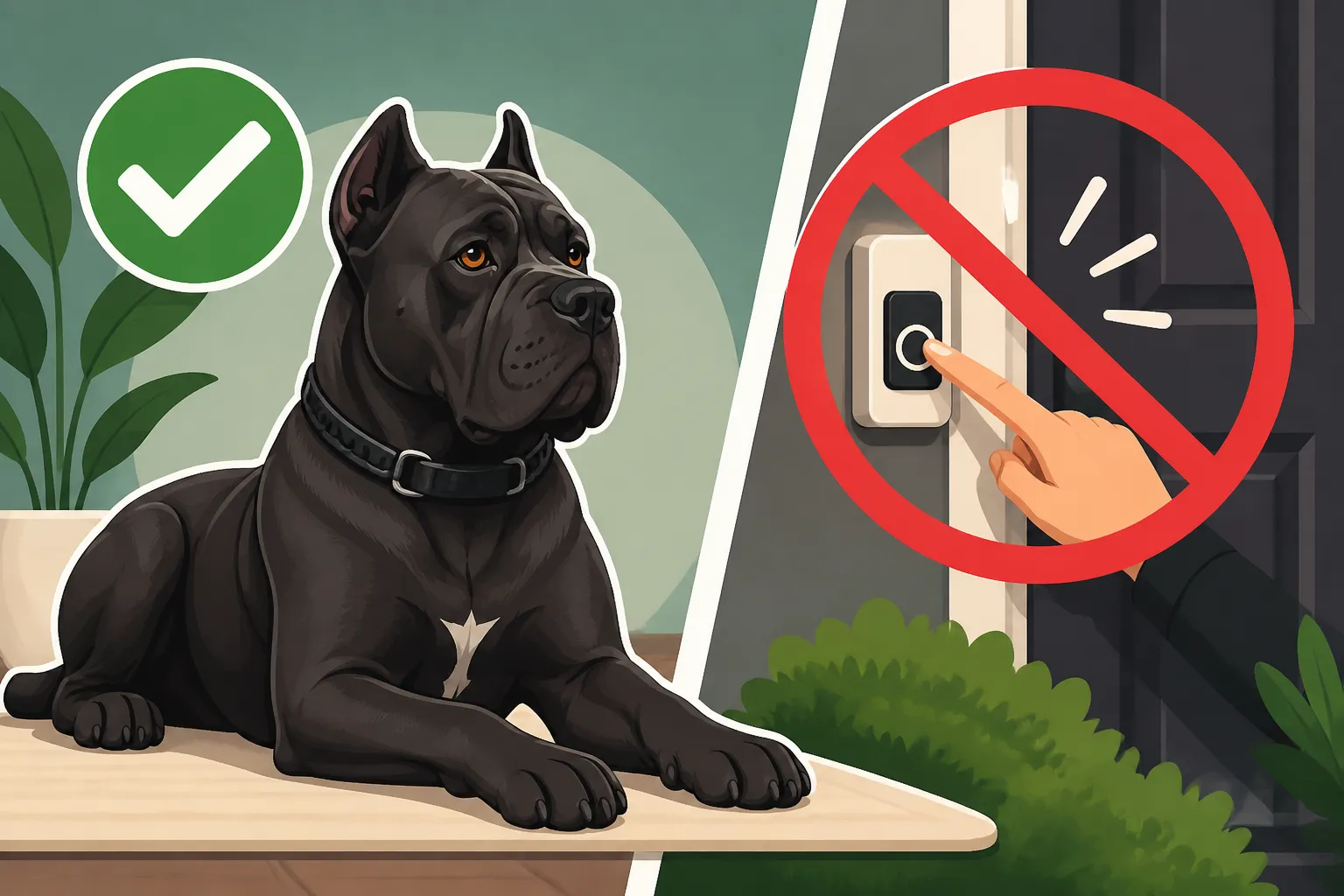
The "place" command is one of the most powerful tools in your arsenal for managing doorbell reactivity. It teaches your Cane Corso to go to a designated spot – like a dog bed or a cot – and stay there until released. This isn't just about obedience; it's about creating a safe, calm zone for them and giving you control over their location during high-stress situations. A sturdy, elevated cot, often available on Amazon, can become their special "place."
Start by teaching the "place" command in a low-distraction environment. Lure them onto their bed, say "place," and reward them heavily for staying, even for a few seconds initially. Gradually increase the duration and add distractions. Practice having them stay on their place while you walk around, open and close doors, or even have someone walk past a window. The goal is for them to understand that "place" means calm, still, and patient, no matter what else is happening. This is exactly what we explore in Teaching a Cane Corso to Hold a Place Cot, emphasizing the importance of consistency.
Building Solid Recall and "Wait" Cues
Having a reliable recall means you can call your Cane Corso away from a distraction and have them come to you. This is invaluable if they do manage to bolt towards the door. The "wait" command is equally important, teaching them to pause before going through a doorway or taking a treat. These commands reinforce your leadership and their ability to defer to you, even when excited.
Practicing these commands constantly, in various environments, is key. Start with short distances and minimal distractions for recall, gradually increasing the challenge. For "wait," practice at every doorway, before meals, and before getting into the car. The more your Cane Corso practices deferring to you and controlling their impulses in everyday situations, the better equipped they'll be to handle the intense trigger of the doorbell. Many owners find online resources, such as those offered by BAXTER & Bella, provide excellent, structured programs for building these fundamental obedience skills from puppyhood, which can prevent such issues from escalating. You can find more detail on building this crucial skill in Building a Cane Corso's Recall From Eight Weeks.
The Doorbell Desensitization Program: A Step-by-Step Approach
Now that your Cane Corso has a strong foundation, it's time to tackle the doorbell directly. This process involves desensitization and counter-conditioning, essentially changing their emotional response to the sound of the doorbell from alert and reactive to calm and neutral, or even positive.
Stage 1: The Recorded Doorbell at Low Volume
The first step is to completely remove the real-life trigger and use a recorded doorbell sound. This allows you to control the volume and frequency, ensuring your Cane Corso stays under their reactivity threshold. You'll need an assistant (a family member or friend) for later stages, but for now, you can manage this alone.
- Start Extremely Quiet: Play a recording of your doorbell on your phone or computer at the absolute lowest volume your Cane Corso can hear, maybe even barely perceptible to you.
- Reward Calmness: The moment your Cane Corso hears the sound and doesn't react (no ears perked, no tensing, no bark), immediately reward them with a high-value treat (like small pieces of cooked chicken or cheese). Repeat this 10-15 times per session, 2-3 times a day.
- Increase Volume Gradually: Over several days, slowly, incrementally increase the volume. If your Cane Corso reacts, you've gone too far. Lower the volume back down to where they were successful and try again later. The key is to keep them under their reaction threshold so they only associate the sound with good things, not with alarm.
- No Reaction = Treat: Never give the treat if they bark or lunge. Wait for them to be quiet and calm, even for a split second, and then reward. The goal is to create the association: doorbell = treat, but only when calm.
Stage 2: The Doorbell Rings, You Control the Outcome
Once your Cane Corso is consistently calm with the recorded doorbell at a reasonable volume, it's time to introduce a real doorbell, but still in a controlled manner. This requires an assistant.
- Your Assistant Rings, You Command "Place": Have your assistant stand outside, ready to ring the doorbell. You should be inside with your Cane Corso, ideally with them already on their "place" mat or tethered calmly nearby.
- Ring, Reward, Release: Your assistant rings the doorbell once. The moment it rings, immediately give your Cane Corso a "place" command or reinforce their stay. Reward them heavily for remaining calm and on their place. If they bark or try to get up, gently guide them back to their place, wait for calm, and then reward.
- Keep it Brief and Positive: Have your assistant ring the bell, you command/reinforce, reward, and then they can leave. Don't open the door yet. The goal is for your Cane Corso to learn that the doorbell means "go to your place and get rewarded," not "rush to the door." This is a perfect application of The Place Command That Saves a Cane Corso Household.
- Practice Short Sessions: Repeat this 5-10 times in a session, always ending on a success. Gradually increase the time they need to stay on their place after the ring before they get their release and final reward.
Stage 3: Adding the Door Opening
Now, you'll start to simulate a more realistic scenario by opening the door after the doorbell rings, still with your Cane Corso on their designated spot.
- Doorbell, Place, Door Open: With your Cane Corso on their "place," have your assistant ring the doorbell. Command/reinforce "place." When they are calm, then open the door slightly while they remain on their place.
- Reward for Stillness: Reward them for staying on their place while the door opens a crack, then wider. Your assistant can wave and then walk away, and you can close the door.
- Gradual Introduction of the "Visitor": Slowly, over several sessions, have your assistant step inside briefly (still without interacting with the dog), then leave. Always reward your Cane Corso for remaining calm and on their place. The idea is that they learn the doorbell means a visitor might appear, but their job is to stay put and be calm. This helps them understand Teaching a Cane Corso to Wait at Every Door.
- Consistency is Key: Every time the doorbell rings, whether in training or real life, you must be consistent. If you let them rush the door even once, you're undoing all your hard work. Consider redirecting their attention with a durable chew toy from Amazon when you know someone is coming.
Advanced Strategies and Troubleshooting for Persistent Doorbell Reactivity
Even with consistent training, some Cane Corsos might still struggle. Here are some advanced tips and troubleshooting methods to help you manage more challenging situations.
Managing Real-Life Doorbell Rings
It’s impossible to control every doorbell ring. What do you do when the delivery person comes unexpectedly, or a friend stops by unannounced? Management is crucial while you are still training.
- Pre-emptive "Place": If you know someone is coming, put your Cane Corso on their "place" before the doorbell rings. Give them a high-value, long-lasting chew to keep them occupied. This sets them up for success.
- Muzzle Training: For Cane Corsos with significant reactivity, especially if they are prone to nipping or jumping, muzzle training can be a responsible management tool. A comfortable basket muzzle, used temporarily during known high-trigger times, can provide peace of mind for you and safety for visitors. Why Every Cane Corso Should Be Muzzle Trained Early delves into this.
- Tethering: If "place" is still a work in progress, a sturdy tether (attached to a wall anchor, not furniture) can keep your Cane Corso from rushing the door. This allows you to answer calmly, and then reward them for being quiet at the end of the tether.
- White Noise or Music: Playing music or a white noise machine near the door can sometimes muffle the sound of the doorbell, reducing its startling effect and giving your Cane Corso a less abrupt trigger.
Addressing Underlying Anxiety or Overstimulation
Sometimes, doorbell reactivity is just one symptom of a larger issue, such as general anxiety, lack of mental stimulation, or insufficient exercise. A Cane Corso with pent-up energy or chronic stress will be more prone to reactive behaviors.
- Increased Mental Stimulation: Cane Corsos are intelligent dogs and need mental work. Engage them in puzzle toys (many great options on Amazon), scent work games, or advanced obedience training. A tired mind is often a calm mind. Without adequate stimulation, you might see issues like The Damage a Bored Cane Corso Does Indoors.
- Consistent Exercise: Ensure your Cane Corso is getting appropriate physical exercise tailored to their age and joint health. This doesn't mean just letting them out in the yard; it means structured walks, training sessions, or appropriate play. A well-exercised dog is less likely to be over-aroused by minor stimuli.
- Consider a Professional: If you're struggling to make progress, don't hesitate to consult a certified professional dog trainer or a veterinary behaviorist. They can assess your Cane Corso's specific situation, identify underlying causes, and develop a tailored training plan. They might also explore medical options if anxiety is a significant factor. Getting professional input, especially for a powerful breed like the Cane Corso, can make all the difference in achieving The Structure a Cane Corso Needs Every Single Day.
Troubleshooting Common Setbacks
It’s completely normal to hit roadblocks during this training. Don’t get discouraged!
- Regression: If your Cane Corso suddenly regresses, it often means you've moved too fast, or something in their environment has changed. Go back to an earlier, easier step where they were successful and slowly build up again. Remember that consistency is crucial for successful habit formation.
- "They only listen when I have treats!": This is a common complaint. Treats are essential for teaching new behaviors, but you need to fade them out eventually. Once the behavior is reliable, start rewarding intermittently, use praise, or incorporate life rewards (like a quick game of tug or access to a favorite toy).
- Too much excitement for real visitors: If your dog is fine with training but loses it with actual guests, it’s likely that the excitement of real people coming into the home is a stronger trigger. You'll need to go back to controlled scenarios with real people (friends or family) who can follow your training protocols. Have them come over just for training, not for a visit, for a while.
Teaching your Cane Corso to ignore the doorbell takes time, patience, and unwavering consistency. But with a solid foundation, a step-by-step approach, and a good understanding of your dog's instincts, you can transform a chaotic greeting into a calm, controlled one.
Disclaimer
This article is for general informational purposes only and does not constitute professional advice. Laws, prices and regulations vary by location and change over time. Consult a qualified professional for guidance on your specific situation.