Whether a Cane Corso Should Be Corrected for Growling
It’s a moment that can make your heart leap into your throat: your majestic Cane Corso, a dog known for its stoic demeanor and protective nature, lets out a low, guttural growl. Maybe it’s at a new visitor, a child reaching for their toy, or even just as you approach their food bowl. In that instant, many of us instinctively want to shut it down, to "correct" that growl, because a growling Cane Corso feels inherently dangerous. But what if that instinct is actually the riskiest move you could make? This guide will dive deep into why a growl is a critical piece of communication from your Cane Corso and why correcting it might silence the warning, not solve the problem, potentially leading to far more serious consequences down the road.
Understanding the Growl: Your Cane Corso's Warning System
When a Cane Corso growls, they're not being "bad" or "disobedient" in the way we often perceive it. Instead, they are communicating, in the clearest way a dog knows how, that they are uncomfortable, stressed, fearful, or even in pain. Think of it as a smoke detector: it's loud, it's unpleasant, but it's telling you something important is happening that needs your attention. Silencing the smoke detector doesn't put out the fire, does it? The same principle applies to your dog's growl.
Why Growls Happen: Unpacking the "Why"
There are countless reasons a Cane Corso might growl, and understanding the context is absolutely paramount. It's rarely random. Often, it's a reaction to a perceived threat or an uncomfortable situation. Perhaps they’re feeling overwhelmed by a stranger, or they might be in pain and are warning you not to touch a sensitive spot. A Cane Corso's guardian instincts are deeply ingrained, and sometimes that manifests as a growl when they feel their personal space, their resources, or their family is being encroached upon. What a Cane Corso's Guardian Instinct Actually Is delves into the historical context of this behavior.
Consider a scenario: you have guests over, and your Cane Corso is resting in their favorite spot. A small child, excited and full of energy, rushes towards them, perhaps with the innocent intention of petting. Your dog growls. This isn't aggression for aggression's sake; it’s likely a warning born of feeling trapped, startled, or simply not wanting to be approached by a fast-moving, unpredictable tiny human. They're saying, "Please, give me space." If you miss these subtle signals – a stiff body, a whale eye, a quick lip lick – the growl becomes their louder, more urgent plea.
The Nuances of Canine Communication Beyond the Growl
It’s easy to focus solely on the growl itself, but dogs communicate through a whole spectrum of body language. A growl is usually the last warning before a bite. Before that growl, your Cane Corso has likely given you a whole host of more subtle signals. These can include a stiff posture, a low head carriage, tail tucked or held stiffly, lip licks, yawns when not tired, turning their head away, or a "whale eye" where the whites of their eyes are visible. They might even try to move away or freeze.
If you understand Reading a Cane Corso's Body Language at a Distance, you'll start to see these earlier indicators. Ignoring these subtle cues means you're pushing your dog to escalate their communication to something more overt, like a growl. It's like someone whispering for help, then speaking up, and if still ignored, finally shouting. We want to address the "whisper" stage, not wait for the "shout" and then punish them for it. A growl is a shout, a final warning that intervention is needed before things get worse.
The Peril of Punishing a Growl: Silencing the Alarm
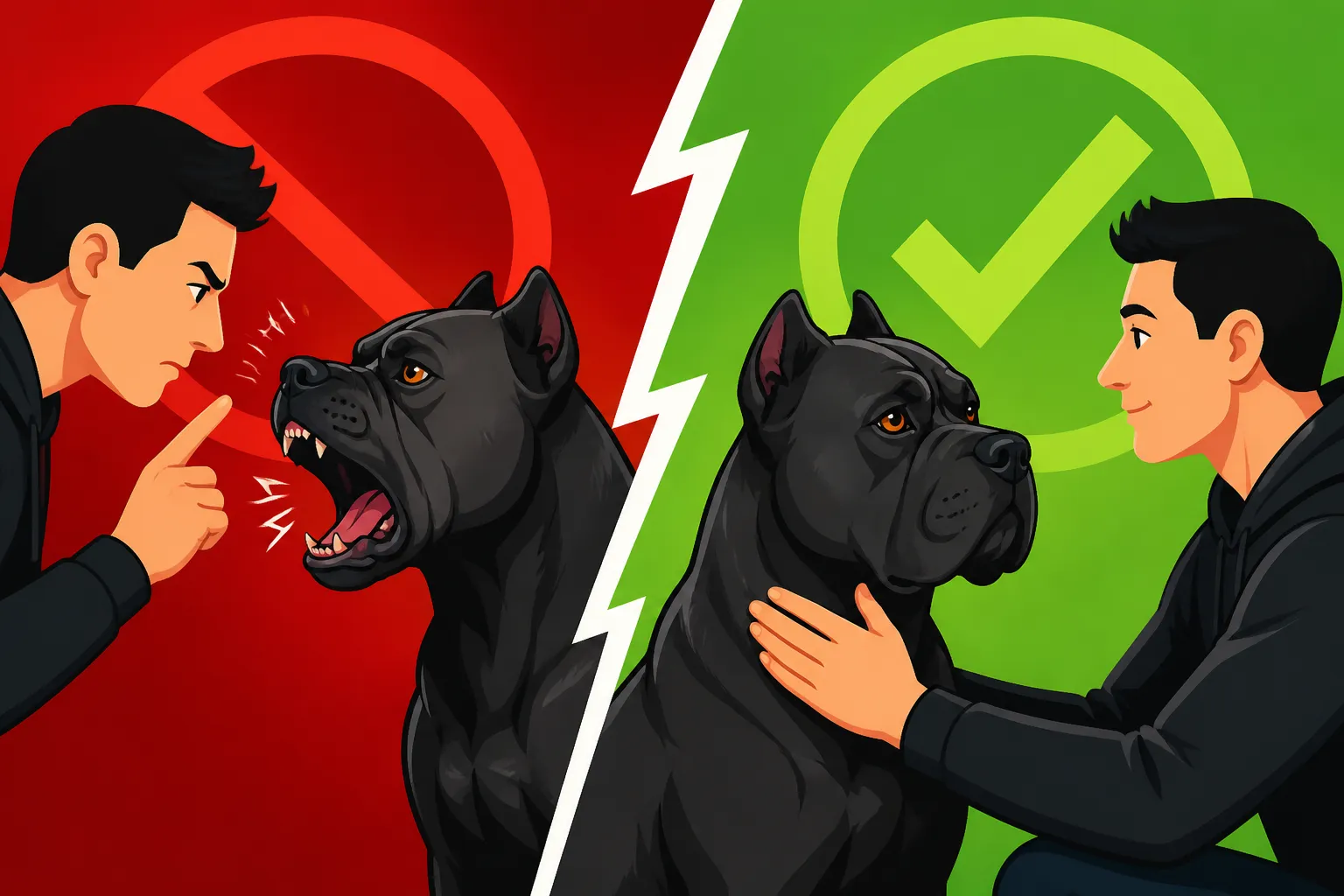
This is where many well-meaning owners make a critical mistake. Their Cane Corso growls, and they react with a harsh verbal correction, a leash jerk, or even a physical reprimand. The immediate effect might seem positive: the growl stops. But what you've actually done is taught your dog that communicating their discomfort is dangerous for them. You've taken away their warning system.
Why "Correcting" a Growl is a Recipe for Disaster
Imagine if your smoke detector went off, and instead of checking for a fire, you just ripped the batteries out because the noise annoyed you. That's what happens when you punish a growl. The dog learns, "If I growl, I get punished. So, I won't growl." They don't learn that the underlying cause of the growl (fear, pain, discomfort) is gone, nor do they learn a better way to cope with it. They simply learn to suppress the warning.
The terrifying consequence of this is that the dog, feeling the same level of discomfort or threat, will then go straight to the next level of defense: a snap or a bite, without any audible warning. This is how "sudden" bites happen, when an owner insists, "He never showed any signs!" In reality, the dog did show signs – they growled – but those signs were punished out of them. A dog that bites without warning is infinitely more dangerous than one that gives clear, escalating signals like a growl.
Resource Guarding: A Common Growl Trigger
One of the most common reasons Cane Corsos growl is resource guarding. This could be their food bowl, a favorite chew toy, their bed, or even a human they perceive as "theirs." When you approach them while they have a high-value item, a growl is their way of saying, "This is mine, stay away." Correcting this growl only teaches them to guard more covertly or to escalate directly to a bite. Teaching a Cane Corso Puppy to Give Things Up is a crucial skill that can help prevent resource guarding from developing into a serious issue.
Instead of punishing, you need to address the root cause of the guarding behavior, which is often anxiety about losing the resource. Positive reinforcement methods, where you teach your dog that your approach predicts good things (like more tasty treats added to their bowl, or trading for an even better toy), are far more effective and build trust. This is a skill many positive reinforcement trainers, like those connected with BAXTER & Bella, emphasize in their programs.
Effective Responses to a Growling Cane Corso
So, if you shouldn't correct it, what should you do when your Cane Corso growls? The key is to immediately acknowledge the communication, identify the trigger, and then strategically manage the situation to ensure safety and begin to teach your dog a more appropriate response.
Step 1: Immediate Management and Safety First
When a growl happens, your very first priority is to create safety. This means immediately removing your Cane Corso from the situation or removing the trigger that caused the growl. Do not try to soothe, punish, or engage in a battle of wills. Just create distance and space.
- Remove the dog: If your Cane Corso growls at a child or a guest, calmly and gently leash them and move them to a quiet, secure space like their crate in another room.
- Remove the trigger: If the growl is over a toy, simply remove the toy. If it’s over their food bowl, carefully pick up the bowl (if safe to do so) or lead your dog away from it.
- Create space: If the growl is directed at a strange dog on a walk, immediately increase the distance between your dog and the other dog. Cross the street, turn around, or step behind a car. You want to stay below their threshold, meaning the point at which they react.
The goal here isn't to punish but to de-escalate and prevent the situation from getting worse. Once the immediate danger is diffused, you can begin to analyze.
Step 2: Investigate the "Who, What, When, Where, Why"
Once everyone is safe and calm, play detective. What exactly triggered the growl?
- Who: Was it a specific person (child, stranger, family member), another animal, or perhaps a novel object?
- What: What were they doing? Approaching, reaching, making a sudden noise, staring?
- When: What time of day was it? Was your dog tired, stressed from a previous event, or just woken up?
- Where: In a specific location? Their bed, near the door, in the yard?
- Why: This is the big question you're trying to answer. Are they afraid, in pain, guarding, startled, frustrated?
Keep a journal if these incidents are recurring. Detailed notes will help you identify patterns. For instance, if your Cane Corso only growls at visitors when they sit on your couch, it might be a territorial guarding issue. If it's when you try to pick them up, consider a vet check for pain. What an Anxious Cane Corso Looks Like might offer clues to underlying stress contributing to growling.
Step 3: Implement Counter-Conditioning and Desensitization
This is where you actually change your dog's emotional response to the trigger, rather than just suppressing the growl. It involves showing your dog that the scary or uncomfortable thing actually predicts good things for them.
- Desensitization: Gradually expose your dog to the trigger at a very low intensity, where they don't react. This might mean starting with the trigger at a great distance, or for a very short duration.
- Counter-Conditioning: Pair that low-intensity exposure with something your dog absolutely loves, like high-value treats (think cooked chicken or hot dogs) or a favorite game. The goal is to change their emotional association from negative to positive.
For example, if your Cane Corso growls at strangers, you might start by having a stranger appear at the very edge of your dog's sight, far enough away that your dog doesn't react. The moment your dog notices them (without growling), immediately give them a delicious treat. The stranger moves away, treats stop. Repeat this, gradually decreasing the distance over many, many sessions, always ensuring your dog remains comfortable and below their growling threshold.
This process takes time, patience, and consistency. It's about building new associations and trust. Online platforms, like the training resources offered by BAXTER & Bella, often provide structured programs for these types of behavioral modifications, which can be invaluable for large breeds with serious guarding instincts.
Step 4: Teach Alternative, Acceptable Behaviors
Instead of growling, what do you want your Cane Corso to do? Can they go to their The Place Command That Saves a Cane Corso Household when someone comes to the door? Can they settle calmly on their bed when guests arrive?
- "Go to your mat/place": This is a fantastic default behavior. Teach your dog to go to a specific spot and stay there calmly, especially when potential triggers are present. Reward heavily for staying on their place while distractions occur.
- "Leave it": If resource guarding is an issue, teaching a strong "leave it" or "drop it" cue for items can be life-saving. Practice with low-value items first, then gradually increase the value, always exchanging for something even better.
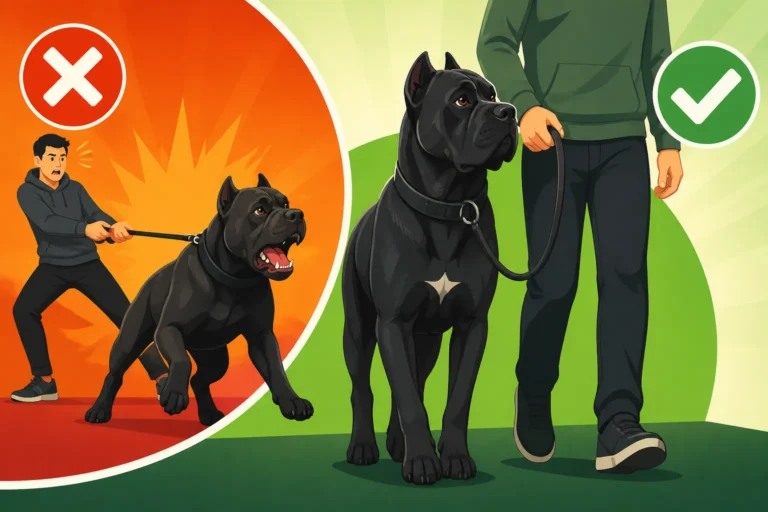
- Loose leash walking: If your Cane Corso growls at other dogs on walks, mastering Loose Leash Walking a Cane Corso Puppy and general leash manners is vital. This gives you more control and can reduce their stress in public.
Consistency is key here. Everyone in the household needs to be on board with the training plan. For specific training tools, a durable basket muzzle from Amazon can be an essential part of your management toolkit when working on desensitization, especially if your Cane Corso has a history of growling that escalates. Why Every Cane Corso Should Be Muzzle Trained Early is a proactive measure every Cane Corso owner should consider, not just for reactive dogs.
Prevention is Always Better Than Correction
The absolute best way to handle a growling Cane Corso is to prevent the growl from happening in the first place. This goes back to diligent socialization, consistent positive reinforcement training, and understanding your dog’s needs and boundaries.
Early and Ongoing Socialization
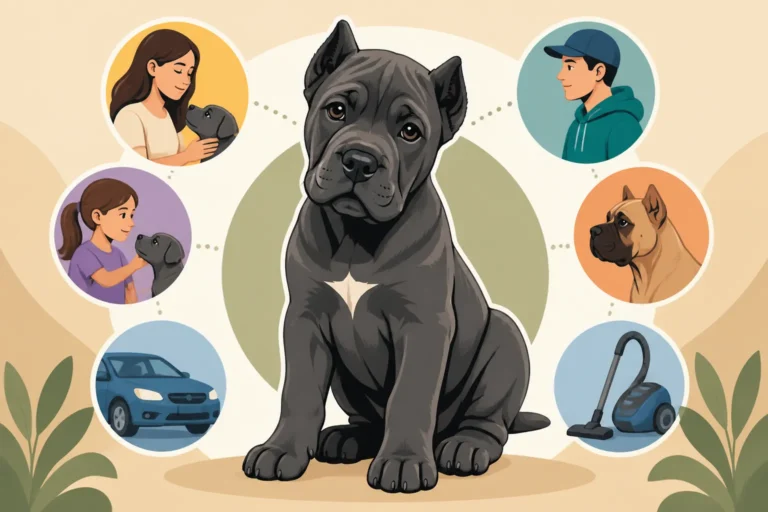
Proper socialization for a Cane Corso isn't just about meeting other dogs and people. It's about controlled, positive exposures to all sorts of sights, sounds, textures, and experiences in their critical development window. The Socialization Window a Cane Corso Puppy Gets is short, and it's vital to make the most of it. Your Cane Corso puppy needs to learn that the world is generally a safe place, and that new things, people, and dogs don't necessarily pose a threat.
- Variety of people: Introduce them to people of different ages, sizes, ethnicities, and with different gaits (e.g., someone with a hat, someone with a beard, someone in a wheelchair). Always keep these interactions positive and voluntary for the puppy.
- Variety of environments: Take them to different places – parks, pet-friendly stores (like a hardware store or an Amazon Go store if they allow dogs), busy streets (from a distance), quiet trails.
- Variety of sounds: Expose them to common household noises, city sounds, sirens, children playing, all while ensuring they associate these sounds with positive experiences like treats or play.
A well-socialized Cane Corso is generally more confident and less likely to resort to growling out of fear or uncertainty.
Building a Foundation of Trust and Positive Reinforcement
Your relationship with your Cane Corso should be built on trust, clear communication, and positive reinforcement. This means rewarding desired behaviors, rather than punishing unwanted ones. If your dog trusts you, they are less likely to feel the need to guard against you or feel threatened by your presence.
- Consistent training: Short, frequent training sessions using positive reinforcement (treats, praise, toys) help your Cane Corso understand what you expect. Five Minute Cane Corso Sessions Twice a Day are more effective than one long, tedious session.
- Predictability: Dogs thrive on routine. A predictable environment and consistent expectations reduce anxiety and the likelihood of reactive behaviors like growling. The Structure a Cane Corso Needs Every Single Day goes a long way in creating a secure environment.
- Meet their needs: Ensure your Cane Corso is getting enough physical exercise and mental stimulation. A bored or under-exercised Cane Corso is more likely to develop behavioral issues. Active play, puzzle toys, and Scent Work and Sniff Walks for a Cane Corso can fulfill their innate drive.
Professional Guidance When Needed
If your Cane Corso's growling is persistent, intense, or escalating, it's absolutely crucial to seek help from a qualified professional. This might be a certified professional dog trainer (CPDT-KA), a certified behavior consultant (CBCC-KA), or a veterinary behaviorist (DACVB). Avoid trainers who advocate for harsh "dominance" methods or physical corrections, as these are precisely what lead to suppressing growls and increasing bite risk. What a Behaviorist Charges for a Reactive Cane Corso can be a significant investment, but it's an investment in safety and a harmonious home.
| Response Type | Approach | Potential Outcome |
|---|---|---|
| Punishing Growl | Yelling, leash jerk, physical correction | Dog learns to suppress growl; may bite without warning; increased fear/anxiety; damaged trust. |
| Ignoring Growl | Doing nothing, hoping it stops | Dog learns their communication is ineffective; may escalate to biting; underlying issue remains unaddressed. |
| Investigate & Manage | Remove dog/trigger, create space | Immediate safety; prevents escalation; allows time to assess the situation without further stress. |
| Counter-Conditioning | Pair trigger with high-value rewards | Changes emotional association of trigger from negative to positive; reduces fear/anxiety; builds trust. |
| Teach Alternatives | Reward desired behaviors (e.g., "Place") | Dog learns appropriate ways to respond to triggers; provides a clear, safe action for the dog to take. |
Ultimately, your Cane Corso is a complex, intelligent guardian breed. Their growl isn't a challenge to your authority, but a plea for help or space. By understanding it, respecting it, and responding effectively with management and positive reinforcement, you can build a stronger bond and ensure a safer, happier home for everyone.
Disclaimer
This article is for general informational purposes only and does not constitute professional advice. Laws, prices and regulations vary by location and change over time. Consult a qualified professional for guidance on your specific situation.