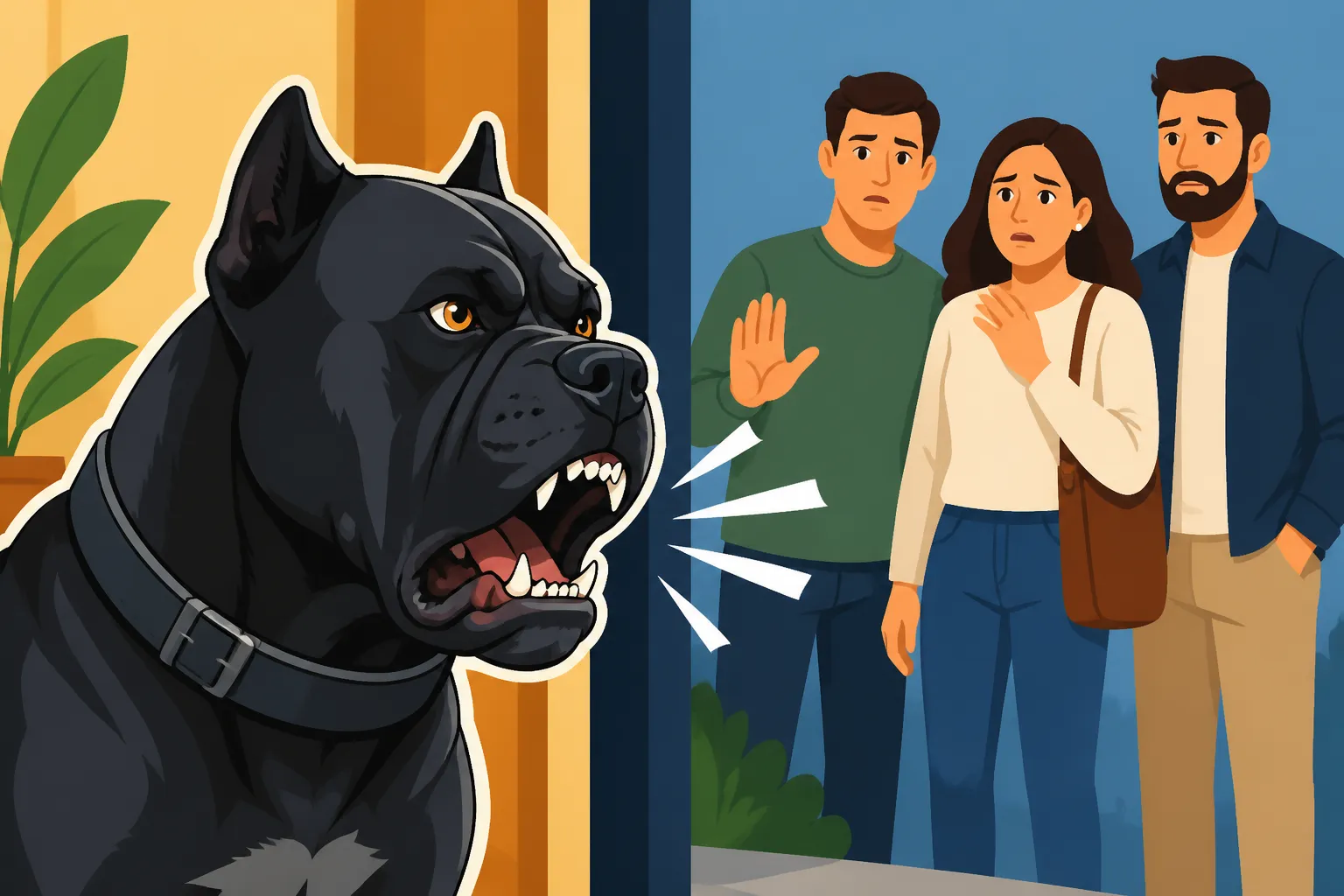
A Cane Corso That Growls at Family Friends
It can be incredibly disheartening, and frankly, quite embarrassing, when your majestic Cane Corso, who is usually a loving member of your family, starts growling at your closest friends. You invite people over you trust, people you care about, and instead of a wagging tail, you get a deep, rumbling warning that leaves everyone feeling awkward and you, the owner, feeling confused and a little bit worried. This guide is here to help you understand why your Cane Corso might be displaying this concerning behavior and provide you with actionable steps to manage it, ultimately fostering a more welcoming environment for everyone.
Understanding Why Your Cane Corso Growls at Family Friends
When your Cane Corso growls at someone you've invited into your home, it's a deeply unsettling experience. It makes you question their training, their temperament, and your ability to control them. But before you panic, it's crucial to understand the underlying reasons for this behavior, which are often rooted in their protective instincts or previous experiences rather than malice.
Natural Guardian Instinct vs. Unwanted Behavior
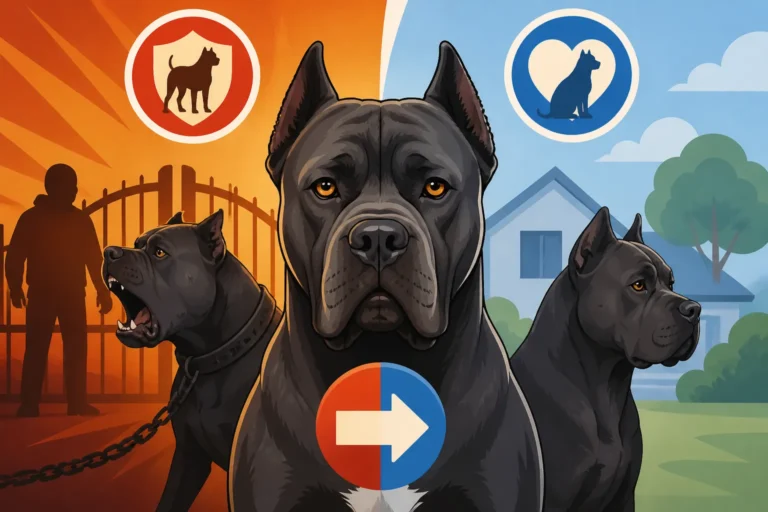
Let's be real: you probably got a Cane Corso, at least in part, for their natural guarding abilities. They are, after all, descendants of ancient Roman war dogs and historically bred to protect property and livestock. This instinct is hardwired into them. A Cane Corso's job is to assess threats and protect its family. The issue arises when that protective instinct is misdirected or overreactive towards people who are not threats, especially your friends.
A healthy guardian dog will observe, perhaps give a low rumble or an alert bark, and then, upon your reassurance, relax and accept the guest. What you're experiencing, the growling at family friends, goes beyond this. It's often a sign that your dog either doesn't trust your judgment, feels overly responsible for security, or hasn't learned the appropriate social etiquette for welcoming known visitors. It’s not about stifling their protective nature entirely, but about refining it so they understand who the true threats are versus who belongs to your inner circle. Sometimes, owners unintentionally reinforce this by being tense themselves when guests arrive, signaling to the dog that there is something to be worried about.
Lack of Proper Socialization or Exposure
The phrase "socialization is key" gets tossed around a lot, but for a powerful breed like the Cane Corso, it's absolutely non-negotiable. If your Cane Corso puppy didn't get adequate, positive, and varied exposure to a wide range of people, places, and situations during their critical The Socialization Window a Cane Corso Puppy Gets, they might struggle later in life. This isn't just about meeting 100 people; it's about meeting different types of people (men, women, children, people with hats, people with glasses, people with different gaits) in different environments, always ensuring these interactions are positive and calm.
Imagine a scenario: your Cane Corso, let's call him Brutus, spent his puppyhood mostly in your backyard and only met a handful of people. Now, when your friend Dave, who has a booming laugh and wears a baseball cap, comes over, Brutus perceives him as an unknown entity, potentially a threat. His growl isn't necessarily aggression; it might be fear or uncertainty. He's saying, "I don't know you, and I'm not comfortable with you in my space." This lack of foundational positive experiences can make even familiar faces feel like intruders if the initial introductions weren't handled carefully and consistently over time. A Cane Corso needs to learn that new or semi-familiar people entering their space can be a good thing, not a reason to raise an alarm.
Resource Guarding of People or Space
Cane Corsos can be intense resource guarders. While we often think of resource guarding in terms of toys or food bowls, it can extend to people and even physical spaces like your home or your spot on the couch. Your Cane Corso might be growling at your friends because they perceive your friends as encroaching on their resources – specifically, you.
Consider this: your friend comes in and gives you a hug. Your Cane Corso might see this as an invasion of their person. Or, if your friend sits next to you on the sofa, the dog might feel their prime spot (or access to you) is being challenged. They are essentially saying, "This human is mine, and you need to back off." This kind of guarding can be subtle and might escalate if not addressed. It often stems from a deep bond with their primary caregiver, but it becomes problematic when it translates into aggression towards others. It's about teaching your dog that shared resources, especially shared affection from you, are not something to be possessive over. You are the leader, and you decide who gets to be near you, not the dog.
Fear, Anxiety, or Past Negative Experiences
Sometimes, growling isn't about guarding or lack of socialization in a broad sense, but a direct response to a specific fear or past trauma. Has your Cane Corso ever had a negative interaction with someone who resembles your friend? Perhaps a child was rough with them, or an adult startled them. Even subtle things can leave a lasting impression on a sensitive dog.
For example, if your friend wears heavy boots and has a distinctive gait, and your dog once had a bad experience with someone who had similar characteristics, that growl could be a manifestation of anxiety or fear. It's their way of trying to make the perceived threat go away. They're not being "bad"; they're reacting out of self-preservation. It's crucial to observe your dog's body language closely – are their ears pinned, tail tucked, lips tight, or are they stiff and forward? Understanding Reading a Cane Corso's Body Language at a Distance can give you clues. If this is the case, traditional "socialization" might not be enough; it requires a more delicate approach focusing on counter-conditioning and desensitization to change their emotional response to the trigger.
Practical Steps to Manage and Redirect Growling Behavior
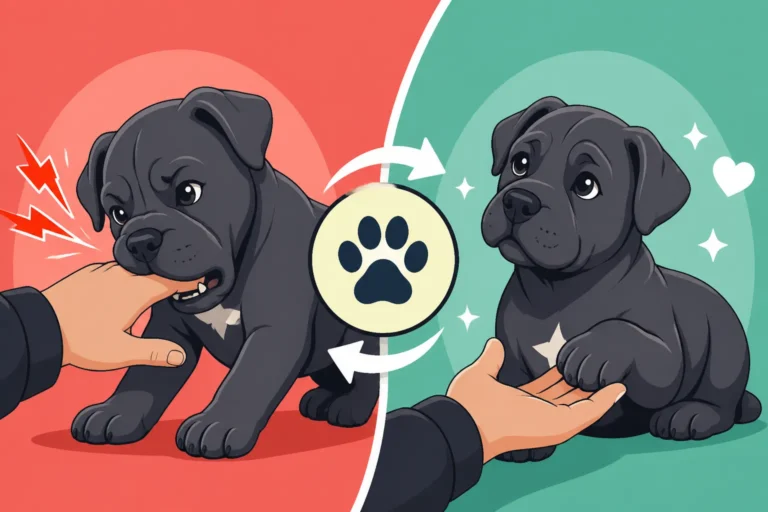
Once you understand why your Cane Corso is growling, you can start to implement strategies to address it. This isn't about punishment, which can often suppress growling without resolving the underlying issue, potentially leading to a bite without warning. Instead, it’s about management, positive reinforcement, and consistent training.
Assess the Situation Safely and Objectively
Before you even think about training, you need to become a detective. What exactly triggers the growl? Is it when the friend enters the house? When they make eye contact? When they try to pet your dog? Or is it only certain friends? Jot down notes about the circumstances, the person's actions, and your dog's full body language leading up to the growl. This information is gold for figuring out the root cause.
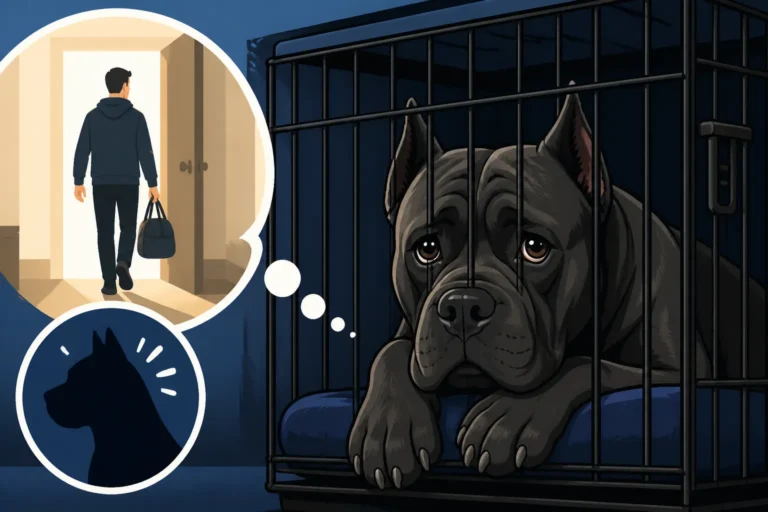
Your safety, and your friends' safety, is paramount. If your dog's growling is intense or accompanied by lunging, a stiff body, or baring teeth, do not risk an incident. For now, manage the situation by having your Cane Corso secured in another room or a crate before guests arrive. A sturdy kennel or a safe, dog-proofed room with a durable baby gate (look for robust options on Amazon) can be an invaluable tool. You can even consider Crate Training a Cane Corso That Outgrows Every Crate for a safe space solution. This isn't a permanent solution, but it buys you time to implement training without putting anyone at risk. Think of it as putting a pause button on the problem while you strategize.
Implement Structured Introductions and Positive Associations
Once you've safely assessed the situation, you can start reintroducing your friends in a controlled, positive way. The goal here is to change your dog's emotional response from "threat" to "bringer of good things."
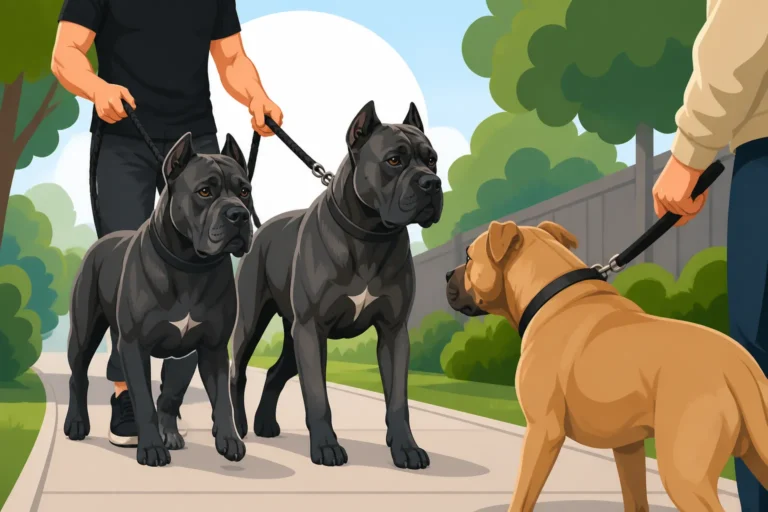
- Start Outside (if possible): If your dog is growling inside, try having the friend meet your Cane Corso on neutral territory first, like a short walk around the block before entering the home. This can lessen the territorial aspect. Keep your Cane Corso on a leash, preferably with a head collar or a front-clip harness to give you better control without causing pain or fear. Which Collar and Lead Hold a Cane Corso might offer some good options.
- The "Look and Reward" Game: When your friend arrives, before they even step inside, ask them to stand a distance away where your dog can see them but is not reacting (no growling, stiffening, or staring). Every time your dog looks at the friend and then looks back at you, immediately reward them with a high-value treat. The friend should not interact with the dog at this stage. You're teaching your dog: "Friend appears = great things happen from my human."
- Treat Delivery from the Friend: Once your dog can calmly look at the friend, your friend can start gently tossing treats on the ground away from them, not directly to the dog's mouth. This keeps pressure off the dog. Over time, as your dog becomes more comfortable, the friend can drop treats closer, eventually offering them gently by hand if your dog initiates approach and is relaxed. The key is that the dog always has the option to disengage.
- No Direct Eye Contact or Petting (initially): Instruct your friends to completely ignore your Cane Corso for the first 10-15 minutes inside. No talking to, no looking at, and absolutely no petting. This lowers the perceived threat and allows your dog to assess them without feeling pressured. Many dogs find direct eye contact and reaching gestures threatening.
- Short Sessions, High Success: Keep these initial interactions short and positive. End them before your dog shows any signs of discomfort. You want to build a history of successful, calm interactions, not push them to their limit.
Reinforce Calmness and Desired Behavior
This is where consistency really pays off. You want to make it abundantly clear to your Cane Corso that calm, non-reactive behavior around your friends is what earns them rewards.
- Reward Quiet Observation: Any time your Cane Corso is calmly observing your friend without growling or staring, mark that moment with a verbal "yes!" or a clicker, and give a high-value treat. You're essentially saying, "This is exactly what I want to see!"
- Place Command Power: Train your Cane Corso a strong "place" command. This involves teaching them to go to a designated mat or dog bed and stay there calmly until released. When friends come over, send your dog to their place. Reward them frequently for staying there, especially when they are calm. This gives your dog a job and a safe space, while also giving your friends peace of mind. The Place Command That Saves a Cane Corso Household provides excellent guidance on this. You can find durable, comfortable place mats or beds specifically designed for large breeds on Amazon.
- Redirection, Not Punishment: If your dog starts to growl, interrupt it with a sharp, positive sound (like a clap or a whistle) and immediately redirect their attention to something else, like a favorite toy or a quick obedience command they know well (sit, stay). As soon as they comply, reward them. The goal is to break the growling pattern and offer an alternative, acceptable behavior, rather than simply punishing the growl itself. Punishing a growl often teaches a dog not to growl, but instead to go straight to a bite, which is far more dangerous.
Long-Term Training Strategies and Management
Resolving growling at family friends isn't a one-and-done fix. It requires a long-term commitment to consistent training, ongoing management, and sometimes, a little extra help.
Consistent Training and Boundary Setting
A Cane Corso thrives on structure and clear expectations. If your dog isn't sure what their job is, or who is in charge, they might take on the role of "home security manager" themselves, leading to inappropriate guarding.
- Be the Benevolent Leader: You need to be your dog's consistent, fair, and confident leader. This means setting clear rules, enforcing boundaries, and providing ample mental and physical exercise. A tired Cane Corso with a fulfilled mind is less likely to be reactive. Aim for Sixty to Ninety Minutes Across Two Cane Corso Walks daily, incorporating mental enrichment like puzzle toys or scent work.
- General Obedience: A strong foundation in basic obedience commands like sit, stay, down, and recall is critical. These aren't just tricks; they are communication tools. When your dog has a solid "down-stay," you can ask them to hold it when guests arrive, giving them a constructive task rather than allowing them to stew in anxiety. Online platforms like BAXTER & Bella offer comprehensive puppy and adult dog training programs that emphasize positive reinforcement and structure, which can be immensely helpful for large, powerful breeds like the Cane Corso.
- Teach "Go to Mat": We touched on "place" earlier, but really solidify this. Make it a default for when anyone enters your home. This gives your dog a job and a sense of routine, which can be very calming. Practice it multiple times a day, rewarding heavily, so it becomes second nature.
Continued Socialization with Controlled Exposure
Even after addressing the specific growling issue, it's vital to continue exposing your Cane Corso to new people and situations in a controlled, positive manner. This isn't about throwing them into a dog park full of strangers, which can often be counterproductive for a guardian breed. A Cane Corso at the Dog Park is often not a good idea for many reasons.
- Quality over Quantity: Focus on quality interactions. Invite one calm, dog-savvy friend over at a time. Work through the structured introduction steps. Gradually introduce new friends, one by one, ensuring each experience is positive.
- Neutral Exposure in Public: Continue taking your Cane Corso to public places where they can observe people from a distance without direct interaction. Think outdoor cafes (where they can sit quietly under the table), parks (staying on a long leash away from heavy foot traffic), or even just sitting on a bench outside a busy store. The goal is for them to see people, hear sounds, and simply exist calmly in the presence of others without feeling the need to react. This helps generalize their understanding that most people are not threats.
- Muzzle Training: For a Cane Corso, muzzle training is a responsible owner's tool, not a punishment. If your dog has a history of growling, training them to comfortably wear a basket muzzle can provide peace of mind for you and safety for others during training sessions or initial introductions. It allows your dog to participate more freely in public or social situations while removing the risk of a bite. Look for comfortable, well-fitting basket muzzles on Amazon that allow for panting and drinking. Why Every Cane Corso Should Be Muzzle Trained Early is a must-read.
When to Seek Professional Guidance
Sometimes, despite your best efforts, the growling behavior persists or even escalates. This is not a failure on your part, but a sign that you might need a specialist.
- Certified Professional Dog Trainer (CPDT-KA) or Certified Applied Animal Behaviorist (CAAB): If you're struggling to make progress, or if your dog's growling is accompanied by other concerning behaviors like lunging, snapping, or biting, it's time to call in a professional. Look for someone who uses positive reinforcement methods and has experience with large guardian breeds. They can help you identify subtle triggers you might be missing and develop a tailored training plan. A good professional will often start with a thorough behavioral assessment.
- Veterinary Behaviorist: In some cases, growling can have a medical component, such as pain, an underlying anxiety disorder, or even a neurological issue. A veterinary behaviorist is a veterinarian with specialized training in animal behavior and can rule out any medical causes for the aggression. They can also prescribe medication if necessary to help manage severe anxiety while you work on behavior modification. They work in conjunction with your regular vet.
- Don't Wait: The longer you let problematic growling go unaddressed, the more ingrained the behavior becomes. Early intervention, even for what seems like minor growling, can prevent it from escalating into more serious aggression. Your dog relies on you to guide them and help them navigate the human world safely and confidently.
Remember, patience is key. Changing ingrained behavior takes time, consistency, and a deep understanding of your dog's individual needs. Celebrate the small victories, and don't get discouraged by setbacks.
| Behavior Aspect | Appropriate Guardian Behavior (Good) | Problematic Growling at Friends (Needs Work) |
|---|---|---|
| Initial Reaction | Observes new person calmly, perhaps a low rumble or alert bark. | Immediate, deep, sustained growl, stiff body, direct stare. |
| Response to Owner | Looks to owner for guidance; relaxes with owner's reassurance. | Ignores owner's cues; continues growling despite owner's intervention. |
| Body Language | Relaxed posture, ears forward but not pinned, tail might wag slowly. | Stiff posture, hackles raised, lips might be tight or slightly curled. |
| Interaction with Guest | Avoids direct interaction initially, eventually accepts presence. | Actively tries to deter guest, may lunge or air snap if approached. |
| Trigger | Perception of a real, novel threat (e.g., stranger on property). | Known, trusted friends entering the home or approaching the owner. |
| Underlying Emotion | Alertness, protective instinct, confidence in owner's leadership. | Fear, anxiety, possessiveness over owner, feeling overwhelmed/responsible. |
Disclaimer
This article is for general informational purposes only and does not constitute professional advice. Laws, prices and regulations vary by location and change over time. Consult a qualified professional for guidance on your specific situation.