Loose Leash Walking a Cane Corso Puppy
Bringing home a Cane Corso puppy is an incredibly exciting time, but let's be honest, the idea of walking a hundred-pound-plus dog on a leash can also bring a twinge of anxiety. Many new owners quickly discover that their adorable, chunky puppy already has a surprising amount of strength, and if not taught early, that playful tug can quickly turn into a full-blown drag as they grow. This guide is here to walk you through the essential steps to master loose leash walking with your Cane Corso puppy, setting both of you up for a lifetime of enjoyable strolls.
Why Early Leash Training is Non-Negotiable for a Cane Corso
You might think, "Oh, they're just a puppy, they'll grow out of it," but with a Cane Corso, that couldn't be further from the truth. These are powerful, intelligent dogs, and what's cute or manageable in a 30-pound fluffball becomes a serious safety concern in a 120-pound adult. Starting early isn't just a recommendation; it's absolutely crucial for your peace of mind and your dog's well-being.
The Looming Power of a Growing Giant Breed
Imagine trying to control a hundred-pound muscle machine that's decided to chase a squirrel, or greet another dog, with full force. A Cane Corso puppy might start out small enough to lift, but they grow at an astonishing rate. In just a few months, that little pup will be a strong adolescent, capable of pulling an adult off their feet. Many owners have experienced that sudden jolt, the scraped knee, or the strained shoulder because they didn't prioritize leash manners from day one. Preventing this kind of chaos down the road starts now, while your puppy is still small enough for you to physically manage. It's an investment in your future comfort and safety.
Building a Foundation of Respect and Control
Leash training for a Cane Corso is about far more than just walking nicely. It's a foundational element of your relationship, establishing clear communication, boundaries, and trust. When your puppy learns to pay attention to you on a leash, they're also learning that you are their guide, their leader, and the one who dictates the pace and direction. This isn't about being harsh or dominant; it's about being consistent, fair, and providing clear expectations. A well-leashed dog is a dog that can accompany you more places, safely meet new people, and generally be a better canine citizen. Without this control, outings can become stressful, limiting both your and your dog's experiences.
Preventing Bad Habits Before They Start
It's a universal truth in dog training: it's always easier to teach a new, positive behavior than it is to extinguish an ingrained bad one. If you allow your Cane Corso puppy to pull on the leash from the moment you bring them home, they're quickly going to learn that pulling gets them where they want to go. This habit becomes a deeply etched pattern of behavior, reinforced every single time they succeed in dragging you. Common issues like lunging at other dogs, sniffing every blade of grass, or constantly straining forward are all far simpler to prevent through early, consistent training than they are to rehabilitate months down the line. By being proactive, you save yourself countless hours of frustration and your puppy the discomfort of corrective tools later on. You want your puppy to understand that a loose leash is the only way forward.
Essential Gear for Teaching Loose Leash Walking
Before you even step out the door, having the right equipment can make all the difference in your loose leash walking journey. Just like a carpenter needs the right tools for the job, you need gear that is sturdy, comfortable for your giant breed puppy, and effective for teaching. Don't skimp on quality here; this equipment is going to be put to the test.
Choosing the Right Collar and Leash
For a Cane Corso puppy, you'll want to start with a comfortable, well-fitting flat buckle collar. It should be snug enough that it won't slip over their head, but loose enough to allow two fingers to slide underneath easily. As they grow and their neck thickens, you might consider a martingale collar. These are fantastic because they tighten slightly when your dog pulls, preventing them from backing out of the collar, but they don't apply constant pressure like a choke chain. They offer a humane way to give a gentle correction without causing discomfort or damage.
When it comes to the leash, invest in something robust. A 6-foot nylon or leather leash with a strong clasp is ideal. Avoid retractable leashes entirely, especially for a Cane Corso. They offer no control, teach dogs to pull to gain distance, and can cause serious injuries to both dog and handler. For a variety of options, many owners find a good selection of durable collars and leashes readily available on platforms like Amazon, allowing them to compare materials and sizes easily for their fast-growing pup. Which Collar and Lead Hold a Cane Corso is a great resource if you're looking for more in-depth advice on specific types.
Harnesses: Pros and Cons for a Cane Corso Puppy
Harnesses can be a valuable tool, especially for puppies or dogs with neck issues. A front-clip harness, in particular, is excellent for teaching loose leash walking because it redirects your puppy's forward momentum. When your Cane Corso puppy pulls, the leash attachment on their chest causes them to turn sideways, making it difficult to pull straight ahead. This doesn't stop them from pulling altogether, but it does make it less effective and more uncomfortable for them to do so, encouraging them to stay by your side.
However, not all harnesses are created equal. Avoid back-clip harnesses for dogs that pull, as these can actually encourage pulling by mimicking the feel of a sled dog harness. Some dogs might also find certain harness designs uncomfortable, causing chafing or restricting shoulder movement. Always ensure the harness fits correctly and doesn't rub. While harnesses can be a great temporary aid, the ultimate goal is to teach your Cane Corso to walk politely on a flat collar, so use harnesses as a training tool rather than a permanent solution to pulling.
Treats and Rewards: Your Most Powerful Tools
Let's be clear: high-value treats are your secret weapon in loose leash training. Your Cane Corso puppy needs to understand that walking nicely by your side is incredibly rewarding, more rewarding than any squirrel, scent, or person they might encounter. Small, soft, smelly treats like bits of cooked chicken, cheese, or specialized training treats work wonders. They should be easy for your puppy to swallow quickly without breaking stride.
Vary your rewards! Sometimes it's a treat, sometimes it's enthusiastic praise, sometimes a quick game of tug with a favorite toy. The key is to make yourself the most interesting thing on the walk. Carrying a treat pouch makes it easy to dispense rewards quickly and consistently. Remember, you're not bribing your dog; you're paying them for a job well done. Think of it as their paycheck for their focus and good behavior.
Step-by-Step Guide to Loose Leash Walking Success
Teaching a Cane Corso puppy to walk politely on a leash requires patience, consistency, and a clear, structured approach. Don't expect perfection overnight, but do expect progress if you stick with it. We're building a habit here, one tiny step at a time.
Starting Indoors: The First Steps
Before you even dream of hitting the sidewalk, start your leash training journey inside your home or a very quiet, fenced yard. The goal here is to make the collar and leash a positive, neutral experience. Put the collar on for short periods, associating it with treats and playtime. Let your puppy wear it for a few minutes, distract them with toys, give them a few treats, and then take it off. Gradually increase the duration.
Once they're comfortable with the collar, attach the leash. Let them drag it around for a few minutes (under supervision, so they don't get tangled or chew it). Then, pick up the leash and simply walk around your living room. Don't focus on heeling yet; just let them get used to the feel of the leash being held by you. Every time they ignore the leash or walk beside you without pulling, offer praise and a treat. Five Minute Cane Corso Sessions Twice a Day are more effective than one long, frustrating session. For structured online guidance on these initial steps, resources like BAXTER & Bella offer comprehensive puppy training programs that often cover early leash introductions, providing a great framework for new owners.
The "Engage and Reward" Method
This is the cornerstone of loose leash walking. The principle is simple: reward your puppy every time the leash is loose. This means you're constantly looking for that slack in the line.
- Start Walking: Begin walking in a quiet area with your puppy on a 6-foot leash.
- Reward Slack: The moment you see the leash go slack, or if your puppy glances up at you, mark it with a verbal cue like "Yes!" or a clicker, and immediately give a high-value treat right by your side.
- Keep Moving, Keep Rewarding: Take a few steps. If the leash is still loose, reward again. If your puppy starts to forge ahead and the leash tightens, stop immediately.
- Change Direction: To keep your puppy engaged and prevent them from constantly pulling forward, frequently change direction. If they're pulling left, turn right. If they're pulling forward, turn around. Every time they adjust to follow you and the leash slackens, reward them. This teaches them to pay attention to you rather than just the environment.
- Stop and Wait: Occasionally stop walking. Wait for your puppy to notice you've stopped, perhaps sit, and then reward them before resuming your walk.
This method teaches your puppy that walking by your side with a loose leash is the most rewarding place to be. It's about proactive reinforcement, not reactive correction.
Managing Distractions and Gradual Progression
Once your Cane Corso puppy has the hang of loose leash walking indoors and in your quiet yard, it's time to slowly introduce distractions. This is where many owners go wrong, expecting their puppy to perform perfectly in a busy park after only practicing in a sterile environment.
Start with mild distractions:
- Quiet Street: Walk on a quiet residential street, avoiding peak times when other dogs or people are out.
- Park Edge: Practice on the perimeter of a park, staying far enough away from play areas to manage your puppy's focus.
- New Surfaces/Sounds: Introduce your puppy to different surfaces (grass, pavement, gravel) and mild noises (cars passing quietly).
The key is to manage the environment so your puppy can succeed. If your puppy is constantly pulling, you've introduced too much distraction too quickly. Go back to a less stimulating environment and build up gradually. Remember, it's a marathon, not a sprint. Consistency in varying environments is crucial. You're building a solid foundation here, which will be vital when your Cane Corso is a full-grown adult facing bigger distractions. Building a Cane Corso's Recall From Eight Weeks is also a huge help here, as a strong recall can help you regain focus when distractions become too much.
What to Do When Your Cane Corso Puppy Pulls
Despite your best efforts, your Cane Corso puppy will pull. It's part of being a curious, energetic puppy. How you respond to this pulling is critical for their learning.
The most effective method is the "Be a Tree" technique:
- Stop Immediately: The very instant you feel tension on the leash, stop moving. Stand still, like a tree rooted to the ground.
- Wait for Slack: Do not say anything, do not yank the leash, do not pull your puppy back. Just wait. Your puppy will likely pull for a moment, then realize they're not going anywhere. Eventually, they will look back at you, or the leash will go slack as they turn.
- Reward and Resume: The moment the leash loosens (even for a split second), mark and reward them right at your side, then immediately start walking again.
- Repeat, Repeat, Repeat: Every single time the leash tightens, you stop. Every single time it loosens, you reward and move forward. Your puppy will quickly learn that pulling makes the walk stop, and a loose leash makes the walk continue.
Consistency is absolutely vital with this method. If you let them pull even once, you're reinforcing the pulling behavior. It can be frustrating, and some walks might be very short and stop-and-go, but this investment in time early on will pay dividends when your Cane Corso is 100+ pounds. This method is far more effective and humane than harsh leash corrections, which can damage your relationship with your puppy and even cause physical harm. If you're struggling to stop your pup, consider reading Stopping a Cane Corso Before It Drags You Off Your Feet for more specialized advice.
Common Challenges and Troubleshooting
Even with the best intentions and consistent training, you're likely to encounter a few bumps in the road. Cane Corso puppies are intelligent and strong-willed, and their natural instincts can sometimes conflict with our desire for a polite walking companion. Let's tackle some of these common issues head-on.
The Puppy Who Just Wants to Sniff Everything
Cane Corsos have incredible noses, and the world is a symphony of smells for them. It's completely natural for your puppy to want to investigate every interesting scent. However, if they're constantly dragging you from one sniff spot to the next, it's not loose leash walking.
The trick is to balance sniffing time with structured walking. You can incorporate a cue like "Go sniff!" to designate periods where they are allowed to explore freely (on a loose leash, of course). During your structured walk, however, when you are actively training, use your "Engage and Reward" method. If your puppy locks onto a scent and tries to pull, use the "Be a Tree" method. Once the leash is loose, you can gently redirect them with a treat and your verbal cue, "Let's go!" and continue walking.
Remember, walks are for them too, so don't eliminate sniffing entirely. Just ensure it's on your terms, not theirs. Incorporating Scent Work and Sniff Walks for a Cane Corso into your routine can actually help satisfy their natural drive to sniff in a controlled way, making them less frantic on regular walks.
The Leash Biter and the Frustrated Puller
Some Cane Corso puppies express their frustration or boredom by grabbing and tugging on the leash. This can be annoying and, as they get older, quite destructive to your leash!
If your puppy starts biting the leash:
- Redirect Immediately: Offer them a designated chew toy or a treat the moment they try to bite the leash. "No bite, take this instead."
- Remove Attention: If redirection doesn't work, immediately stop walking and stand still, ignoring the leash biting. The moment they release the leash, reward and resume walking.
- Check for Overwhelm: Leash biting can also be a sign of being over-stimulated or overly tired. Perhaps the walk is too long, or the environment too noisy. Shorten the walk or change your route to a quieter area.
For the puppy who just can't seem to stop pulling, even with the "Be a Tree" method, consider a front-clip harness if you haven't already. It can provide a mechanical advantage, making it physically harder for them to pull effectively, giving you more opportunities to reward a loose leash. Also, evaluate if your treats are high-value enough or if your timing for rewards is precise. Are you rewarding before they pull, or only after they stop? Being proactive with rewards is key.
Dealing with Reactivity on Leash
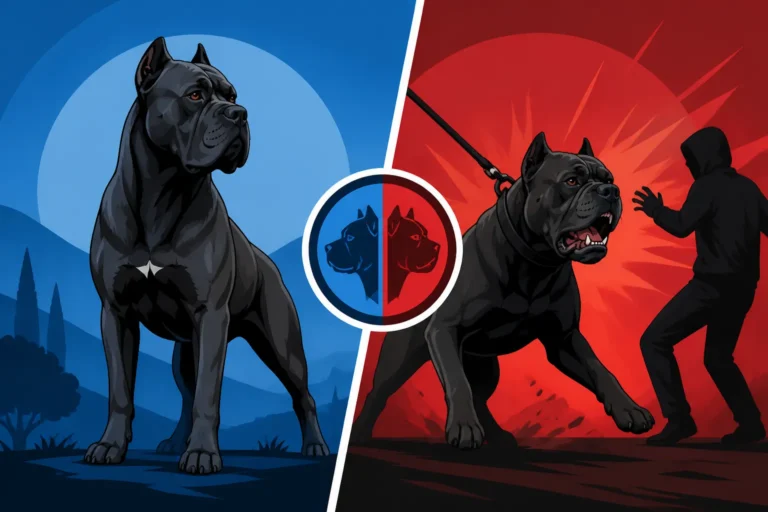
A Cane Corso's natural guarding instincts can start to surface even in puppyhood, sometimes manifesting as reactivity on the leash—barking, lunging, or growling at other dogs, people, or objects. This is a serious issue that needs to be addressed early and carefully.
If your puppy shows signs of reactivity:
- Increase Distance: The first step is to manage the environment. If your puppy reacts to other dogs, increase the distance between them and the trigger. Find a distance where your puppy can notice the trigger but not react.
- Positive Association: At that safe distance, feed your puppy high-value treats continuously while the trigger is present. The goal is to change their emotional response from fear/frustration/guarding to "Oh, other dog/person/thing means yummy treats!"
- Professional Help: If reactivity is severe or you're unsure how to proceed, seek help from a certified professional dog trainer or behaviorist immediately. This isn't something to "wait out" with a Cane Corso. Early, Neutral Socialization for a Cane Corso at Twelve Weeks is essential in preventing reactivity, exposing them positively to the world without forcing interaction. In some cases, for safety and peace of mind during training, learning Why Every Cane Corso Should Be Muzzle Trained Early can be a proactive step, allowing you to train safely without the risk of an incident.
| Technique | When to Use | How it Helps |
|---|---|---|
| Engage & Reward | Constantly, during all loose leash training. | Teaches the puppy that a loose leash and attention to you is highly rewarding. |
| Be a Tree | Anytime the leash tightens or puppy pulls. | Teaches the puppy that pulling makes the walk stop, loose leash makes it continue. |
| Change Direction | Regularly during walks, and when puppy pulls. | Keeps puppy engaged with you, prevents forward momentum pulling. |
| "Go Sniff!" Cue | During designated sniff breaks on a loose leash. | Allows for mental enrichment while maintaining structured walking. |
| Treat Luring | Early stages, for positioning at your side. | Guides the puppy into the desired position and rewards them there. |
| Redirection | For leash biting or excessive focus on distractions. | Diverts attention to an appropriate object or back to you. |
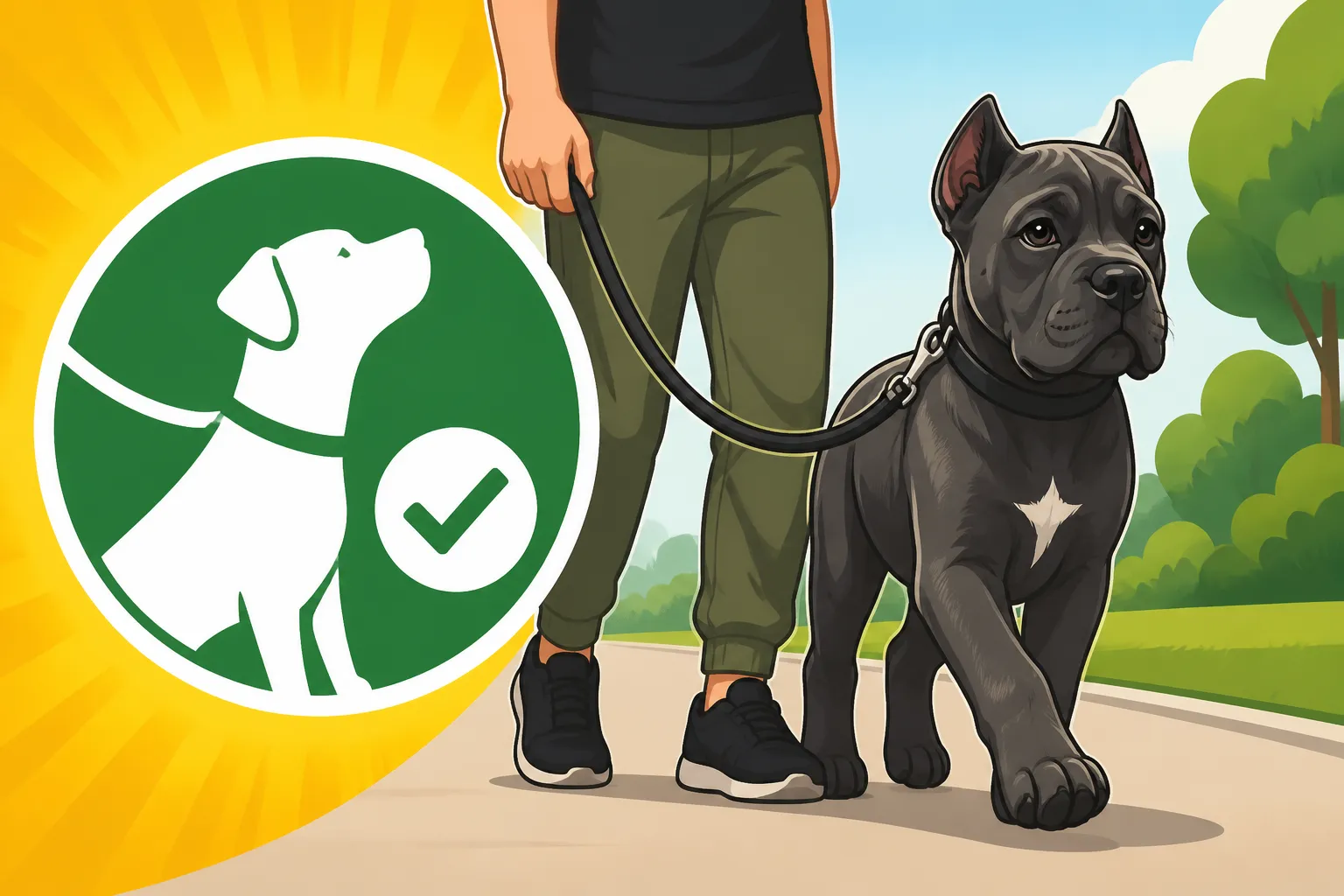
Loose leash walking with your Cane Corso puppy is a journey, not a destination. It takes time, patience, and a whole lot of consistency, but the reward is a confident, well-behaved companion you can take anywhere. Keep your sessions short, keep them positive, and always remember that you're building a bond of trust and respect with your magnificent dog. This fundamental skill will open up a world of shared experiences for both of you. Getting your Cane Corso past its puppy stage and into adulthood with good leash manners is a huge accomplishment, and it starts right here, right now. Remember, The Structure a Cane Corso Needs Every Single Day applies to walks as much as it does to home life.
Disclaimer
This article is for general informational purposes only and does not constitute professional advice. Laws, prices and regulations vary by location and change over time. Consult a qualified professional for guidance on your specific situation.