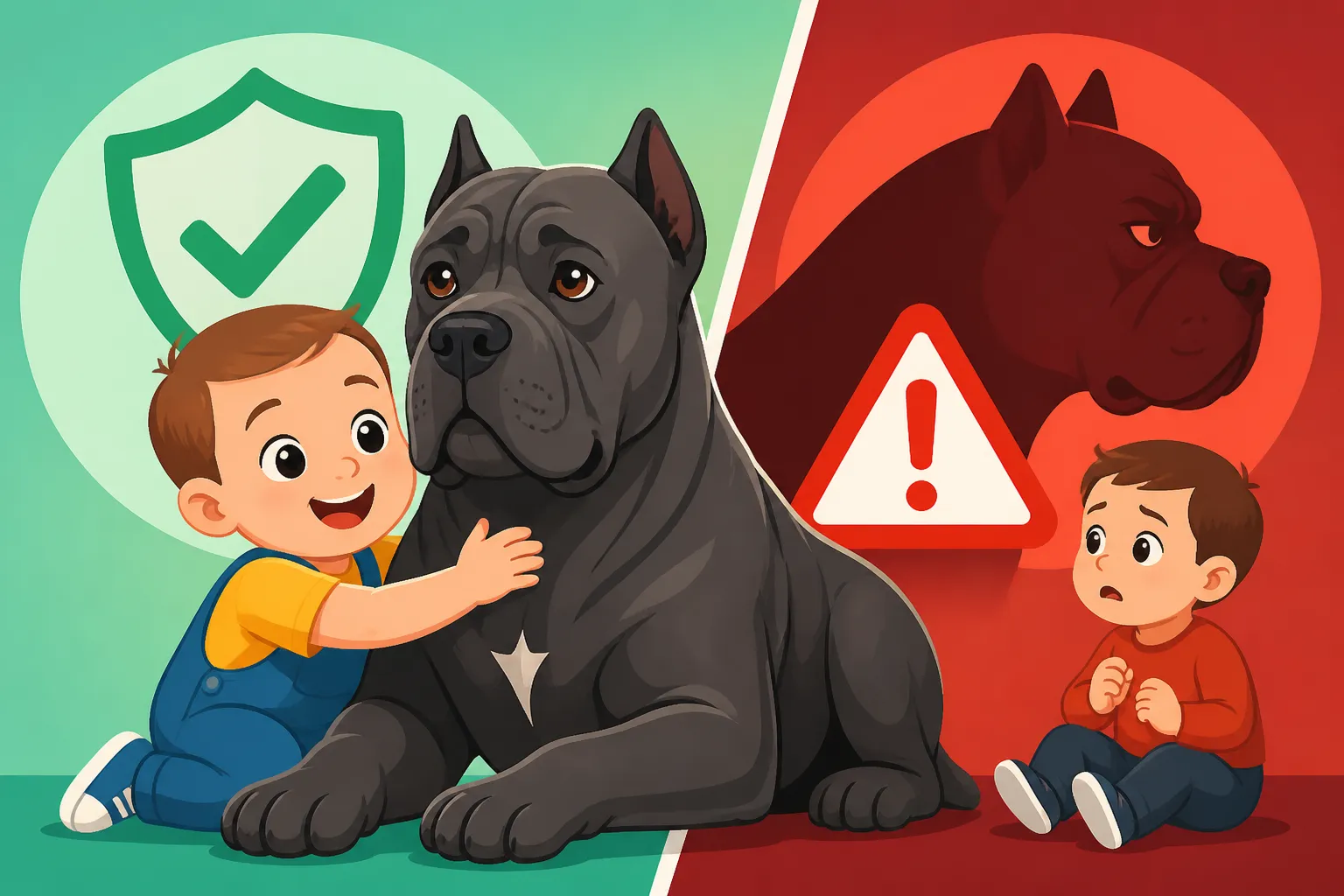
Whether a Ninety Pound Cane Corso Is Safe With a Toddler
The question of safety when you have a powerful, large breed like a Cane Corso and a curious, sometimes unpredictable toddler in the same home is a valid and often deeply concerning one for many parents. It's a situation that requires careful consideration, proactive measures, and a realistic understanding of both dogs and young children. This comprehensive guide will walk you through how to navigate this dynamic, focusing on preparation, management, and continuous training to foster a safe and harmonious environment for your entire family.
Understanding the Cane Corso's Natural Instincts Around Children
Bringing a Cane Corso into a home with small children, or bringing a baby into a home with an established Cane Corso, means understanding the breed's fundamental nature. These are magnificent dogs, bred for specific tasks, and those instincts don't just disappear because they're part of your family.
The Guardian Role Versus Family Pet
Cane Corsos are inherently guardian dogs. Their history is steeped in protecting property, livestock, and people. This guardian instinct is a double-edged sword when it comes to toddlers. On one hand, you might feel a deep sense of security knowing your dog is watchful. On the other hand, a toddler's erratic movements, loud cries, and sometimes clumsy interactions can be misinterpreted by a dog whose primary impulse is to assess and react to potential threats or perceived vulnerabilities. They aren't inherently aggressive towards children, but their protective nature means they are constantly assessing situations. A toddler's sudden lunge, a shriek, or even just tumbling over could be seen through the lens of protection or, conversely, as something to be "managed" by the dog. It's crucial that your Cane Corso learns that children, especially your children, are not threats to be guarded from, nor are they little charges to be herded or controlled.
Prey Drive and Rough Play Concerns
While not typically seen as a high prey drive breed in the same vein as a sighthound, Cane Corsos can have a prey drive, especially when young or if not properly socialized. A toddler's quick, jerky movements, high-pitched squeals, or even running away can inadvertently trigger a dog's chase instinct. Imagine a toddler darting across the room, perhaps with a toy or a snack in hand. To a Cane Corso, especially one that hasn't learned profound impulse control, this could be seen as an invitation to chase or play rough. The sheer size and power of a ninety-pound Cane Corso means that even an accidental bump or an attempt at play can easily injure a small child. It's not about malice; it's about the significant disparity in size and strength. We need to teach our Cane Corsos that toddlers are not small, squeaky playthings. This is why it's vital to begin The Socialization Window a Cane Corso Puppy Gets early and intentionally, ensuring they associate children with calm, positive experiences, never as objects of chase or roughhousing.
Essential Preparations Before Bringing a Cane Corso Home to Toddlers
Preparation is paramount when integrating a Cane Corso with toddlers. It's not something you can wing; it requires intentional, consistent effort long before the dog or child arrives, or as soon as you foresee the situation changing.
Early Socialization and Exposure to Children
The foundation of safety lies in comprehensive socialization. If you're bringing a Cane Corso puppy into a home with a toddler, or know children will be regular visitors, that puppy needs to be exposed to children of all ages early and often. This isn't about letting every child rush up and pet them. It's about controlled, positive exposure from a distance. The goal is for your Cane Corso to view children as a normal, non-threatening, and often boring part of the environment, not as exciting objects. Take your puppy to parks where children are playing (from a safe distance, on leash), let them observe, and reward them for calm behavior. Introduce them to well-behaved children under strict supervision, always ensuring positive associations with treats and praise. The key is quality, not quantity, of exposure. A great online program, like those offered by BAXTER & Bella, can guide you through structured socialization steps, ensuring you hit those critical developmental windows with your puppy, especially regarding their comfort level with various people and environments, including children. Don't underestimate the power of Neutral Socialization for a Cane Corso at Twelve Weeks to build a resilient, well-adjusted adult dog.
Establishing Boundaries and Training for Calmness
From day one, your Cane Corso needs to understand boundaries within the home, especially concerning children's spaces. This means teaching a solid "place" command, where your dog learns to go to a designated bed or mat and stay there calmly until released. This is invaluable when a toddler is actively playing or when guests with children are over. It also means teaching your dog that jumping on people is never acceptable. A ninety-pound dog jumping on an adult is one thing; jumping on a toddler can be disastrous. Train a "four on the floor" rule, rewarding your dog heavily for keeping all paws down. Consistency is key here. Every family member must enforce these rules without exception. The Structure a Cane Corso Needs Every Single Day goes a long way in creating a dog that understands expectations and can remain calm in various situations. Establishing a routine and clear rules helps your Cane Corso feel secure and less likely to feel the need to "manage" situations on their own.
Day-to-Day Management and Supervision Strategies
Even with the best preparation and training, daily management and constant vigilance are non-negotiable when a Cane Corso shares a home with a toddler. This isn't about distrusting your dog; it's about acknowledging the inherent risks and being a responsible owner.
Constant Supervision: The Golden Rule
I cannot stress this enough: never leave your Cane Corso unsupervised with a toddler. Ever. Not for a second. This is the absolute golden rule. Accidents happen in a blink, and even the most well-behaved dog can react unpredictably to a sudden poke, pull, or shriek from a child. A child might fall on the dog, accidentally step on a paw, or grab an ear or tail. These are all common, innocent toddler actions that can elicit an unwanted reaction from a dog, regardless of breed. Supervision means active engagement, not just being in the same room while you're distracted by a phone or chore. You need to be actively observing the interactions, ready to intervene immediately if either the dog or the child shows signs of discomfort or inappropriate behavior. Think of it like supervising a toddler near a swimming pool – you wouldn't just glance over occasionally. It's that level of attentiveness, always. For more insights on this, read Supervising a Cane Corso With Children on the Floor.
Creating Safe Spaces for Both Dog and Child
Having designated safe zones is critical for both your Cane Corso and your toddler. Your dog needs a quiet retreat where they can go to escape the hustle and bustle of family life, especially from an overzealous toddler. This could be a crate in a calm room, a dog bed behind a baby gate, or even just a "place" mat in a corner where they know they won't be disturbed. This space should be respected by everyone, especially children. Similarly, your toddler needs areas where they can play freely without the dog interfering. Baby gates are your best friend here. Use them liberally to create physical barriers between your dog and child when active supervision isn't possible, or when one needs a break. An extra-tall baby gate, perhaps from a selection found on Amazon, can be incredibly effective for a large breed like a Cane Corso. These physical boundaries are not punishments; they are management tools that prevent unwanted interactions and reduce stress for both parties. It allows your dog to relax without constantly being "on guard" and your child to explore safely.
| Scenario | Recommended Action | Why it's Important |
|---|---|---|
| Child approaching dog | Call dog to "place" or gently redirect child. | Prevents accidental pokes/grabs that could startle dog. Dog learns to relax in designated space. |
| Dog approaches sleeping child | Gently redirect dog to another area. | Prevents potential resource guarding of the child or startling the dog if child wakes. |
| Mealtime / Treat Time | Dog in crate or separate room. | Prevents resource guarding of food from child; reduces risk of accidental bites or knocking child over. |
| Playtime (child active) | Dog on "place" or behind a gate. | Reduces temptation for dog to chase or join rough play, preventing accidental injury from a large dog. |
| Dog needs a break | Ensure clear access to their designated safe space (crate/bed). | Allows dog to de-stress away from child, preventing snapping due to overstimulation or fear. |
| Child needs a break | Ensure clear access to their designated safe space (playpen/gated room). | Allows child to play freely without dog interference, preventing accidental tumbles or fear of the dog. |
Training Your Cane Corso for Life with Little Ones
Training is a continuous process, not a one-time event. For a Cane Corso living with toddlers, specific training focuses become even more critical to ensure a safe and respectful coexistence.
Impulse Control: The Key to a Gentle Giant
A Cane Corso with excellent impulse control is a safer Cane Corso around children. This means teaching your dog to pause, think, and wait for your command rather than reacting instinctively. Exercises like "leave it" are vital. Your dog needs to leave dropped food, toys, and especially the toddler's belongings alone on command. "Stay" and "wait" commands, particularly at doorways or before being allowed to eat, build self-control. Teach your dog to ignore high-pitched sounds or sudden movements from the toddler, rewarding them for remaining calm and disengaged. Impulse Control Work for a Cane Corso should be integrated into your daily routine, making it second nature for your dog to look to you for direction instead of acting on their own impulses. This includes teaching them not to The Cane Corso That Knocks Small Children Over through excitement.
Teaching Calm Greetings and Ignoring Excitement
When people, especially children, enter the room, Cane Corsos can get excited. This excitement, combined with their size, can easily overwhelm or injure a toddler. Train your dog to greet people, and especially children, calmly. This often means teaching them to sit or lie down and wait for an invitation to interact, if any. Reward them for calm, non-jumpy greetings. If your dog struggles with over-excitement, practice controlled introductions where they are on a leash, and you can guide their behavior. Work on exercises where your dog learns to simply ignore the child walking by, playing, or even crying. The goal isn't necessarily for them to be best friends, but for them to coexist peacefully and respectfully. If the Cane Corso learns that calm behavior leads to positive attention (from you, not necessarily the child), they'll be more likely to offer it. Teaching a Cane Corso Not to Body Slam is a foundational skill in this context, protecting both the child and guests.
Educating Your Toddler About Dog Etiquette
Safety is a two-way street. While we focus heavily on training the dog, it's equally important, albeit sometimes more challenging, to teach your toddler how to interact safely and respectfully with your Cane Corso.
Gentle Hands and Quiet Voices
Toddlers are still learning about the world and their own strength. They need consistent, gentle guidance on how to behave around the family dog. Teach them the concept of "gentle hands" from the earliest age. Show them how to stroke the dog's back or side, avoiding sensitive areas like the face, ears, or tail. Make it clear that pulling, poking, or climbing on the dog is absolutely forbidden. Use simple, clear language: "Gentle hands," "Soft pets." Model the behavior yourself. If they are too rough, immediately separate them from the dog and gently redirect their hands. Similarly, teach them to use "quiet voices" around the dog. Loud shrieks or sudden yells can startle even a well-adjusted Cane Corso, leading to an unpredictable reaction. Consistent repetition is key for toddlers, as their understanding develops over time. This vital training is discussed more deeply in Rules a Child Living With a Cane Corso Must Know.
Recognizing a Dog's Signals for Space
Just as important as teaching gentle interaction is teaching your toddler to recognize when the dog needs space. While toddlers won't grasp complex canine body language, they can learn a few simple cues. Teach them that if the dog walks away, turns its head, or goes to its "place" bed, it means the dog wants to be left alone. Use phrases like "Doggy needs space" or "Leave doggy alone." Emphasize that the dog's bed or crate is their special place, and the child is never allowed to disturb them there. This not only keeps the child safe but also fosters a respectful relationship where the dog feels secure in its ability to retreat without being cornered. These lessons are fundamental in Raising a Cane Corso Around Small Children and should be reinforced daily. Remember that a dog that feels it cannot escape an interaction might eventually resort to snapping or growling as a last resort, which we want to prevent at all costs.
Addressing Common Challenges and When to Seek Professional Help
Even with the best intentions and efforts, challenges can arise. It's crucial to know how to address them and when to call in the cavalry.
Nipping, Jumping, and Resource Guarding
When a Cane Corso is around toddlers, even minor behavioral issues take on greater significance.
- Nipping: A puppy might nip in play, but a ninety-pound adult Cane Corso's accidental nip can be serious. If your dog shows any nipping behavior, immediately redirect it to an appropriate chew toy. If it persists, it's a sign that immediate, focused training is needed.
- Jumping: As mentioned, jumping is completely unacceptable. Every jump must be met with a consistent "off" command and rewarded when all four paws are on the floor. If a Cane Corso continues to jump on a toddler, it suggests a lack of consistent training or an over-arousal issue that needs professional intervention.
- Resource Guarding: This is a major concern. If your Cane Corso growls over food, toys, or even a favorite spot when a toddler approaches, you have a serious problem that needs immediate attention from a qualified professional. A Cane Corso's instinct to guard property can translate to guarding resources from children, which is incredibly dangerous. This can sometimes manifest subtly, especially when Whether a Cane Corso Guards the Children Too becomes a perceived responsibility rather than a protective bond.
These behaviors are not just nuisances; they are potential precursors to serious incidents.
Consulting a Certified Professional Dog Trainer or Behaviorist
If you're struggling with any of these issues, or even if you just want peace of mind that you're doing everything right, do not hesitate to consult a certified professional dog trainer or a veterinary behaviorist. Look for someone with experience with large guardian breeds and families with young children. A qualified professional can assess your specific situation, observe your dog's behavior, and provide a tailored training plan. They can help you identify subtle stress signals in your dog that you might miss, and teach you how to respond appropriately. This isn't a sign of failure; it's a sign of responsible pet ownership, prioritizing the safety and well-being of everyone in your home. A professional can provide invaluable guidance, especially if you're dealing with a reactive Cane Corso, and can outline What a Behaviorist Charges for a Reactive Cane Corso. Programs like BAXTER & Bella also offer ongoing support and one-on-one coaching, which can be an excellent resource for addressing specific behavioral challenges as they arise with your Cane Corso.
In conclusion, having a ninety-pound Cane Corso and a toddler in the same home can be safe, but it requires an extraordinary commitment to management, consistent training, and unwavering supervision. It's about being proactive, understanding both species, and creating an environment where boundaries are clear, and everyone's needs for safety and space are respected.
Disclaimer
This article is for general informational purposes only and does not constitute professional advice. Laws, prices and regulations vary by location and change over time. Consult a qualified professional for guidance on your specific situation.