Whether a Cane Corso Can Earn a Canine Good Citizen Title
It's a common concern for many Cane Corso owners: can a dog with such a powerful presence and natural guarding instincts truly be considered a "good citizen" in public? You love your Corso, you know they're gentle giants at home, but the world sometimes sees a different picture. This guide is here to tell you that not only can a Cane Corso earn the Canine Good Citizen (CGC) title, but achieving this milestone can profoundly strengthen your bond and challenge common misconceptions about the breed.
Understanding the Canine Good Citizen Title
The Canine Good Citizen (CGC) program, established by the American Kennel Club (AKC), is designed to reward dogs who have good manners at home and in the community. It's not about complex tricks or winning competitions; it’s about demonstrating reliability, attentiveness to their handler, and appropriate behavior around strangers, other dogs, and distractions. Many people initially feel intimidated, especially with a large, imposing breed like the Cane Corso, wondering if their dog’s inherent protective nature will clash with the requirements. But honestly, the CGC test is more about a dog being well-adjusted and responsive to its owner than it is about being outgoing with everyone they meet.
The CGC test consists of ten specific items, each designed to assess a dog's basic manners and stability. Think of it as a public service announcement from your dog: "I'm well-behaved, I listen to my human, and I won't cause trouble." These items range from simple politeness, like sitting calmly for petting by a stranger, to more dynamic skills such as walking through a crowd without pulling or reacting negatively to distractions. It also includes showing control during a supervised separation, proving your Cane Corso can handle a brief moment apart from you without excessive anxiety or noise. The Age a Cane Corso Puppy Starts Formal Training is a great time to start thinking about these foundations, as early exposure and positive experiences build confidence.
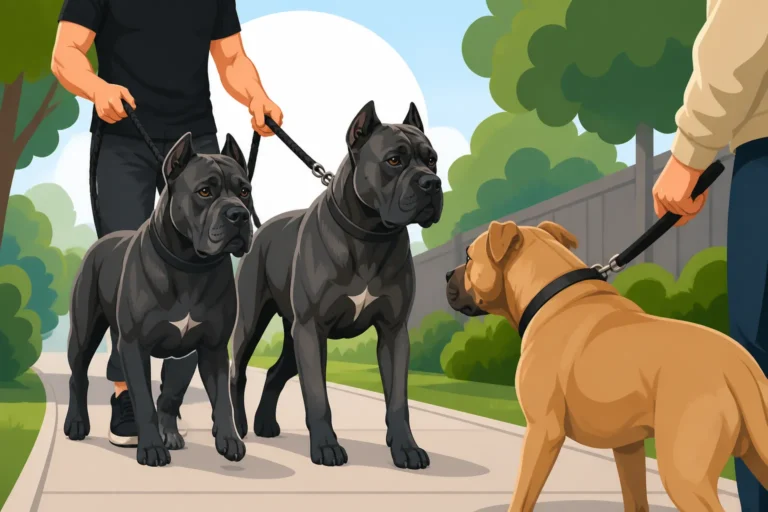
Each component of the test requires focus and trust between dog and handler. For instance, the "loose leash walking" segment evaluates your dog's ability to walk calmly on a leash without pulling, turning left, right, stopping, and navigating an "about turn." This might sound basic, but with a powerful breed like the Cane Corso, it's a testament to consistent training and control. The "reaction to another dog" item doesn't demand your Cane Corso play with another dog, but rather walk past it politely without pulling, barking, lunging, or showing aggression. It's all about demonstrating a calm, neutral demeanor in various real-world situations, which is exactly what responsible Cane Corso ownership is all about.
Why a Cane Corso Excels in Canine Good Citizen Training
Despite their imposing size and guarding reputation, Cane Corsos possess several inherent qualities that actually make them excellent candidates for the Canine Good Citizen title. It might seem counterintuitive at first glance, but once you delve into their breed characteristics, you'll see how well-suited they are to this kind of foundational obedience.
Intelligence and Trainability
Cane Corsos are intelligent dogs. They were originally bred to be working dogs, tasks that required not only physical prowess but also keen intellect and the ability to problem-solve and follow complex commands. This mental acuity translates directly into their capacity for learning. They pick up new cues quickly, especially when motivated and guided by a handler they trust. Their desire to please their primary human is strong, making them eager participants in training sessions. This isn't a breed content to sit around all day; they thrive on having a job, and learning and practicing obedience commands provides that mental stimulation. When you engage their minds, you'll find they're much more focused and less likely to invent their own, less desirable, forms of entertainment.
Strong Bond with Their Handler
A well-socialized and properly trained Cane Corso forms an incredibly deep bond with their owner. This intense loyalty is a huge asset in any obedience program, particularly one like CGC that emphasizes the dog's responsiveness to its handler. Your Cane Corso views you as their leader, their confidant, and their partner. This connection means they are highly attentive to your cues and genuinely want to work with you. During the CGC test, where distractions can be numerous, that deep-seated desire to check in with you, to perform for you, and to follow your lead becomes invaluable. It’s this partnership, rather than brute force, that truly shines in a successful CGC team.
Inherently Calm Demeanor (With the Right Foundation)
While Cane Corsos are formidable guardians, a properly bred and raised Corso should possess a stable, calm temperament. They are not meant to be hyperactive or overly reactive to every stimulus. Their natural guardian instinct is one of discernment—observing, assessing, and acting only when truly necessary. This underlying calmness, when fostered through early and consistent Neutral Socialization for a Cane Corso at Twelve Weeks, means they can learn to handle new environments and people without becoming agitated or fearful. A Cane Corso that is confident and comfortable in their surroundings, rather than stressed or anxious, is a dog perfectly capable of demonstrating good manners. The key is to nurture this stability from puppyhood, ensuring they have positive experiences with the world outside their home.
Impressive Physical Presence
Let's be honest, a Cane Corso makes an impression. They are large, muscular, and carry themselves with a regal air. When a dog of this stature confidently and calmly navigates a crowded space, sits politely for petting from a stranger, and performs a perfect "stay" amidst distractions, it’s not just passing a test—it’s a powerful statement. It helps to break down negative stereotypes about "bully breeds" or large working dogs. Your Cane Corso, by earning a CGC, becomes an ambassador for responsible dog ownership and for the breed itself. Their good behavior is magnified precisely because of their impressive size, making their achievement all the more impactful.
Overcoming Common Cane Corso Challenges for CGC Success
Even with all their amazing attributes, training a Cane Corso for the Canine Good Citizen title isn't always a walk in the park. There are specific breed characteristics and common pitfalls that owners need to be aware of and proactively address. Understanding these challenges upfront allows you to implement strategies that lead to success, rather than frustration.
Managing Natural Wariness and Reactivity
Cane Corsos are, by design, guardians. This means they are naturally wary of strangers and keenly aware of their surroundings. This isn't aggression, but a protective instinct that can manifest as aloofness or a watchful stance around new people or dogs. For the CGC test, which requires accepting a "friendly stranger" and walking past another dog without incident, this wariness needs careful management. You don't want to extinguish their guarding instincts entirely, but rather teach them appropriate responses in public.
Early and ongoing, positive socialization is absolutely critical. This means controlled exposure to a wide variety of people (different ages, appearances, gaits), sounds, environments, and calm dogs from a young age. The goal isn't to make them love everyone, but to teach them that most new experiences are non-threatening and don't require their intervention. Practicing the "friendly stranger" item involves having different people approach and pet your dog only when your Corso offers calm, accepting body language. If your dog is prone to A Cane Corso That Growls at Family Friends, this is an area that needs dedicated, consistent work with a positive reinforcement trainer. For the "reaction to another dog" item, you’ll focus on teaching your Corso to ignore other dogs, or at most, offer a brief, neutral glance before re-engaging with you. Using high-value treats and a confident "leave it" cue can be very effective in these scenarios. What to Do When a Cane Corso Lunges at a Dog is a more serious issue that needs professional help before attempting CGC.
Battling Distractions and Maintaining Focus
Given their protective nature, Cane Corsos are highly observant. Every rustle of leaves, every distant siren, every passing squirrel can capture their attention. This can make maintaining focus on you during a CGC test, especially in a new or busy environment, a significant challenge. Their attention span, particularly as young adults, might feel short when competing with the stimulating world around them. The Length of a Cane Corso's Attention Span can vary, but consistent training helps build endurance.
To overcome this, start training in low-distraction environments and gradually increase the level of distraction. Practice your "sit," "stay," and "come" commands in your quiet backyard, then move to a slightly busier park at off-peak hours, and eventually to a bustling pet-friendly store (if allowed) or a public sidewalk. Use high-value rewards – whether it's their favorite squeaky toy or a particularly delicious treat – to make yourself more exciting than the distractions. Short, frequent training sessions are more effective than long, drawn-out ones. The key is to teach your Cane Corso that you are the most interesting and rewarding thing in their environment, no matter what else is happening. Tools like a sturdy long line, available on Amazon, can give you control while practicing recall in moderately distracting environments.
The Power of Impulse Control
A hundred-pound dog, even a well-meaning one, can cause a lot of chaos if they lack impulse control. Jumping on guests, bolting out an open door, or grabbing dropped food can be problematic. The CGC test includes items that directly assess impulse control, such as "sit politely for petting" (no jumping!) and "sit and down on command/staying in place." For a breed as physically capable as the Cane Corso, teaching strong impulse control is paramount, not just for the CGC, but for daily life.
Work on commands like "wait" at doors, "leave it" for tempting items, and a solid "place" command, where your Cane Corso goes to a designated spot and stays there until released. Impulse Control Work for a Cane Corso needs to start early and be reinforced consistently. Reward calm behavior often. For example, if your dog sits calmly when someone approaches, immediately reward that with praise and a treat. If they start to jump, calmly redirect them to a sit and reward that. Consistency from every family member is crucial for these behaviors to generalize effectively across different situations. Online resources like BAXTER & Bella offer structured training programs that can guide you through these critical impulse control exercises.
The Path to Earning Your Cane Corso's CGC Title
Earning the Canine Good Citizen title with your Cane Corso is a journey, not a sprint. It requires dedication, consistency, and a deep understanding of your dog's individual needs and temperament. But the rewards—a well-mannered companion, a stronger bond, and proving stereotypes wrong—are immeasurable.
Laying the Foundational Training
Before you even think about the CGC test, you need to ensure your Cane Corso has a rock-solid foundation in basic obedience. This includes commands like "sit," "down," "stay," "come," and "heel" or loose-leash walking. These aren't just parlor tricks; they are the vocabulary you use to communicate with your dog and maintain control in various situations. Start training in quiet, familiar environments where distractions are minimal. Use positive reinforcement methods – treats, praise, and toys – to make learning fun and rewarding for your Corso. They are intelligent and eager to please, so leverage that desire by making training a positive experience.
Consider enrolling in a local basic obedience class. These classes provide structured lessons, a controlled environment for socialization, and invaluable guidance from experienced trainers. Even if you've had dogs before, a large, powerful breed like a Cane Corso presents unique challenges and benefits, and a professional can offer tailored advice. For those who prefer to learn at home or have unique schedules, online platforms like BAXTER & Bella offer comprehensive, step-by-step training programs that can be incredibly effective for laying these foundations and preparing for CGC.
Strategic Socialization and Exposure
We've talked about it already, but it bears repeating: proper socialization is the cornerstone of a well-behaved Cane Corso. This goes beyond just meeting other dogs; it's about exposing your Corso to a diverse range of sights, sounds, smells, people, and environments in a positive and controlled manner. Think about all the things your dog might encounter during a CGC test: people of different ages, people with hats or glasses, wheelchairs, strollers, other dogs, loud noises, slick floors, bumpy surfaces.
From puppyhood, take your Cane Corso to different places (once their vaccinations are complete and you have vet approval for public outings). Visit pet-friendly hardware stores, walk around quiet parks, sit outside coffee shops, and introduce them to calm, known dogs and dog-savvy people. The goal is exposure without overwhelming them, always keeping experiences positive. This helps build their confidence and reduces their tendency to react fearfully or defensively to novelty. Remember, the objective is for your Cane Corso to be neutral to these stimuli, not necessarily to interact enthusiastically with everything.
Consistent Practice in Diverse Environments
Once your Cane Corso understands the basic commands, the real work for CGC begins: practicing those commands in increasingly distracting environments. It's one thing for your dog to "sit" in your living room; it's another entirely for them to "sit" while a child runs past, another dog barks, or a siren wails.
Gradually introduce distractions:
- Practice loose-leash walking on different surfaces – grass, pavement, gravel – and near increasing levels of foot traffic. Leash Manners Before a Cane Corso Hits Ninety Pounds is crucial to prevent being dragged.
- Work on "stay" with you moving further away, then with you out of sight briefly, and eventually with people walking past your dog.
- Simulate the "friendly stranger" by having friends or family members (who your dog knows to be safe but isn't overly familiar with) approach, talk to you, and calmly pet your dog.
- Practice "reaction to another dog" by walking past calm, neutral dogs at a distance, gradually decreasing the distance as your Corso learns to focus on you.
Gear Up for Success
Having the right equipment can make a huge difference in your training journey. While the CGC test specifies a buckle or slip collar (no choke chains, prong collars, head halters, or harnesses are allowed during the test itself), using a front-clip harness for daily training can be incredibly effective for teaching loose-leash walking without putting pressure on your dog's neck. Once they understand the concept, you can transition to a flat buckle collar for the test. You'll also need a sturdy leash – a standard 6-foot leash is ideal. Many high-quality options for collars, leashes, and training treats are readily available on Amazon. Which Collar and Lead Hold a Cane Corso is a crucial consideration for safety and control.
Here’s a quick overview of what the CGC test entails and how your Cane Corso can tackle it:
| CGC Test Item | Cane Corso Strengths | Potential Challenges & How to Address Them |
|---|---|---|
| 1. Accepting a Friendly Stranger | Calm demeanor when well-socialized; desire to please handler. | Natural wariness of strangers; need for positive exposure and teaching appropriate greetings (no jumping). |
| 2. Sitting Politely for Petting | Intelligence and trainability; strong bond means they listen to your cues. | Can be prone to jumping as puppies/young adults; needs consistent "sit" and "off" training. |
| 3. Appearance & Grooming | Generally tolerate handling if introduced positively early. | Sensitive about feet or ears if not handled routinely from puppyhood. Practice regular handling. |
| 4. Walking on a Loose Leash | Eager to work with handler; can learn quickly. | Powerful pulling strength; requires consistent loose-leash training from day one. Leash Manners Before a Cane Corso Hits Ninety Pounds |
| 5. Walking Through a Crowd | Can be calm and discerning in busy environments with proper socialization. | Distraction management; tendency to be watchful. Focus on "look at me" and rewarding attention on handler. |
| 6. Sit & Down on Command/Stay | Intelligent; respond well to clear cues. | Sustaining a "stay" with distractions; impulse control. Build duration and distraction gradually. |
| 7. Coming When Called | Strong desire to please and bond with handler. | High prey drive or guarding instinct can override recall. Practice in varied environments, use high-value rewards. |
| 8. Reaction to Another Dog | Can be neutral if properly socialized and not pushed to interact. | Breed may have same-sex aggression or general dog reactivity. Teach "ignore" and reward focus on handler. |
| 9. Reaction to Distraction | Can be stable and steady in temperament. | Alertness to environment. Teach "leave it" and reward calm responses to novelty. |
| 10. Supervised Separation | Can be independent; generally not prone to severe separation anxiety. | Anxiety if never left alone; vocalization. Practice short separations at home, build confidence. |
Test Day: What to Expect
On the day of the test, remember that the evaluator is looking for a safe, well-mannered dog, not perfection. They understand that dogs are living beings and minor mistakes can happen. What they want to see is that your Cane Corso is under control, responsive to your commands, and can recover quickly if something unexpected occurs. Stay calm and confident; your dog will pick up on your demeanor. The test is typically conducted in a neutral location, such as a community center or a dog training facility. It's usually a low-key, supportive atmosphere.
Passing the Canine Good Citizen test is a significant achievement for any dog, but especially for a Cane Corso. It’s a testament to your dedication as an owner and a powerful declaration that your impressive companion is not just a protector, but a truly well-adjusted and respected member of society.
Disclaimer
This article is for general informational purposes only and does not constitute professional advice. Laws, prices and regulations vary by location and change over time. Consult a qualified professional for guidance on your specific situation.