Teaching a Cane Corso to Wait at Every Door
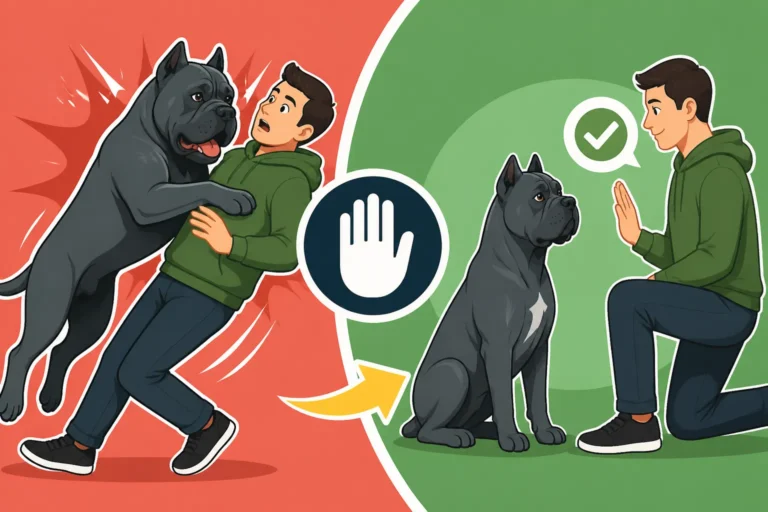
There’s nothing quite like the rush of a massive, eager Cane Corso barreling out the door the moment it cracks open. This isn't just annoying; for a dog of their size and power, it's a genuine safety hazard, whether they’re dragging you down the steps or bolting into traffic. This comprehensive guide will walk you through the practical, step-by-step process of teaching your Cane Corso impeccable door manners, ensuring calm and controlled exits every single time.
Why Door Manners Are Crucial for Your Cane Corso
For a breed as imposing and protective as the Cane Corso, door manners aren't just about politeness; they're fundamentally about safety, effective management, and reinforcing your role as the calm, consistent leader. Without a solid "wait" at the door, you're inviting chaos and potential danger into your daily routine. Imagine trying to manage a hundred-plus-pound dog lunging at a guest or escaping the yard – the stakes are incredibly high.
Ensuring Safety for Everyone Involved
Let's be brutally honest: a Cane Corso is not a small dog. Their sheer mass means that an uncontrolled lunge can easily knock over a child, an elderly person, or even an unsuspecting adult. I've heard too many stories of torn rotator cuffs or scraped knees from owners caught off guard by their excited giant. Beyond physical harm, a bolting Cane Corso poses a serious risk to themselves. A loose dog, especially a powerful one, is vulnerable to cars, fights with other animals, or even getting lost in an unfamiliar area. Teaching them to wait ensures they only exit when you give the explicit permission, safeguarding them from these all-too-real dangers.
This disciplined approach extends to interactions with visitors. A well-mannered Cane Corso waiting patiently at the door projects an image of control and calm, alleviating any apprehension guests might feel about their formidable size. This is especially important for A Cane Corso Meeting Guests at the Front Door. It shows that your dog is not a runaway train but a well-integrated member of the household who understands boundaries, even in exciting situations.
Managing a Powerful Guardian Breed
The Cane Corso's instinct to guard their home and family is inherent and powerful, and often this instinct kicks in right at the front door. They view every approaching person, every passing car, as a potential variable in their territory. If not properly channeled, this guardian instinct can manifest as an uncontrolled surge forward, barking, or even aggression, particularly if they perceive a threat. Teaching a solid "wait" allows you to manage these instincts, giving you time to assess the situation and communicate to your dog that you have it under control. It shifts the responsibility of "gatekeeper" from them to you.
Consider the simple act of receiving a package. If your Cane Corso explodes at the delivery driver, it can be intimidating for the driver and stressful for you. With proper door manners, you can have your dog calmly wait several feet back while you handle the transaction, reinforcing that you dictate who comes and goes, and how those interactions unfold. This level of control is paramount for a dog bred for protection; it keeps their natural guarding drive from becoming a liability.
Reinforcing Your Role as Leader
Dogs thrive on clear communication and consistent leadership. When your Cane Corso learns that you control access to the exciting outside world, it solidifies your position as the decision-maker in the relationship. This isn't about dominance in an old-school, harsh sense, but about being the reliable provider of structure and safety. Every time they wait for your release cue, they are practicing self-control and looking to you for guidance, which strengthens your bond and makes them more responsive in other areas of training.
Without this structure, your Cane Corso might interpret a free-for-all at the door as their right, or even their job. This can lead to them making their own decisions about who is welcome and who isn't, which is exactly what we want to avoid with a powerful breed. The "wait" command is a cornerstone of The Structure a Cane Corso Needs Every Single Day, providing a predictable framework that benefits both you and your dog. It teaches them patience and respect for boundaries, skills that translate into better behavior throughout the house and on walks.
Understanding the "Why" Behind the Rush
Before you can effectively teach your Cane Corso to wait patiently at doors, it's incredibly helpful to understand why they might be rushing in the first place. This isn't usually an act of defiance; it's often a combination of excitement, instinct, and sometimes, a lack of clear guidance from us. Identifying the root cause helps tailor your training approach and makes you a more empathetic and effective trainer.
The Burst of Excitement
Let's face it, the outside world is a wonderland of smells, sights, and sounds, especially for a curious and active Cane Corso. The moment that door cracks open, it's like a portal to adventure, a sensory explosion they can't wait to dive into. For many dogs, the rush is simply an overflow of unbridled enthusiasm, a natural dog reaction to the promise of a walk, a car ride, or meeting a friend. They're just so darn happy to go!
This excitement can often override any nascent impulse control. Think about a child on Christmas morning – they're not intentionally being disobedient when they tear into presents before being told; they're just overwhelmed with joy. For a Cane Corso, the thrill of the leash coming out, the jingle of keys, or the sound of the front door opening can trigger a similar surge of adrenaline. This is why we need to patiently teach them to regulate that excitement and channel it into a calmer, more controlled response. The goal isn't to squash their joy, but to teach them to express it politely.
Channeling Guardian Instincts Appropriately
Cane Corsos were historically bred to be formidable guardians, protecting livestock, property, and family. This powerful instinct is hardwired into their DNA. When someone approaches the door, whether it's the mail carrier, a neighbor, or a welcome guest, their protective hackles can rise. The rush isn't always about wanting to play; sometimes it's about getting to the "threat" first, asserting their presence, or investigating who is on their territory. What a Cane Corso's Guardian Instinct Actually Is means they feel a deep responsibility for their home.
If they believe they need to be the first one through the door to "handle" an incoming person or situation, they will act on that perceived duty. This can be particularly pronounced if they haven't been taught that you are the one in charge of managing external interactions. Your job in training is to clearly communicate that you've got it covered, and their role is to calmly observe and defer to your lead. This shifts their mental burden from "I must protect" to "My human is protecting, and I will support them by being calm."
Lack of Impulse Control
Beyond excitement and instinct, the most straightforward reason a Cane Corso rushes doors is often a simple lack of impulse control. This isn't a character flaw, but rather a skill that needs to be taught, especially to intelligent and driven breeds. Impulse control is the ability to resist an urge or desire in favor of a more appropriate behavior. For a Cane Corso, this means resisting the urge to burst through the door the moment it opens.
Puppies, like toddlers, have very little impulse control. They act on instinct and immediate gratification. As dogs mature, we teach them delayed gratification and self-regulation. If this training hasn't been consistently applied at doors, then the dog simply hasn't learned the "stop and think" step. This is where dedicated Impulse Control Work for a Cane Corso becomes vital. It’s about building their mental muscle to pause, wait for a cue, and then act. Think of it as teaching them patience – a virtue that pays dividends in every aspect of their behavior.
Laying the Foundation: Basic Obedience for Door Control
Before you tackle the specific challenge of waiting at the door, it’s absolutely essential to have a solid foundation of basic obedience. Think of these commands as the building blocks; without them, trying to teach door manners will be like trying to build a house on quicksand. For a powerful breed like the Cane Corso, these basic cues provide the framework of communication and control that makes more advanced training possible and safe.
The Indispensable "Sit" and "Stay"
The "sit" command is your absolute starting point. It’s a simple, universal command that puts your Cane Corso in a calm, receptive posture. Before you even touch the doorknob, your dog should be able to reliably sit on command, both inside and outside. This isn't just about the physical act; it's about getting their attention and signaling that work or calm behavior is expected. Practice "sit" in various locations, with different distractions, until it's second nature.
Once "sit" is solid, the "stay" command becomes your next indispensable tool. A rock-solid "stay" is literally the command that tells your Cane Corso to hold that position even when tempting things are happening around them – like a door opening. Start with short durations in low-distraction environments, gradually increasing the time and adding distance. The goal is for your Cane Corso to understand that "stay" means absolutely no movement until they hear their release cue. This foundation is what will prevent them from inching forward or breaking position when the door is ajar. Many online puppy programs, like those offered by BAXTER & Bella, provide structured lessons that build these foundational skills step-by-step.
Teaching a Reliable Release Cue
Just as important as the "stay" is a clear, consistent release cue. This tells your Cane Corso that the "stay" is over and they are now free to move, go through the door, or greet someone. A release cue should be a distinct word or phrase, like "Okay!" or "Free!" It should never be arbitrary or unclear. The consistency of this cue is what teaches your dog to truly wait for your permission rather than guessing or breaking position.
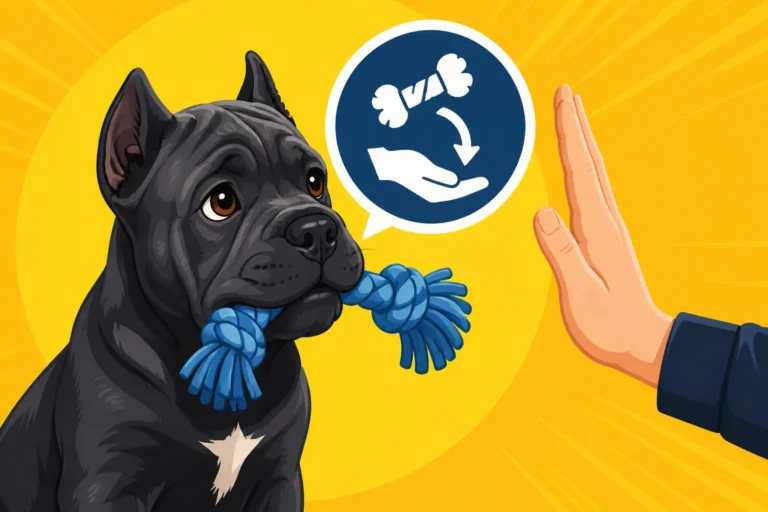
Practice your release cue repeatedly in controlled settings. Have your Cane Corso "stay," then give your release cue, and immediately reward them. This teaches them that waiting for the release is always worth it, as it signals access to something good. Without a clear release, your dog might just break their "stay" because they assume the door opening is the release. This clear boundary of "wait for my word" empowers you to control the flow of activity at the door, rather than your Cane Corso making that decision.
Mastering Impulse Control in Everyday Scenarios
Door manners are essentially an exercise in advanced impulse control. To really succeed, you need to embed impulse control into your Cane Corso's daily life, not just at the door. This means teaching them patience in countless small ways. For instance, Teaching a Cane Corso to Hold a Place Cot is an excellent way to practice extended stays and ignoring distractions. Having them wait for their food bowl, for toys to be thrown, or before getting affection are all opportunities to build this crucial skill.
Make it a game! Hold a treat in your hand and only offer it when your Cane Corso looks away or sits calmly. Walk towards the door, pause, ask for a sit, reward, then take another step. These small, consistent repetitions build their "impulse control muscle." Remember, a Cane Corso's mind is always working; giving them productive ways to exercise self-restraint will make them a more thoughtful and controlled companion. The more you practice impulse control in general, the easier it will be to apply it specifically to the door.
Step-by-Step: Teaching the "Wait" Command at Doors
Now that your Cane Corso has a solid foundation in basic obedience and impulse control, it's time to apply those skills directly to the challenging environment of the door. This process requires patience, consistency, and breaking the behavior down into tiny, manageable steps. Remember, we’re aiming for a calm, thoughtful exit, not a mad dash.
Phase 1: The Inner Threshold
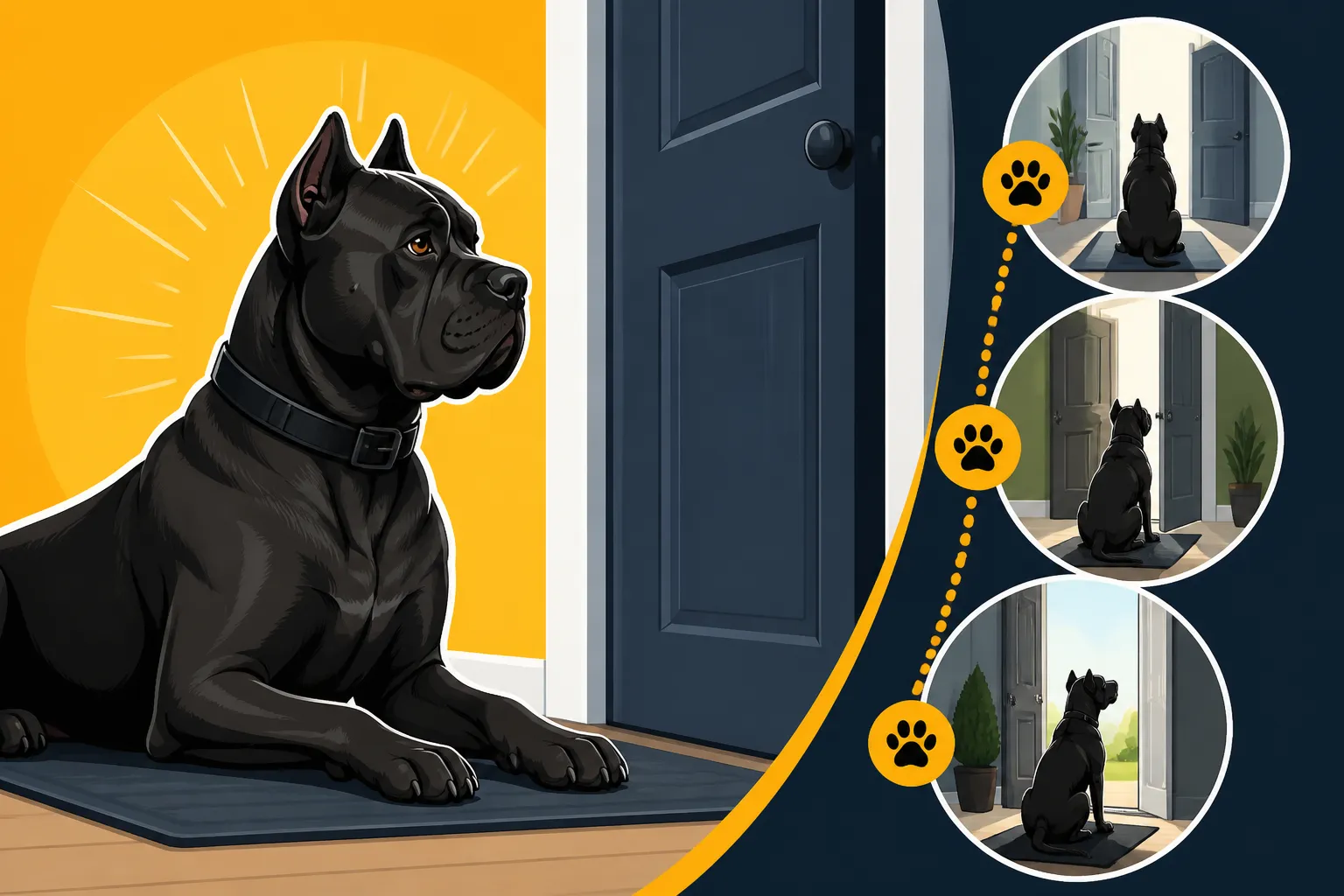
Start this training at an interior doorway, one that leads to another room rather than the exciting outside world. This minimizes distractions and allows your Cane Corso to focus purely on the task at hand. Ask your dog to "sit" a few feet away from the door. Hold their leash loosely or stand near them for gentle guidance. Now, reach for the doorknob. If your dog breaks their sit, immediately close the door (or stop reaching for the knob) and reset. No scolding, just a calm "Uh-oh, try again" and guide them back to a sit.
The moment you can reach the doorknob without them moving, give a treat. Gradually, turn the knob. If they move, reset. If they stay, treat. Then, slowly open the door a crack. Again, if they move, close it and reset. If they stay, treat. The goal is to build up to the door being fully open, and your Cane Corso remaining in a sit, waiting for your release cue. This might take many, many repetitions, especially with a dog that loves to blast through open spaces. Once the door is fully open and they are still patiently waiting, give your release cue ("Okay!" or "Free!") and enthusiastically invite them through, rewarding them on the other side. This positive reinforcement for waiting and for the release is critical.
Phase 2: Adding the Leash and Exterior Doors
Once your Cane Corso is a master of the inner threshold, it's time to introduce the leash and move to an exterior door – perhaps the back door to the yard, which might be less distracting than the front. Put their leash on, but keep it slack. You want them to choose to wait, not be physically restrained into it. Ask for the "sit" a few feet from the exterior door. Now, go through the same steps as Phase 1: reach for the knob, turn it, open the door a crack, then fully open it.
The moment they stay in their sit while the door is open, give a treat. If they start to inch forward or break the sit, immediately take a step back, close the door, and reset. The door only opens when they are calm. Practice opening and closing the door multiple times without ever letting them through, just rewarding for their calm "wait." This desensitizes them to the excitement of the door opening. When they can consistently sit calmly with the door wide open, give your release cue and step out together, rewarding them as they cross the threshold with you. Remember, the goal is always to have them move with you, not ahead of you. Leash Manners Before a Cane Corso Hits Ninety Pounds are foundational here.
Phase 3: Introducing Distractions and Real-World Scenarios
With a solid "wait" at a simple exterior door, you can begin to introduce real-world distractions. This is where the training truly solidifies. Start with mild distractions, like another family member walking past the open door. Progress to more significant ones, such as the sound of a car, someone approaching the house, or even having a friend stand outside the door. Each time, if your Cane Corso breaks their "wait," immediately reset and try again. The reward for waiting calmly with distractions needs to be highly valuable – a favorite treat or toy.
Practice at different doors – the front door, the garage door, even the car door. The principles remain the same: "sit," "wait" until released, even when the environment is exciting. If you find your dog struggling, go back a step to an easier scenario. This graduated approach is key. You might consider using a management gate (easily found on Amazon) to help create a barrier during the initial stages, allowing you to open the main door slightly while still having a controlled boundary. This is particularly useful for Stopping a Cane Corso From Blocking the Front Door when you're trying to manage guests or deliveries. The ultimate goal is for your Cane Corso to understand that no matter the situation or the excitement level, they always wait for your explicit permission to proceed through any doorway.
| Training Phase | Location/Scenario | Key Actions | Common Challenges | Success Metric |
|---|---|---|---|---|
| Phase 1: Inner Threshold | Interior doorway (e.g., bedroom) | Sit, reach for knob, turn knob, open crack, open fully; consistent reset. | Breaking sit from excitement | Sits calmly with door fully open for 5 seconds |
| Phase 2: Exterior Doors | Backyard door (leashed) | Sit (leashed), repeat knob/open steps; step out with dog on release. | Pulling on leash, anticipation | Steps out politely with slack leash on release |
| Phase 3: Distractions | Front door, car door (leashed) | Add family members, sounds, actual visitors; maintain wait, high value reward. | Lunging at guests, ignoring cue | Sits calmly for 10+ seconds with distractions and waits for release |
| Phase 4: Generalized | Any door, off-leash (supervised) | Practice in new locations, varied situations; gradually remove leash. | Over-excitement, testing boundaries | Waits reliably off-leash at any door upon cue |
Common Challenges and Troubleshooting
Even with the best intentions and a clear plan, training a Cane Corso to wait at every door isn't always a smooth, linear process. These intelligent and powerful dogs can present unique challenges. Understanding what might go wrong and having strategies to address them will help you stay patient and consistent, ultimately leading to success.
The Pushy, Anticipating Dog
One of the most frequent challenges is the Cane Corso that anticipates your every move, perhaps even leaning into the door or trying to push their way through the moment you touch the knob. This isn't necessarily defiance, but often a combination of high drive, excitement, and learned behavior from past successful door rushes. They’ve learned that anticipation can get them what they want.
To counter this, you need to become utterly unpredictable. Instead of always opening the door when they perform well, sometimes you just reach for the knob, then step away. Or you might open it a crack, then immediately close it without letting them through. The idea is to make the door opening not a guaranteed gateway to outside, breaking their predictive pattern. If they push, simply close the door and wait until they offer a sit voluntarily. Only then do you begin the process again. This teaches them that pushing actually delays their desired outcome, while calm waiting makes the door eventually open. Incorporating Five Minute Cane Corso Sessions Twice a Day focusing solely on door work can help break this habit quicker.
Managing Guests and Multiple Doors
It's one thing to get your Cane Corso to wait when it's just you and a quiet door. It's quite another when the doorbell rings, and Aunt Sally is on the porch, or you're juggling groceries and three different doors to get into the house. Guests and multiple points of entry introduce high-level distractions and increased logistical complexity. Your Cane Corso's guardian instincts will likely be heightened when strangers approach their territory, making impulse control harder.
For managing guests, consider using a physical barrier like a baby gate or keeping your Cane Corso on a leash even indoors when expecting company. This allows them to "wait" in a slightly separated, less stimulating area while you greet guests, then introduce them calmly. For multiple doors (like a house leading to a mudroom, then to the garage), practice each threshold individually, and then in sequence. Remember, every door is a new training opportunity. If you're struggling, don't hesitate to go back to simpler scenarios until they grasp the concept under higher stress. A long line, available on Amazon, can be incredibly useful here, allowing you to maintain control from a distance without physical force.
Consistency is Key, Even When Tired
This might be the biggest hurdle of all: maintaining absolute consistency, every single time, with every single person in the household. A Cane Corso learns best through clear, unwavering rules. If one family member lets them blast through the door "just this once," it can undermine weeks of training. Dogs don't generalize rules easily; they learn what works in specific situations with specific people.
Everyone in the household needs to be on board with the training protocol. This includes visitors too, if possible. If you're tired, stressed, or in a rush, it's easy to let standards slip. This is precisely when you need to double down on management. If you know you're in a hurry, put your Cane Corso on a leash before approaching the door, or simply put them in a Crate Training a Cane Corso That Outgrows Every Crate in another room until you're ready for a controlled exit. It's better to manage the situation to prevent an error than to allow them to practice the wrong behavior. Remember, every time they rush the door, they're practicing that undesirable behavior, making it stronger.
Consistency is Key: Maintaining Door Manners Long-Term
Training is never truly "done," especially with a breed as intelligent and driven as the Cane Corso. Door manners, like any other learned behavior, require ongoing reinforcement and consistency to remain reliable. Life happens, routines change, and sometimes, those little bad habits can creep back in if we're not vigilant. Think of it as an ongoing commitment to a well-behaved companion.
Daily Reinforcement and Practice
The "wait" command at doors isn't just for special occasions or when you're going for a walk. It should be a part of every single exit, no matter how mundane. Going to the mailbox? Wait. Letting them out into the yard for a potty break? Wait. Even if it's a door they rarely use, reinforce the expectation. These small, daily repetitions are what keep the behavior strong and reliable. The more they practice being patient and looking to you for direction at every threshold, the more ingrained it becomes.
Don't just train during dedicated sessions; integrate it into your natural routine. Ask for a "wait" before opening the pantry door, before letting them into a different room, or before they jump out of the car. Every moment is a chance to reinforce impulse control and your leadership. Five Minute Cane Corso Sessions Twice a Day are perfect for reinforcing these daily habits, even if it's just a quick "wait" before getting their favorite toy.
Preventing Regression in High-Stimulus Situations
One of the most common reasons for regression in door manners is encountering a high-stimulus situation without adequate preparation. This could be a new guest, an unexpected delivery, or even a sudden noise outside. Your Cane Corso's guardian instincts or excitement can easily override their training if they haven't practiced in similar scenarios.
To prevent regression, continually challenge your Cane Corso with increasing distractions, similar to how you gradually introduced them during initial training. Practice with friends entering your home, with family members leaving and returning, or by having someone approach the door while you're holding your dog on a leash. If you anticipate a highly exciting situation, like a party, proactively manage your dog. This might mean having them on a leash indoors, crated in a quiet room, or stationed on a "place cot" away from the main entryway. It's about setting them up for success, not expecting them to perform perfectly under extreme pressure without support.
The Role of Every Family Member
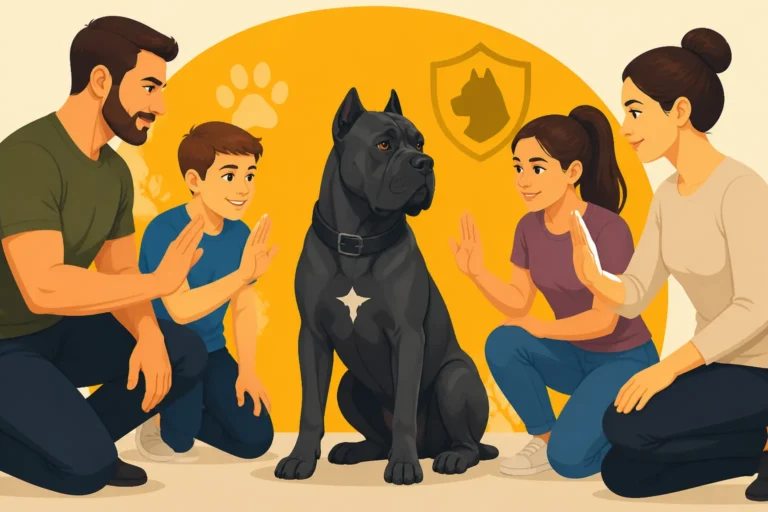
This point cannot be stressed enough: everyone who interacts with your Cane Corso and opens a door must adhere to the same rules. Consistency from every family member is paramount. If one person allows the dog to rush out, it completely undermines the efforts of everyone else and confuses the dog. They learn quickly who the "pushover" is at the door, and they will exploit that inconsistency.
Hold a family meeting and ensure everyone understands the "wait" command, the release cue, and the steps to follow at every door. Explain why it's important for the dog's safety and the household's peace. It can be helpful to post a small reminder by the doors. If children are involved, ensure they are supervised and taught how to manage the Cane Corso at doors safely; perhaps their role is just to ask the dog to sit, and an adult does the door opening. A united front will ensure your Cane Corso consistently applies their excellent door manners, making your home a calmer and safer place for everyone.
Disclaimer
This article is for general informational purposes only and does not constitute professional advice. Laws, prices and regulations vary by location and change over time. Consult a qualified professional for guidance on your specific situation.