Stopping a Cane Corso From Blocking the Front Door
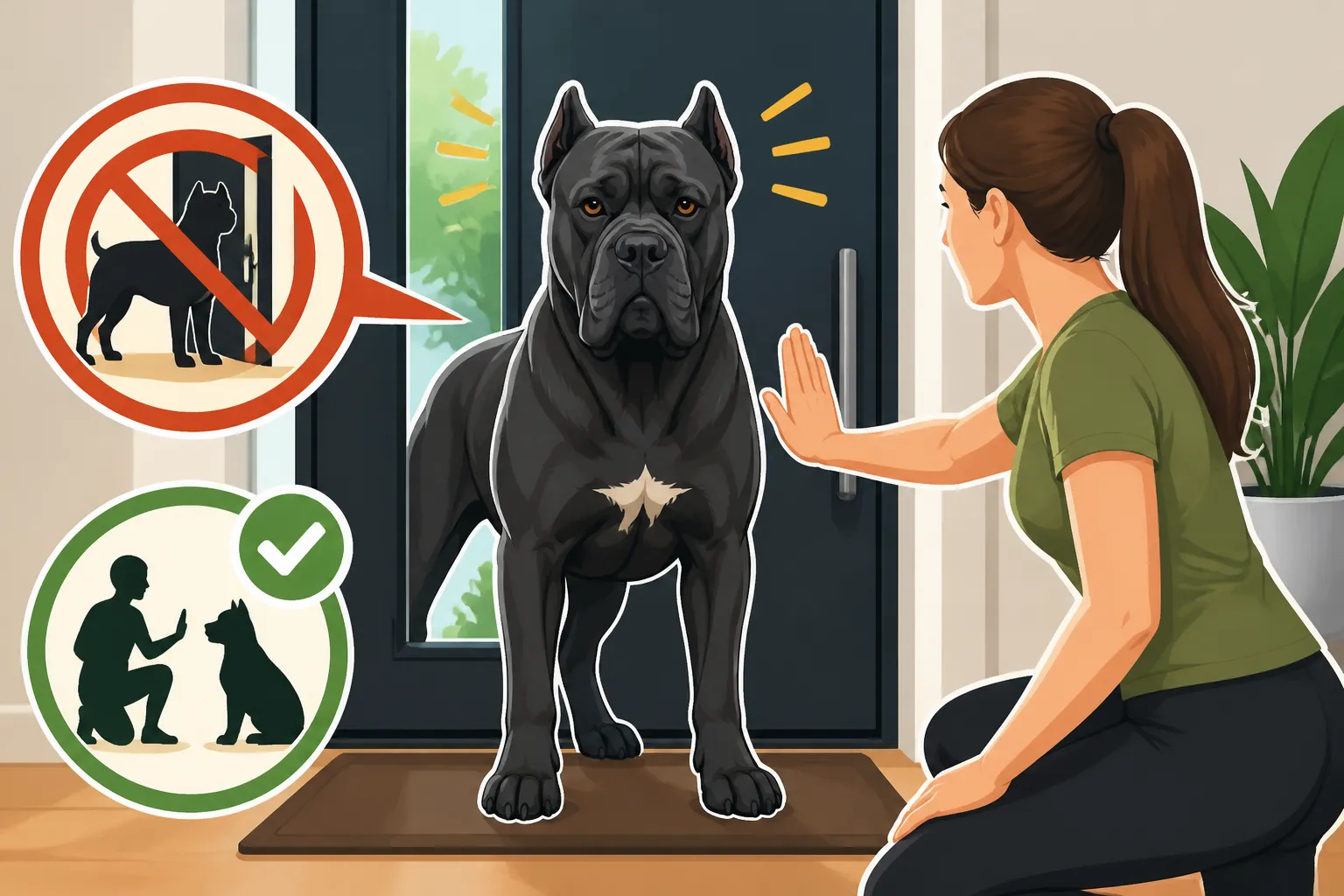
It's incredibly frustrating when you're trying to simply open your front door, whether to let in a guest, grab a package, or just step outside, and your massive Cane Corso decides that the threshold is their personal blockade. This isn't just an inconvenience; it can be a genuine safety concern, tripping hazards for you or visitors, and a clear sign that boundaries need to be established. This guide will help you understand why your Cane Corso might be blocking the front door and provide actionable strategies to teach them better manners and respect for personal space.
Understanding Why Your Cane Corso Becomes a Doorway Sentinel
Your Cane Corso isn't trying to be a pest, even if it feels that way in the moment. Their behavior at the front door stems from a deep-seated instinct to guard their territory and protect their family. They see the front door as the main entry point to their domain, and anyone or anything approaching it becomes a potential "thing to be evaluated." For a breed like the Cane Corso, this instinct is incredibly strong, but it needs to be managed and directed correctly so it doesn't become a problem.
The Guardian Instinct Kicking In
Cane Corsos were historically bred to guard property and livestock, and their guardian instinct is a powerful, intrinsic part of who they are. When the doorbell rings, or someone knocks, their immediate reaction is often to investigate, assess, and potentially intervene. They view themselves as the first line of defense. This isn't necessarily aggression; it's vigilance. They're asking: Who is this? Are they a threat? What's going on?
Imagine being a Cane Corso: you hear a strange noise, or see a shadow, and your brain immediately floods with "alert!" You rush to the source – the door – because that's where the perceived potential breach is. Standing directly in front of it gives them a prime position to observe and, if necessary, block entry. It's their way of "doing their job." The problem arises when their "job" interferes with your ability to navigate your own home safely and politely. It's a natural inclination, but it needs a polite outlet. What a Cane Corso's Guardian Instinct Actually Is delves deeper into this inherent trait.
Lack of Clear Boundaries and Expectations
Often, door-blocking behavior isn't just about guarding; it's also about a lack of clear boundaries. If your Cane Corso hasn't been consistently taught what their role is when someone approaches the door, they'll create their own. Without a designated "place" or a "stay" command that they understand applies during these high-excitement moments, they default to what feels natural to them – being front and center.
This is especially true for young, still-growing Cane Corsos. They don't understand the nuance of "it's okay when the mailman comes, but not okay for strangers." To them, all door interactions are important. If you've unintentionally reinforced their presence at the door – maybe by petting them when they stand there, or simply pushing past them without a command – you've taught them that this is an acceptable behavior. They learn by association, and if being at the door gets them attention, they'll continue to do it.
Excitement, Anxiety, or Over-Stimulation
Not all door blocking is about pure guarding. Sometimes, it's pure excitement. A friendly Cane Corso might be thrilled that someone is at the door, eager to greet them, and completely oblivious to their massive size creating an obstacle. They might jump, bark, whine, and get directly in the way, not out of malice, but out of sheer joy or anticipation.
Conversely, some Cane Corsos might experience anxiety or over-stimulation. The sudden noise of the doorbell, the unexpected presence of a stranger, or even just the commotion of people coming and going can trigger an overwhelming response. They might block the door because they don't know what else to do with that surge of energy or nervousness. This is where Impulse Control Work for a Cane Corso becomes absolutely crucial, as it teaches them to manage these powerful emotions rather than reacting instinctively.
Proactive Training Strategies for a Well-Mannered Doorway
The key to stopping a Cane Corso from blocking the front door lies in consistent, clear, and proactive training. You need to give them a job to do that is incompatible with blocking the doorway, and then reward them for doing that job. This isn't about suppressing their natural instincts entirely, but about channeling them into acceptable behaviors.
The "Place" Command: Your Best Friend
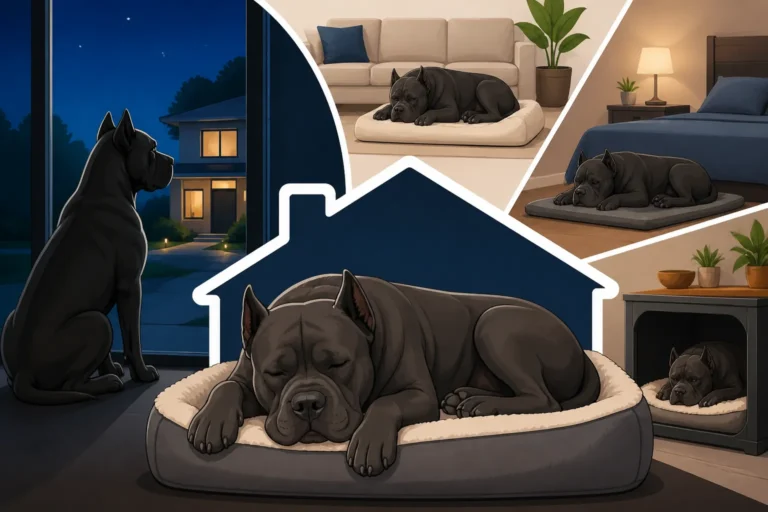
The "place" command is arguably the most powerful tool you'll have for managing your Cane Corso's door behavior. This command teaches your dog to go to a designated spot – a mat, a dog bed, a raised cot – and stay there until released. For a Cane Corso, this place should be far enough from the door that they aren't interfering with foot traffic, but still able to observe if that's part of their comfort level.
Start by teaching "place" in a calm environment, with no distractions. Lure your dog onto their designated spot with a treat, say "Place," and reward them heavily when all four paws are on it. Gradually increase the duration they stay there, then introduce minor distractions, like you walking away briefly. Once they understand "place" solidly, start practicing with the doorbell. Ring it, immediately tell your Cane Corso "Place!", and reward them when they comply. It might take many repetitions, but consistency is king. Products like heavy-duty elevated dog beds, available on platforms like Amazon, make excellent "place" spots because they are clearly defined and comfortable. You can find more detailed guidance on this in The Place Command That Saves a Cane Corso Household.
Establishing Boundary Lines
Beyond "place," you can teach your Cane Corso about physical boundaries around the door. This could be an invisible line on the floor that they aren't allowed to cross when the door is being approached or opened. You can use a long line or a leash for this initially. Have your dog on a leash a few feet away from the door. As you approach the door, if they try to come with you, gently correct them back to their spot with the leash and a verbal cue like "Back" or "Stay." Reward them for staying put.
Another effective method, especially for younger Cane Corsos or those who are particularly persistent, is to use physical barriers. A sturdy baby gate placed a few feet from the front door can create a clear boundary. This physically prevents them from rushing forward while still allowing them to see and hear what's happening. Gradually, as they learn to respect the gate, you can transition to verbal cues and the "place" command without the physical barrier. Remember, it's all about repetition and positive reinforcement. Teaching a Cane Corso to Wait at Every Door can provide additional strategies for managing thresholds.
Controlled Greetings and Desensitization
Part of the problem might be an over-excitement or anxiety around new people. To address this, you need to practice controlled greetings. Instead of letting your Cane Corso rush the door, have them on their "place" or behind a barrier when guests arrive. Only once the guest is inside and settled, and your dog is calm, should you release them for a polite greeting.
For some Cane Corsos, the actual sound of the doorbell or a knock can trigger an intense reaction. Desensitization can help with this. Record your doorbell or a knocking sound. Play it at a very low volume, far away from your dog, and immediately reward them for staying calm. Gradually increase the volume and proximity over many sessions. The goal is to change their emotional response to the sound from "ALERT!" to "Oh, that's just a noise that means I get a treat if I stay calm." This often pairs well with the "place" command, so they associate the sound with going to their spot and getting a reward.
| Training Method | Primary Goal | Key Benefit | When to Use It |
|---|---|---|---|
| "Place" Command | Designate a specific, safe spot for the dog | Removes dog from immediate doorway | All instances of door approach/entry/exit |
| Boundary Training | Teach a "no-go" zone near the door | Prevents rushing, defines personal space | When dog struggles with "place" or needs visual cue |
| Controlled Greetings | Teach polite interaction with visitors | Reduces over-excitement/anxiety at the door | When guests arrive |
| Desensitization | Neutralize triggers like doorbell/knocks | Reduces reactive barking and lunging | When doorbell/knock causes significant reaction |
Managing Immediate Doorway Blocking Behavior
Sometimes, despite your best training efforts, your Cane Corso might still try to block the door. It happens! Especially when you're caught off guard or if they're particularly hyped up. Having strategies to manage these immediate situations is crucial to prevent accidents and reinforce the training you're working on.
Utilizing Leash Management Indoors
Even inside your home, a leash can be your best friend when managing a large, determined Cane Corso. If you know you're expecting a delivery or a guest, put a light house line or leash on your dog before the distraction arises. This gives you a safe, non-confrontational way to guide them to their "place" or gently pull them away from the door without having to physically wrestle a hundred-plus pound dog.
Keep the leash short enough that you have control, but long enough that it's not constantly tight. When the doorbell rings, you can simply step on the leash near their collar (or gently hold it) to prevent them from rushing forward, while simultaneously giving your "Place" command. This allows you to open the door without your dog being a barrier, and then you can reward them for maintaining their position. This is especially helpful during the early stages of training. Even basic Leash Manners Before a Cane Corso Hits Ninety Pounds apply indoors for control.
Redirecting and Distraction Techniques
In the heat of the moment, redirection can be a lifesaver. If your Cane Corso is already at the door, blocking your path, try to immediately redirect their attention away from the door. A high-value treat tossed a few feet away from the door can be enough to get them to move. As soon as they take a step towards the treat, give your "Place" command and try to guide them there.
Another effective distraction can be a favorite toy. Keep a special "door toy" near your "place" mat or bed. When a distraction happens, say "Place" and then offer them the toy as a reward for going to their spot. The key is to be quicker than your dog's reaction to the door. You want to interrupt the undesirable behavior before it fully escalates into a full-blown blockade. This takes practice and anticipation on your part, but it teaches your dog that good things happen when they move away from the door, not to it.
Consistent Enforcement by All Family Members
This is where many families struggle. It’s absolutely vital that every single person in the household, from adults to older children, is on the exact same page regarding door etiquette. If one person allows the Cane Corso to rush the door while another enforces the "place" command, your dog will become confused and inconsistent in their behavior. They'll quickly learn who they can get away with what, and your training efforts will be undermined.
Hold a family meeting to discuss the rules. Ensure everyone knows the commands, understands the expectations, and commits to reinforcing them every single time. This consistency creates a clear and predictable environment for your Cane Corso, making it much easier for them to learn what's expected. Without it, you're essentially giving them mixed signals, which can be incredibly frustrating for a smart, but rule-seeking, dog. Teaching Every Family Member the Same Cane Corso Cues is paramount for success here.
Tools and Aids to Support Doorway Training
While training fundamentally relies on consistency and communication, certain tools can make the process smoother and more effective, especially with a powerful and intelligent breed like the Cane Corso. These aids can help reinforce boundaries and manage situations where your dog's instincts might override their training.
Place Cots and Dedicated Beds
As mentioned, a designated "place" is incredibly helpful. For a Cane Corso, a sturdy, comfortable cot or bed is ideal. These are usually elevated, providing a clear visual cue for your dog. They understand this is their spot. When choosing one, look for something durable enough to withstand a large breed. Amazon offers a wide variety of these, from orthopedic memory foam beds to elevated cots that are easy to clean and provide good air circulation.
The key is that this "place" becomes a sanctuary, a spot where they can relax and be rewarded for staying. It's not a punishment zone. By making it a positive place, your Cane Corso will be more inclined to go there voluntarily when given the command, especially during high-stress times like when the doorbell rings. Consistently using the same item helps cement the association.
Indoor Gates and Pens for Containment
For situations where you need guaranteed separation or during the initial stages of training, indoor gates and pens are invaluable. A heavy-duty, tall baby gate can be installed a few feet from your front door, creating a physical barrier that prevents your Cane Corso from getting into the immediate doorway space. This is particularly useful when you're training a puppy or a new rescue who hasn't yet grasped the "place" concept.
You can also use a larger exercise pen or portable kennel to create a secure zone further away from the door. This allows your Cane Corso to still be part of the household activities but safely contained and unable to rush the door. It's a management tool that buys you time to teach the desired behavior without constant physical intervention. Make sure any gate or pen is robust enough to contain a Cane Corso, as they are powerful and determined dogs.
Professional Training Resources
Sometimes, despite all your efforts, you might feel like you're hitting a wall, or you just want extra guidance. This is where professional training resources come in. While this guide provides a lot of information, an experienced trainer can offer personalized advice and help troubleshoot specific challenges with your dog.
Many online platforms, like BAXTER & Bella, offer comprehensive dog training programs that cover everything from basic obedience to impulse control and reactivity. These programs can be a fantastic resource, providing structured lessons, video tutorials, and often access to professional trainers for questions. Investing in good training early on, especially for a powerful breed like the Cane Corso, is always worth it. They can help you refine your "place" command, work on Teaching a Cane Corso to Down at Distance, or address underlying anxiety that might contribute to door-blocking. Remember, consistent training is a lifelong commitment with a Cane Corso, but the rewards are immeasurable in terms of a well-behaved and respected companion.
Disclaimer
This article is for general informational purposes only and does not constitute professional advice. Laws, prices and regulations vary by location and change over time. Consult a qualified professional for guidance on your specific situation.