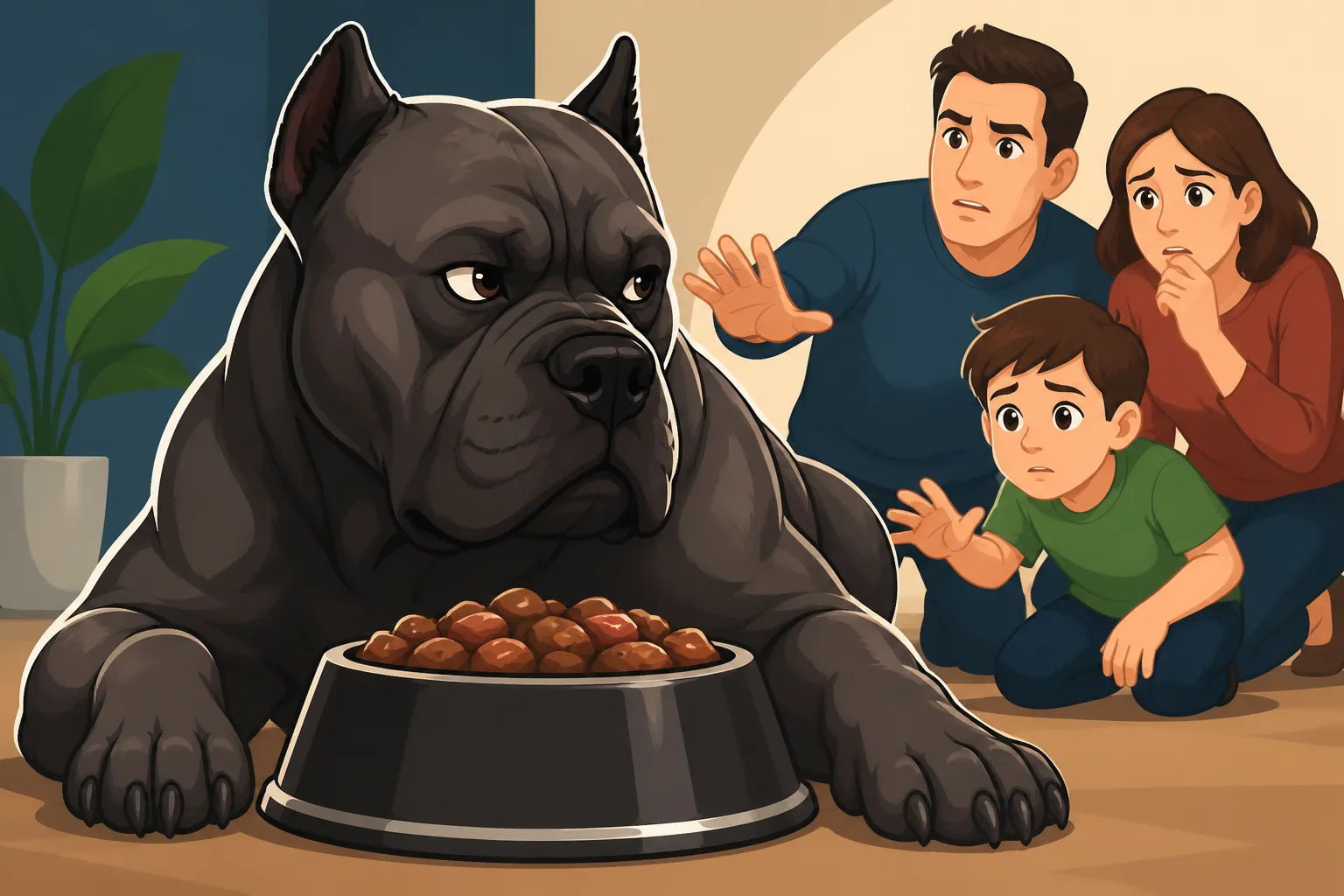
A Cane Corso That Guards Its Bowl From the Family
It's incredibly unsettling when your loyal, devoted Cane Corso suddenly starts acting possessive, especially around something as fundamental as their food bowl. That shift from loving companion to a tense, growling, or even snapping dog at mealtime can be terrifying, leaving you feeling confused, heartbroken, and perhaps a little fearful. This guide is here to help you understand why your Cane Corso might be guarding their bowl, how to recognize the signs, and most importantly, how to safely and effectively address this challenging behavior so you can reclaim peaceful mealtimes and strengthen your bond.
Understanding Resource Guarding in Cane Corsos
Resource guarding is a natural, instinctual behavior in dogs, stemming from their ancestral need to protect valuable resources like food, toys, or even sleeping spots from competitors. While it's natural, in a domestic setting, especially with a powerful breed like the Cane Corso, it can become a serious safety concern that needs careful management and training. It's not about your dog being "dominant" or trying to take over your household; it's about perceived threat and the instinct to protect what they value.
Why Resource Guarding Develops
There's no single reason a Cane Corso might start guarding their food bowl, and it's often a combination of factors. Sometimes, it stems from early life experiences, particularly if they had to compete for food in a litter, or if they were adopted from a situation where food was scarce or inconsistent. A puppy who had to fight for every morsel among siblings might carry that insecurity into their adult life. Even if you've done everything "right," these ingrained instincts can surface as they mature.
Another factor can be a lack of clear boundaries and consistent training from a young age. If a puppy is allowed to "tell" people to back off from their food bowl without intervention, they learn that growling or stiffening works. For a Cane Corso, a breed with strong protective instincts, this can escalate quickly if not addressed. It's not their fault; they're simply learning what behaviors get them what they want – unchallenged access to their meal. The Handler a Cane Corso Respects is crucial in establishing trust and clear communication to prevent such issues from spiraling.
The Instinctive Nature of Protection
Cane Corsos were historically bred to be guardians, protecting property, livestock, and family. What a Cane Corso's Guardian Instinct Actually Is runs deep in their veins. While this is a desirable trait when it comes to protecting against genuine threats, it can sometimes manifest in undesirable ways, such as guarding resources from family members. Their inherent protectiveness can blur the lines between guarding a home and guarding a bowl, especially if they perceive family members as potential competitors for that resource, even if the intention isn't there.
It’s not necessarily a sign of aggression towards you as their owner, but rather a manifestation of their strong protective drives directed at a high-value item. They aren't trying to be "mean" or assert dominance over you; they are simply reacting to an internal alarm bell that says "protect this." Understanding this can help shift your perspective from feeling personally offended or fearful to recognizing it as a behavior that needs careful, consistent, and calm guidance.
Recognizing the Signs of Bowl Guarding
Catching the subtle cues of resource guarding early can make a huge difference in preventing escalation. Many owners miss the initial, softer warnings, only realizing there's a problem when their Cane Corso is growling or snapping. Being attuned to your dog's body language is key, especially with a breed as powerful and stoic as the Cane Corso, who might not always broadcast their intentions as loudly as other breeds.
Subtle Early Warnings
Before a full-blown growl or snap, a Cane Corso will often give off subtle signals. These can include freezing or stiffening their body when you approach their bowl, lowering their head over the food, eating faster, or darting their eyes at you without turning their head. You might also notice a slight tension in their lips or a very soft, almost inaudible growl or grumble deep in their throat. They might shift their body to block access to the bowl, placing themselves between you and the food.
These early signs are crucial because they tell you your dog is feeling uneasy and potentially threatened. Ignoring them often leads to the dog escalating their warnings because the subtle cues weren't effective. Think of it like a polite whisper turning into a shout if the whisper isn't heard. Your Cane Corso is trying to communicate their discomfort, and it's vital that you learn to "listen" to these quiet signals.
Escalated Behaviors
If the subtle warnings are ignored or not understood, a Cane Corso's guarding behavior can escalate. This might involve a clear, audible growl, baring teeth, a snarl, or even a lunge with a snap – which may or may not make contact. They might stand over their bowl, hackles raised, with a hard stare, making it very clear that any further approach will not be tolerated. This is where the situation becomes dangerous, especially with a large, strong breed.
At this stage, you might feel a knot in your stomach, questioning your dog's loyalty or even your ability to manage them. It’s a frightening experience. However, remember that these are still communication attempts, albeit forceful ones. Your Cane Corso is still saying, "Back off, I'm serious about protecting this." It’s a clear indication that immediate and consistent intervention is required, focusing on safety first and then on modifying the behavior.
Here’s a quick overview of what to look for:
| Behavior Type | Subtle Cues | Escalated Cues |
|---|---|---|
| Body Language | Stiffening, freezing, head low over food | Raised hackles, body block, lunging, snapping |
| Eye Contact | Darting eyes, quick glances, avoiding eye contact | Hard stare, dilated pupils |
| Vocalizations | Soft grumble, quiet growl deep in throat | Loud, clear growl, snarl, bark |
| Eating Speed | Eating faster, gulping food | Aggressively eating, protecting with body |
| Mouth | Tense lips, slight lip curl | Baring teeth, snapping, biting |
| Posture | Body shifting to shield bowl | Charging, standing over, refusing to move |
Implementing Management Strategies
Before you even think about training, safety has to be your number one priority. Managing the environment and your interactions around food can prevent incidents, reduce your stress, and give you a safer foundation to start behavior modification. This is especially true with a Cane Corso, where a single mistake can have serious consequences due to their size and strength.
Designating a Safe Eating Space
One of the simplest yet most effective management tools is to provide your Cane Corso with a completely undisturbed, private eating space. This could be a crate, a separate room, or a quiet corner of the house where they can eat without interruption. When they are eating, no one—not children, other pets, or even adults—should approach them. The goal is to remove any perceived threat that might trigger their guarding instincts.
This isn't about giving in to bad behavior; it's about setting your dog up for success and teaching them, through consistent positive experiences, that their food is safe and won't be taken away. If your Cane Corso learns that mealtime always happens in peace, their anxiety around food can significantly decrease over time. For some dogs, a designated mat or The Place Command That Saves a Cane Corso Household can create a psychological "safe zone" even in a busier room, but only after extensive training and trust building.
Controlling Access to High-Value Items
Food isn't the only thing a Cane Corso might guard. Toys, chew bones, or even stolen "forbidden" items like socks can become guarded resources. For the time being, especially while you're working on food guarding, it's wise to limit access to any items that consistently trigger guarding behavior. Only offer chew bones or special toys when your dog is safely confined and will not be approached.
When it comes to regular meals, consider using puzzle feeders or slow-feeder bowls, which can make mealtime last longer and reduce the perceived value of eating quickly before it's gone. Brands available on platforms like Amazon offer a wide variety of these specialized bowls that can help regulate eating speed and mental engagement. Never allow children unsupervised access to your Cane Corso when any high-value item is present, and teach everyone in the household Rules a Child Living With a Cane Corso Must Know.
Training for a Safer Mealtime Environment
Once management is in place and everyone is safe, you can start working on changing your Cane Corso's emotional response to people approaching their food. This isn't about punishing them for growling (which will only suppress the warning and make future bites more likely without warning); it's about creating positive associations.
Desensitization and Counter-Conditioning
The core of addressing resource guarding is a process called desensitization and counter-conditioning. This means gradually exposing your Cane Corso to the trigger (you approaching their bowl) while simultaneously creating a positive experience (giving them something even better than what they're guarding). The goal is to change their emotional response from "danger!" to "yay, people approaching means good things!"
Here's a step-by-step approach:
- Start from a Distance: While your Cane Corso is eating, stand far enough away that they don't show any signs of guarding (no stiffening, no hard stare). Toss a super high-value treat (like cooked chicken or cheese) past their bowl, so they have to move away from the bowl to get it. Then walk away. Repeat this several times over multiple meals.
- Gradual Approach: Over days or weeks, slowly decrease the distance from which you toss the treat. The key is to never get close enough to trigger a guarding response. If they show any tension, you've moved too quickly. Back up to the previous comfortable distance.
- Approaching and Adding: Once you can approach fairly close without a reaction, start dropping the treat into their bowl as you pass by, then immediately walk away. This teaches them that your approach adds value, rather than taking it away.
- Practice "Trade": For non-food items, you can teach a "trade" command. Offer a high-value treat, and when they drop the guarded item to take the treat, praise them and then return their original item or give them an equally good replacement. Teaching a Cane Corso Puppy to Give Things Up is a foundational skill that can be built upon for trade. Always ensure the trade is genuinely rewarding for them.
This process requires immense patience and consistency. Never force the issue or try to take the bowl away without a successful trade. If your dog growls, it means you moved too fast, not that they are being "bad." Retreat and try again from a greater distance next time.
Structured Training with Positive Reinforcement
Beyond desensitization, incorporating structured obedience training can significantly help. A well-trained Cane Corso who understands and respects cues is often a more confident dog. Using positive reinforcement, such as clicker training or verbal markers, strengthens your bond and teaches your dog that cooperating with you leads to good things. For example, working on Teaching a Cane Corso to Hold a Place Cot can give them a reliable "go-to" spot during busy times, including meal prep.
Consider enrolling in a positive reinforcement-based online course or local classes. Online programs like those offered by BAXTER & Bella can provide structured guidance, video tutorials, and even personalized coaching to help you implement these training techniques effectively. Consistency in training every family member to use the same cues and rewards is vital. Teaching Every Family Member the Same Cane Corso Cues reinforces the desired behavior and prevents confusion for your Cane Corso.
When to Seek Professional Help
While management and basic training can go a long way, some cases of resource guarding, especially with a breed as powerful as the Cane Corso, require expert intervention. Knowing when to call in a professional isn't a sign of failure; it's a sign of responsible ownership.
Identifying Severe Guarding
If your Cane Corso's guarding behavior is severe – meaning they consistently growl, snarl, lunge, or have bitten family members or other pets over food or other resources – it’s time to call a professional. If you feel unsafe around your dog during mealtimes, or if the behavior is escalating despite your best efforts with management and basic desensitization, don't hesitate. The risk of injury is too high to try and handle it alone.
Other red flags include guarding that extends beyond food to other resources like furniture, specific people, or even pathways in the house. If the guarding seems to be worsening, or if your dog is exhibiting other fear-based or aggressive behaviors, a professional can help unravel the complexity of the situation.
Choosing the Right Professional
When seeking help, look for a certified professional dog trainer (CPDT-KA) or, for more severe cases, a certified professional behaviorist (CPBC) or a veterinary behaviorist (DACVB). Avoid any trainer who suggests using punitive methods, physical corrections, or "dominance theory" to address resource guarding. These methods are not only ineffective but can exacerbate the problem, making your dog more fearful and potentially more aggressive without warning. What to Look For in a Cane Corso Trainer should always prioritize positive, force-free methods.
A good professional will observe your Cane Corso's behavior, take a thorough history, and develop a customized training plan that focuses on safety, management, and positive reinforcement-based behavior modification. They should be able to guide you step-by-step through the desensitization and counter-conditioning process, offering hands-on support and helping you understand your dog's specific triggers and responses. Group Classes Versus Private Work for a Cane Corso can be discussed, though private one-on-one sessions are usually best for specific behavior issues like resource guarding.
Living with a History of Resource Guarding
Even after successful training, it's important to understand that resource guarding can be a deeply ingrained behavior. While you can significantly improve it, you might always need to maintain certain management strategies to prevent relapse and ensure a peaceful household.
Maintaining Vigilance and Consistency
Consistency is your best friend when living with a Cane Corso who has a history of resource guarding. Continue to use a designated, undisturbed eating space for meals. Avoid testing your dog by suddenly trying to take their bowl away. While a trained "trade" command should be reliable, it's not an invitation to constantly interfere with their eating. The goal is to build trust that their resources are safe, not to prove you can take them. The Structure a Cane Corso Needs Every Single Day is fundamental, and consistent management of their environment around food is part of that structure.
Regularly practice your "trade" command and continue to reinforce positive associations with your presence around their food. This might mean occasionally tossing a high-value treat into their bowl as you walk by, even after the initial training phase is over. This ongoing positive reinforcement ensures the behavior remains modified and prevents a return to guarding.
Educating Your Household and Guests
Everyone in your household, especially children, must be aware of and adhere to the established rules around your Cane Corso's meal and resource times. Children, in particular, need clear boundaries and strict supervision. Never assume a child understands the nuances of dog body language; it's up to the adults to enforce safety protocols. If you have guests, particularly those unfamiliar with large breeds or dog behavior, explain the rules clearly. It's perfectly acceptable to politely request that they give your Cane Corso space during meal times or when they have a valuable chew.
Remember, your Cane Corso's well-being and the safety of your family are paramount. By understanding the roots of resource guarding, implementing smart management, and engaging in patient, positive reinforcement training, you can transform mealtime from a source of anxiety into a routine that reinforces trust and security for everyone. It takes work, but the peace of mind and the strengthened bond with your magnificent Cane Corso are absolutely worth it.
Disclaimer
This article is for general informational purposes only and does not constitute professional advice. Laws, prices and regulations vary by location and change over time. Consult a qualified professional for guidance on your specific situation.