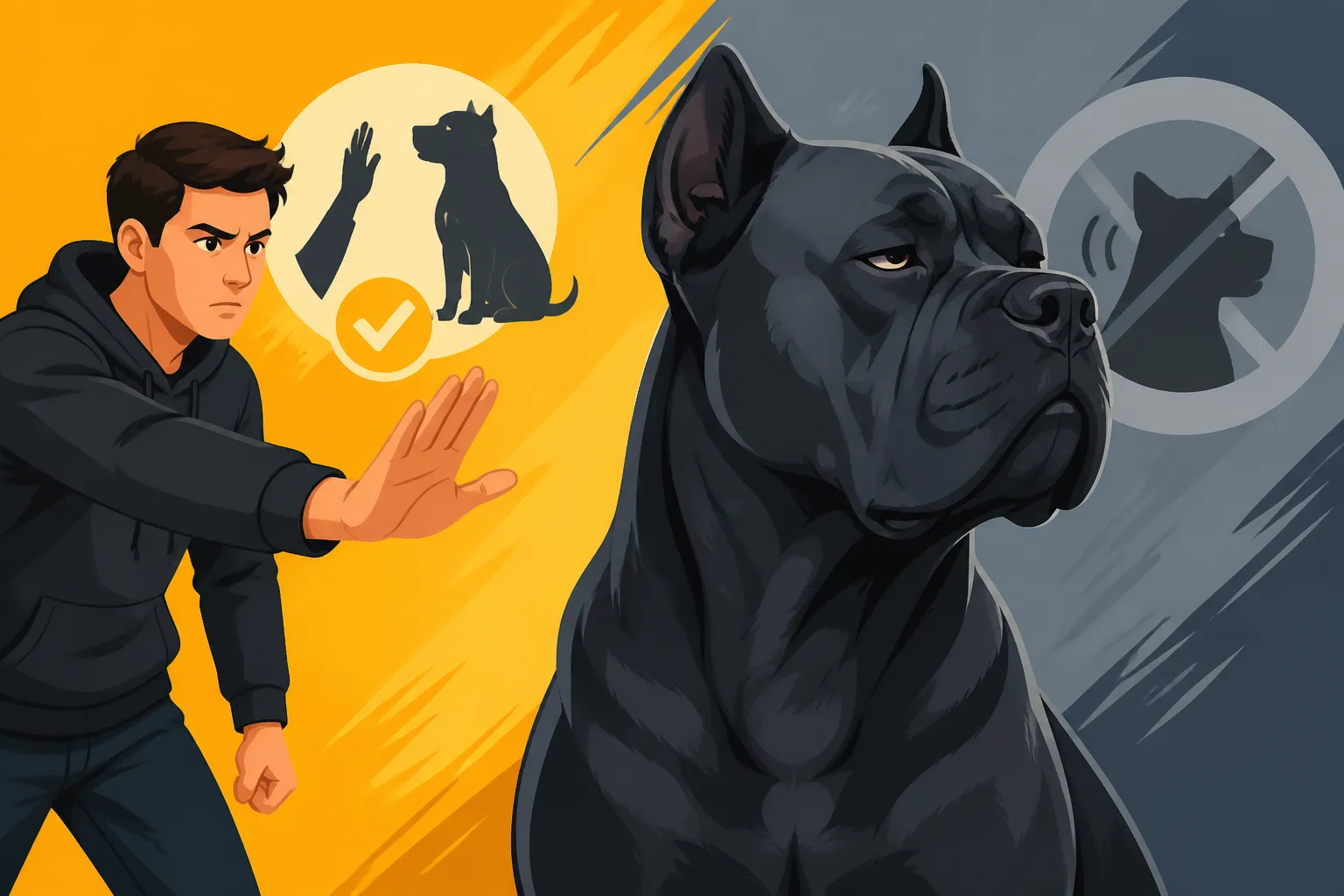
The Adolescent Cane Corso That Stops Listening
It's a common, utterly frustrating scenario for Cane Corso owners: your well-behaved puppy suddenly seems to have forgotten every single command you taught them. The polite loose-leash walks have become a tug-of-war, the once-reliable recall is a distant memory, and your once-attentive companion now acts like you're speaking a foreign language. This guide dives deep into the phenomenon of the adolescent Cane Corso who seemingly stops listening, helping you understand why this happens and what practical, empathetic steps you can take to navigate this challenging but temporary phase.
Decoding Cane Corso Adolescence
Adolescence in a Cane Corso is often compared to a human teenager hitting their rebellious years, and honestly, that comparison isn't far off. It's a period of immense physical, hormonal, and cognitive change that can turn your sweet, eager-to-please puppy into a defiant, independent, and sometimes exasperating giant. Understanding the biological underpinnings of this phase is crucial for keeping your sanity and helping your Cane Corso through it.
The Developing Brain and Shifting Hormones
During adolescence, a Cane Corso's brain is undergoing significant remodeling, especially in the prefrontal cortex—the part responsible for impulse control, decision-making, and understanding consequences. This is why a dog that once had impeccable manners might suddenly seem to lack judgment, reacting impulsively to stimuli they previously ignored. Their brains are literally wired differently for a time, making it genuinely harder for them to control their urges or recall complex commands under distraction. It's not malice; it's biology.
Simultaneously, a surge of hormones floods their system. For males, testosterone peaks, leading to increased territoriality, marking behavior, and a heightened interest in other dogs, especially females. For females, estrogen levels fluctuate with heat cycles, bringing their own set of behavioral shifts. These hormonal changes are powerful drivers of behavior, often making them more bold, less inhibited, and more prone to testing boundaries. Your once-submissive lean against your leg might be replaced by a demanding push for attention, or a subtle defiance in following a known command.
The Instinct to Explore and Challenge
Beyond brain chemistry, adolescence triggers a strong evolutionary drive in Cane Corsos to explore their world and establish their place within it. They’re becoming physically capable adults, and with that comes an innate push to be more independent. This often manifests as a desire to range further on walks, investigate every smell with intense focus, and generally be less tethered to their human handler. For a guardian breed like the Cane Corso, this period is also when their inherent protective instincts can start to solidify. They might become more wary of strangers or other dogs, barking at things they once ignored.
This instinct to explore and challenge also extends to their relationship with you. They'll test boundaries, pushing to see what they can get away with. "Do I really have to come when called if there's an interesting squirrel?" becomes a genuine question in their mind, not just a disregard for your command. It's a natural part of their development, but it can be incredibly frustrating when you're dealing with a rapidly growing, powerful dog that's suddenly "selective" in its hearing.
Common Behavioral Hiccups in Adolescent Cane Corsos
When your Cane Corso hits adolescence, it often feels like a switch has been flipped. Behaviors that were once reliably trained seem to evaporate into thin air, and new, less desirable habits crop up. It's important to recognize these common challenges so you can address them effectively and with patience.
The "Selective Hearing" Phenomenon
This is perhaps the most universal complaint from owners of adolescent dogs, especially a large, strong-willed breed like the Cane Corso. Your dog knows "sit" and "stay," but suddenly, when you ask, they stare blankly, sniff the ground, or simply walk away. Their recall, which you diligently proofed, might become utterly unreliable the moment another dog or an interesting scent appears. It’s as if they understand the words but choose to ignore them, or, more accurately, their developing brains are prioritizing novel stimuli over your familiar voice.
This isn't an act of defiance, though it certainly feels that way. It's their brain struggling with impulse control and distraction. The world is suddenly a much more interesting, exciting, and sometimes intimidating place than it was when they were a puppy. Every new smell, sight, and sound competes for their attention, and their maturing instincts often override their training. This is a critical time to re-evaluate how you Building a Cane Corso's Recall From Eight Weeks and reinforce every single command, making yourself more interesting than the environment.
Increased Reactivity and Boundary Testing
Adolescence often brings an increase in reactivity—barking, lunging, or growling at things they previously ignored. This could be directed at other dogs, strangers, or even inanimate objects. Their inherent guardian instincts, which might have been dormant as a puppy, can begin to emerge and intensify. They might decide that the mail carrier is a threat, or that every dog they see on a walk needs to be barked at. This isn't necessarily aggression, but often a manifestation of fear, insecurity, or simply a strong territorial drive combined with a lack of social maturity.
Beyond reactivity, you'll find them actively testing boundaries you thought were well-established. They might counter-surf, steal items, or refuse to move off the couch when asked, all behaviors they knew were off-limits as a puppy. This testing is their way of figuring out where they stand in the household hierarchy and how much they can get away with now that they're bigger and more confident. It's a crucial time to revisit The Structure a Cane Corso Needs Every Single Day and ensure every family member is on the same page with rules and expectations.
Destructive Chewing and Excessive Energy
Despite their growth, adolescent Cane Corsos still have a tremendous amount of energy to burn, both physical and mental. If this energy isn't channeled appropriately, it often manifests as destructive chewing, digging, or general mayhem around the house. They might shred furniture, chew through leashes, or excavate your prized flower beds, not out of malice, but out of boredom and an urge to explore with their powerful jaws. This is where those heavy-duty chew toys become essential.
Their need for mental stimulation also ramps up. Simple obedience commands might not be enough to satisfy their keen intellect. If you find your Cane Corso destroying things indoors, consider if they are getting enough exercise and mental enrichment. Puzzle toys, longer walks, and scent work can be invaluable. Remember, The Damage a Bored Cane Corso Does Indoors can be significant, so proactive management is key.
Strategies for Redirecting Focus
Navigating the choppy waters of Cane Corso adolescence requires a multi-pronged approach that combines patience, consistency, and a deep understanding of their developmental stage. The key is to make yourself and training more rewarding and engaging than the distractions vying for their attention.
Making Training More Engaging and Rewarding
During adolescence, your Cane Corso needs to be convinced that listening to you is the most valuable option available. This means upping your reward game. Forget the basic kibble if it's not cutting it; switch to high-value treats like cooked chicken, cheese, or hot dogs. Use praise and exciting toys as additional motivators. Vary your training sessions, keeping them short, fun, and unpredictable. Instead of rote drills, turn training into a game. You can find excellent training treats and durable toys on Amazon that can help hold your Cane Corso's attention.
Focus on creating a strong positive association with listening. If they respond to a recall, it should be like hitting the jackpot. If they hold a "place" command, they should be generously rewarded. Remember that their brain is literally struggling with impulse control, so celebrate every small victory. You might also find it helpful to look into online training platforms like BAXTER & Bella, which offer structured programs that can help you re-engage your adolescent dog with fresh ideas and consistent methods.
Mastering Leash Manners and Impulse Control
One of the biggest struggles with an adolescent Cane Corso is managing their strength on a leash. What was once a manageable puppy pull can now turn into a full-body drag. This is the time to go back to basics with Leash Manners Before a Cane Corso Hits Ninety Pounds. Invest in appropriate gear, such as a well-fitting front-clip harness or a head halter, if necessary, to give you more control without causing pain or discomfort.
Every walk should be a training session. Practice "look at me" commands, sudden changes in direction, and rewarding calm leash walking in low-distraction environments before gradually increasing the challenge. Impulse control exercises, like waiting at doorways, leaving dropped food, or staying in a "down" while you walk away, are absolutely vital. These exercises directly strengthen the prefrontal cortex functions that are still developing in their brain. Celebrate when they choose to ignore a distraction and focus on you, even for a split second.
Socialization and Exposure Revisited
While the critical socialization window happens in puppyhood, adolescence requires a continuation of positive, controlled exposure. It's not about letting your Cane Corso run wild at the dog park, especially if they're showing increased reactivity. Instead, focus on neutral exposure: taking them to busy places where they can observe people, dogs, and new environments from a safe distance, without needing to interact. Reward calm observation.
Controlled "parallel walks" with calm, well-adjusted adult dogs can be incredibly beneficial. This allows your Cane Corso to be in the presence of another dog without the pressure of direct interaction, learning appropriate social cues by observation. Avoid situations that overwhelm or scare your dog, as negative experiences during this sensitive period can have lasting impacts. The goal is to build confidence and reinforce that the world, while interesting, is not inherently threatening.
Consistency and Boundaries: Your Adolescent Cane Corso's North Star
Adolescence is a time of immense confusion for your Cane Corso, even if they act like they know exactly what they're doing. During this period of change, consistency and clear boundaries from you become their anchor. Without them, your Cane Corso will likely feel insecure and push even harder to establish their own rules, which rarely align with yours.
Re-establishing Rules and Expectations
It’s not enough to have trained something once. With an adolescent Cane Corso, you need to re-train everything, or at least heavily reinforce it, as if they were a puppy again – but with the strength and mental acuity of an almost-adult dog. This means going back to square one with basic commands like "sit," "stay," "down," and "come." Every family member must be consistent with the rules. If one person lets the Cane Corso on the couch and another doesn't, you're setting your dog up for confusion and frustration.
Write down your household rules and stick them on the fridge. Does the dog get on furniture? Only on command? Never? Does the dog get fed scraps? When are walks? Who trains? Consistency in these areas provides clarity and predictability, which is incredibly reassuring to a developing dog. Remember, a Cane Corso thrives on structure, and The Structure a Cane Corso Needs Every Single Day is more important than ever during these trying months.
The Importance of a Daily Routine
A predictable daily routine provides immense comfort and security to a Cane Corso, especially an adolescent one whose internal world feels a bit chaotic. Knowing when they'll eat, go for walks, have training sessions, and get downtime helps manage their energy and reduces anxiety. When a Cane Corso knows what to expect, they are less likely to act out from boredom, anxiety, or unmet needs.
For example, if your Cane Corso has a regular morning walk, then a quiet chew session, followed by some crate time while you work, they learn to settle into that rhythm. Disruptions to this routine can sometimes trigger unwanted behaviors, as they lose their sense of predictability. This isn't to say life can't have spontaneity, but a solid foundation of routine helps them cope with deviations more effectively. This predictability also helps manage their expectations and reduce the chances of issues like Separation Anxiety in a Cane Corso Left in a Crate.
When to Seek Professional Guidance
While adolescence is a normal phase, some behaviors can become overwhelming or indicative of deeper issues. Knowing when to reach out to a professional trainer or veterinary behaviorist can save you a lot of heartache and set your Cane Corso up for success.
Recognizing Concerning Behaviors
It's one thing for your Cane Corso to forget "sit" occasionally or pull more on the leash. It's another if they are consistently displaying behaviors that put themselves or others at risk. Signs that you might need professional help include:
- Persistent aggression: Biting, lunging, or growling at people or other dogs without clear provocation, or an inability to calm down after a reactive outburst.
- Extreme fear or anxiety: Hiding, uncontrollable shaking, excessive panting, or destructive behavior when left alone, especially if it worsens despite your efforts.
- Resource guarding: Aggressively protecting food, toys, or even people from family members.
- Unmanageable strength or reactivity: If you genuinely fear for your safety or the safety of others on walks, or if your Cane Corso's reactivity makes public outings impossible.
These are not behaviors that will simply "go away" with time; they often require targeted intervention from an expert. Waiting too long can entrench these patterns, making them harder to modify.
Finding the Right Trainer or Behaviorist
If you've identified concerning behaviors, the next step is finding a qualified professional. Look for trainers who use positive reinforcement and force-free methods. Avoid trainers who advocate for harsh corrections, dominance theory, or who promise quick fixes. For a complex breed like the Cane Corso, understanding their specific drives and temperament is crucial. A good trainer will observe your dog, ask detailed questions about their history and your routine, and develop a personalized plan.
For more severe cases, especially those involving anxiety or aggression, a veterinary behaviorist might be the best route. These professionals are veterinarians with specialized training in animal behavior, meaning they can diagnose underlying medical conditions that might contribute to behavioral issues and prescribe medication if appropriate, in conjunction with behavior modification. Platforms like BAXTER & Bella can also connect you with resources for finding certified trainers who align with positive reinforcement philosophies, or provide guidance on What a Behaviorist Charges for a Reactive Cane Corso. Don't be afraid to interview a few trainers to find the right fit for you and your Cane Corso.
Strengthening Your Bond Through Adolescence
Even when your Cane Corso seems to be ignoring you, remember that the foundation of your relationship is built on trust and positive experiences. Navigating adolescence together can actually strengthen your bond if approached with empathy and dedication.
Prioritizing Play and Enrichment
Beyond formal training, make time for pure, unadulterated fun with your adolescent Cane Corso. Play builds rapport and strengthens your connection. Tug-of-war, fetch, or even just silly romps in the yard can remind your dog that you are a source of joy and excitement. Introduce puzzle toys, snufflemats, or engage in scent work. These activities tap into their natural instincts, provide mental stimulation, and fulfill their need for engagement, reducing the likelihood of boredom-induced mischief.
Foraging for their meals, rather than simply eating from a bowl, can be incredibly rewarding. Hide their kibble in various places around the house or yard, or use a slow feeder from Amazon to make mealtime a brain game. This kind of enrichment fulfills their innate need to work for their food and keeps their intelligent minds active, which is particularly important for a working breed.
Becoming the Reliable Leader
A Cane Corso, especially during adolescence, needs a consistent, fair, and reliable leader. This doesn't mean being harsh or dominant; it means being clear, predictable, and trustworthy. They need to know that you will protect them, provide for them, and guide them. This leadership is demonstrated through consistent routines, clear boundaries, and calm, confident communication.
When your Cane Corso is pulling on the leash, you calmly redirect them. When they're jumping on guests, you consistently enforce the "off" command. When they're scared, you offer comfort and guidance, not just coddling. This consistent leadership helps them feel secure in their place within your "pack," reducing the need for them to make their own, often less desirable, decisions. By being their consistent North Star, you reinforce that listening to you leads to good things, safety, and a fulfilling life, paving the way for a well-adjusted adult dog.
| Adolescent Behavior | Common Cause | Recommended Response |
|---|---|---|
| Ignoring Commands | Brain development, distraction, testing | High-value rewards, short fun sessions, reduce distractions, re-teach |
| Leash Pulling | Strength, excitement, exploring | Front-clip harness, head halter, practice loose-leash in quiet areas, reward focus |
| Reactivity (Barking/Lunging) | Fear, insecurity, territoriality, arousal | Neutral exposure from distance, positive associations, professional guidance if severe |
| Destructive Chewing | Boredom, excess energy, teething | More exercise, puzzle toys, appropriate chews, supervised play |
| Boundary Pushing (e.g., Counter Surfing) | Testing limits, opportunistic, lack of impulse control | Consistent rules from all family members, management (e.g., gates), "leave it" command |
| Increased Vocalization | Attention-seeking, territoriality, anxiety | Identify trigger, reward quiet, structured mental exercise, professional help for anxiety |
Disclaimer
This article is for general informational purposes only and does not constitute professional advice. Laws, prices and regulations vary by location and change over time. Consult a qualified professional for guidance on your specific situation.