Getting a Cane Corso Through Adolescence
Bringing a Cane Corso puppy home is often a whirlwind of excitement, adorable antics, and rapid learning. You establish routines, you work on basic obedience, and you feel like you're truly getting somewhere. Then, seemingly overnight, that sweet, compliant puppy transforms into a gangly, opinionated, and sometimes frustrating teenager. If your confident, well-behaved Corso suddenly seems to have forgotten every command, is pushing boundaries, or acting like a defiant adolescent, you are definitely not alone, and this guide will help you understand and navigate the challenging, yet crucial, adolescent period.
Understanding Cane Corso Adolescence: More Than Just a "Phase"
It's tempting to think of adolescence in dogs as just a brief, awkward stage, but for a powerful, intelligent, and deeply bonded breed like the Cane Corso, it's a profound period of physical, mental, and emotional development. This isn't just a puppy being "naughty"; it's a complex shift where their adult brain is starting to emerge, challenging their understanding of the world and their place in it. For many Cane Corso owners, this is the most challenging time, often leading to frustration and, sadly, sometimes rehoming if not understood and managed properly.
The Physical and Hormonal Rollercoaster
Just like human teenagers, adolescent Cane Corsos are undergoing immense physical and hormonal changes. They're no longer the soft, roly-poly puppies you brought home; they're growing rapidly, gaining muscle mass, and their bodies are becoming much more powerful. This rapid growth can sometimes lead to an awkward grace, where they misjudge their size or strength, bumping into things or people. It's a period where their coordination is still catching up with their rapidly expanding frame, leading to some clumsy moments.
Simultaneously, their hormones are surging, impacting everything from their energy levels to their focus. For males, testosterone levels can spike, often leading to increased marking behavior, a stronger urge to roam, and heightened interest in female dogs. Females, too, experience hormonal shifts with their first heat cycles, which can bring about changes in mood, increased restlessness, and a different kind of focus. These internal changes are largely outside of their conscious control, making patience and understanding from your side absolutely paramount.
The Mental and Emotional Shift
Beyond the physical, the adolescent Cane Corso is experiencing a significant mental and emotional transformation. Their brain is actively rewiring itself, moving from the purely associative learning of puppyhood to more complex, abstract thought processes. This means they are starting to think for themselves, question boundaries, and challenge authority in ways they never did as a young pup. That previously bomb-proof recall might suddenly fail when a squirrel appears, not because they've forgotten the command, but because the immediate reward of chasing is now intensely more compelling than obeying you.
This period is also when their inherent guardian instincts truly start to solidify. What might have been playful curiosity as a puppy towards strangers or other dogs can morph into a more serious, wary, or even territorial response. They begin to discern perceived threats with greater intensity, and their protective drive, which is a hallmark of the breed, becomes much more pronounced. Understanding this fundamental shift in their perception of the world is key to guiding them through this critical phase and ensuring they mature into well-adjusted, confident guardians rather than anxious or reactive dogs.
The Return of "Selective Hearing": Battling Regression in Training
It's one of the most common and disheartening experiences for a Cane Corso owner: you’ve put in months of diligent work, your puppy was acing all their commands, and then adolescence hits. Suddenly, it feels like all that effort vanished overnight. The "sit" is ignored, the "stay" lasts for a fraction of a second, and "come" elicits nothing more than a blank stare. This regression can be incredibly frustrating, making you feel like you're starting from scratch, but it's a normal part of canine development, especially for strong-willed breeds.
Why Your Cane Corso Suddenly "Forgot" Everything
When your Cane Corso seems to have forgotten their training, it's rarely a true case of amnesia. Instead, it's often a combination of factors related to their adolescent brain. Their attention span can decrease dramatically as the world outside becomes infinitely more interesting. That squirrel across the park, the distant bark of another dog, or the scent of something intriguing on the breeze now holds far more sway than your voice. Their impulse control is still developing, and the urge to explore or react often overrides the ingrained habit of obedience. They are experiencing a surge in confidence and independence, testing the waters to see where the boundaries truly lie.
Think of it as the ultimate proofing stage for all your previous training. What they learned in the quiet of your living room now needs to be generalized and practiced in increasingly distracting environments. They haven't forgotten; they're simply choosing not to respond, or more accurately, their developing brain is struggling to prioritize your command over the overwhelming stimuli of their environment and their own surging instincts. This is why continued, consistent, and patient reinforcement is so crucial during this time.
Re-establishing Basic Obedience and Consistency
The key to battling this regression is to go back to basics, but with a more mature dog. Don't assume they "know" anything; treat every command as if you're teaching it for the first time in a new context. Start practicing in low-distraction environments again, like your backyard, and gradually introduce more challenges. Break down complex commands into smaller, easier steps, and reward heavily for success. High-value treats, exciting toys, or even a quick game of tug can be powerful motivators for an adolescent Cane Corso.
Consistency from every family member is absolutely non-negotiable. If one person allows behaviors that another doesn't, your Cane Corso will quickly learn who to ignore. Everyone needs to use the same commands, the same hand signals, and have the same expectations. Consider enrolling in an advanced obedience class, not just to learn new skills, but to help your dog generalize their existing knowledge under distraction and to provide you with expert guidance. Resources like BAXTER & Bella's online puppy program, even if started earlier, often have modules that address adolescent challenges, helping you stay consistent with your training approach. The Training Bill a Cane Corso Owner Cannot Skip is a good reminder that professional guidance can be invaluable at this stage.
Navigating Social Changes: Other Dogs and Strangers
One of the most noticeable shifts in an adolescent Cane Corso is how they interact with the world around them, particularly other dogs and unfamiliar people. The open, curious nature of a young puppy can quickly give way to a more reserved, watchful, or even wary demeanor. This isn't necessarily a negative development; it's often the maturation of their innate guardian instincts, but it requires careful management to ensure it develops into appropriate discernment rather than reactivity or aggression.
The Maturing Guardian Instinct: Friend or Foe?
As your Cane Corso moves into adolescence, their perception of "friend" and "foe" becomes much more refined and specific. What they once tolerated with indifference, they might now observe with intense scrutiny. This is the period when their protective instincts, a defining trait of the breed, begin to bloom. They start to evaluate new people and situations, deciding who belongs and who might be a potential threat. A mail carrier, a stranger approaching the car, or even a friend they haven't seen in a while might be met with a low growl, an alert bark, or a rigid stance.
It's crucial to understand that this isn't always aggression, but often a powerful expression of their developing discernment and protective drive. The challenge for us as owners is to teach them who to guard against, when to guard, and perhaps most importantly, when not to guard. Allowing them to make all these decisions on their own can lead to an overly reactive or fearful dog. Instead, you need to be their guide, demonstrating through calm, confident leadership that you are in control of assessing situations, and they don't need to shoulder that burden. The Difference Between Guarding and Reacting in a Cane Corso delves deeper into this important distinction.
Controlled Introductions and Continued Socialization
Continued socialization during adolescence doesn't mean letting your Cane Corso indiscriminately greet every dog or person they encounter. In fact, for a maturing guardian breed, that can be counterproductive. Instead, focus on neutral exposure. This means taking them to various environments – busy parks (where you keep a respectful distance from other dogs and people), hardware stores, outdoor cafes – and simply letting them observe without interaction. The goal is for them to see the world as a normal, non-threatening place, where most stimuli are simply part of the background, not something to react to.
When introducing them to new people or dogs, ensure these interactions are structured and positive. Keep them on a leash, maintain a calm demeanor, and advocate for your dog. Don't force interactions. If your Cane Corso seems uncomfortable, create distance. For other dogs, controlled "parallel walks" with a calm, known dog, supervised by experienced owners, can be beneficial. Avoid dog parks during adolescence, as unpredictable interactions can quickly lead to negative experiences that solidify undesirable behaviors. Focus on quality, controlled interactions rather than quantity. Why a Cane Corso Should Meet People Without Greeting Them offers more insight into this nuanced approach to socialization.
Managing the Energy Surge: Channeling Adolescent Drive
As your Cane Corso grows into their adolescent body, they often experience a huge surge in energy and physical capability. The long naps of puppyhood become shorter, and their desire to move, explore, and "work" becomes much more pronounced. This isn't just about physical exercise; it's also about satisfying their mental needs. An under-exercised or under-stimulated adolescent Cane Corso is a recipe for frustration, destructive behavior, and a generally unhappy dog (and owner!).
Beyond the Puppy Play: Structured Exercise Needs
While puppies benefit from short bursts of play, an adolescent Cane Corso needs structured, intentional exercise. Free-for-all playtime with other dogs at the park, especially with unknown dogs, can be risky. Instead, focus on activities that engage both their body and mind, and that you can control. Long, brisk walks or jogs on a leash are excellent, providing physical exertion while reinforcing good leash manners. Consider activities like hiking on trails, where varied terrain provides a good workout and new scents offer mental stimulation.
Remember, their joints are still developing, so avoid excessive jumping or high-impact activities on hard surfaces. Swimming can be a fantastic, low-impact exercise option. For very high-energy individuals, consider engaging in dog sports like obedience, rally, or even scent work (which we'll discuss more below) once their bodies are mature enough. The key is to provide outlets for their energy that are productive and reinforce your bond, rather than allowing them to find their own, potentially destructive, ways to blow off steam. What Happens to an Under Exercised Cane Corso explains the downsides of insufficient activity.
Mental Stimulation to Prevent Boredom and Destruction
Physical exercise alone is rarely enough for a smart, driven breed like the Cane Corso. Their minds need to be worked just as much, if not more, than their bodies. Mental stimulation is incredibly fatiguing for dogs and can help prevent common adolescent issues like chewing, barking, and general restlessness. Puzzle toys, like those found on Amazon, where they have to work to get their food, are excellent. Stuffing Kongs with wet food and freezing them can keep them occupied for extended periods.
Beyond toys, structured training sessions are fantastic mental exercise. Even if you're battling regression, short, frequent training sessions (5-10 minutes, several times a day) are highly beneficial. Work on known commands, introduce new tricks, or engage in scent work. Hiding treats around the house or yard for them to find uses their powerful nose and brain in a very satisfying way. Enroll in an online course through BAXTER & Bella that offers creative ways to engage their mind. Remember, a tired dog isn't just physically tired; a mentally stimulated dog is often a calm and happy one.
Dealing with Newfound Boldness: Pushing Boundaries
Adolescence is a time when your Cane Corso will begin to test limits and push boundaries. What they once accepted without question, they may now challenge. This can manifest in various ways, from ignoring commands to developing resource guarding tendencies. It's a natural part of their development as they try to understand their place in your household hierarchy and the world at large. Your consistent, calm, and firm leadership is paramount during this phase.
The "I'm the Boss Now" Mentality
As your Cane Corso matures, they become more self-assured and often more assertive. This can sometimes lead to a "challenging" phase where they might try to assert their will, test your reactions, or simply choose to ignore you. This isn't necessarily a malicious act; it's often an attempt to figure out the rules of engagement and where they stand. They might lean into you more, push past you at doors, or demand attention in ways they didn't before.
It’s crucial to understand that allowing them to succeed in these boundary-testing moments reinforces their perception that they are in charge. Every successful nudge, ignored command, or pushy demand strengthens this belief. This is why consistency in house rules is so important. Make them sit and wait before going out the door, before eating, and before getting attention. Don't let them walk all over you, even playfully. You need to be the consistent leader, making the rules clear and enforcing them calmly but firmly every single time. The Handler a Cane Corso Respects explains why this consistent leadership is so important.
Proactive Strategies for Preventing Resource Guarding
Resource guarding – where a dog protects food, toys, sleeping spots, or even people from others – can often emerge or intensify during adolescence. For a powerful breed like the Cane Corso, this behavior can be very serious. It stems from a primal instinct to protect valuable resources, but it needs to be managed carefully in a domestic setting. If you see early signs, like your dog stiffening over a toy when you approach, growling when someone comes near their food bowl, or trying to move a coveted item away, address it immediately.
The best approach is proactive prevention. Make it a routine to regularly exchange their valuable items for something even better. For instance, when they're chewing on a favorite bone, approach calmly, offer a high-value treat (like a piece of cooked chicken), and then gently take the bone. Immediately give the bone back, or another similar item. This teaches them that your approach means good things happen, not that you're going to steal their stuff. Practice this often and with low-value items first. Never punish growling, as growling is a warning; if you punish it, they might learn to go straight to biting without warning. Instead, identify the triggers and work to change their emotional response through positive association and controlled management.
The Importance of Consistency: Every Family Member on Board
One of the most significant challenges during Cane Corso adolescence is maintaining absolute consistency. With their growing independence and intelligence, they are constantly observing and learning the "rules" (or lack thereof) in your household. Any cracks in your consistency will be exploited, making it much harder to guide them through this demanding period. This isn't just about training; it's about every interaction, every boundary, every day.
Speaking the Same Language: Training Protocol
Imagine trying to learn a new language when half your teachers use one grammar system and the other half use a completely different one. That's what it's like for your Cane Corso if different family members use different commands, different rules, or different expectations. If one person allows jumping on the couch and another doesn't, your dog will be confused and will often default to doing what they want, especially when that "lenient" person is around. This inconsistency undermines your authority and makes training incredibly difficult.
All family members must agree on a set of commands, hand signals, house rules, and consequences. For example, if "place" means going to their mat and staying there until released, everyone must enforce that. If "off" means getting all four paws on the floor, everyone must insist on it. Regular family meetings to discuss training progress and address any slipping standards can be incredibly helpful. Consistency creates clarity for your Cane Corso, and clarity builds confidence and trust in your leadership. Teaching Every Family Member the Same Cane Corso Cues is vital for a harmonious home.
Seeking Professional Guidance When You Need It
It's absolutely okay to admit when you're struggling, especially with a powerful and intelligent breed like the Cane Corso during their adolescent phase. Sometimes, what feels like defiant behavior to you might be a symptom of a deeper issue, or you might simply need fresh eyes and new strategies. A certified professional dog trainer or behaviorist can offer invaluable support, helping you navigate specific challenges and refine your approach. They can observe your interactions, identify communication breakdowns, and provide tailored exercises.
Look for trainers who use positive reinforcement and modern, force-free methods. Avoid anyone who advocates for harsh corrections or dominance theory, as these approaches can damage your relationship with your Cane Corso and often exacerbate behavioral issues, especially in a dog with strong protective instincts. A good trainer will empower you with the skills and knowledge to effectively communicate with your dog. Investing in professional guidance now can save you years of frustration and ensure your Cane Corso grows into a well-adjusted companion. What a Molosser Board and Train Charges for a Cane Corso might be an option if you need intensive support, but always vet trainers thoroughly.
Safety First: Managing a Growing, Powerful Dog
As your Cane Corso transitions from a relatively manageable puppy to a powerful, adolescent dog, safety becomes an even more critical consideration. Their size, strength, and developing instincts mean that managing them effectively is paramount, both for their well-being and the safety of those around them. This isn't about fear; it's about responsible ownership and proactive management.
Tools and Techniques for Management
Even the best-trained Cane Corso can have an off day, or be surprised by something unexpected. Having the right management tools in place can prevent potentially dangerous situations. A sturdy, appropriately sized crate is essential, not just for house-training but as a safe den when you can't actively supervise them. For walks, invest in a strong collar and leash. Some owners find a front-clip harness or a head halter, like a Gentle Leader, can provide better control for strong pullers, especially during this pushy adolescent phase. Explore options on Amazon for durable leashes, harnesses, and training tools designed for large breeds. Harnesses Rated for a Cane Corso's Pull can be a lifesaver for your shoulders.
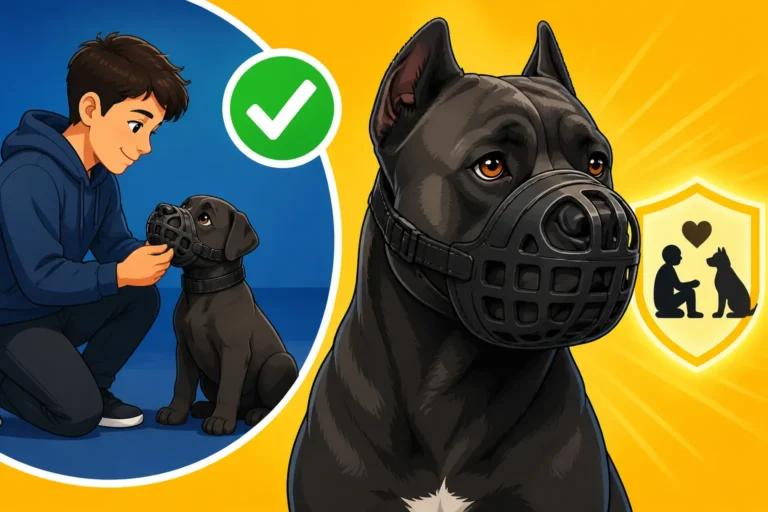
Muzzle training, done positively, is also a highly responsible practice for any large, powerful breed. It's not about anticipating aggression, but about preparedness. A muzzle can be essential for vet visits, emergencies, or in situations where local regulations require it. Teaching your Cane Corso to comfortably wear a basket muzzle from a young age can be invaluable down the road. Why Every Cane Corso Should Be Muzzle Trained Early is a crucial piece of advice for this breed. These tools are extensions of your training and management, not replacements for it.
Setting Up Your Home for an Adolescent Cane Corso
Your home environment needs to be set up to safely accommodate an adolescent Cane Corso. This means baby-proofing, or rather, "Corso-proofing," your space. Anything within reach that you don't want chewed, destroyed, or ingested needs to be put away. Their powerful jaws can make short work of furniture, shoes, and anything else that catches their attention when bored or anxious. Provide plenty of appropriate chew toys – durable Nylabones, tough rubber toys, or natural chews – to redirect their chewing instincts.
Ensure your yard is securely fenced. A Cane Corso's size and intelligence mean that standard fences might not be enough to contain them if they decide to explore. A six-foot, solid fence is often recommended. If you have guests, especially children, create a safe space for your Cane Corso to retreat to, such as their crate or a separate room, to prevent accidental knocks or uncomfortable interactions. Having a designated "place" command and a comfortable mat or cot, even an extra large one from Amazon, can be incredibly useful for managing their presence when visitors are over. The Crate Size a Grown Cane Corso Needs is important to consider as they grow.
| Adolescent Behavior | Owner Response Strategy |
|---|---|
| Ignoring commands | Go back to basics in low distraction, high-value rewards, frequent short sessions. |
| Pulling on leash | Practice loose leash walking in controlled areas, use front-clip harness or head halter. |
| Jumping on people | Turn away, ignore until all four paws are on the floor, then reward. |
| Excessive chewing/destruction | Increase mental and physical exercise, provide appropriate, durable chews. |
| Resource guarding (mild) | Practice "trade-up" game with high-value treats, avoid confronting directly. |
| Reactivity to strangers/dogs | Focus on neutral exposure from a distance, structured positive interactions only. |
| Pushing boundaries (e.g., at doors) | Insist on "sit" or "wait" before every threshold, consistent leadership. |
| Restlessness/hyperactivity | More structured exercise, puzzle toys, scent work, short training bursts. |
Looking Ahead: From Adolescent to Mature Adult
While the adolescent phase can feel like an endless uphill battle, it's important to remember that it is a temporary, albeit challenging, period. The effort, consistency, and patience you invest now will lay the foundation for a well-adjusted, confident, and harmonious adult Cane Corso. There truly is a light at the end of the tunnel, and the bond you forge through these trials will be incredibly strong.
The Light at the End of the Tunnel
For most Cane Corsos, the intensity of adolescence begins to wane around 18-24 months of age, though some may mature a bit later. Around their second birthday, you'll often notice a gradual settling. Their impulse control improves, their attention span lengthens, and they become more reliable in their responses. The dramatic shifts in behavior become less frequent, replaced by a more consistent, predictable temperament. They will retain their protective instincts, but they will be more refined, less reactive, and better able to discern true threats from everyday occurrences under your confident leadership.
This period of maturation doesn't mean you can stop training or being consistent; rather, it means your efforts start yielding more consistent rewards. The dog you envisioned when you brought home that tiny puppy will finally begin to fully emerge, ready to be the loyal, formidable, and loving companion you always hoped for. Your patience will be rewarded with a dog who respects your guidance and trusts your judgment, capable of navigating the world with a calm confidence.
Continuing Education for a Lifetime
Even after your Cane Corso has navigated the choppy waters of adolescence, their education should never truly end. For a breed as intelligent and driven as the Cane Corso, ongoing training and mental stimulation are crucial throughout their lives. Continued learning helps keep their minds sharp, reinforces your bond, and prevents boredom. Consider exploring advanced obedience, rally, or even engaging in protection sports if that aligns with your goals and your dog's temperament, ensuring you work with highly reputable and ethical trainers. What IGP Training Involves for a Cane Corso provides insight into more advanced training.
Many owners find that continuing education is not just for the dog, but for themselves as well. Learning about canine behavior, new training techniques, or specific breed traits can only enhance your relationship. Websites like BAXTER & Bella offer lifetime memberships that provide access to continued learning and support, which can be invaluable as you transition from managing an adolescent to enjoying a mature adult. Remember, a Cane Corso thrives on structure and purpose. Providing them with opportunities to use their formidable intelligence and physical capabilities in a constructive manner will lead to a truly fulfilled and happy dog for years to come. The Structure a Cane Corso Needs Every Single Day is a principle that applies throughout their life.
Disclaimer
This article is for general informational purposes only and does not constitute professional advice. Laws, prices and regulations vary by location and change over time. Consult a qualified professional for guidance on your specific situation.