Holding a Cane Corso Steady When a Dog Charges the Fence
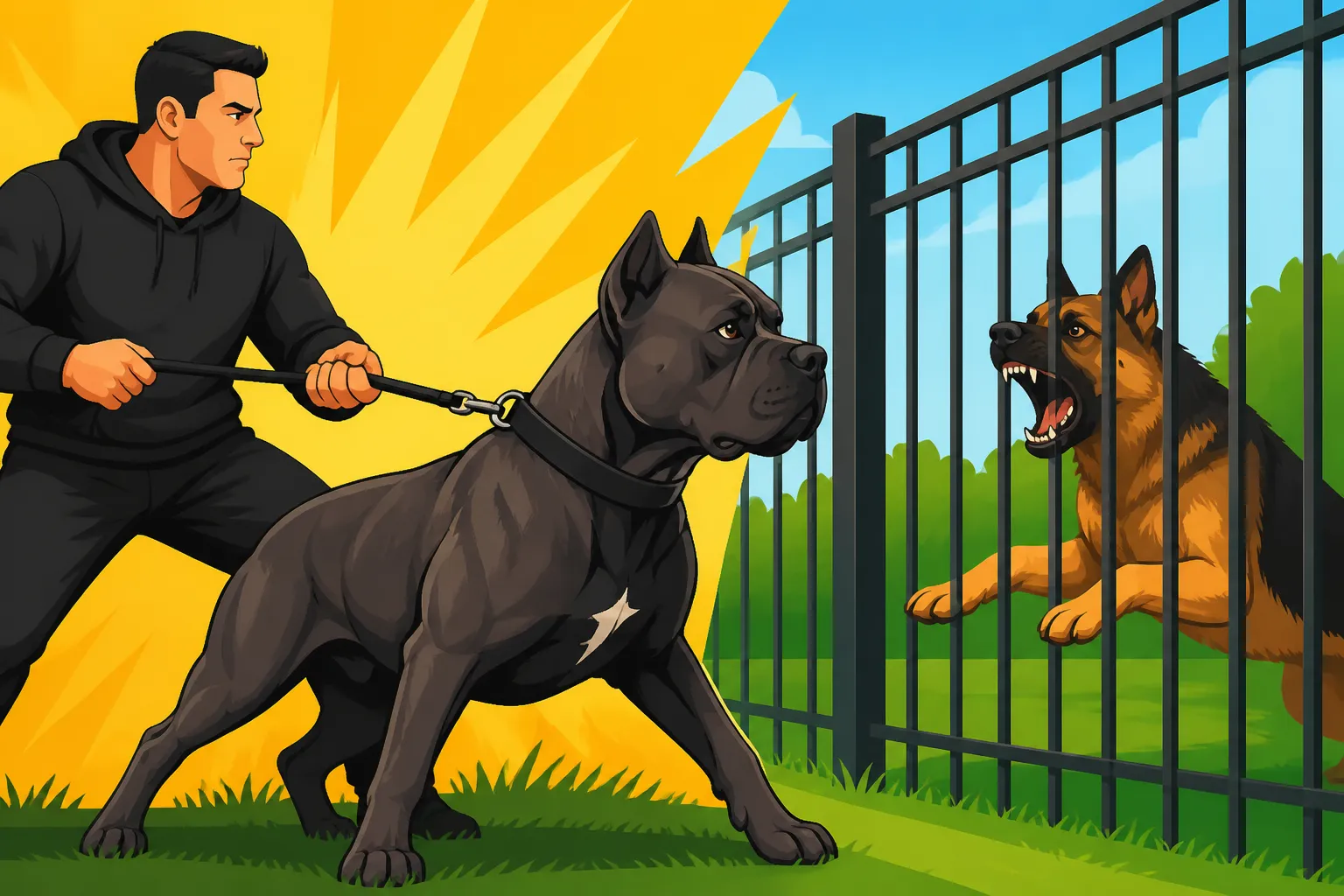
It’s a scenario that makes every Cane Corso owner’s heart pound: you’re out for a walk, enjoying a peaceful moment with your magnificent companion, when suddenly, a dog behind a fence erupts in a frenzy of barking and lunging. Your Cane Corso, a breed known for its protective instincts, might instantly lock on, pulling with immense strength, barking back, or even trying to engage. This guide is here to walk you through how to prepare for, manage, and ultimately hold your Cane Corso steady when faced with these startling and often overwhelming fence-line charges, helping both you and your dog navigate these stressful moments with confidence and control.
Understanding Your Cane Corso's Reaction to Fence Chargers
Let's be real, seeing another dog go ballistic behind a fence is jarring for us, let alone our sensitive and powerful Cane Corsos. Their reactions aren't usually about aggression for aggression's sake; they're deeply rooted in their breed history and individual experiences. Understanding what's happening internally for your dog is the first step to helping them.
The Instinct to Guard and Protect
Your Cane Corso comes from a lineage of guardians, dogs bred to protect property, livestock, and family. When another dog charges a fence, particularly if it's accompanied by aggressive barking, lunging, or perceived threats, your Cane Corso's ingrained guardian instinct can kick in hard. They might interpret this as a direct challenge to their territory, or to your safety, especially if they see you as part of their "flock." This isn't them being "bad"; it's them doing what they were literally bred to do. The problem is, modern life doesn't always appreciate these ancient instincts playing out in public spaces, particularly when it's just a neighbor's dog over-reacting to your presence.
What this looks like in practice can vary. Some Cane Corsos will stand their ground, bristling and giving a deep, booming "alert" bark that makes the hair on your arms stand up. Others might try to advance, pulling with all their might towards the perceived threat. Still others might show a mixture of concern and a desire to de-escalate, but their sheer size and presence can still be intimidating to bystanders. It's a powerful combination of genetics and environment. This instinct is why What a Cane Corso's Guardian Instinct Actually Is is such a critical read for any owner. You need to channel that instinct, not suppress it entirely.
The feeling of that immense power at the end of your leash, especially when it's suddenly directed towards a perceived threat, can be frightening. You might feel a surge of panic, a desperate need to physically restrain your dog. This is normal. But remember, your Cane Corso is looking to you for guidance. If you become flustered or anxious, it can heighten their own stress and reaction. They pick up on everything, from the tension in your grip to the subtle shift in your breathing.
Over-Arousal and Thresholds
Every dog has a "threshold" – a point at which they can no longer cope with a situation calmly and their emotional responses take over. For a Cane Corso, a sudden fence-line charge can instantly push them over this threshold. When they become over-aroused, their ability to think and respond to your cues effectively shuts down. They go into a primal "fight or flight" mode, and you become just another object in the environment, albeit one they are tethered to. This state is often characterized by frantic pulling, rapid barking, a stiff body, dilated pupils, and sometimes even drooling or panting.
This over-arousal can build quickly. It might start with a subtle ear twitch, then a stiffening of the body, then the full-blown reaction. The key is to recognize these early signs, those tiny tells that your Cane Corso is nearing their threshold, so you can intervene before they boil over. Maybe they stop sniffing the ground, their head snaps up, or their tail becomes rigid. These are all cues for you to take action and redirect their attention or create distance.
Understanding your individual Cane Corso's specific triggers and thresholds is a continuous learning process. Does the reaction only happen with small, yappy dogs? Or is it any dog that barks aggressively? Does a physical fence make a difference, or do they react the same way to a dog behind a glass door? Knowing these nuances will allow you to anticipate and better manage these situations. This kind of nuanced understanding feeds directly into Whether a Cane Corso Can Be Socialized After a Year, highlighting that it's never too late to work on these behaviors, but the approach might change based on their history and arousal levels.
Reading Their Body Language
Becoming fluent in your Cane Corso’s body language is your superpower. Before the full-blown reaction, your dog will send out a flurry of signals. A high, stiff tail, ears rotated forward, a fixed stare, a closed mouth, or even a low growl are all indications that they are engaged and potentially preparing to react. Conversely, a soft gaze, a loose body, a gently wagging tail, and relaxed ears indicate a calm dog.
When a dog charges a fence, watch your Cane Corso's eyes and ears. Are their eyes wide and locked on the other dog? Are their ears pinned forward, listening intently? This is crucial information. If their body tenses, their hackles might raise along their spine, and they might shift their weight forward, ready to lunge. These are all signs that their focus has narrowed, and their emotional state is escalating.
Conversely, if your Cane Corso looks at you for guidance, even for a split second, that's a window of opportunity. That's a moment when they're still capable of making a choice, still connected to you. Your job is to make it worth their while to keep looking at you. Recognizing these subtle cues helps you step in early, perhaps by calmly turning and walking away, or offering a high-value treat before the situation completely takes over their senses. This practice is essential for Reading a Cane Corso's Body Language at a Distance, helping you head off trouble before it even starts.
Essential Gear and Management Strategies
You can't control the neighborhood dogs, but you can control your tools and how you manage your Cane Corso. Having the right gear and smart strategies in place are non-negotiable for a breed of this size and power.
The Right Collar and Lead
Forget flimsy nylon leashes and buckle collars. For a Cane Corso, especially one with a tendency to react to fence-line dogs, you need gear that offers both security and control without causing pain or injury. A flat buckle collar should be for tags only, not primary restraint during walks. My go-to recommendation for many Cane Corso owners is a well-fitting, sturdy front-clip harness or a head halter.
A front-clip harness, like those from popular brands available on Amazon, discourages pulling by redirecting your dog's momentum back towards you when they pull. It attaches at the chest, making it physically harder for them to lunge forward with all their hundred-plus pounds. Pair this with a heavy-duty, six-foot leash made of strong material like biothane or thick nylon. Avoid retractable leashes entirely – they offer zero control with a powerful dog. For some dogs, a head halter (like a Halti or Gentle Leader) can be incredibly effective, giving you precise control over their head direction, and thus, their focus. If their head isn't pointed at the distraction, it's harder for them to fixate and react.
Consider having a backup system, too. Some owners use a martingale collar (which tightens slightly when pulled, preventing escape) in conjunction with a front-clip harness, using a double-ended leash. This gives you two points of contact and added security. Whatever you choose, ensure it's properly fitted. A loose harness or collar is useless and can even be dangerous. Which Collar and Lead Hold a Cane Corso provides more in-depth advice on this crucial topic. The safety and security of your Cane Corso, and of those around you, depend on your gear.
Reinforcing Your Fence Line
Sometimes, the charging dog isn't your Cane Corso, but a neighbor's dog harassing yours through the fence. This is a common and incredibly frustrating situation. If your Cane Corso is consistently reacting to a neighbor's dog through a shared fence, the first line of defense is to reinforce your own fence line. This isn't just about containment; it's about reducing visual access and physical interaction, which are major triggers.
You might consider adding a "visual barrier" to your existing fence. This could be slats that fit into chain-link fences, privacy screens, or even planting dense hedges along the fence line. The goal is to prevent your Cane Corso from seeing the other dog, and vice-versa, thereby removing the primary visual trigger. Remember, if they can't see it, they're less likely to react to it.
For particularly persistent fence-fighting, you might need to build a secondary internal fence a few feet inside your main fence. This creates a physical buffer zone that both protects your Cane Corso from potential nips through the fence and prevents them from charging right up to the boundary. It's an investment, for sure, but the peace of mind and reduced stress for your dog and yourself can be priceless. Think about the long-term mental health of your Cane Corso; constant fence-line stress takes a toll. Fencing That Actually Holds a Cane Corso offers more specifics on physical barriers and their effectiveness.
Creating Buffer Zones
Beyond reinforcing your physical fence, creating "buffer zones" during walks is a proactive management strategy. This means actively scanning your environment and identifying potential triggers before your Cane Corso does. See a house with a barking dog behind a fence down the street? Cross the street, take a different route, or create a wide arc around that house. The further away you are from the trigger, the lower the intensity of the stimulus, and the more likely your Cane Corso can remain calm.
This isn't about avoiding the problem forever, but about setting your dog up for success. You're giving them space to make better choices and giving yourself time to implement training techniques. If you know certain areas or times are high-risk for fence-line encounters, adjust your walking schedule. Early morning or late evening walks might offer fewer distractions.
Think of it like this: if you're trying to teach someone to drive, you don't start them on a busy highway. You start in an empty parking lot. Buffer zones are your empty parking lot. They allow you to work on focus and calm in a low-stress environment. The goal is to always be under your Cane Corso's threshold, giving them the mental space to hear and respond to you.
Training for Fence-Line Encounters
Management is crucial, but training is what truly empowers your Cane Corso to handle these situations with grace. It's about teaching them alternative, more desirable behaviors, rather than just reacting impulsively.
Building a Solid "Look at That"
The "Look at That" (LAT) game is a cornerstone of positive reinforcement training for reactive dogs. It teaches your Cane Corso to look at a trigger (like a fence-charging dog), then look back at you for a reward. It shifts their emotional response from "threat!" to "that means good things are coming from my human!"
Here’s how it works:
- Spot the trigger: From a distance where your Cane Corso is under their threshold (not reacting yet, just noticing).
- Mark the look: The instant your Cane Corso looks at the trigger, say "yes!" or click your clicker.
- Reward: Immediately follow with a super high-value treat (cooked chicken, cheese, whatever drives them wild). The treat should come from your hand, near your face, so they associate looking at you with the reward.
- Repeat: As soon as they finish the treat, they might look back at the trigger. Repeat the process.
The goal is that eventually, they'll see the fence-charging dog, briefly glance at it, and then immediately turn their head to you, anticipating the reward. This is active engagement with you, replacing the reactive fixation. You can use this for any environmental distraction, not just fence-charging dogs. Many online training platforms, including those like BAXTER & Bella, offer excellent step-by-step guides on teaching the LAT game and other impulse control exercises for situations just like this. This technique builds on The Reward a Cane Corso Actually Values, using that motivation to change their perception.
The "Continue Walking" Cue
This cue is exactly what it sounds like: teaching your Cane Corso to continue walking calmly past a distraction without stopping or reacting. It’s about building momentum and focus. Start this in a low-distraction environment, then gradually introduce distractions.
- Start simple: Practice walking in a quiet area. When you say "Let's go!" or "Heel!", reward them for maintaining pace with you.
- Introduce mild distractions: Walk past a parked car, a lamppost, or someone sitting on a bench. As you approach, give your cue, "Let's go!" and walk purposefully past, rewarding them with treats for staying with you and not fixating.
- Gradual progression: Slowly increase the level of distraction. As you approach a fence that might have a barking dog, anticipate the moment your Cane Corso might want to stop. Give your "Let's go!" cue with enthusiasm and a clear direction, perhaps even a slight increase in your own pace.
- High-value rewards: Make staying with you incredibly rewarding. Shower them with treats as you walk past the trigger, creating a positive association with moving away from the distraction.
The beauty of "Continue Walking" is that it's proactive. You're giving your Cane Corso a job to do (stay with me!) instead of letting them default to their reactive response. Over time, the cue itself becomes a predictor of reward and moving past the stressful situation. Loose Leash Walking a Cane Corso Puppy lays the foundation for this critical skill early on.
Desensitization and Counter-Conditioning
These are the scientific terms for changing your dog's emotional response to a trigger. Desensitization means gradually exposing your Cane Corso to the trigger at a low intensity, where they don't react. Counter-conditioning means pairing that low-intensity exposure with something positive (like amazing treats).
Imagine a scale of 1 to 10, where 10 is a full-blown meltdown at a fence-charging dog. You want to work at a "2" or "3." This means finding a distance where your Cane Corso notices the other dog but doesn't react.
- Identify the working distance: This might be across a large field, or even just around a corner where they can faintly hear, but not see, the other dog.
- Pair with positives: While at this distance, consistently feed your Cane Corso high-value treats. The moment the other dog is quiet, or out of sight, stop the treats. Your Cane Corso starts to learn: "Other dog = treats from human."
- Gradually decrease distance: Over many, many sessions, slowly decrease the distance to the fence-charging dog, always ensuring your Cane Corso remains under threshold. If they start to react, you've gone too far; increase the distance again.
- Short, positive sessions: Keep these sessions short (5-10 minutes) and always end on a positive note.
This process takes patience and consistency, but it fundamentally rewires your Cane Corso's brain to associate the once-feared or reacted-to stimulus with positive things, reducing their stress and reactivity. This kind of systematic training is often featured in online dog training programs, and resources like BAXTER & Bella provide structured curricula that can help you implement these techniques effectively. Rehabilitating a Cane Corso That Was Never Taken Out touches on the intense effort required for dogs with significant behavioral challenges, where desensitization is key.
Emergency Drills for the Unexpected
Even with the best training, life happens. A dog might suddenly appear, or a neighbor might open their gate unexpectedly. Having an emergency drill can save the day.
Your emergency drill should be simple, ingrained, and highly reinforced. It could be a super fast "U-turn" where you abruptly turn around and walk in the opposite direction, generously rewarding your Cane Corso for moving with you. Or it might be a "find it!" cue, where you scatter a handful of high-value treats on the ground, engaging their nose and distracting their mind while you create distance.
Practice these drills when there are no distractions, making them a fun game. Then, practice them with mild distractions. The goal is that when the unexpected does happen, you have a go-to response that your Cane Corso understands and that gives you immediate control. The more fluent they are in these drills, the faster you can disengage from a stressful situation. Teaching The Place Command That Saves a Cane Corso Household can also be adapted for outdoor use, essentially creating a "place" for your dog to go mentally even amidst chaos.
When Prevention Isn't Enough: What to Do in the Moment
Despite all your best efforts, there will be times when a fence-charging dog catches you off guard, or your Cane Corso has an off day. It happens to the best of us. Knowing what to do in that immediate, high-stress moment is crucial for managing the situation safely.
Staying Calm Under Pressure
This is arguably the hardest part, but the most important. Your Cane Corso is highly attuned to your emotional state. If you tense up, yell, or become anxious, it will amplify their own stress and reactivity. Take a deep breath. Seriously. Before you do anything else, inhale slowly, count to four, hold for four, exhale slowly for four. Repeat this once or twice.
This conscious effort to calm yourself will translate down the leash. Speak in a low, calm, reassuring voice, even if you’re internally screaming. Avoid harsh corrections or jerking the leash, as this can actually increase your dog’s arousal and frustration. Remember, you are their anchor, their leader in this moment. Projecting calm, even when you don't feel it, helps your Cane Corso regulate their own emotional state. They need your steadiness to get through this.
It's natural to feel frustrated or embarrassed, especially with a large, imposing breed like a Cane Corso. But resist the urge to punish them for their reaction. They're not being "naughty"; they're reacting out of instinct, fear, or over-arousal. Your goal is to guide them, not to reprimand them in a heightened state.
Managing the Leash and Your Stance
When your Cane Corso is lunging and pulling, your physical management of the leash becomes paramount.
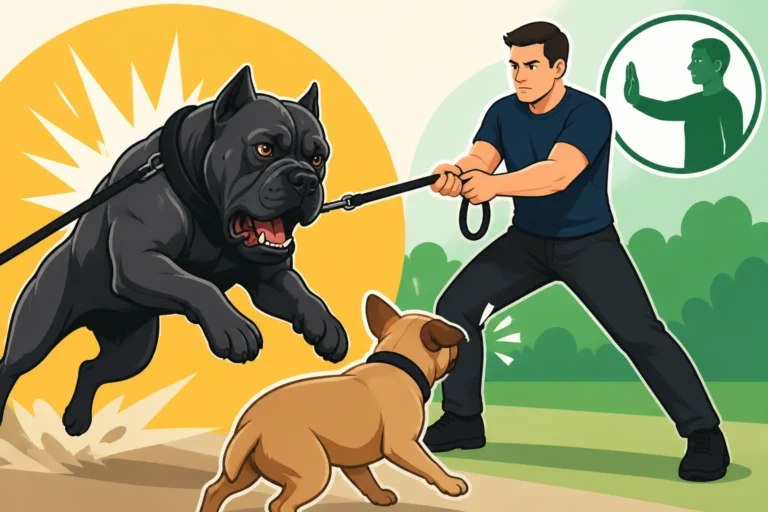
- Maintain a firm, but not rigid, grip: Hold the leash securely, perhaps wrapping it once around your hand for extra grip, but keep your arm somewhat flexible to absorb shock. Avoid yanking or tugging aggressively.
- Brace yourself: Use your body weight. With a Cane Corso, this means planting your feet wide, possibly even leaning slightly back, to create a strong counter-balance against their pull. Your core strength will be your best friend.
- Shorten the leash, if safe: If you can do so without escalating the situation, shorten the leash to give yourself more control over their movement. This isn't about choking them; it's about reducing their range of motion and preventing them from reaching the fence or becoming entangled.
- Turn your body: If the fence-charging dog is directly in front of you, try to turn your body so that you are between your Cane Corso and the distraction, effectively blocking their line of sight. This also encourages them to look at you instead.
This physical management is purely about safety and control in the heat of the moment, buying you crucial seconds to implement your disengagement strategies. It’s also why Holding a Hundred Pound Cane Corso Through a Seizure requires an incredible amount of strength and calm; managing a reactive lunge, while different, still demands that same foundational steadiness.
Creating Space and Disengagement
Once you have managed to regain some physical control, your immediate goal is to create space and disengage from the trigger. This is where your emergency drills come in handy.
- Execute your emergency U-turn: Give your "Let's go!" cue with urgency, turn sharply 180 degrees, and walk briskly in the opposite direction. Reward heavily the moment your Cane Corso starts moving with you.
- "Find it!": If turning isn't an option, or your dog is still too fixated, scatter a handful of irresistible treats on the ground. The act of sniffing and foraging is a calming behavior for dogs, and it naturally breaks their visual focus on the trigger. While they are sniffing, use the opportunity to walk away quickly.
- Don't linger: The moment you create distance and your Cane Corso is calmer, keep moving. Lingering near the trigger, even if they're quiet now, can lead to a relapse. Reward them continuously as you move further away, reinforcing the idea that disengaging is the right choice.
- Re-evaluate: Once you are in a completely calm environment, take a moment to re-evaluate. What went wrong? Could you have spotted the trigger earlier? Did you push too close? This self-reflection helps you learn and adjust your strategy for next time.
Remember, every time you successfully disengage, you're building a new, more positive pattern for your Cane Corso. You're teaching them that facing a fence-charging dog doesn't have to end in an explosion of reactivity; it can end with calm disengagement and rewards from you. This is also why Why Every Cane Corso Should Be Muzzle Trained Early is a proactive measure for any powerful breed owner; while not for aggression, it provides an invaluable safety net for unexpected situations and can reduce anxiety about bites, allowing you to focus on training.
Here's a quick comparison of proactive vs. reactive approaches:
| Approach | Description | When to Use | Benefits |
|---|---|---|---|
| Proactive: | Planning ahead, using training, and avoiding known triggers. | Always, as the primary strategy for managing fence-line reactivity. | Prevents reactions, builds confidence, reduces stress for dog and owner. |
| Visual Barriers | Adding privacy screens or secondary fences to block sightlines. | At home, for shared fences with reactive neighbors. | Eliminates primary visual trigger. |
| Buffer Zones | Deliberately creating distance or choosing alternative routes. | During walks, when approaching known or potential trigger areas. | Keeps dog under threshold, allows for successful training. |
| "Look at That" | Teaching dog to look at trigger, then look at owner for reward. | During training sessions with controlled exposure, or when noticing triggers. | Changes emotional association, builds owner focus. |
| "Continue Walking" | Teaching dog to move calmly past distractions. | During walks, to guide dog past triggers without stopping. | Builds momentum, gives dog a job, prevents fixation. |
| Reactive: | Actions taken in the moment after a reaction has begun. | As a backup plan when proactive measures fail or surprise triggers occur. | Safely manages immediate situation, prevents escalation. |
| Stay Calm | Consciously regulating your own emotions and breathing. | In the immediate aftermath of a trigger, before physical intervention. | Prevents escalation, provides a steady anchor for your dog. |
| Leash Management | Shortening leash, bracing stance, positioning body between dog and trigger. | During active lunging or pulling. | Maintains physical control, prevents escape or further engagement. |
| Emergency U-Turn | Abruptly turning and walking away, rewarding dog for movement. | When rapid disengagement is necessary, and space allows. | Quickly removes dog from stimulating environment. |
| "Find It!" | Scattering high-value treats on the ground to engage nose and distract. | When dog is fixated, or U-turn is not feasible. | Breaks visual focus, initiates calming sniffing behavior, allows owner to create space. |
Disclaimer
This article is for general informational purposes only and does not constitute professional advice. Laws, prices and regulations vary by location and change over time. Consult a qualified professional for guidance on your specific situation.