The Difference Between Guarding and Reacting in a Cane Corso
It’s a common scenario: your impressive Cane Corso lets out a booming bark at a passerby or lunges at another dog on a walk. Immediately, your mind jumps to thoughts of their protective nature, the guardian instinct. But here’s the thing many owners grapple with: is that truly guarding, or is it something else entirely – something more akin to reactivity? Understanding this crucial distinction isn't just semantics; it's fundamental to responsible ownership, effective training, and ensuring both your dog's well-being and the safety of those around them. This guide will walk you through the nuanced differences, helping you recognize, understand, and manage your Cane Corso's behavior, whether it's their noble guardian spirit or an underlying reactive tendency.
The Core of True Guarding: Intentional Protection
When we talk about a Cane Corso's guarding instinct, we're discussing a deeply ingrained, intentional behavior rooted in centuries of selective breeding. This isn't just a dog reacting impulsively; it's a dog performing a job. Their historical role was to protect property, livestock, and family, often without direct human command. This required intelligence, courage, and a discerning nature – knowing what was a threat and what wasn't.
Instinctive Role of the Cane Corso
Imagine the ancient Italian farms, known as masserie, where the Cane Corso truly earned its keep. These magnificent dogs weren't just pets; they were integral members of the farm's security system. Their job was to patrol, observe, and deter. They learned to differentiate between a neighbor walking through the fields and a stranger with ill intent. This required a calm, steady temperament capable of assessing situations rather than simply exploding into action at the slightest provocation. They were often tasked with driving cattle and protecting them from predators, which meant they needed to be formidable but also intelligent enough to not harm the livestock they were guarding.
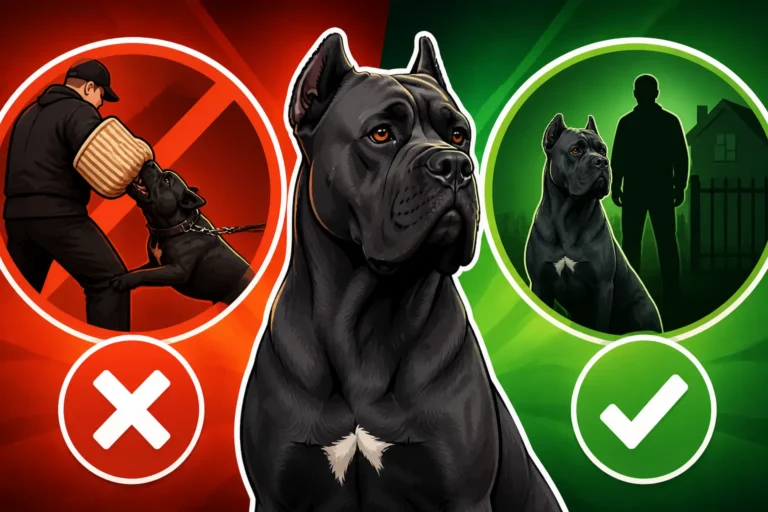
A true guardian Cane Corso, at its best, isn't looking for a fight; it's looking to maintain boundaries and keep its family safe. Its response should be proportionate to the perceived threat. This means a low, rumbling growl and a watchful stance for a curious stranger, escalating only if the threat persists or becomes more direct. It's about presence and deterrence, not indiscriminate aggression. A Cane Corso's guardian instinct is about a measured, deliberate response, making them truly formidable when needed, but otherwise a calm and integrated part of the household.
Characteristics of a Balanced Guardian
A truly balanced guardian Cane Corso exudes confidence and control. They are alert to their surroundings, always taking in information, but they are not constantly on edge or anxious. When something piques their interest, their body language will be purposeful: head held high, ears often pricked forward (if uncropped, they'll be listening intently), tail held in a neutral position or with a slight, slow wag that indicates observation, not joy. They will typically stand still, perhaps taking a step or two closer to the perceived boundary or family member, focusing their gaze intently. Their stance is often square, solid, and powerful, projecting an undeniable presence.
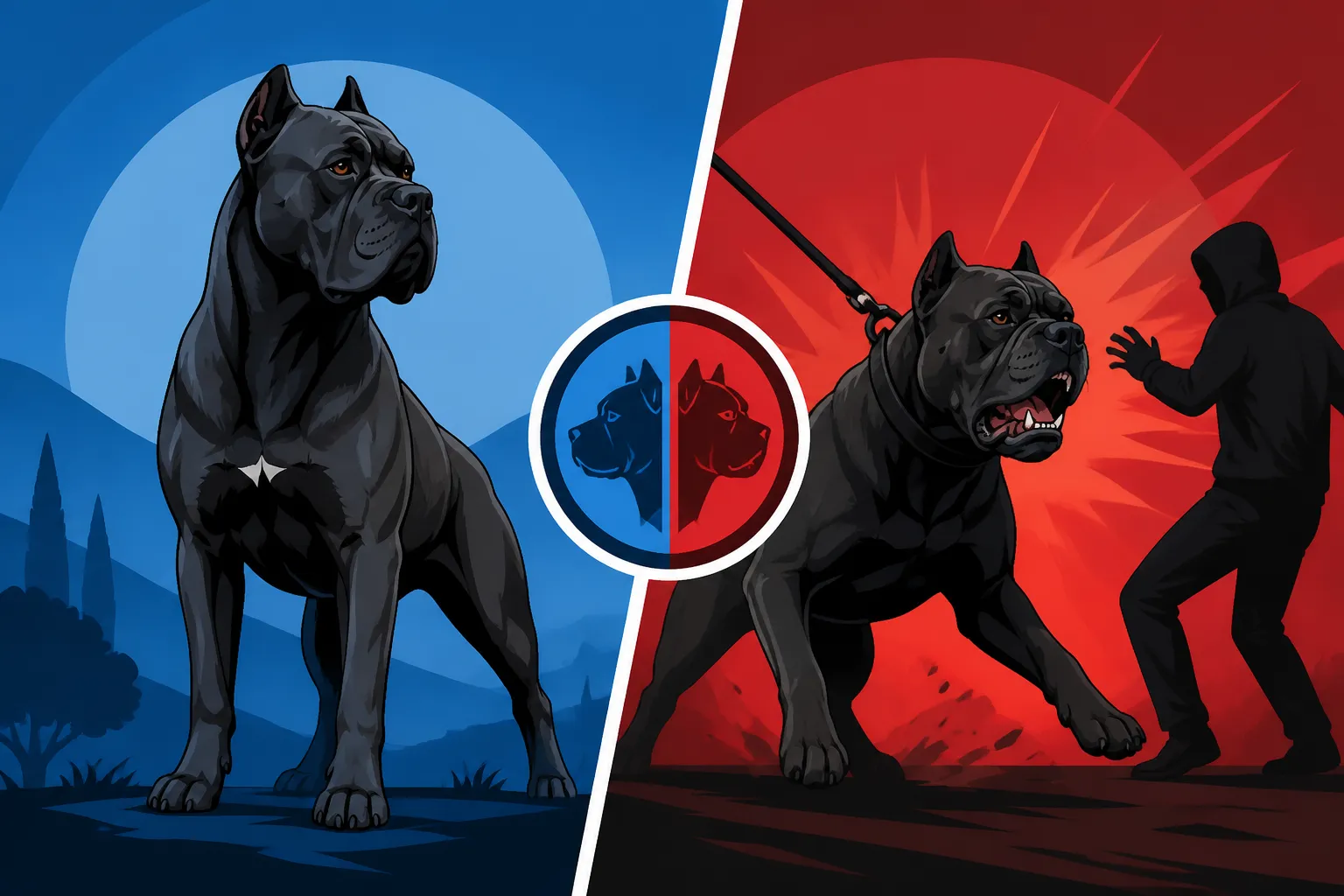
This focused intensity is a key differentiator. There might be a low, guttural growl that seems to emanate from deep within their chest, a warning rumble that says, "I see you, and I am watching." This isn't a frantic, high-pitched yelp or a desperate bark; it's a calm, strong declaration. A balanced guardian understands its role and relies on its presence and intelligence to manage potential threats. It's the silent, watchful sentinel, not the frenzied alarm bell. Owners who understand What a Cane Corso's Guardian Instinct Actually Is can better appreciate this nuanced behavior.
Decoding Reactive Behavior: Anxiety, Fear, and Overwhelm
Now, let's pivot to reactivity. This is where many owners understandably get confused, as the outward display – barking, lunging, growling – can superficially resemble guarding. However, the motivation behind reactive behavior is fundamentally different. Reactive dogs are often driven by fear, anxiety, frustration, or a sense of being overwhelmed, rather than a calm, intentional assessment of a threat. It's often an over-the-top, uncontrolled response to stimuli that aren't actually dangerous.
What Reactive Behavior Actually Looks Like
When a Cane Corso is exhibiting reactive behavior, it's typically a sudden, exaggerated, and often frantic response to a trigger that, to a human observer, doesn't warrant such intensity. This might involve explosive barking, lunging on the leash, growling, snapping at the air, or even spinning in frustration. The key here is the lack of control and the often disproportionate nature of the response. For example, a reactive Cane Corso might lunge and bark hysterically at a dog across the street, even if that dog is minding its own business and posing no threat. They might react strongly to a skateboarder, a jogger, or even a sudden noise.
The dog might appear incredibly agitated, unable to break its focus on the trigger, and difficult for its handler to redirect. This isn't the calm, watchful stance of a guardian; it's often a dog feeling trapped, overwhelmed, or desperately trying to create distance from something it perceives as threatening or just too much to handle. If you've ever found yourself wondering What to Do When a Cane Corso Lunges at a Dog, chances are you're dealing with reactivity rather than true guarding.
Common Triggers and Underlying Causes
Reactive behavior rarely appears out of nowhere; it usually has roots in a few common areas. One of the biggest culprits is a lack of proper socialization during critical developmental windows. A Cane Corso puppy needs extensive, positive exposure to a wide variety of people, places, sounds, and other calm dogs and animals before they are sixteen weeks old. If they miss out on The Socialization Window a Cane Corso Puppy Gets, the world can become a scary, unpredictable place, leading to fear-based reactivity. Without these experiences, everyday occurrences can be overwhelming.
Other factors can include genetic predisposition to anxiety, a history of negative experiences (like being attacked by another dog), insufficient physical or mental exercise leading to pent-up frustration, or even pain. A dog that is constantly bored or under-stimulated can develop frustration-based reactivity, barking and lunging simply because they don't know what else to do with their energy. Furthermore, some dogs are just naturally more sensitive or anxious than others, and without careful breeding and early intervention, these traits can manifest as reactivity. Online resources, like the structured programs offered by BAXTER & Bella, can provide excellent guidance for new puppy owners to ensure broad, positive early experiences that help prevent reactivity from developing.
Distinguishing the Two: Body Language and Context Clues
Understanding the difference between guarding and reacting hinges on keen observation. You need to become fluent in your Cane Corso's body language and pay close attention to the context of their behavior. It's not just what they do, but why and how they do it.
Reading Your Cane Corso's Signals
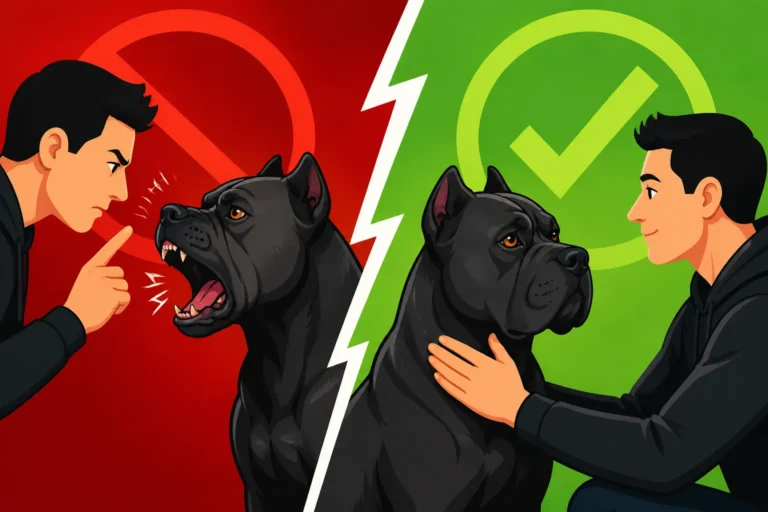
When a Cane Corso is truly guarding, their body language usually signals a controlled intensity. They'll often appear larger, more imposing. Their posture will be erect, sometimes slightly leaning forward, with their weight distributed evenly, ready for action but not frantic. Their gaze will be fixed, unwavering, and focused directly on the perceived threat. You might see a slight stiffening of the body, and the fur on their back (hackles) might raise, but their movements will still be deliberate, not spastic. A low, rumbling growl or a deep, measured bark are common. Their tail might be held neutrally or slightly lowered, but it won't be tucked tightly between their legs. It's the look of a confident, self-assured sentinel.
Conversely, a reactive Cane Corso often shows signs of internal conflict and heightened arousal. Their body might be tense, rigid, or coiled, but often with a lean away from the trigger, or they might seem to be pulling towards it frantically. You might see "whale eye," where the whites of their eyes are visible as they turn their head slightly but keep their eyes fixed. Their barking tends to be higher pitched, more rapid, and frantic, often accompanied by desperate lunging and pulling on the leash. The tail might be tucked tightly, or if it's high, it will be stiff and possibly quivering. They might also look back at their owner frequently, almost as if seeking reassurance or a way out. This is a dog that feels uncomfortable and overwhelmed.
Here’s a quick comparison table:
| Behavior Aspect | True Guarding (Intentional Protection) | Reactive Behavior (Anxiety/Overwhelm) |
|---|---|---|
| Motivation | Protection, boundary enforcement, deliberate response | Fear, anxiety, frustration, overstimulation |
| Body Language | Calm, confident, erect, focused gaze, deliberate movement, low growl, neutral/low tail | Tense, rigid, frantic, lunging, high-pitched barking, whale eye, tucked/stiff tail |
| Response | Measured, proportionate, aims to deter | Exaggerated, disproportionate, uncontrolled |
| Focus | Alert observation of perceived threat | Hyper-focus on trigger, difficult to redirect |
| Emotional State | Confident, secure, watchful | Stressed, anxious, frustrated, overwhelmed |
| Recovery | Returns to calm state once threat recedes | Takes longer to settle, residual stress |
The Importance of Context
Beyond body language, the situation itself provides crucial clues. True guarding is almost always tied to specific contexts: the dog's territory, their family members, or their resources (like food or toys). For instance, a Cane Corso who barks and stands between a stranger and their children in the backyard is likely exhibiting guarding behavior. Similarly, a dog that barks at a delivery driver approaching the front door is acting on its instinct to protect its home. The Age a Cane Corso Becomes Territorial often coincides with the onset of these behaviors, usually around 12-18 months.
Reactivity, however, can happen anywhere, and often against a wider range of stimuli. A reactive Cane Corso might bark and lunge at a leaf blowing across the sidewalk, a plastic bag caught in a tree, or a distant dog at the park, even when no one is approaching them or their family. It’s often triggered by novelty, sudden movements, or simply being over-threshold for stimulation in a busy environment. If the behavior occurs equally strong both at home and on a walk in an unfamiliar area, it's more likely reactivity. The key is that the trigger does not necessarily represent a direct, immediate threat to the dog's perceived territory or loved ones.
Fostering True Guarding Through Thoughtful Training
A well-trained Cane Corso is a marvel, capable of discerning true threats from everyday occurrences. The goal isn't to suppress their guardian instinct entirely, but to channel it responsibly, ensuring they act under your direction and not out of uncontrolled impulse. This journey begins long before they become an imposing adult.
Early Socialization and Exposure
The foundation for a balanced guardian lies in comprehensive, positive early socialization. This isn't about letting your Cane Corso puppy run wild in a dog park; it's about controlled, neutral exposure to the world. Think about taking your puppy to different environments: busy city sidewalks (observing from a distance), quiet nature trails, hardware stores where people are moving around, and the homes of trusted friends with calm, stable dogs. The emphasis should always be on positive experiences where the puppy observes without being overwhelmed or forced into interactions. They should meet people without being forced to greet them, simply existing calmly in their presence. This teaches them that most people and situations are not threats.
For example, a new Cane Corso puppy should be exposed to children, but always under strict supervision, teaching both the child and the puppy appropriate boundaries. They should hear loud noises from a distance, see different types of vehicles, and walk on various surfaces. These experiences, especially during Neutral Socialization for a Cane Corso at Twelve Weeks, build confidence and teach the puppy that the world is a generally safe place, reducing the likelihood of fear-based reactivity later on. The more varied and positive their early experiences, the more resilient and discerning they will be as adults.
Building a Strong Foundation of Obedience and Trust
Beyond socialization, a rock-solid foundation of obedience and trust is paramount for a Cane Corso. This breed thrives on clear communication and consistent leadership. Commands like "sit," "stay," "down," "come," and especially a reliable "place" command are not just tricks; they are essential tools for managing a powerful guardian breed. Impulse control exercises, such as waiting for food, waiting at doors, or leaving dropped items, are critical. These exercises teach your Cane Corso that you are in control of resources and decisions, and that listening to you brings good things.
When your Cane Corso trusts your judgment and respects your commands, you can direct their guardian instincts. If they alert to a stranger at the door, a strong "place" command allows you to calmly assess the situation, giving you the opportunity to decide if the person is a threat. This prevents the dog from making its own decisions based on instinct alone, which can lead to inappropriate guarding. Programs like those offered by BAXTER & Bella can provide structured, positive reinforcement-based training that builds this vital foundation, empowering owners to guide their Cane Corso's protective nature responsibly. Impulse Control Work for a Cane Corso is not just about manners; it's about safety.
Addressing and Rerouting Reactive Tendencies
If you’ve identified that your Cane Corso is exhibiting reactive behaviors, don't despair. It's a common challenge, especially with powerful breeds, and one that can be managed and improved with patience, consistency, and the right approach. The key is to address the underlying emotional state, not just the outward display.
Management and Environmental Control
The first step in addressing reactivity is effective management. This means identifying your Cane Corso's specific triggers and doing everything you can to avoid or minimize exposure to them. If your dog reacts to other dogs on walks, find quieter routes or walk during off-peak hours. If delivery drivers are a trigger, manage the situation by having your dog in another room or on a leash when you know a package is arriving. Increasing distance from a trigger can often bring your dog below their "threshold," where they can actually think and learn, rather than just react.
Consider using management tools that prioritize safety for everyone. A front-clip harness can give you more control over your dog's pulling, and a basket muzzle, easily found on Amazon, can be an invaluable safety tool during training sessions, especially if your dog has a history of air snapping or has a lower bite inhibition. Why Every Cane Corso Should Be Muzzle Trained Early is excellent advice, even for non-reactive dogs, as it normalizes the muzzle for potential future needs. Management isn't a cure, but it provides the necessary space and safety to begin the real training work.
Counter-Conditioning and Desensitization
Once you have management in place, the real work of counter-conditioning and desensitization can begin. Counter-conditioning means changing your dog's emotional response to a trigger from negative (fear, frustration) to positive (excitement for treats, calm acceptance). Desensitization means gradually exposing your dog to the trigger at a level where they don't react, slowly increasing the intensity over time.
For example, if your Cane Corso reacts to other dogs, start by finding a distance where they notice another dog but don't react. At that distance, immediately start giving them high-value treats (like boiled chicken or cheese). The goal is for them to associate the sight of another dog with something wonderful. As they remain calm, you can slowly, incrementally, decrease the distance. This process takes immense patience and consistency. Never push your dog past their threshold, as this will only reinforce the reactive behavior. Professional guidance from a certified behaviorist or an experienced positive-reinforcement trainer specializing in reactivity is often essential, especially for a powerful breed like the Cane Corso. If you're wondering What a Behaviorist Charges for a Reactive Cane Corso, it's a worthwhile investment in your dog's and your family's peace of mind.
The Owner's Role: Leadership, Consistency, and Empathy
Ultimately, the distinction between a guardian and a reactive dog, and the ability to foster the former while mitigating the latter, rests squarely on the owner's shoulders. Your demeanor, consistency, and willingness to understand your Cane Corso's needs are paramount.
Becoming the Calm, Confident Leader Your Cane Corso Needs
Cane Corsos are intelligent, powerful dogs that thrive under clear, consistent, and confident leadership. They don't need a heavy hand or "dominance" tactics, which can actually exacerbate fear and anxiety, but they do need to understand that you are in charge of their world. When you are calm, confident, and consistent in your expectations and reactions, your Cane Corso learns to trust your judgment. They look to you for cues on how to interpret new situations and what response is appropriate.
If you become anxious or stressed every time your dog barks at a stranger, your Cane Corso will pick up on that and may conclude that the stranger is indeed a threat, reinforcing their reactive tendencies. Conversely, a calm, assertive "thank you for letting me know, I've got this" attitude can help them relax and defer to you. Your ability to project this steady confidence is key to harnessing their natural guardian instincts in a constructive way. Remember, The Handler a Cane Corso Respects is one who provides clear boundaries and unwavering support.
Recognizing Limits and Seeking Professional Guidance
It's crucial to be realistic about your own capabilities and acknowledge when you might need extra help. Owning a Cane Corso is a huge responsibility, and managing their powerful instincts is not always easy. If you're struggling to differentiate between guarding and reactivity, or if your dog's reactive behaviors are escalating and becoming difficult to manage, seeking professional guidance is not a sign of failure; it's a sign of responsible ownership.
Look for a certified professional dog trainer or a veterinary behaviorist who has experience with guardian breeds and understands positive reinforcement techniques. Be wary of anyone promising quick fixes or advocating harsh, punishment-based methods, as these can often worsen reactivity and damage your relationship with your dog. A good trainer will help you develop a tailored plan, teach you how to read your dog's signals, and empower you with the tools and confidence to guide your Cane Corso effectively. Understanding What to Look For in a Cane Corso Trainer can make all the difference in turning a challenging situation into a rewarding partnership.
Disclaimer
This article is for general informational purposes only and does not constitute professional advice. Laws, prices and regulations vary by location and change over time. Consult a qualified professional for guidance on your specific situation.