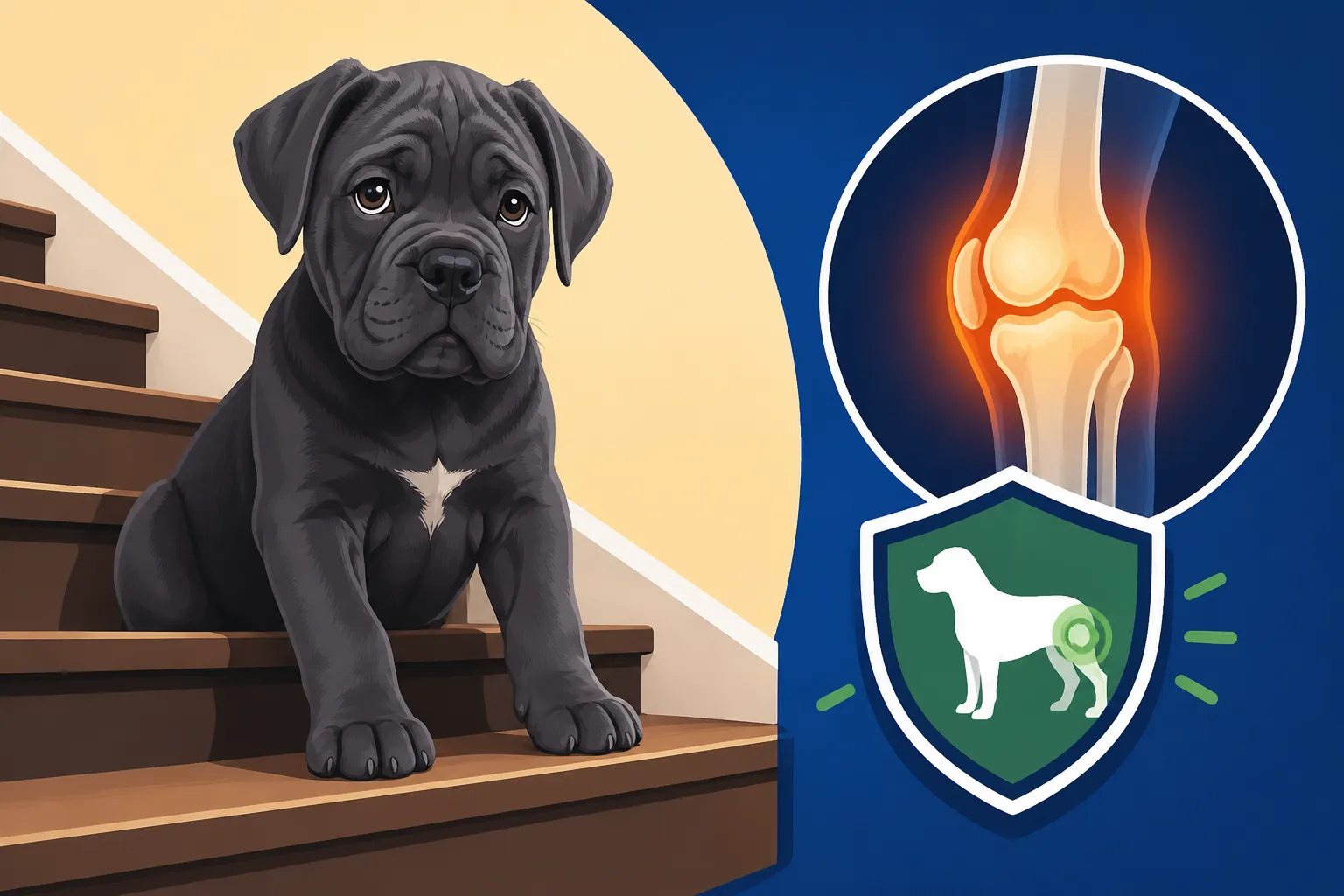
Why Stairs Matter for a Cane Corso Puppy’s Joints
Bringing a Cane Corso puppy home is an exciting time, filled with dreams of a loyal, powerful companion. However, many new owners underestimate the critical period of growth their giant breed puppy goes through, especially when it comes to the impact of everyday activities like navigating stairs on their developing joints. This guide will walk you through precisely why stairs can be a hidden hazard for your Cane Corso puppy's long-term joint health and what you can do to protect them.
The Foundation: Understanding Your Cane Corso Puppy's Vulnerable Joints
Your Cane Corso puppy is growing at an astonishing rate, sometimes gaining several pounds a week. This rapid development, while impressive, leaves their skeletal system incredibly vulnerable during their first 12 to 18 months. Ignoring this critical window can have lasting consequences, laying the groundwork for serious joint issues later in life.
The Rapid Growth of a Cane Corso Puppy
Unlike smaller breeds, a Cane Corso puppy isn't just getting bigger; their bones, muscles, ligaments, and tendons are all undergoing massive changes simultaneously. Their growth plates, the areas of cartilage at the ends of long bones where new bone tissue is produced, are soft and open. These plates are designed to expand, not to withstand high-impact forces or repetitive stress. Imagine a young sapling; it needs gentle support and consistent conditions to grow strong, not heavy winds and constant bending. Similarly, a Cane Corso's immense size means even small amounts of stress are magnified on these delicate structures. This is why issues like The Growth Curve a Cane Corso Follows to Nineteen Months are so important to understand, as any deviation can impact joint health.
How Too Much Impact Harms Developing Joints
When a Cane Corso puppy repeatedly navigates stairs, especially descending them, the forces exerted on their joints are far greater than what their undeveloped bodies are equipped to handle. Each step down creates a jarring impact, sending shockwaves through those soft growth plates and immature ligaments. Over time, this cumulative stress can lead to microtraumas—tiny injuries that, while not immediately obvious, can disrupt normal bone formation and contribute to the development of painful conditions. This constant stress is a significant factor in the onset of problems such as Hip Dysplasia in a Fast Growing Cane Corso and Elbow Dysplasia and a Cane Corso's Front End. It’s not just about extreme trauma; it’s the consistent, low-level stress that does the most damage over months of growth, setting your puppy up for discomfort and mobility issues as an adult.
The Mechanics of Movement: Why Stairs Pose a Unique Challenge
It’s easy to think of stairs as just another part of the house, but for a large-breed puppy, they are a complex obstacle course that demands specific biomechanical exertion. The way a Cane Corso puppy uses its body on stairs puts disproportionate strain on certain areas, making it a high-risk activity for their growing frame.
The Stress on Hips, Elbows, and Spine
Consider the action of going down stairs: a puppy must brake with its front legs, absorbing its entire body weight through its shoulders and elbows. This creates immense compression and torsion on the elbow joints, which are notoriously prone to developmental issues in large breeds. As the puppy descends, its hindquarters extend, placing strain on the hip joints. Going up stairs also has its challenges, requiring significant push-off power from the hind legs and flexion through the spine and hips, which can also stress these areas if done repetitively. The awkward angle and uneven surface of stairs mean that the puppy's gait is compromised, leading to unnatural loading on the vertebral column and surrounding soft tissues. This sustained, repetitive motion, especially when done quickly or clumsily, can exacerbate underlying genetic predispositions and contribute to conditions like Panosteitis and the Shifting Limp in a Cane Corso Puppy, a common growing pain that can be worsened by excessive impact.
The Risk of Falls and Acute Injuries
Beyond the gradual wear and tear on joints, stairs present an immediate danger: the risk of an acute injury. A Cane Corso puppy, even a coordinated one, can misjudge a step, slip, or lose its balance. Their large, rapidly growing paws can be clumsy, and their long legs may not fit neatly on standard stair treads. A fall down a flight of stairs, even a short one, can result in sprains, fractures, or dislocations. These acute injuries require immediate veterinary attention and can have long-lasting effects on mobility and joint integrity. It's a scary thought, imagining your powerful pup tumbling down, and it's a very real concern for responsible owners. Even with the best intentions, accidents happen, and a severe injury early on can affect their entire life, often requiring expensive interventions that a good pet insurance plan like those offered by Healthy Paws can help cover.
Proactive Measures: Safeguarding Your Puppy's Joint Health
Understanding the risks is the first step; taking action to mitigate them is where true puppy parenthood shines. You have the power to shape your Cane Corso's skeletal development by implementing smart, preventative strategies in their daily routine.
Limiting Stair Access and Using Ramps
The simplest and most effective way to protect your Cane Corso puppy's joints from stair-related stress is to prevent them from using stairs altogether during their critical growth period. This usually means until they are at least 18 months old, and ideally until they are fully grown around two years of age. Baby gates are your best friend here. Block off access to staircases within your home. If you live in a multi-story home, you might need to carry your puppy up and down, which can be a challenge as they grow, but is well worth the effort. For outside steps or getting into a vehicle, consider investing in a sturdy ramp. Training your puppy to use a ramp takes a little patience but pays dividends in joint health. It's a small investment compared to potential future vet bills.
When Stairs Become Unavoidable: Tips for Safe Navigation and Training
Sometimes, completely avoiding stairs isn't practical. If your Cane Corso puppy absolutely must use stairs, it's crucial to minimize the impact and ensure their safety. Always supervise them closely. If they are small enough, carry them. As they grow too heavy, teach them to go slowly and deliberately. You can use a harness to guide them, providing support and preventing them from rushing or jumping. Reward calm, controlled stair climbing. It’s also wise to check for slippery surfaces; adding non-slip treads can make a significant difference. Remember, the goal is to make stair navigation as low-impact and controlled as possible, treating it as a mindful exercise rather than a casual trot.
The Importance of a Balanced Exercise Regimen
Protecting your Cane Corso puppy's joints isn't just about avoiding hazards; it's also about promoting healthy development through appropriate exercise. Too little exercise can lead to weak muscles that don't support joints, while too much high-impact activity is detrimental. Focus on low-impact, controlled activities. Short, frequent walks on soft surfaces like grass are ideal. Supervised playtime in a fenced yard is great, but avoid intense running, jumping, or sudden stops and starts, especially with other dogs that might be rougher. Activities like swimming can be fantastic for building muscle without joint strain. The key is moderation and observation; if your puppy seems tired or shows any signs of lameness, it's time to rest. Understanding How Much Walking a Cane Corso Puppy Should Do is crucial for their long-term health, as is being mindful of The Age a Cane Corso Can Start Real Exercise.
Looking Ahead: Long-Term Consequences and Comprehensive Care
The choices you make during your Cane Corso puppy's formative months have a profound impact on their quality of life as an adult. Investing in joint-protective habits early on can save them from a lifetime of pain and you from significant emotional and financial stress.
Linking Early Trauma to Adult Joint Issues
The microtraumas and stresses sustained during puppyhood might not manifest as lameness until your Cane Corso is much older, often leading owners to believe that adult joint problems are simply "old age" issues. However, the foundation for many chronic conditions like osteoarthritis, hip dysplasia, and elbow dysplasia is often laid in those early, vulnerable months. Repetitive strain on growth plates can lead to malformations, uneven wear, and premature degeneration of cartilage. This means that a seemingly benign activity like daily stair climbing as a puppy can contribute to painful arthritis, reduced mobility, and a diminished quality of life for your adult Cane Corso. Ensuring proper development means being proactive now, not just reacting to problems later.
The Role of Genetics and Environment
It's true that genetics play a significant role in a Cane Corso's joint health. Reputable breeders will perform health clearances on breeding dogs, looking for conditions like hip and elbow dysplasia. You can verify these certifications with organizations like OFA. This is why checking The Two DNA Diseases in Cane Corso Pedigrees and ensuring a puppy's parents have been properly screened, sometimes even with procedures like The Age a Cane Corso Can Be Hip Scored, is so important. However, environmental factors, including nutrition and exercise, are equally crucial. Even a puppy with excellent genetics can develop joint problems if subjected to excessive stress or an improper diet. Conversely, careful management can help a puppy with a genetic predisposition lead a more comfortable life. It’s a delicate balance, and as owners, we control a huge part of that environmental equation. This comprehensive approach to care, including regular vet visits and considering pet insurance from a provider like Healthy Paws for comprehensive coverage, can provide peace of mind for unexpected health challenges.
Supporting Adult Joint Health
Once your Cane Corso is fully grown, stairs generally become less of a concern, as their growth plates have closed and their skeletal system is mature. However, the preventative mindset should continue. Maintaining a lean body weight is paramount; being overweight significantly stresses joints, even healthy ones. What Extra Weight Does to a Cane Corso's Hips can be substantial, exacerbating any underlying issues. A balanced diet, appropriate exercise that includes mental stimulation, and regular veterinary check-ups are essential for lifelong joint health. Your vet might also recommend joint supplements like glucosamine and chondroitin, especially if your Cane Corso has a genetic predisposition to joint issues or begins to show signs of stiffness. Discussing Whether a Cane Corso Benefits From Joint Supplements with your veterinarian can provide tailored advice for your specific dog. If arthritis does develop later, there are many strategies for Managing Arthritis in a Hundred Pound Cane Corso, but prevention during puppyhood is always the best medicine. Pet insurance, such as plans offered by Healthy Paws, often provides crucial support for managing these long-term conditions, helping cover costs for medications, therapies, or even surgeries that may arise from joint issues.
| Activity Type | Safe for Cane Corso Puppy (Under 18 Months) | Unsafe for Cane Corso Puppy (Under 18 Months) |
|---|---|---|
| Stairs | Carried or very slow, supervised ramp use | Running up/down stairs, repetitive climbing/descending |
| Walking | Short, frequent walks on soft surfaces (grass) | Long walks, forced marches, walking on concrete for extended periods |
| Running | Light, self-initiated play on soft ground | Forced running, intense sprints, jogging with owner |
| Jumping | Small, natural jumps during play on soft ground | High jumps, agility obstacles, jumping on/off furniture or out of vehicles |
| Play | Gentle play with suitable canine companions, solo chew time | Rough-housing with large, energetic dogs; uncontrolled tug-of-war |
| Training | Positive reinforcement, short sessions, mental games | High-impact obedience, repetitive drills, forced retrieving |
Disclaimer
The information provided in this guide is for general educational purposes only and should not be considered a substitute for professional veterinary advice. Always consult with a qualified veterinarian regarding any health concerns or before making any decisions about your Cane Corso's care. Individual needs may vary.