Why the Cane Corso Panel Now Includes Kneecaps
It can feel like there's always a new hurdle to jump when it comes to the health of our beloved Cane Corsos. Just when you've wrapped your head around hip and elbow screenings, the conversation shifts, and suddenly everyone is talking about kneecaps. This can be a real source of confusion and even frustration for owners and breeders who are trying their best to ensure their dogs lead long, healthy lives. This comprehensive guide will explain why patellar luxation, or dislocating kneecaps, has become an important part of the Cane Corso health panel, what it means for your dog, and how responsible breeding practices are adapting to this vital information.
Understanding Patellar Luxation
When we talk about joint health in Cane Corsos, hips and elbows usually grab all the attention. But there's another crucial joint that deserves our focus: the kneecap. Patellar luxation, while often associated with smaller breeds, is a significant concern in large breeds like our powerful Corsos, leading to pain and mobility issues.
What is Patellar Luxation and Why it Matters for Large Breeds
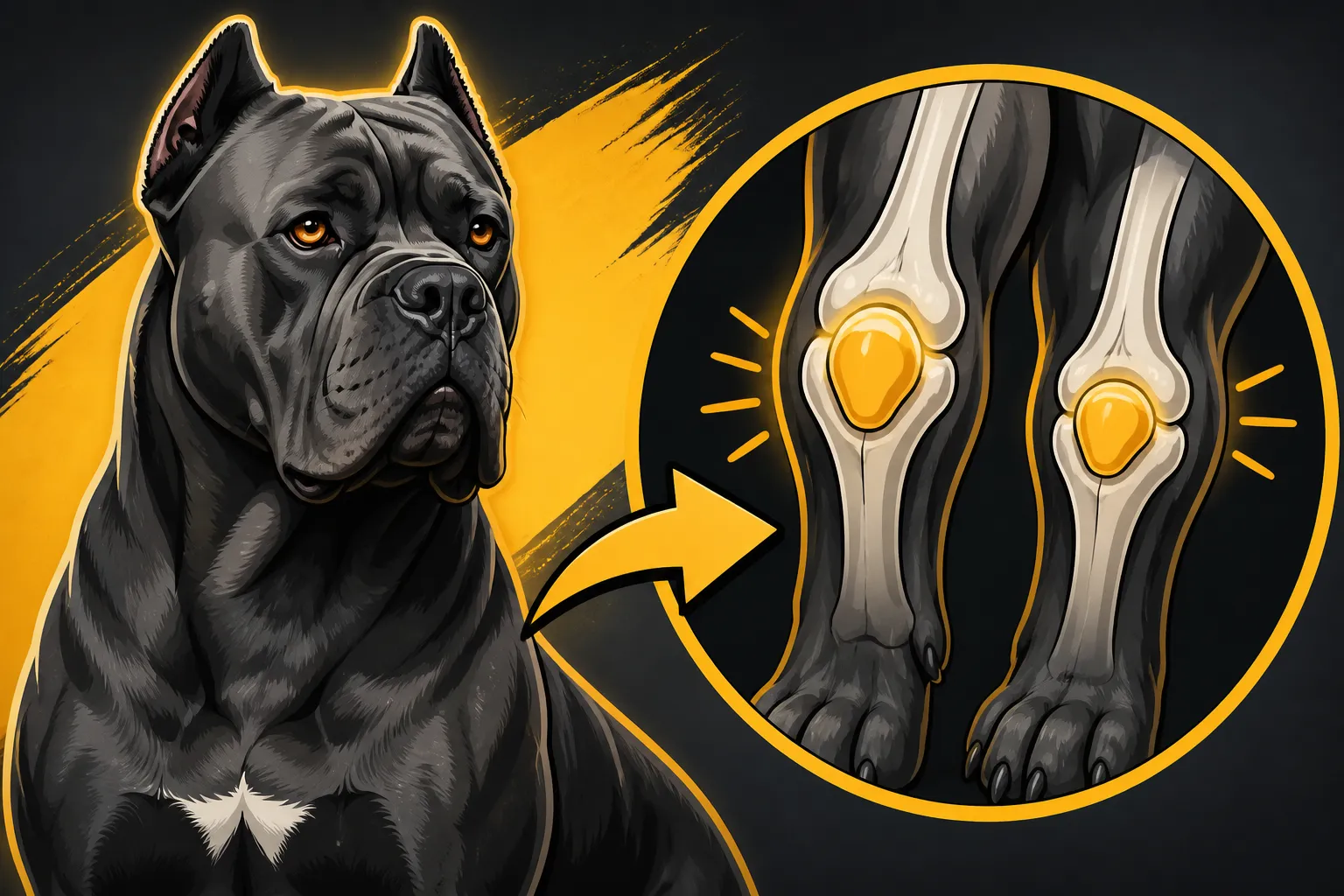
Patellar luxation is a condition where the patella, or kneecap, dislocates or slips out of its normal groove on the femur (thigh bone). This groove is called the trochlear groove, and it's designed to keep the kneecap tracking smoothly as the leg bends and straightens. When the patella moves out of this groove, it can cause the leg to lock up, the dog to skip steps, or experience significant pain. While a small terrier might manage a mild luxation with little apparent discomfort, a hundred-pound Cane Corso putting all its weight on a compromised knee is a much more serious scenario. The sheer size and muscle mass of a Corso means that even a minor luxation can lead to more severe damage over time, including torn cruciate ligaments and accelerated arthritis. Ignoring this condition in a large breed isn't really an option if you want your dog to maintain good quality of life.
The Mechanics of a Dislocating Kneecap in a Cane Corso
To truly understand patellar luxation, it helps to visualize the knee's mechanics. The patella sits within the patellar tendon, which connects the quadriceps muscle at the front of the thigh to the tibia (shin bone). As your Cane Corso walks, runs, or jumps, this tendon pulls the kneecap up and down within the trochlear groove. In a dog with patellar luxation, this alignment is off. The patella might slip inward (medial luxation, more common) or outward (lateral luxation, often seen in large breeds like the Cane Corso). This malalignment can be due to a shallow trochlear groove, a twisted femur, or an incorrectly angled tibia. When the kneecap slides out, it's like a train jumping its tracks, momentarily interrupting the normal function of the leg and causing that characteristic skip or limp that owners often notice. The larger the dog, the greater the forces exerted on that joint, which means the potential for chronic instability and discomfort is much higher.
How Patellar Luxation Differs from Hip or Elbow Dysplasia
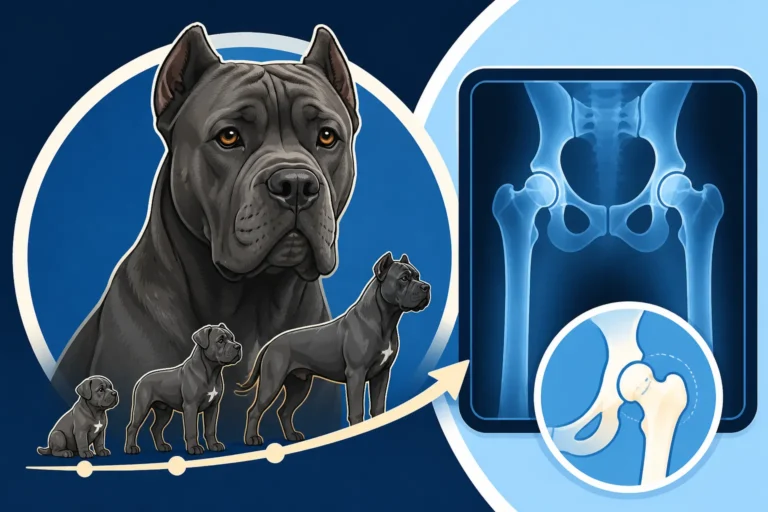
It's easy to lump all joint issues together, but patellar luxation has distinct differences from the more commonly discussed hip or elbow dysplasia, even though they all impact mobility. Hip dysplasia involves a malformation of the hip joint, where the ball (femoral head) doesn't fit snugly into the socket (acetabulum). This leads to looseness in the joint, abnormal wear, and eventually arthritis. Similarly, elbow dysplasia is a complex condition involving multiple possible developmental abnormalities within the elbow joint, often leading to lameness and pain. Both hip and elbow dysplasia are polygenic and are primarily issues of joint formation.
Patellar luxation, while also having a genetic component and involving joint structure, focuses specifically on the tracking of the kneecap within its groove. It’s less about the overall shape of the major bone ends (like the ball and socket of the hip) and more about the alignment of the quadriceps mechanism and the depth of the trochlear groove. While dogs can certainly suffer from all three conditions, they are distinct issues, each requiring its own diagnostic approach and management. This is precisely why the Cane Corso panel now includes explicit screening for patella health, rather than just assuming hip and elbow clearances cover everything. It’s a recognition that joint health is multifaceted and requires a comprehensive approach.
The Genetic Component and Breeding Implications
Understanding patellar luxation is one thing, but for a responsible breed like the Cane Corso, recognizing its genetic roots and how that impacts breeding decisions is paramount. For too long, this condition was seen as something that affected smaller dogs, but data is showing otherwise, leading to important changes in breed health protocols.
Why the Condition Was Previously Overlooked in Cane Corsos
Historically, the focus for Cane Corso breeders, and indeed many large breeds, has been overwhelmingly on hip and elbow dysplasia. These are devastating conditions that can severely impact a large dog's quality of life and are highly prevalent. Organizations like the Orthopedic Foundation for Animals (OFA) developed rigorous screening protocols for these major joints, leading breeders to prioritize certifications for hips and elbows as a gold standard. Patellar luxation, on the other hand, was largely considered a "toy breed" ailment. It was simply not on the radar as a significant concern for giant breeds, partly because the clinical signs might not be as immediately obvious or as severely debilitating in early stages compared to severe hip or elbow issues.
Breeders, understandably, dedicate their limited resources and time to tackling the most prevalent and damaging health concerns. This oversight meant that many Cane Corsos could be carrying genes for patellar luxation without their breeders even realizing it, as their energy was directed towards achieving a passing grade on examinations like those required for Hips and Elbows a Cane Corso Must Be Cleared On. The increasing awareness and updated research have highlighted that ignoring the patellas in large breeds was a gap that needed to be filled.
The Heritability of Luxating Patellas in Large Dogs
The scientific community now widely accepts that patellar luxation has a significant heritable component across many breeds, including large ones. It's not usually a simple dominant or recessive gene, but rather a polygenic trait, meaning multiple genes, along with environmental factors (like rapid growth, diet, and injury), contribute to its development. This complex inheritance pattern makes screening even more crucial. If a Cane Corso parent has luxating patellas, even a mild grade, they are more likely to pass on the genetic predisposition to their offspring. This is why a simple visual assessment isn't enough; proper veterinary examination is required to grade the patellas.
Imagine a scenario where a breeder has two otherwise perfectly healthy Cane Corsos, both with excellent hip and elbow scores. If they haven't been screened for patellas, they might unknowingly be carrying and passing on genes for patellar luxation, slowly increasing its incidence in the breed. This is similar to how other genetic conditions, like the two DNA diseases in Cane Corso pedigrees, can quietly spread through lines if not properly screened for. Comprehensive health screening aims to identify these hidden genetic predispositions to safeguard the breed's future.
The Impact on Breeding Decisions and Line Health
The inclusion of patellar screening in the Cane Corso health panel fundamentally shifts responsible breeding decisions. Breeders are now expected to have both dam and sire evaluated for patellar luxation, ideally through an official registry like the OFA, before considering a breeding. A Cane Corso with a Grade 2 or higher luxation would typically be removed from a breeding program, and even dogs with Grade 1 might be considered cautiously, depending on the severity and the overall health of the line.
This proactive approach helps mitigate the risk of producing puppies that will suffer from this painful condition later in life. It ensures that breeders are making informed decisions, not just based on what they can see, but on a comprehensive picture of a dog's genetic and structural health. For instance, a breeder might have a fantastic female with ideal temperament and conformation, but if she fails her patella screening, ethical considerations demand she not be bred. While this can be a tough decision for breeders who have invested heavily in a particular line, the long-term health of the breed must always take precedence. Prospective owners should always ask for patella clearances, just as they would for hip grades, when evaluating a breeder.
Recognizing Symptoms and Diagnosis
Even with the best breeding practices, understanding the signs of patellar luxation is vital for any Cane Corso owner. Early detection can make a significant difference in managing the condition and ensuring your dog remains comfortable and active.
Subtle Signs of Patellar Luxation in a Growing Cane Corso Puppy
Recognizing patellar luxation in a rambunctious Cane Corso puppy can be tricky, as their boundless energy often masks subtle lameness. However, paying close attention to their gait and movement patterns is crucial. One of the most common early signs is an intermittent "skip" or "hop" in their step, particularly when they are running or changing direction. You might notice them briefly holding one back leg up for a few steps, then putting it down as if nothing happened. This often occurs when the kneecap pops out and then spontaneously pops back in.
Another subtle indicator could be a reluctance to put full weight on a particular leg, or a general awkwardness in their hindlimb movement. Perhaps they seem to favor one side when sitting, or they avoid certain types of play that involve sharp turns or jumping. Sometimes, owners might only notice a slight stiffness after rest, especially after a particularly active play session. Since Cane Corso puppies are growing rapidly, their joints are under immense stress. Issues like hip dysplasia in a fast-growing Cane Corso or elbow dysplasia can also manifest subtly, so any unusual gait should be brought to your veterinarian's attention immediately. Don't dismiss a "funny step" as just puppy clumsiness; it could be an early warning sign.
Clearer Indicators in an Adult Cane Corso
As a Cane Corso matures, especially if the luxation is left unaddressed or progresses, the symptoms tend to become more pronounced and persistent. What started as an occasional skip might turn into a more consistent lameness, a noticeable limp, or a reluctance to bear weight on the affected leg. You might observe your adult Corso walking with a "bow-legged" or "knock-kneed" appearance, as the body tries to compensate for the misaligned kneecap. They might struggle to jump into the car, climb stairs, or even rise from a lying position.
Chronic pain can also lead to behavioral changes; a previously playful dog might become more withdrawn, less eager for walks, or even irritable when touched around the affected knee. Muscle atrophy in the quadriceps of the affected leg is another indicator, as the dog naturally tries to avoid using the painful limb. Over time, the constant rubbing of the patella against the femur can lead to premature arthritis, exacerbating the discomfort. This is where comprehensive pet insurance like that offered by Healthy Paws can really make a difference, covering diagnostics and treatment for these evolving conditions. Observing your Cane Corso's movement carefully and noting any changes, no matter how minor, is key to timely intervention.
The Veterinary Examination and Grading System
Diagnosing patellar luxation involves a thorough veterinary examination, and it's something your vet can often do with a hands-on physical assessment, though imaging might also be required. During the examination, the vet will manipulate your Cane Corso's knee joint, attempting to manually dislocate the kneecap while the dog is standing, lying down, or in various positions. They'll also check for any associated pain, crepitus (a grinding sound or sensation), and the general stability of the joint.
Patellar luxation is typically graded on a scale from 0 to 4:
- Grade 0: The patella is normally seated and cannot be luxated manually. This is a clear patella.
- Grade 1: The patella can be manually luxated but returns to its normal position spontaneously. The dog might show intermittent lameness.
- Grade 2: The patella luxates frequently, either spontaneously or manually, and remains luxated until manually replaced or until the dog extends its stifle joint. Lameness is more noticeable.
- Grade 3: The patella is permanently luxated but can be manually replaced in the trochlear groove. However, it will re-luxate immediately when the manual pressure is released. Consistent lameness and altered gait are common.
- Grade 4: The patella is permanently luxated and cannot be manually replaced in the trochlear groove. This is the most severe grade, often causing significant pain, pronounced lameness, and a severely abnormal gait.
While X-rays are usually taken to rule out other orthopedic issues or assess arthritic changes, the primary diagnosis and grading are often done through palpation. This grading system provides a clear framework for breeders and owners to understand the severity of the condition and make informed decisions about treatment and breeding.
Management and Treatment Options
Discovering your Cane Corso has patellar luxation can be worrying, but thankfully, there are various management and treatment options available, ranging from conservative care to surgical intervention, depending on the severity.
Conservative Management for Mild Cases
For Cane Corsos diagnosed with Grade 1 or even some mild Grade 2 patellar luxation, especially if they are not exhibiting significant pain or lameness, conservative management might be the initial approach. The primary goals here are to minimize discomfort, maintain muscle strength, and prevent the condition from worsening. This often involves a multi-pronged strategy:
Firstly, weight management is absolutely critical. An overweight Cane Corso puts excessive strain on all its joints, including the knees, accelerating wear and tear and worsening luxation. Keeping your Corso lean, as discussed in why a lean Cane Corso keeps its hips longer, is vital. Secondly, controlled exercise is important. This means avoiding high-impact activities like jumping or sudden stops, and instead focusing on low-impact exercises like leash walking or swimming to build and maintain strong hindlimb muscles, which can help stabilize the kneecap.
Thirdly, pain management and anti-inflammatory medications may be prescribed during flare-ups or for chronic discomfort. Non-steroidal anti-inflammatory drugs (NSAIDs) are commonly used. Lastly, joint supplements, containing ingredients like glucosamine, chondroitin, and omega-3 fatty acids, can be beneficial for overall joint health and may help slow the progression of arthritis. While joint supplements aren't a cure, they can support joint cartilage and reduce inflammation. Regular check-ups with your vet are essential to monitor the condition and adjust the management plan as needed.
Surgical Interventions for Severe Luxation
When patellar luxation is severe (Grade 2 with consistent lameness, Grade 3, or Grade 4), or when conservative management fails to provide relief, surgical intervention becomes the most effective long-term solution. The goal of surgery is to realign the quadriceps mechanism and deepen the trochlear groove to prevent the kneecap from slipping out. Several surgical techniques can be employed, often in combination:
- Trochlear Groove Deepening: This involves deepening the groove in the femur where the patella sits, usually by removing a wedge or block of bone and replacing it deeper.
- Tibial Tuberosity Transposition (TTT): The tibial tuberosity, the bony prominence on the shin bone where the patellar tendon attaches, is cut and reattached in a new position that aligns the patellar tendon properly. This helps to centralize the pull of the quadriceps.
- Lateral/Medial Release or Imbrication: Tissues on one side of the joint might be cut (released) to reduce tension, while tissues on the opposite side are tightened (imbricated or overlapping) to further stabilize the patella.
The specific combination of procedures will depend on the individual Cane Corso's anatomy and the type and severity of the luxation. Surgery can be expensive, often costing several thousand dollars per knee, especially for a large breed. This is where pet insurance providers like Healthy Paws become invaluable, helping to cover a significant portion of these substantial veterinary bills, which can certainly add up, given the surgeries every Cane Corso owner should budget for.
Post-Operative Care and Long-Term Outlook for a Cane Corso
Post-operative care is just as critical as the surgery itself for a successful outcome. Immediately after surgery, your Cane Corso will require strict rest and confinement to prevent damage to the healing joint. This typically means limited potty breaks on a leash only, no running, jumping, or playing for several weeks. Pain management, including prescribed medications, will be crucial during this initial recovery phase.
Physical therapy often begins a few days or weeks after surgery and is vital for restoring strength, flexibility, and proper gait. This might include passive range of motion exercises, controlled walks, hydrotherapy, or therapeutic exercises. A rehabilitation specialist can guide you through this process. Recovery can be long, often taking 8-12 weeks or more, particularly for a large, heavy dog like a Cane Corso.
The long-term outlook for most Cane Corsos after successful patellar luxation surgery is generally very good. Many dogs regain excellent function and live comfortable lives. However, it's important to understand that even with successful surgery, there is still a risk of developing arthritis in the joint later in life, as the joint has already experienced abnormal wear. Continued weight management, joint supplementation, and regular, moderate exercise can help mitigate this. For an aging Cane Corso, managing conditions like arthritis becomes a part of their ongoing care, similar to managing arthritis in a hundred-pound Cane Corso. Regular follow-up appointments with your veterinarian will be necessary to monitor the joint's health and address any emerging issues.
The Role of Health Registries and Breeder Responsibility
The shift in focus towards patellar screening for Cane Corsos isn't just a recommendation; it's being integrated into official health registries, placing a greater responsibility on breeders to ensure the continued health of the breed. This collective effort is vital for the breed's future.
How OFA and CHIC Programs Now Include Patella Screening
The Orthopedic Foundation for Animals (OFA) is a cornerstone of canine health screening, and its Canine Health Information Center (CHIC) program provides a centralized database for canine health information. For a Cane Corso to achieve a CHIC number, it must undergo specific health screenings recommended by the Cane Corso Association of America (CCAA), the breed's parent club. This panel historically included hip and elbow evaluations, cardiac exams, and sometimes thyroid or eye certifications.
Now, patellar luxation examination is an increasingly recommended, and in some cases required, component for CHIC certification for Cane Corsos. This means that for a Cane Corso to be considered fully health-cleared according to the breed club's highest standards, a veterinarian must perform a patella examination and the results must be submitted to OFA. The OFA will then issue a grade (Normal, Grade 1, 2, 3, or 4). Dogs receiving a 'Normal' or often 'Grade 1' designation are generally considered suitable for breeding regarding patellas. This formal inclusion underscores the seriousness with which the breed community now views this condition and provides a standardized, verifiable method for breeders to prove their commitment to health.
The Breeder's Ethical Obligation to Screen Kneecaps
With the advent of these updated screening protocols, a responsible Cane Corso breeder has an undeniable ethical obligation to screen for patellar luxation in all their breeding stock. This goes beyond merely checking for visible lameness; it means actively submitting dogs for the full OFA patella examination. Cutting corners here is not just financially risky for future puppy owners, but it also directly undermines the collective efforts to improve the breed's health.
An ethical breeder understands that their responsibility extends far beyond producing cute puppies. They are stewards of the breed, dedicated to reducing the incidence of hereditary diseases. This means investing in comprehensive health testing, which can run into significant costs per dog. When considering what 500 to 1,500 in testing buys per Cane Corso parent, patella screenings are a relatively small additional cost compared to hip and elbow X-rays, but they add immense value to the overall health profile. Breeders who openly share these results, including patella clearances, demonstrate transparency and a genuine commitment to their dogs and the families who will adopt their puppies.
What Prospective Owners Should Ask About Patella Clearances
For anyone looking to bring a Cane Corso puppy into their home, asking about patella clearances is just as important as inquiring about hip and elbow scores. Don't be shy about requesting to see the official OFA certificates for both parents. A reputable breeder will not only have these documents readily available but will be proud to share them and explain what they mean.
Here are specific questions you should ask:
- "Are both parents of the litter OFA patella certified?"
- "What were their specific patella grades?" (You're looking for 'Normal' or Grade 0, or at most a Grade 1 if the breeder can explain their breeding rationale clearly).
- "Can I see the physical OFA certificates or look up their CHIC numbers on the OFA website?"
- "How long have you been screening for patellar luxation in your lines?"
A breeder who hesitates, claims it's "not an issue" in their lines without proof, or tries to downplay the importance of patella screening is a red flag. Your Cane Corso puppy will go through a significant growth curve in its first year, putting immense stress on all its joints. Ensuring their parents have clear patella health is one of the best ways to set your future family member up for a healthy start.
Comparison of Major Cane Corso Joint Health Issues
To help clarify the differences and similarities between common joint health concerns in Cane Corsos, here's a quick comparison:
| Feature | Hip Dysplasia | Elbow Dysplasia | Patellar Luxation (Kneecap) |
|---|---|---|---|
| Affected Joint | Hip (ball and socket) | Elbow (complex three-bone joint) | Stifle (Knee), specifically the kneecap (patella) |
| Core Problem | Malformation of the joint, leading to looseness and abnormal wear. | Abnormal development of the elbow joint, resulting in pain and lameness. | Kneecap slips out of its groove in the femur. |
| Primary Cause | Genetic predisposition (polygenic), rapid growth, diet, environment. | Genetic predisposition (polygenic), rapid growth, trauma. | Genetic predisposition (polygenic), anatomical abnormalities. |
| Typical Onset | Puppyhood/adolescence (6-18 months), can worsen with age. | Puppyhood/adolescence (4-18 months), often bilateral. | Puppyhood to adulthood, can be intermittent initially. |
| Common Symptoms | Bunny hopping gait, reluctance to run/jump, difficulty rising, pain, lameness, muscle atrophy. | Forelimb lameness, stiffness, reluctance to exercise, carrying limb awkwardly. | Intermittent skipping/hopping, lameness, reluctance to bear weight, bow-legged/knock-kneed stance. |
| Diagnosis | OFA/PennHIP X-rays (sedation often required). | OFA X-rays (sedation often required). | Physical examination (palpation), sometimes X-rays. |
| Grading System | Excellent, Good, Fair, Borderline, Mild, Moderate, Severe. | Grade 0 (Normal), Grade 1, 2, 3. | Grade 0 (Normal), Grade 1, 2, 3, 4. |
| Treatment Options | Conservative (weight control, PT, meds) or Surgical (FHO, THR, DPO). | Conservative (weight control, PT, meds) or Surgical (arthroscopy, osteotomy). | Conservative (weight control, PT, meds) or Surgical (trochlear deepening, TTT, soft tissue release/imbrication). |
| Prognosis | Varies by severity and treatment, often manageable but arthritis likely. | Varies by severity, often manageable but arthritis likely. | Good to excellent with surgery, varies with conservative. |
| Breeding Goal | Breed only clear (Good/Excellent) dogs. | Breed only clear (Grade 0) dogs. | Breed only clear (Grade 0/1) dogs. |
Disclaimer
The information provided in this article is for general educational purposes only and should not be considered as professional veterinary advice. Always consult with a qualified veterinarian for any health concerns or before making any decisions related to your Cane Corso's care.