Reading a Cane Corso’s Hip Grade Against the CHIC List
Bringing a Cane Corso into your home is a massive commitment, and few things are more heartbreaking than discovering your powerful companion might be struggling with hidden health issues. The medical jargon surrounding hip grades, X-ray results, and programs like CHIC can feel like a foreign language, leaving even the most diligent owner confused and anxious. This guide is here to cut through the noise, helping you understand precisely how to interpret your Cane Corso's hip health information, especially when it comes to reading their Orthopedic Foundation for Animals (OFA) grades against the critical CHIC list.
The Initial Confusion Around Canine Hip Dysplasia
It's a scary term, isn't it? Canine Hip Dysplasia (CHD) conjures up images of painful, limping dogs, and for a powerful, athletic breed like the Cane Corso, it's a concern that weighs heavily on every owner's mind. The sheer size and growth rate of these magnificent dogs make their joint health a primary consideration, and unfortunately, hip dysplasia is a reality many Cane Corso owners face.
Understanding What Hip Dysplasia Actually Means
At its core, hip dysplasia is a genetic condition where the ball and socket of the hip joint don't fit together properly. Instead of a smooth, snug fit, the joint is loose, causing the bones to grind and rub against each other over time. Imagine a door hinge that's slightly off-kilter; every time you open and close the door, it scrapes and wears down, eventually leading to damage and pain. That's essentially what happens with a dysplastic hip. This abnormal development leads to a cascade of problems, including cartilage erosion, bone spurs, and ultimately, debilitating osteoarthritis. For a Cane Corso, a breed renowned for its strength and protective instincts, this can mean a significant reduction in quality of life, impacting their ability to move, play, and perform the tasks they were bred for. The pain can range from mild discomfort after exercise to constant, severe agony, making everyday activities a struggle for both dog and owner.
Why Cane Corsos Are Particularly Prone to Hip Issues
Cane Corsos, like many large and giant breeds, are disproportionately affected by hip dysplasia. Their rapid growth rate as puppies means their bones and joints are developing incredibly quickly, and any genetic predisposition to hip laxity can be exacerbated during this crucial period. Think about a rapidly constructed building – if the foundations aren't absolutely perfect, the entire structure can be compromised down the line. Similarly, a Cane Corso puppy's bones are literally growing before your eyes, and if the genetic blueprint for their hips isn't sound, the chances of developing dysplasia increase significantly. Beyond genetics, factors like diet, exercise, and even environmental stressors during puppyhood can play a role, although genetics remain the primary driver. It's not just about their mature size; it's about the speed at which they get there. Owners often face the challenge of managing a rapidly growing pup's exercise and nutrition to support healthy joint development, even when their genetics are strong. This makes understanding the health clearances of the parents, particularly their hip scores, absolutely paramount when considering a Cane Corso puppy. It's why careful breeders put so much emphasis on certifications.
Deciphering OFA Hip Grades for Your Cane Corso
When a breeder talks about "OFA hips" or shows you certificates, they're referring to a standardized system developed by the Orthopedic Foundation for Animals to evaluate hip joint conformation. This system is designed to provide an objective assessment of a dog's hips, giving breeders and prospective owners valuable insight into the genetic health of an animal. It's the gold standard for hip evaluation in many breeds, including the Cane Corso.
The Different OFA Classifications and What They Signify
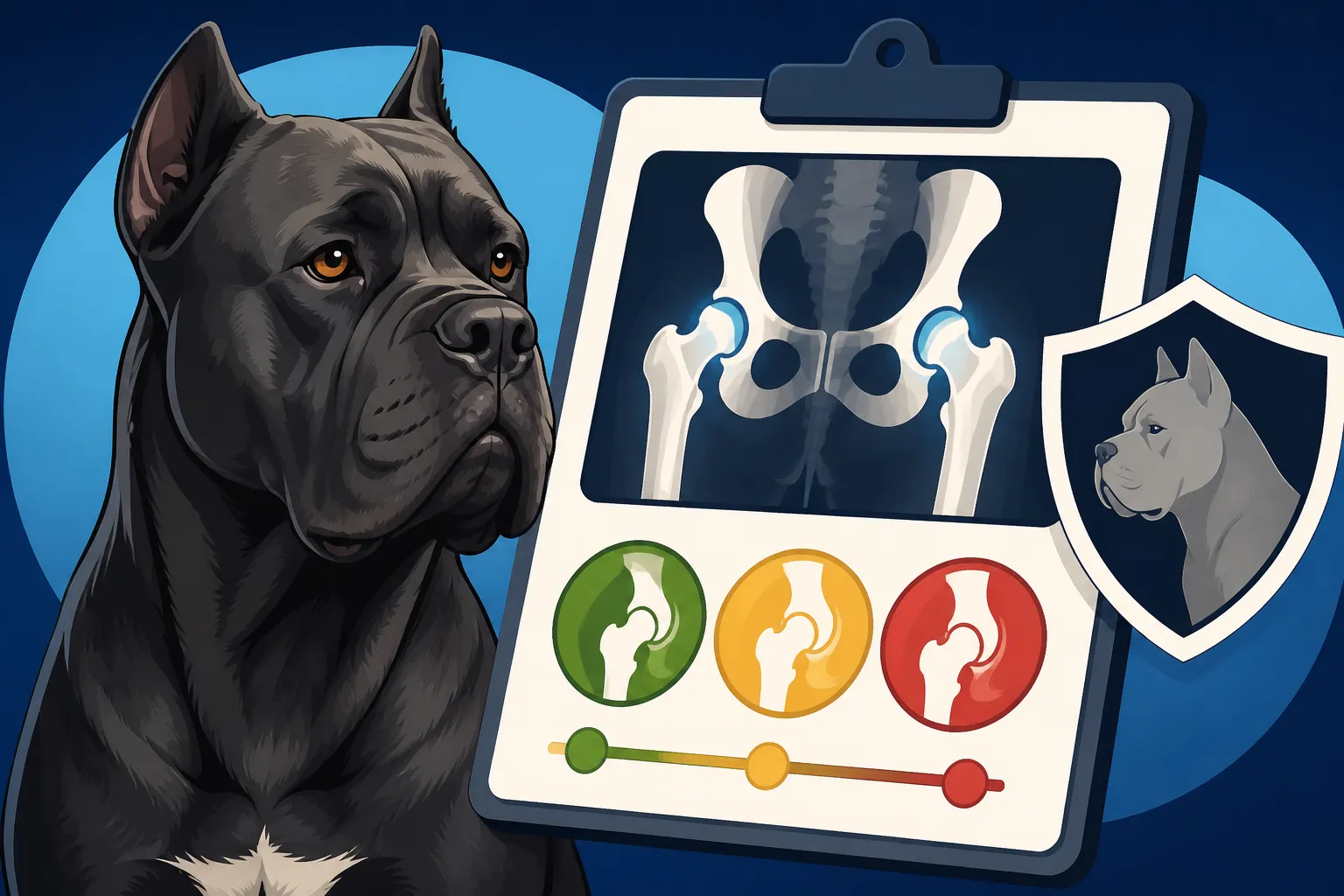
The OFA uses a panel of three independent, board-certified veterinary radiologists to review X-rays of a dog's hips. Each radiologist evaluates the joint on several anatomical points, looking for signs of laxity (looseness) and degenerative joint disease (DJD), which are hallmarks of hip dysplasia. After their individual assessments, the OFA assigns one of seven possible hip classifications:
- Excellent: Superior hip conformation compared to other individuals of the same breed and age. The femoral head fits exceptionally tight into the acetabulum (socket).
- Good: Well-formed hip joint with a good congruity between the femoral head and acetabulum. Slight irregularities may be present, but overall good conformation.
- Fair: Minor irregularities in the hip joint, but still considered within normal limits. The hip joint is still functional, but there might be a very slight degree of laxity.
- Borderline: This is where things get tricky. A Borderline grade means there's insufficient evidence to classify the hips as normal (Excellent, Good, Fair) or dysplastic (Mild, Moderate, Severe). These dogs might have some features consistent with mild hip dysplasia, but not enough for a definitive diagnosis. Often, OFA recommends re-evaluating these dogs in 6-12 months.
- Mild Dysplasia: Evidence of mild hip dysplasia, characterized by some subluxation of the femoral head and minor degenerative changes. The hip joint is clearly not normal.
- Moderate Dysplasia: Significant subluxation of the femoral head, with moderate degenerative changes and often a shallow acetabulum. These hips are definitely dysplastic and often cause clinical signs.
- Severe Dysplasia: Marked evidence of hip dysplasia, with pronounced subluxation, severe degenerative changes, and often a deformed femoral head and acetabulum. These dogs typically suffer from chronic pain and severe lameness.
For responsible breeders, the goal is always to breed dogs with "Normal" hip grades (Excellent, Good, or Fair). Anything less is generally not recommended for breeding, as it increases the risk of passing on hip dysplasia to offspring. It's a tough standard, but it's there to protect the breed's health.
The X-Ray Process and What Your Vet Is Looking For
Getting your Cane Corso's hips evaluated by OFA involves a specific X-ray procedure, usually performed under sedation or light anesthesia. This is crucial because your dog needs to be perfectly positioned to get a clear, diagnostic image. The dog is placed on its back with its hind legs extended straight back and rotated inward, a position called the "VD extended" view. This particular angle allows the radiologists to assess the depth of the hip sockets, the congruity of the joint, and the presence of any degenerative changes. Your veterinarian will take the X-rays, ensuring the positioning is correct, and then submit them to the OFA for evaluation. They'll be looking for things like the tightness of the hip joint, the shape of the femoral head (the ball) and acetabulum (the socket), and any signs of abnormal bone remodeling, which indicates wear and tear. It's a detailed and precise process, and the quality of the X-rays can significantly impact the accuracy of the grading. This is why it’s imperative to choose a vet experienced in OFA positioning.
The Significance of Getting Your Cane Corso Tested at the Right Age
Timing is everything when it comes to OFA hip evaluations for your Cane Corso. The OFA only issues a preliminary certification from 4 months of age, but the official, permanent certification can only be issued once a dog is 24 months (two years) of age or older. This is because skeletal maturity typically isn't reached until around two years old in large and giant breeds. Before this age, the growth plates are still open, and the hip joints are still developing, meaning a younger dog's hips might look "normal" but could still develop dysplasia later. Getting a Cane Corso's hips scored at this mature age provides the most accurate and reliable assessment of their joint health, reflecting the final state of their hips. This is why ethical breeders will never breed a Cane Corso based solely on preliminary hip scores; they wait for the official, two-year-old certification. It requires patience, but it's a critical step in ensuring healthy offspring and demonstrates a breeder's commitment to the long-term well-being of the breed. If you're considering a Cane Corso puppy, always ask to see the OFA certificates of both parents, explicitly stating their two-year-old evaluations. Understanding The Age a Cane Corso Can Be Hip Scored is vital for responsible breeding and purchasing.
The CHIC Program and Its Role for Cane Corsos
While OFA hip grades are a cornerstone of health testing, they're just one piece of a larger puzzle. This is where the Canine Health Information Center (CHIC) program comes in. CHIC is a voluntary program sponsored by the Orthopedic Foundation for Animals (OFA) and the AKC Canine Health Foundation (CHF), designed to provide a centralized public database of health information on individual animals.
What the CHIC Database Represents for Responsible Breeding
The CHIC program isn't about setting arbitrary standards; it's about providing a clear, concise way for breeders and puppy buyers to verify that a dog has undergone all the recommended health screenings for its breed. Each breed parent club, in consultation with the OFA, establishes a "CHIC protocol" – a list of specific health tests considered important for that breed. Once a dog has completed all the required tests for its breed and those results are publicly available in the OFA database, it's assigned a CHIC number. This number doesn't mean the dog is "perfect" or free of all genetic diseases; rather, it signifies that the dog has been tested for the diseases prevalent in its breed, and those results are transparently accessible. For a Cane Corso, seeing a CHIC number attached to a dog's name indicates a breeder's dedication to open health disclosures and their proactive approach to reducing the incidence of hereditary diseases within their lines. It moves beyond just hip scores and encompasses a more holistic view of a dog's health profile. You can learn more about What a Cane Corso CHIC Number Actually Certifies to understand its full scope.
Specific Health Tests Required for a Cane Corso's CHIC Number
For a Cane Corso to earn a CHIC number, it needs to undergo a specific battery of health tests, as outlined by the Cane Corso Association of America (CCAA) and the OFA. These tests go beyond just hips and elbows, addressing other significant health concerns prevalent in the breed. As of my last check, the typical CHIC requirements for a Cane Corso include:
- Hip Dysplasia: OFA evaluation (Fair, Good, or Excellent passing grade).
- Elbow Dysplasia: OFA evaluation (Normal passing grade).
- Cardiac Evaluation: OFA Cardiac (either a practitioner exam or an advanced cardiologist exam, depending on breeder preference, with the advanced exam being strongly recommended for breeding stock). This aims to screen for heart conditions like Dilated Cardiomyopathy (DCM).
- Eye Examination: OFA Eye Certification (CERF/CAER) by a board-certified veterinary ophthalmologist, ideally performed annually, looking for conditions like entropion, ectropion, and cataracts.
- Thyroid: OFA Thyroid evaluation (Normal passing grade).
- Patellar Luxation: OFA Patellar Luxation evaluation (Normal passing grade). This is a newer addition to many breed panels; for Cane Corsos, specifically, Why the Cane Corso Panel Now Includes Kneecaps underscores its importance.
Some breeders may also opt for DNA tests for known genetic diseases specific to certain lines, even if they aren't strictly required for CHIC at present. The crucial point is that all these results must be publicly verifiable on the OFA website to receive the CHIC number. If a dog has a CHIC number, you can look it up and see all the individual test results, offering complete transparency.
How a CHIC Number Helps You Evaluate a Breeder
When you're searching for a Cane Corso puppy, seeing that the parent dogs have CHIC numbers is a powerful indicator of a reputable and ethical breeder. It signifies that they are actively participating in health screening, not just for the minimum standard, but for a comprehensive set of concerns relevant to the breed. It means they're not hiding any health information; all results, good or bad, are publicly available. This transparency is invaluable. Imagine being able to verify every single health test result for both parents with just a few clicks – that's the power of the CHIC program. A breeder who proudly displays CHIC numbers for their breeding stock isn't just making claims; they're providing verifiable proof of their commitment to producing healthy puppies. It gives you a solid foundation for trust and allows you to ask informed questions. Without this level of transparency, you're relying solely on a breeder's word, which, unfortunately, isn't always enough to prevent heartbreaking health issues down the line. It's an investment in your puppy's future, potentially saving you significant emotional and financial strain if your beloved Cane Corso develops a major health issue. This upfront investment in testing, which can range from What 500 to 1,500 in Testing Buys Per Cane Corso Parent, truly pays off in peace of mind.
Comparing Your Cane Corso's OFA Grade to CHIC Requirements
Now that we understand both OFA hip grades and the CHIC program, let's bring it all together. The goal isn't just to get an OFA grade; it's to ensure that grade meets the standards set by the breed club for CHIC certification, indicating a truly health-conscious breeding program.
Meeting the Hip Dysplasia Standard for CHIC Certification
For a Cane Corso to satisfy the hip dysplasia requirement for a CHIC number, its OFA hip grade must be categorized as "Normal." This means the hips must be graded as Excellent, Good, or Fair. Any other grade – Borderline, Mild, Moderate, or Severe Dysplasia – will disqualify the dog from receiving a CHIC number, even if all other health tests are perfect. This strict standard is in place because hip dysplasia is a significant concern in large breeds, and the CHIC program aims to identify and promote breeding stock with demonstrable good hip conformation. It’s a clear line in the sand: if a Cane Corso’s hips are anything less than Fair, according to the OFA, they do not meet the CHIC standard for breeding. This doesn't mean a dog with Borderline hips can't live a full, happy life as a pet; it simply means that, from a responsible breeding perspective, their genetics should not be passed on, as it increases the risk of Hip Dysplasia in a Fast Growing Cane Corso.
Here's a quick reference table to visualize the OFA hip grades and their CHIC eligibility:
| OFA Hip Grade | Description | CHIC Eligibility | Breeding Recommendation |
|---|---|---|---|
| Excellent | Superior hip conformation, tight fit. | YES | Highly Recommended |
| Good | Well-formed hip joint, good congruity. | YES | Recommended |
| Fair | Minor irregularities, still within normal limits. | YES | Recommended |
| Borderline | Insufficient evidence for normal or dysplastic. | NO | Re-test, Not Recommended |
| Mild | Mild hip dysplasia, some subluxation. | NO | Not Recommended |
| Moderate | Significant subluxation, moderate changes. | NO | Not Recommended |
| Severe | Marked hip dysplasia, severe changes. | NO | Not Recommended |
Interpreting Borderline or Dysplastic Results in Context
Receiving a Borderline or any degree of dysplastic hip grade for your Cane Corso can be incredibly disheartening, especially if you had hopes for breeding or if you're a prospective owner trying to understand a puppy's lineage. It's crucial to interpret these results in context. A "Borderline" grade, while not disqualifying a dog from a happy pet life, is a red flag for breeding. It suggests that while the hips aren't overtly dysplastic at the time of evaluation, they also aren't optimally conformed, and passing on those genetics could be risky. OFA often recommends re-evaluating these dogs at a later date, but for CHIC purposes, they don't meet the "normal" standard.
If a Cane Corso receives a "Mild," "Moderate," or "Severe" dysplastic grade, it unequivocally means the dog should not be used for breeding. While a mildly dysplastic dog might show few clinical signs, the genetic predisposition is present and will likely be passed to offspring. For dogs with moderate or severe dysplasia, the focus shifts entirely to managing their comfort and mobility. This can involve pain medication, physical therapy, and sometimes even surgery, such as Hip Replacement Surgery on a Cane Corso. The emotional toll of a dysplastic diagnosis on an owner is significant, and the financial implications for treatment can be substantial. This is why pet insurance, like a plan from Healthy Paws, can be incredibly valuable, especially if you enroll your puppy early before any pre-existing conditions are identified. Early diagnosis allows for proactive management, but prevention through careful breeding is always the first line of defense.
Why a CHIC-Certified Dog Offers More Assurance
Choosing a Cane Corso from parents who have earned their CHIC numbers provides a much higher level of assurance about the health screening efforts undertaken by the breeder. It goes beyond a single test result, demonstrating a commitment to comprehensive health evaluation across multiple systems. When you see a CHIC number, you're not just getting a "pass" on hips; you're getting a complete picture: clear hips, clear elbows, sound heart, healthy eyes, and more. This holistic approach significantly reduces the likelihood of encountering preventable hereditary diseases in your puppy. While no breeding program can guarantee a puppy will never develop any health issue – genetics are complex, and environment plays a role – a CHIC-certified lineage means the breeder has done everything within their power to mitigate known risks. It's an investment in transparency, accountability, and ultimately, in the long-term health and well-being of your future family member. This commitment from breeders, supported by programs like CHIC, helps ensure that the majestic Cane Corso continues to thrive for generations to come.
Navigating Hip Health for Your Cane Corso Puppy
Even when you've chosen a puppy from CHIC-certified parents, the journey of ensuring your Cane Corso's hip health isn't over. Proper care during their critical growth phases, early screening options, and knowing how to respond if problems arise are all part of responsible ownership.
Early Screening Options Like PennHIP for Cane Corsos
While OFA only offers a preliminary hip evaluation at four months, and official certification at 24 months, another valuable tool for early hip screening is PennHIP. PennHIP is a scientific method for evaluating hip integrity and accurately measuring hip laxity, a predisposition to hip dysplasia. Unlike OFA, which focuses on morphological conformation (how the hips look), PennHIP directly measures the passive hip laxity (how loose the joint is) at any age, typically as early as 16 weeks (4 months).
The PennHIP procedure involves three distinct X-ray views: a distraction view, a compression view, and the conventional extended view used by OFA. The distraction view, in particular, measures the maximum amount of laxity a hip joint has, which is a strong predictor of whether the dog will develop hip dysplasia later in life. The results are presented as a Distraction Index (DI), a value between 0 and 1, where values closer to 0 indicate tighter hips and lower risk.
For Cane Corso breeders, PennHIP offers the advantage of making earlier, more informed breeding decisions. They can screen puppies and potential breeding stock at a young age, allowing them to identify and remove at-risk individuals from breeding programs much sooner. For puppy buyers, if a breeder has utilized PennHIP on their puppies or breeding stock, it provides an additional layer of assurance about hip health from a very early age. Understanding the differences between PennHIP Against OFA for a Cane Corso's Hips can help you appreciate the comprehensive screening options available.
Supporting Joint Health From a Young Age
Beyond genetic screening, proactive care for your Cane Corso's joints begins the moment they come home as a puppy. Their rapid growth makes them particularly susceptible to developmental orthopedic diseases, so everything from nutrition to exercise needs careful consideration.
Firstly, nutrition is paramount. A high-quality, large-breed puppy food specifically formulated for giant breeds is essential. These foods are designed with carefully balanced calcium and phosphorus ratios and moderate protein levels to promote slow, steady growth, rather than rapid weight gain that can put undue stress on developing joints. Overfeeding and excessively rapid growth are significant risk factors for hip and elbow dysplasia, even in genetically sound puppies. Avoid supplementing with extra calcium unless specifically directed by your vet, as this can disrupt the delicate mineral balance.
Secondly, controlled exercise is critical. While it's tempting to let a Cane Corso puppy run and play exuberantly, excessive or high-impact exercise (like jumping from heights, long runs on hard surfaces, or repetitive stair climbing) should be strictly limited during their first year to eighteen months. Their growth plates are still open and vulnerable. Focus on short, frequent, low-impact activities like leash walks on soft surfaces (grass, dirt), controlled play sessions, and mental enrichment. Think of it as "structured play" rather than free-for-all romping. Providing them with safe, non-slip flooring indoors can also prevent slips and falls that stress joints. While some owners wonder Whether a Cane Corso Benefits From Joint Supplements, the most crucial support in puppyhood comes from proper nutrition and controlled activity.
What to Do If Your Cane Corso Receives a Poor Grade
If your Cane Corso receives a Borderline or dysplastic hip grade, whether it's a preliminary OFA reading or an official diagnosis, it can feel like a punch to the gut. The first step is to stay calm and consult with your veterinarian, preferably one with orthopedic experience. They can help you understand the specific implications of the grade for your individual dog and discuss a management plan.
For a Borderline grade, your vet might recommend a re-evaluation in 6-12 months. In the meantime, strict attention to diet, exercise, and weight management is crucial. Keep your Cane Corso lean, as extra weight puts tremendous strain on compromised joints.
For actual dysplastic grades (Mild, Moderate, Severe), the focus shifts to pain management and improving joint function. This can include:
- Weight Management: Keeping your dog at a healthy, lean weight is the single most impactful thing you can do.
- Controlled Exercise: Low-impact activities like swimming or short, consistent leash walks can help maintain muscle mass without overstressing joints.
- Medication: Non-steroidal anti-inflammatory drugs (NSAIDs) can help manage pain and inflammation. Other pain relievers or joint-supporting medications may also be prescribed.
- Supplements: Glucosamine, chondroitin, and Omega-3 fatty acids can support joint health and reduce inflammation, though they are not a cure.
- Physical Therapy: Techniques like hydrotherapy, massage, and therapeutic exercises can significantly improve mobility and reduce pain.
- Surgery: In more severe cases, surgical interventions such as triple pelvic osteotomy (TPO) for younger dogs, femoral head ostectomy (FHO), or total hip replacement (THR) may be options. These are complex and costly procedures.
It’s important to remember that a dysplastic diagnosis isn't a death sentence. With proper management and care, many Cane Corsos with hip dysplasia can still live long, comfortable, and happy lives. Early intervention is key, and having comprehensive pet insurance from a provider like Healthy Paws can truly alleviate the financial burden of ongoing treatments and potential surgeries. Being vigilant for Signs a Cane Corso's Hips Are Starting to Go, such as limping, reluctance to play, or difficulty getting up, allows for earlier intervention and better outcomes.
Disclaimer
The information provided in this article is for general informational purposes only and is not a substitute for professional veterinary advice. Always consult with a qualified veterinarian for any health concerns or before making any decisions related to your Cane Corso's health and treatment. Breed health recommendations, including CHIC requirements, can change, so always refer to the most current information from the OFA and the Cane Corso Association of America.