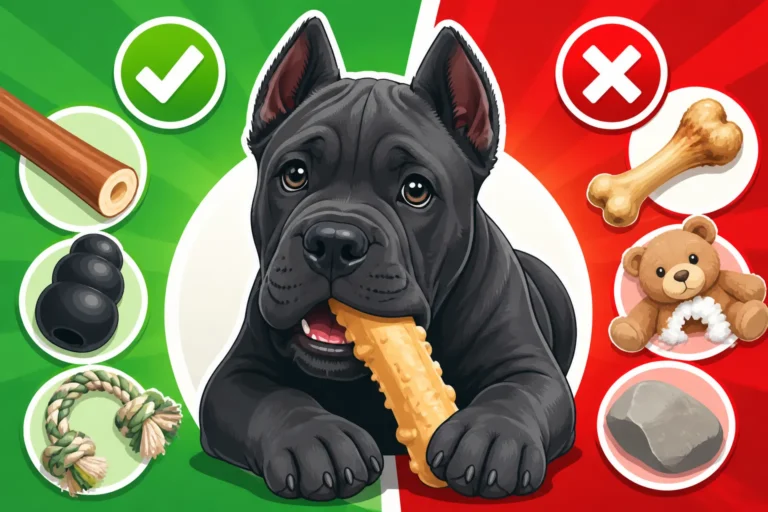
Whether a Cane Corso Should Have Antlers
We all know the struggle of finding a chew toy that can stand up to a Cane Corso's powerful jaws. You invest in something, hoping it will last more than an hour, only to find it shredded to bits before you can even finish your coffee. This guide is here to help you navigate the tricky world of durable chews, specifically addressing the common question of whether antlers are a safe and suitable option for your big, strong companion.
The Allure of Antlers for a Powerful Chewer
When you're dealing with a Cane Corso, you're dealing with a dog bred for strength and endurance, and that includes their incredible chewing power. It's only natural to look for something equally robust to satisfy their need to chew. Antlers often come up in conversations among large breed owners, appearing to be the holy grail of long-lasting chews.
Why Antlers Seem Like a Good Idea
Antlers have gained a reputation for being an incredibly durable, natural chew that can seemingly withstand anything a powerful dog throws at them. Owners often turn to antlers out of desperation, having gone through countless "indestructible" toys that quickly met their demise. The idea is that since they're natural bone, they must be perfectly safe and, even better, might help keep those big teeth clean. It's appealing to think you can offer something that will keep your Corso occupied for hours, giving you a moment of peace from the constant search for the next, tougher chew. Plus, for many, the natural aspect feels healthier and more aligned with what a dog might chew on in the wild.
Types of Antlers and Their Hardness
Not all antlers are created equal, and understanding the differences is crucial before even considering them for your Cane Corso.
- Deer Antlers: These are generally denser and harder than elk antlers. They can be incredibly tough, making them particularly risky for dental health.
- Elk Antlers: While still very hard, elk antlers tend to be a bit less dense and might have more porous centers, especially in larger pieces. Some owners perceive them as slightly "softer" than deer antlers, but this is a relative term when discussing something so hard.
- Whole Antlers: These are exactly what they sound like – an entire piece of antler. They offer the hardest chewing surface on the outside, which is where the most significant dental damage typically occurs.
- Split Antlers: These are antlers cut lengthwise, exposing the marrow inside. The marrow is softer and more appealing to dogs, making them chew on the inside rather than just the hard exterior. This can reduce the initial impact on teeth, but the outer rim remains extremely hard.
While split antlers might seem like a safer option because they give access to the softer interior, don't be fooled into thinking they're without risk. The core problem still remains: the extreme density of the antler material itself. Many people find these available through large pet supply retailers like Chewy or even on Amazon, but the product's availability doesn't inherently make it safe.
The Hidden Risks of Antlers for a Cane Corso
Now, let's get to the nitty-gritty and why, despite their apparent durability, many veterinarians and experienced Cane Corso owners caution against antlers. These magnificent dogs have powerful jaws, but their teeth, while strong, are not invincible.
Dental Damage: Cracked Teeth and Fractures
This is, by far, the biggest and most concerning risk associated with antlers. Imagine trying to chew on a rock – that's essentially what your Cane Corso is doing. Their natural instinct is to apply maximum force to break down whatever is in their mouth. When that object is an antler, which is harder than tooth enamel, something has to give.
We've seen it time and time again: a dog enthusiastically chews an antler, and then suddenly, there's a yelp, or more subtly, they start avoiding certain foods, drooling excessively, or showing signs of pain when you touch their face. What often follows is a trip to the vet, and the diagnosis is a slab fracture or a fractured tooth, often a premolar or molar – the big chewing teeth at the back of their mouth. These aren't just minor chips; these are painful breaks that expose the sensitive pulp inside the tooth. Left untreated, they can lead to infections, abscesses, and even systemic health issues. The cost to repair such a fracture can be substantial, often requiring root canal therapy or extraction under general anesthesia. It's a heartbreaking situation for both owner and dog, all stemming from a chew meant to be a harmless treat. The Cane Corso Study That Followed 232 Dogs highlighted various health concerns, and dental issues, while not always life-threatening, can significantly impact a dog's quality of life.
Choking Hazards and Internal Blockages
While antlers are incredibly hard, they aren't completely invulnerable to a Cane Corso's determined chewing. Over time, or with a particularly aggressive chew, pieces can break off. These pieces can be sharp, oddly shaped, and pose a significant choking hazard, especially if your Corso tries to swallow a chunk too large for their throat.
Beyond choking, if a large piece is swallowed, it can cause an internal blockage. Imagine a piece of dense, indigestible antler getting stuck in your dog's esophagus, stomach, or intestines. This is a medical emergency that often requires immediate veterinary intervention, potentially involving endoscopy or even invasive surgery to remove the obstruction. The signs might include vomiting, lethargy, refusal to eat, or abdominal pain. It's a terrifying scenario, and one that's entirely preventable by avoiding chews that splinter or break into dangerous fragments.
The Lack of Nutritional Value
One of the often-cited "benefits" of antlers is their natural origin, leading some to believe they offer some nutritional advantage. The reality is that antlers are primarily composed of bone tissue, rich in calcium and phosphorus, but in a form that is largely indigestible and not bioavailable to dogs in any meaningful way through chewing. While there might be trace minerals, the primary appeal isn't nutritional; it's the chewing satisfaction.
If you're looking for nutritional benefits, a high-quality, balanced diet specifically formulated for large breeds like the Cane Corso is paramount. Brands like Ollie often emphasize fresh, whole food ingredients for optimal nutrition, which is a much more reliable source of vitamins and minerals than any chew toy. Focusing on digestible supplements like fish oil or probiotics, if recommended by your vet, will offer far more actual nutritional value than an antler ever could.
Safer, More Appropriate Chew Alternatives for a Cane Corso
Given the significant risks associated with antlers, it's wise to explore alternatives that can satisfy your Cane Corso's chewing instinct without putting their health in jeopardy. The goal is durability and mental stimulation, but with safety as the top priority.
Durable Rubber and Nylon Chews
This category offers some of the best and safest options for power chewers like the Cane Corso. The key is to choose products specifically designed for large, aggressive chewers.
- Durable Rubber Toys: Brands like Kong (their "Extreme" line, for example) are a lifesaver for many Corso owners. These toys are made from dense, virtually indestructible rubber. They're designed to be stuffed with treats or peanut butter, which adds a fantastic layer of mental enrichment. Your Corso will spend considerable time working to get the treats out, satisfying their chewing drive in a much safer way. These are nearly impossible to splinter or break into dangerous pieces.
- Heavy-Duty Nylon Chews: Products from companies like Nylabone (again, look for their "Power Chew" or "Souper" sizes) are another excellent choice. These are designed to be gnawed on, providing dental benefits by scraping tartar off teeth, without being so hard that they cause fractures. They gradually wear down, often creating small, rice-sized pieces that are generally safe to pass. The trick is to replace them once they become small enough to be swallowed whole or if sharp edges develop. You can often find a wide variety of these on Amazon or at your local pet store, but always make sure to select the appropriate size and hardness for a large, strong dog like a Cane Corso. Chews That Survive a Cane Corso's Jaw delves deeper into these robust options.
Edible Chews with Dental Benefits
While not as long-lasting as rubber or nylon, certain edible chews can provide mental stimulation and some dental benefits.
- Dental Chews: There are many brands that produce dental chews formulated to help reduce plaque and tartar. These are designed to be consumed, meaning they break down safely in the dog's mouth and stomach. Always choose a size appropriate for your Cane Corso to prevent choking, and ensure they are digestible. These are often great for daily or every-other-day use to complement regular dental care.
- Bully Sticks: These are a very popular natural chew. Made from beef pizzle, they are fully digestible and generally don't splinter. They offer a good, satisfying chew, though their durability varies greatly depending on the thickness and the individual dog's chewing style. For a Cane Corso, you'll want the thickest, longest bully sticks you can find. Always supervise your dog with bully sticks, especially as they get to the end of the chew, as the last small piece can be swallowed too quickly. Whether Bones Are Safe for a Cane Corso explores other natural chew options with important considerations.
Natural Chews with Supervision
If you're still drawn to natural chews, some raw bones can be appropriate with extreme caution and constant supervision.
- Raw Marrow Bones (Femorals): These are large, weight-bearing bones from beef. The marrow inside is a treat, and the bone itself is incredibly hard. However, the same risk of dental fracture applies here as with antlers if the dog tries to crack the bone. Many vets actually recommend against them for this reason. If you do offer them, ensure they are too large for your Corso to get their mouth around completely and that you take them away once the marrow is gone, or if they start to become too worn down and sharp. Never give cooked bones, as these can splinter dangerously. Always discuss raw bones with your vet first to understand the risks of bacterial contamination and dental damage.
Making an Informed Decision for Your Cane Corso
Ultimately, the decision of what to offer your Cane Corso for chewing rests with you. However, arming yourself with knowledge and prioritizing your dog's safety is crucial. What works for one dog might be hazardous for another, even within the same breed.
Consulting Your Veterinarian
Before introducing any new type of chew, especially something as hard and potentially risky as an antler, have a conversation with your veterinarian. They know your dog's individual health history, including any pre-existing dental conditions or tendencies. They can offer personalized advice based on your Cane Corso's age, chewing style, and overall health. If your dog has already had dental work or is prone to sensitive teeth, your vet will almost certainly advise against antlers. They can also recommend specific dental-friendly chews or even point you towards brands that they trust for their durability and safety. Don't underestimate the value of this professional guidance; it can save you a lot of heartache and vet bills down the road. How Often a Healthy Cane Corso Sees the Vet suggests regular check-ups which are the perfect time for these discussions.
Observing Your Dog's Chewing Style
Every Cane Corso is an individual. Some are gentle gnawers, meticulously working on a chew. Others are "destroyers," intent on breaking down whatever is in their mouth as quickly as possible. You know your dog best.
- Is your Cane Corso a "destroyer"? If your dog goes through toys quickly, trying to crack them open or break off pieces, then hard chews like antlers are a definite no-go. Their power is too great for something that won't give.
- Do they have a delicate approach? If your dog is more of a licker and gentle gnawer, they might tolerate a softer chew for longer, but even then, the risk with antlers is still present. It's often not worth taking the chance.
- Are they prone to resource guarding? Some dogs can become possessive of high-value chews. If your Cane Corso shows any signs of resource guarding, especially around children or other pets, any long-lasting chew should be given only under strict supervision or in a secure, solitary environment. A Cane Corso That Guards Its Bowl From the Family offers further reading on this important behavioral trait.
Observing how your Cane Corso interacts with different toys and chews will provide valuable insights into what's safe and what's not. Look for signs of frustration, aggression towards the chew, or any indication that they are trying to break off pieces rather than just wear it down. A chew should be a pleasant, engaging experience, not a dental emergency waiting to happen.
Comparing Chew Options for Your Cane Corso
To help visualize the options, here's a quick comparison of popular chew types:
| Chew Type | Durability | Dental Risk | Choking/Blockage Risk | Mental Stimulation | Common Sources |
|---|---|---|---|---|---|
| Antlers | Very High | Very High (fractures) | Moderate (splinters/ingested pieces) | High | Pet stores, Chewy, Amazon |
| Hard Nylon Chews | High | Low (if appropriate hardness/size) | Low (small, digestible pieces wear off) | Moderate | Pet stores, Chewy, Amazon |
| Durable Rubber Toys (e.g., Kong Extreme) | High | Very Low | Very Low | High (stuffable) | Pet stores, Chewy, Amazon |
| Bully Sticks | Moderate | Low (designed to be consumed) | Moderate (if swallowed whole when small) | High | Pet stores, Chewy, Amazon, Ollie (some brands) |
| Raw Weight-Bearing Bones | High | Very High (fractures) | High (splinters, blockages, bacterial) | High | Butchers, specialty pet stores |
| Dental Chews | Low to Moderate | Very Low (designed to be consumed safely) | Very Low (designed to be consumed) | Low to Moderate | Pet stores, Chewy, Amazon |
Ultimately, while the appeal of an "indestructible" antler is strong, the potential for serious harm to your Cane Corso's teeth and digestive system usually outweighs any perceived benefits. There are plenty of safer, vet-approved alternatives that can keep your powerful chewer happy and healthy. Prioritize their well-being, and choose wisely! The Age a Cane Corso Is Counted as Old reminds us that taking care of their teeth now will make a huge difference in their comfort and health later in life.
Disclaimer
This article is for general informational purposes only and does not constitute professional advice. Laws, prices and regulations vary by location and change over time. Consult a qualified professional for guidance on your specific situation.