Whether a Cane Corso Places in an Obedience Ring
It's a question many Cane Corso owners ponder: can our powerful, independent guardians truly shine in the structured, focused world of competitive obedience? You might look at your Cane Corso, with their strong opinions and often-intense guarding instincts, and wonder if asking them to precisely heel around a ring or retrieve a dumbbell on command is even fair, let alone possible. The truth is, while a Cane Corso might not be the most common breed you'll spot on the obedience podium, they absolutely possess the intelligence and capability to not only compete but to excel. This guide will walk you through what it takes to get your magnificent Cane Corso ready for the obedience ring, addressing the unique challenges and celebrating the incredible bond you'll build along the way.
Understanding the Cane Corso's Natural Aptitude for Obedience
Before you even step foot near an obedience ring, it's crucial to understand the inherent traits of your Cane Corso. These dogs are not your average golden retriever; they were bred for protection, for working alongside humans, and for thinking independently. This background gives them a unique set of skills and, yes, some specific hurdles when it comes to formal obedience.
The Cane Corso's Working Drive and Intelligence
Cane Corsos are incredibly intelligent dogs with a deep-seated working drive. They thrive when they have a job to do and love to engage with their handlers. This isn't just about physical activity; it's about mental stimulation. Their intelligence means they learn quickly, often picking up new commands with surprising speed. However, this same intelligence can also be a double-edged sword in obedience. They're thinkers, and sometimes, their thoughts might stray from the task at hand if they don't see the immediate relevance or if a more "interesting" distraction (like a passing dog or a new smell) presents itself.
Their working drive means they enjoy having a purpose. In their historical roles, this might have been guarding property or livestock, or even hunting boar. Translating that drive into the precision of obedience requires channeling that energy and focus into a different kind of "job." It’s about convincing them that holding a perfect sit-stay for several minutes is just as vital as watching the perimeter of your yard. When a Cane Corso understands the expectation and truly partners with you, their dedication is profound. They want to please, but on their terms, and showing them that obedience is a fun, rewarding partnership is key. This is why it's so important that you, as the handler, project confidence and consistency. The Handler a Cane Corso Respects explores this dynamic further.
Temperament Challenges in Formal Obedience
Let's be real, Cane Corsos can be aloof with strangers and have strong protective instincts. In an obedience ring, where judges, stewards, and other competitors (and their dogs) are present, this can be a significant challenge. A dog that is constantly scanning its environment for threats, rather than focusing on its handler, will struggle. Their natural suspicion can manifest as a stiff posture, a low growl, or even a sudden lunge if they perceive a threat to you or themselves. This isn't aggression for aggression's sake; it's their hardwired guardian nature kicking in.
Another aspect of their temperament that can be a hurdle is their independence. They are not always "yes-dogs." They often weigh commands against their own perceived best interest or what they deem important at that moment. This means you need a training approach that builds immense trust and makes compliance incredibly rewarding, rather than relying solely on force or endless repetition. While some breeds happily perform repetitive tasks, a Cane Corso might get bored or decide there's something more pressing to attend to. Addressing potential anxiety early through consistent, positive methods is vital. Understanding What an Anxious Cane Corso Looks Like can help you recognize and mitigate stress in the ring.
The Importance of a Strong Foundation
Given their intelligence and potential temperament challenges, building an unshakeable foundation is non-negotiable for a Cane Corso in obedience. This isn't just about teaching commands; it's about teaching them how to learn, how to focus under distraction, and how to view you as their trusted leader and the source of all good things. This foundation starts the moment they come home as puppies.
Early, positive socialization is paramount. This means exposing them to a vast array of sights, sounds, people, and environments in a controlled, positive way. A puppy class, perhaps one through a reputable program like BAXTER & Bella, can be invaluable for structured exposure. It’s not about letting them greet every person or dog; it's about teaching them to be neutral, calm observers. Neutral Socialization for a Cane Corso at Twelve Weeks highlights just how critical this early period is. Beyond socialization, consistent daily training sessions, even short ones, reinforce the bond and build essential skills. Five Minute Cane Corso Sessions Twice a Day can make a huge difference in developing focus and reliability. Without this solid groundwork, you'll be constantly battling against their natural instincts in the high-pressure environment of the obedience ring.
Training Strategies for Obedience Ring Success
Getting your Cane Corso ready for the obedience ring is a journey, not a sprint. It requires patience, consistency, and a deep understanding of your dog. The strategies you employ need to leverage their strengths while systematically addressing their potential challenges.
Early Socialization and Exposure
As mentioned, early socialization is critical, but it's worth diving into how it applies to obedience. For a Cane Corso, socialization isn't just about being friendly; it's about developing neutrality. You want your dog to be comfortable in new places, around new people, and near other dogs without feeling the need to react or guard. In an obedience ring, dogs are often working in close proximity, and you need your Cane Corso to be focused solely on you.
Take your puppy to as many safe, novel environments as possible. Think hardware stores, quiet park areas, pet-friendly shops (if allowed), and even just sitting outside a coffee shop watching the world go by. The goal is exposure without pressure. You want them to observe, feel secure, and understand that these new experiences are not threatening. Focus on rewarding calm behavior, not on frantic greetings. This means carrying plenty of high-value treats and perhaps even a favorite toy you might have found on Amazon. These positive associations with new environments will lay the groundwork for a dog who can concentrate in the busy atmosphere of an obedience trial.
Building Focus and Engagement
Cane Corsos have impressive attention spans when something truly captures their interest. Your job is to make you that something. Building focus and engagement is about creating a strong working relationship where your dog actively chooses to pay attention to you, even when there are distractions. This isn't always easy with a breed that has such an independent streak.
Start in a distraction-free environment and use high-value rewards – whether that's a prized piece of cooked chicken or a squeaky ball. Make training fun and unpredictable. Vary your rewards, use enthusiastic praise, and keep sessions short and positive. Introduce games that build focus, like "look at me," where you reward eye contact, or a structured game of fetch that ends with a calm retrieve and delivery to hand. As your dog's focus strengthens, gradually introduce distractions. This might mean starting in your backyard with a family member walking by, then moving to a local park, and eventually to a training class with other dogs. Teaching your Cane Corso to settle on a Teaching a Cane Corso to Hold a Place Cot can also dramatically improve their ability to focus and stay in position amidst chaos. This incremental approach helps them generalize their focus to more challenging environments.
Mastering Core Obedience Commands
The foundation of any obedience routine lies in mastering core commands: heel, sit, stay, down, recall, and retrieve. For a Cane Corso, precision and reliability are key, especially given their size and strength.
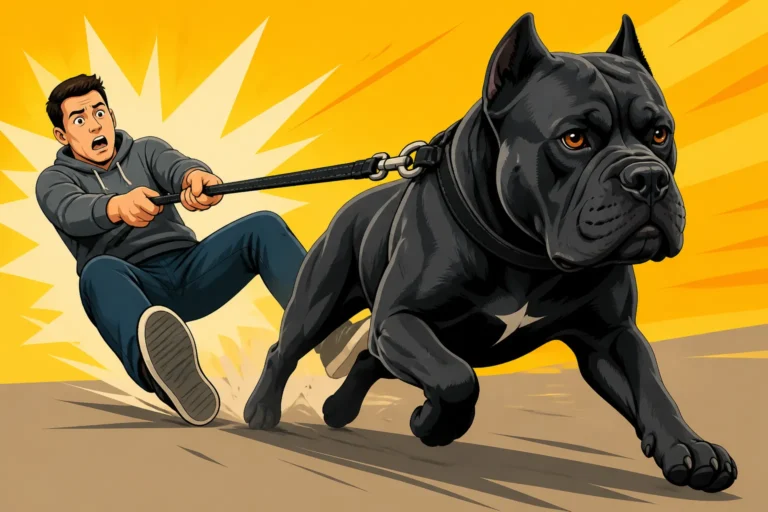
- Heel: A truly solid heel means your Cane Corso stays at your side, paying attention to you, through turns and stops. Start with short bursts, using a treat lure to guide them into position, then fade the lure. Reward frequently for being in the correct spot. Because they can be so powerful, mastering Loose Leash Walking a Cane Corso Puppy early on is essential, long before they hit their full adult weight and can pull you off your feet.
- Sit and Down: These should be immediate and solid, with a clean transition. Practice holding these positions for increasing durations and with you moving further away.
- Stay: This is where the Cane Corso's patience is really tested. Build up the duration and distance of your stays very slowly. It's about mental fortitude. Reward generously for success.
- Recall: This command literally saves lives and is fundamental in obedience. A Cane Corso's recall must be bulletproof. Start in a fenced area, making yourself incredibly exciting and rewarding their return with enthusiasm and top-tier treats. Building a strong Building a Cane Corso's Recall From Eight Weeks ensures a reliable response even when distractions are high.
- Retrieve: For some Cane Corsos, retrieving comes naturally; for others, it's a learned behavior. Break it down into small steps: holding an object, picking it up, bringing it back, and delivering it to hand. Make it a fun game, not a chore.
Consistency across all family members is vital. Everyone in the household should use the same commands and expectations. Consider enrolling in formal obedience classes from a young age. While The Training Bill a Cane Corso Owner Cannot Skip can be substantial, the investment in professional guidance for a powerful breed like the Cane Corso is priceless.
| Obedience Command | Common Cane Corso Challenge | Effective Training Strategy |
|---|---|---|
| Heel | Pulling, scanning environment | High-value rewards, frequent praise, short sessions, engage with handler often. |
| Sit/Down/Stay | Breaking position for distractions, impatience | Gradual increase in duration/distance, proofing with distractions, strong release cue. |
| Recall | Independent thinking, high prey drive | Make yourself the most exciting thing, proof in varied environments, use long lines initially. |
| Retrieve | Lack of interest in objects, not bringing to hand | Make it a game, break down into small steps (hold, pick up, bring, drop), use preferred toys. |
| Focus | Environmental distractions, guarding instincts | Eye contact games, "watch me" exercises, reward neutrality, build value for handler presence. |
Overcoming Common Hurdles in the Obedience Ring
Even with excellent training, the obedience ring environment can present unique challenges for a Cane Corso. It's an artificial setting designed to test precision under pressure, which can sometimes rub against a Corso's natural inclinations. Anticipating these hurdles allows you to proactively train for them.
Distraction Management and Proofing
The obedience ring is a sensory overload. There are other dogs, unfamiliar people, strange sounds (like judges scribbling or gates clanging), and a general hum of activity. For a Cane Corso, whose natural instinct is often to be alert to their surroundings, this can make focusing on their handler incredibly difficult. They might scan the perimeter, growl softly at another dog, or simply "check out" mentally.
Proofing your commands means practicing them in progressively more distracting environments. Don't expect your Cane Corso to perform a perfect long-stay at a dog show if they've only ever done it in your quiet living room. Start small: practice in your yard with family members moving around. Then move to a local park during off-peak hours, slowly introducing more noise, movement, and eventually, other dogs at a distance. Gradually shorten the distance to distractions as your dog's focus improves. High-value treats and toys are your best friend here. If your dog gets distracted, don't punish them; simply re-engage them and try again, perhaps with a slightly easier level of distraction. Learning to read Reading a Cane Corso's Body Language at a Distance can help you spot potential stressors before they escalate, allowing you to intervene and reinforce calm behavior.
Handling Ring Nerves and Pressure
It's not just the dog who gets nervous – handlers do too! Your Cane Corso is incredibly attuned to your emotions. If you're tense, anxious, or frustrated, they will pick up on it and it can impact their performance. Ring nerves can manifest in your dog as hesitancy, a loss of focus, or even acting out in ways they wouldn't normally.
Practice your entire obedience routine as if you were in the ring. This includes walking into the "ring" (a designated area), performing all exercises, and walking out. Mimic the trial environment as much as possible. Attend "run-throughs" or practice matches where you can experience the pressure without the stakes of a real competition. The goal is to make the trial environment feel routine and predictable for your dog. For you, learning relaxation techniques and focusing on the bond with your dog, rather than just the score, can make a huge difference. Remember, the journey itself, the bond you build, and the achievements you make together are far more important than any ribbon. If your Cane Corso's nerves are consistently getting the best of them, a consultation with a certified behaviorist might be worthwhile, even if What a Behaviorist Charges for a Reactive Cane Corso can be a significant expense.
The Judge's Perspective and Expectations
Obedience judges are looking for precision, willingness, and a joyful working relationship between dog and handler. They understand that different breeds have different working styles, but the core expectations remain the same: your dog must perform the exercises accurately and enthusiastically.
For a Cane Corso, a judge might be looking for a dog that is attentive to its handler, not constantly scanning for potential threats. They want to see a dog that can transition smoothly between exercises, demonstrating control and focus even amidst other dogs. A Cane Corso that shows strong guarding tendencies or reactivity in the ring, even if it's not directed at the judge, will be penalized. Your training needs to ensure that your Corso is comfortable being approached and touched by a stranger (the judge checking teeth or patting during a stay) without any adverse reaction. This is where extensive positive socialization, ensuring your dog sees neutral strangers as non-threatening, really pays off. A Cane Corso that is comfortable in its own skin and confident in its handler will impress a judge far more than a dog forced through its paces.
What to Expect When Competing with a Cane Corso
Embarking on the journey of competitive obedience with your Cane Corso is a rewarding experience, regardless of whether you end up with a wall full of ribbons. It deepens your bond, challenges both of you, and truly showcases the intelligence and dedication of this magnificent breed.
Choosing the Right Obedience Class and Trainer
Finding the right class and trainer is perhaps the most crucial step, especially for a Cane Corso. You need someone who understands guardian breeds, utilizes positive reinforcement methods, and prioritizes building a strong working relationship over harsh corrections. Look for trainers who emphasize clear communication, engagement, and distraction management.
Ask about class sizes – smaller classes can be better for a Cane Corso initially, to minimize overwhelming distractions. Inquire about their philosophy on behavior issues and how they handle dogs who might be reactive or overly stimulated. You want a trainer who can guide you through the specific nuances of training a powerful, intelligent, and sometimes opinionated breed. Don't be afraid to visit a few classes, observe the training methods, and speak with other students. Online platforms like BAXTER & Bella also offer structured programs that can be a great supplement to in-person training, especially for foundational skills. Remember, What a Cane Corso's First Six Week Class Costs is an investment in your dog's future success and your peace of mind.
The Journey to Titles and Recognition
Obedience competition is structured in various levels, from Novice to Open to Utility, each building on the complexity and precision of the exercises. Starting in Novice means mastering exercises like heel on leash, figure 8, stand for examination, recall, and long sit/down stays. As you progress, exercises become off-leash, retrieve work gets more complex, and scent discrimination tasks are introduced.
Earning an obedience title (like a Companion Dog, CD, or Companion Dog Excellent, CDX) requires qualifying in three trials under three different judges. The process can be slow, with many ups and downs. There will be days your Cane Corso is brilliant, and days they seem to have forgotten everything. Celebrate the small victories, learn from the challenges, and keep showing up. The real "win" is the improved communication and bond you develop with your dog. Every time your Cane Corso looks to you for guidance in a distracting environment, that's a testament to your hard work. Don't underestimate the sheer dedication required, as the length of a The Length of a Cane Corso's Attention Span can vary significantly based on environment and motivation.
Celebrating Your Cane Corso's Achievements
Whether your Cane Corso earns an impressive stack of titles or simply becomes a more well-behaved, focused companion through your efforts, every step is an achievement. A Cane Corso placing in an obedience ring is a testament to dedicated training, a strong handler-dog bond, and a dog that has learned to channel its natural drives into a structured activity.
Imagine the satisfaction of your powerful Cane Corso executing a perfect off-leash retrieve, or holding a rock-solid stay while other dogs are moving around them. These moments are incredibly rewarding and demonstrate the true potential of the breed when guided with understanding and respect. Even if you only compete for a short time and decide it's not for you, the skills and confidence gained will benefit your Cane Corso for their entire life. Whether it's a simple "sit" at the park or navigating a crowded street with ease, the focus and reliability you build will make your life together so much richer.
Disclaimer
This article is for general informational purposes only and does not constitute professional advice. Laws, prices and regulations vary by location and change over time. Consult a qualified professional for guidance on your specific situation.