How Many Meals a Cane Corso Puppy Gets Each Day
Bringing home a Cane Corso puppy is an exhilarating experience, filled with boundless energy, adorable clumsiness, and a whole lot of questions. One of the biggest concerns new owners often grapple with is how often to feed their rapidly growing giant breed puppy, fearing that feeding too little or too much could compromise their long-term health. This comprehensive guide will demystify the ideal feeding schedule for your Cane Corso puppy, helping you nourish them correctly through their crucial developmental stages.
The Early Weeks: Frequent Small Meals Are Key
When you first welcome that chunky, wrinkly Cane Corso puppy into your home, usually around 8 to 12 weeks old, their nutritional needs are surprisingly intense, yet their little stomachs are still quite small. This combination means they thrive on frequent, smaller meals throughout the day.
Why Puppies Need More Frequent Meals
Think about a human baby: they eat constantly. Puppy metabolism works similarly, but at warp speed! A young Cane Corso puppy is not just maintaining its body; it's building bone, muscle, and organ systems at an incredibly rapid pace. This demanding process requires a constant influx of energy and nutrients. Their tiny digestive systems also aren't equipped to handle large quantities of food at once, which could lead to upset stomachs or even inefficient nutrient absorption. Spreading out meals ensures a steady supply of energy, prevents drops in blood sugar that can cause lethargy or weakness, and keeps their metabolism humming along.
Puppies also burn through calories like tiny furnaces. They play hard, explore everything, and are in a constant state of learning and growth. Imagine a miniature athlete in constant training; that's your Cane Corso puppy. Their high activity levels, coupled with their rapid physical development, necessitate a feeding schedule that keeps them fueled without overwhelming their still-developing digestive tract. It's a delicate balance that sets the foundation for their future health.
The 8-12 Week Schedule: Three to Four Meals
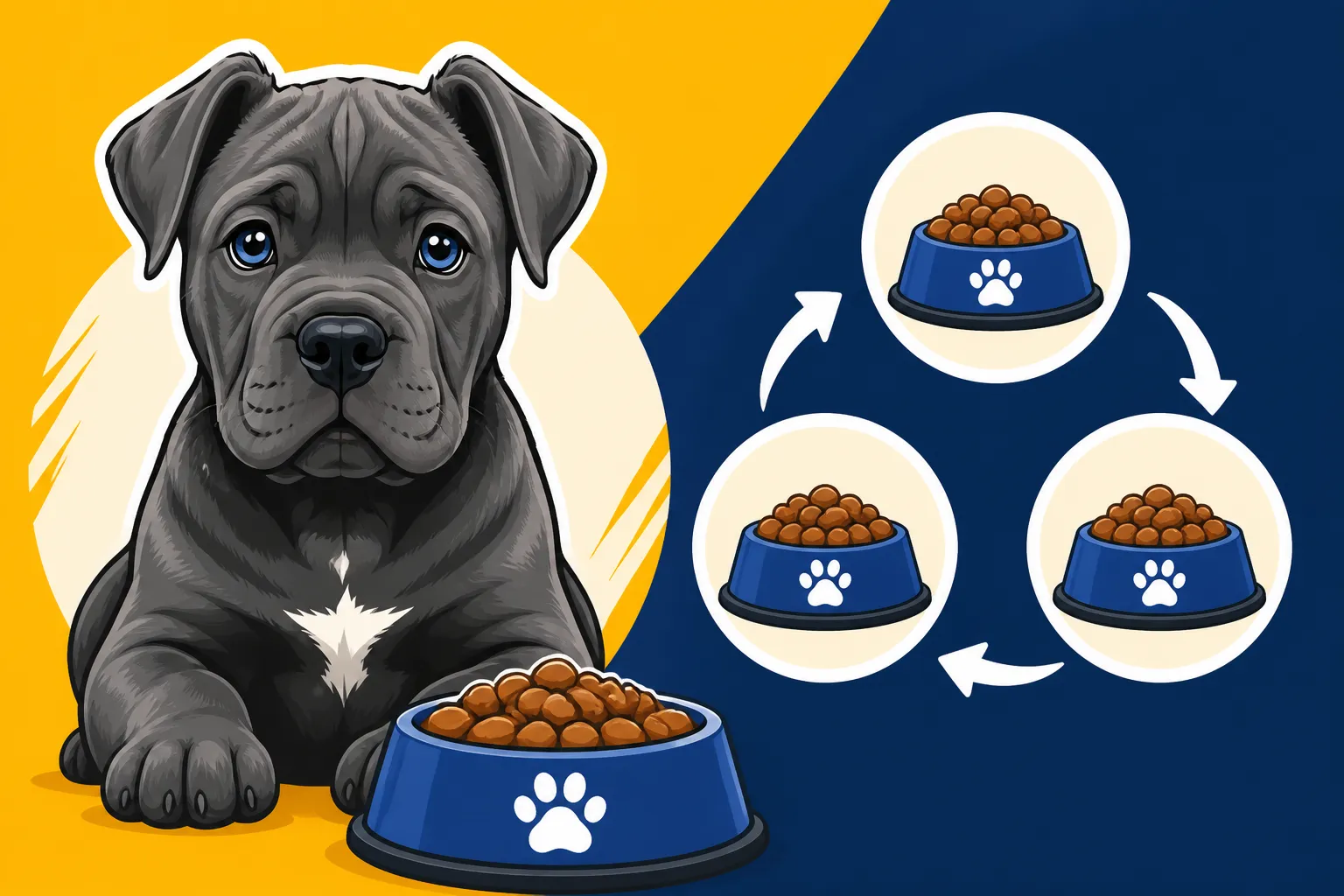
For Cane Corso puppies typically between 8 and 12 weeks of age, a schedule of three to four meals per day is generally recommended. This means if your puppy is getting a total of, say, four cups of food a day, you'd divide that into either four one-cup portions or three portions of roughly 1.3 cups each. Consistency is your best friend here. Aim to feed them at specific, regular times each day. For example, breakfast around 7 AM, lunch at noon, dinner at 5 PM, and perhaps a small pre-bedtime snack around 9 PM if you're doing four meals.
Establishing a consistent feeding routine not only aids digestion but also helps with house-training. Puppies often need to relieve themselves shortly after eating, so a predictable meal schedule allows you to anticipate their bathroom breaks. It also helps manage their energy levels, providing a steady stream of nutrients without long gaps that can lead to excessive hunger or energy crashes. If you're struggling to find the right food, many reliable online retailers like Chewy offer a wide selection of giant breed puppy formulas suitable for this crucial stage.
Navigating Growth Spurts: Adjusting as They Mature
As your Cane Corso puppy grows from a tiny bundle into a substantial juvenile, their feeding needs will naturally evolve. Those frequent small meals will gradually give way to fewer, larger meals as their bodies mature and their growth rate, while still significant, starts to even out.
Transitioning to Fewer Meals (3-6 Months)
Once your Cane Corso puppy hits around 3 to 4 months of age, you'll likely notice they can handle a bit more food in one sitting and might not seem quite as ravenous between meals. This is a good time to start transitioning them from four meals a day down to three. If you were feeding four times a day, you can simply drop the midday meal or combine it with another, ensuring the total daily portion remains the same but is distributed across three feedings. For example, if they were eating four cups total, you'd now give them three meals of approximately 1.3 cups each.
This transition should be gradual, observing your puppy for any signs of digestive upset like diarrhea or excessive gas. Their stomach capacity is growing, and their digestive enzymes are becoming more efficient, allowing them to process more food at once. They're still growing incredibly fast during this period, putting on several pounds a week, so maintaining a consistent feeding schedule with high-quality puppy food remains paramount. You'll want to ensure they are getting appropriate nutrition during this time to support healthy bone and muscle development without growing too quickly. Why a Cane Corso Puppy Should Not Grow Too Fast is an excellent resource for understanding this delicate balance.
The 6-12 Month Mark: Two Meals a Day
By the time your Cane Corso reaches about 6 months of age, they are generally ready to move to a twice-a-day feeding schedule. This is a common practice for most adult dogs and is perfectly suitable for a growing Cane Corso at this stage. At 6 months, while still very much a puppy, they have developed considerably, and their digestive system is robust enough to handle two larger meals. The rapid, almost exponential growth of the earlier months begins to slow, though they will continue to fill out and gain muscle mass for many more months to come.
Dividing their total daily food ration into two equal meals, typically morning and evening, helps manage their weight, maintains stable energy levels, and is a key strategy in preventing bloat, a life-threatening condition common in deep-chested breeds like the Cane Corso. Spreading out the intake prevents their stomach from becoming overly distended, which is a risk factor for gastric dilation-volvulus (GDV). This feeding pattern will largely remain consistent into adulthood. For a deeper dive into their physical development, you might find The Growth Curve a Cane Corso Follows to Nineteen Months helpful.
Choosing the Right Food and Portions
Selecting the appropriate food and understanding how much to feed your Cane Corso puppy is perhaps even more critical than the frequency of meals. This breed has specific nutritional requirements to support its massive growth and development.
Giant Breed Specific Formulas
This cannot be stressed enough: your Cane Corso puppy needs a giant breed specific puppy food. Do not feed them a "large breed" formula, and absolutely avoid regular puppy food. Why the distinction? Giant breed puppy formulas are meticulously formulated with controlled calcium and phosphorus levels and a lower caloric density. This specific nutritional profile is designed to promote slow, steady growth, rather than rapid weight gain. Rapid growth, often fueled by standard puppy foods that are too high in calories and calcium for these large dogs, puts immense stress on developing joints and can significantly increase the risk of orthopedic problems like hip and elbow dysplasia.
The ideal calcium to phosphorus ratio for a giant breed puppy food is typically between 1.1:1 and 1.5:1. Excess calcium, in particular, can interfere with bone development and lead to serious issues like osteochondritis dissecans (OCD). Many reputable brands understand these needs. When browsing online retailers like Chewy or even Amazon, look specifically for terms like "Giant Breed Puppy" on the food bag. These formulas are your best defense against nutrition-related growth disorders in your Cane Corso. For more information on this critical balance, see The Calcium Ratio in a Cane Corso Puppy's Bowl.
Understanding Feeding Guides and Adjusting
While the back of your giant breed puppy food bag provides a feeding guide, it's crucial to understand that these are just starting points. Every Cane Corso puppy is an individual, with variations in metabolism, activity level, and growth rate. A very active puppy might need slightly more food than a more laid-back one, even within the same litter. The best way to determine the right portion size is to regularly assess your puppy's body condition.
You should be able to feel your puppy's ribs easily, without them being visible. When viewed from above, there should be a discernible waist tuck behind the ribs, and from the side, their abdomen should tuck up slightly. If their ribs are difficult to feel, or they look "chunky," you're likely overfeeding, which can be detrimental to their joint health. Conversely, if ribs are prominently visible, or they appear too lean, they might need a slight increase. Adjust portions in small increments (e.g., a quarter-cup at a time) and monitor for a week before making further changes. Remember, a lean Cane Corso puppy is a healthier Cane Corso puppy, particularly during their rapid growth phase. Why a Chunky Cane Corso Puppy Risks Its Elbows details the dangers of overfeeding.
The Role of Supplements (or Lack Thereof)
A common misconception among new giant breed owners is that their rapidly growing puppy needs extra supplements, especially for joints. However, if you are feeding a high-quality, giant breed specific puppy food, it should already be nutritionally complete and balanced. Adding extra vitamins, minerals (especially calcium), or even joint supplements like glucosamine and chondroitin can actually do more harm than good.
Excessive calcium, as mentioned earlier, can disrupt the delicate balance required for proper bone development in a rapidly growing large breed. Over-supplementation of other vitamins and minerals can also lead to toxicity or imbalances that negatively impact health. Always consult your veterinarian before adding any supplements to your Cane Corso puppy's diet. Often, a well-formulated commercial diet is all they need. Focus on quality food, not extra pills, to support their robust development.
Beyond the Bowl: Good Mealtime Habits
Feeding your Cane Corso puppy isn't just about what and how often you feed them; how you feed them and the surrounding routine are equally important for their health and well-being, especially for a breed prone to specific issues like bloat.
Preventing Bloat: Timing and Resting
Bloat, or Gastric Dilatation-Volvulus (GDV), is a terrifying, life-threatening condition where the stomach fills with gas and can twist, cutting off blood supply. Deep-chested breeds like the Cane Corso are particularly susceptible. While not fully understood, mealtime habits play a significant role in prevention. The most critical rule is to avoid strenuous exercise for at least one hour before and after meals. This means no vigorous play, running, or training sessions immediately surrounding their feeding times. Allow them to eat calmly and then rest quietly while their food digests.
Some owners opt for raised bowls, but current research is mixed on whether this helps or even slightly increases the risk of bloat. Many vets now suggest feeding on the floor. Regardless of bowl height, using a slow feeder bowl can be beneficial. These bowls have obstacles that force your puppy to eat around them, preventing them from gulping down their food too quickly. This reduces the amount of air they swallow and slows the rate of stomach distension. Investing in one from Amazon or a pet store can be a simple preventative measure. For a deeper dive into preventative measures, read Resting a Cane Corso After Its Meal and Raised Bowls and a Cane Corso's Bloat Risk.
Consistency and Routine
Just like with feeding frequency, maintaining a consistent mealtime routine every single day is crucial for your Cane Corso puppy. Dogs thrive on predictability. Knowing when to expect their meals helps regulate their digestive system, reduces anxiety, and reinforces their training. It also helps manage their internal clock, making house-training easier as their bathroom needs become more predictable after meals.
Feed them in the same quiet location, free from distractions, at approximately the same times each day. This routine extends beyond just food; it encompasses their potty breaks, training sessions, and playtime. A well-established daily rhythm creates a sense of security for your puppy and makes them more settled and easier to manage. Deviating significantly from their routine can sometimes lead to stress or digestive upset, neither of which you want for a growing giant.
Hydration and Water Access
While food is the focus, water is just as vital. Your Cane Corso puppy should have constant access to fresh, clean water throughout the day. Water plays a crucial role in digestion, nutrient absorption, temperature regulation, and overall cellular function. A dehydrated puppy can quickly become lethargic and unwell.
Make sure to provide a sturdy, heavy bowl that won't easily tip over, given their size and boisterous nature. Change the water frequently to keep it fresh and clean, and wash the bowl daily to prevent bacterial growth. While they might drink copious amounts after a meal or play, ensure they always have water available. If you notice your puppy drinking an unusual amount or very little, it's worth a call to your vet, as it could indicate an underlying health issue.
Monitoring Health and Troubleshooting Feeding Issues
Even with the best intentions and the perfect feeding plan, things can sometimes go awry. It's essential for Cane Corso owners to be vigilant, monitoring their puppy's growth and behavior, and knowing when to seek professional advice.
Recognizing Healthy Growth vs. Too Fast Growth
For a Cane Corso puppy, healthy growth isn't about being the biggest or heaviest for their age; it's about steady, proportionate development. As we discussed, rapid growth puts undue strain on developing joints. Regularly performing a "rib check" is a simple, effective way to monitor their condition. You should easily feel their ribs without pressing hard, but you shouldn't see them prominently. Their waist should be evident when viewed from above, and their belly should tuck up slightly from the side.
Keep a mental (or even written) record of their weight and height, especially during the first year. Comparing it against breed-specific growth charts can give you a general idea, but remember individual variation. What you're looking for is a lean, athletic build, not a plump, pudgy one. A puppy growing too fast might exhibit a "ropy" or loose gait, or even subtle lameness, indicating stress on their joints. These are red flags that warrant immediate veterinary consultation. What a Cane Corso Should Weigh at Six Months provides benchmarks for their development.
Addressing Picky Eaters or Overeaters
Some Cane Corso puppies are chowhounds, ready to eat anything, while others can be surprisingly picky. If you have an overeater, the solution is strict portion control and scheduled meals – no free-feeding. If they seem constantly hungry, try using a slow feeder or puzzle toy to make their meals last longer. If your puppy is picky, first rule out any underlying health issues with a vet visit. If healthy, stick to the routine. Don't offer endless alternatives or "human food" to tempt them, as this teaches them to hold out for better options. Offer their food for 15-20 minutes; if they don't eat, pick it up and offer it again at the next scheduled mealtime. They'll eventually eat when they're hungry.
For truly stubborn picky eaters, sometimes a fresh food diet can make a difference. Brands like Ollie offer human-grade fresh food that can be very appealing, but always transition slowly. Consistency is key to training them to eat what's provided. If your puppy consistently skips meals, loses weight, or seems lethargic, it’s always best to consult your veterinarian.
When to Consult Your Veterinarian
Your veterinarian is your most valuable partner in your Cane Corso's health journey. While this guide provides general advice, never hesitate to contact your vet if you have specific concerns about your puppy's feeding or health. Sudden changes in appetite (either refusing to eat or excessive hunger), persistent diarrhea, vomiting, lethargy, significant weight loss or gain, or any signs of pain or discomfort should prompt an immediate call.
Puppies, especially giant breeds, can go downhill quickly when something is wrong. Don't wait to see if it resolves itself. Early intervention can make all the difference in diagnosing and treating potential issues. Your vet can provide tailored advice based on your puppy's individual health, growth rate, and any specific predispositions.
Here’s a quick overview of a typical Cane Corso puppy feeding schedule:
| Age Range | Meals Per Day | Total Daily Portion (Approximate) | Key Considerations |
|---|---|---|---|
| 8-12 Weeks | 3-4 | As per food packaging | High metabolism, small stomach, rapid growth. |
| 3-6 Months | 3 | As per food packaging | Still growing fast, increasing stomach capacity. |
| 6-12 Months | 2 | As per food packaging | Slower growth, filling out. Bloat prevention critical. |
| 12-19 Months (or 2Y) | 2 | Transition to adult food | Continue filling out, reach full maturity around 19-24 months. |
This table provides a general guideline. Always monitor your individual puppy's condition and adjust as needed, consulting your vet for personalized advice.
Disclaimer
This article is for general informational purposes only and does not constitute professional advice. Laws, prices and regulations vary by location and change over time. Consult a qualified professional for guidance on your specific situation.