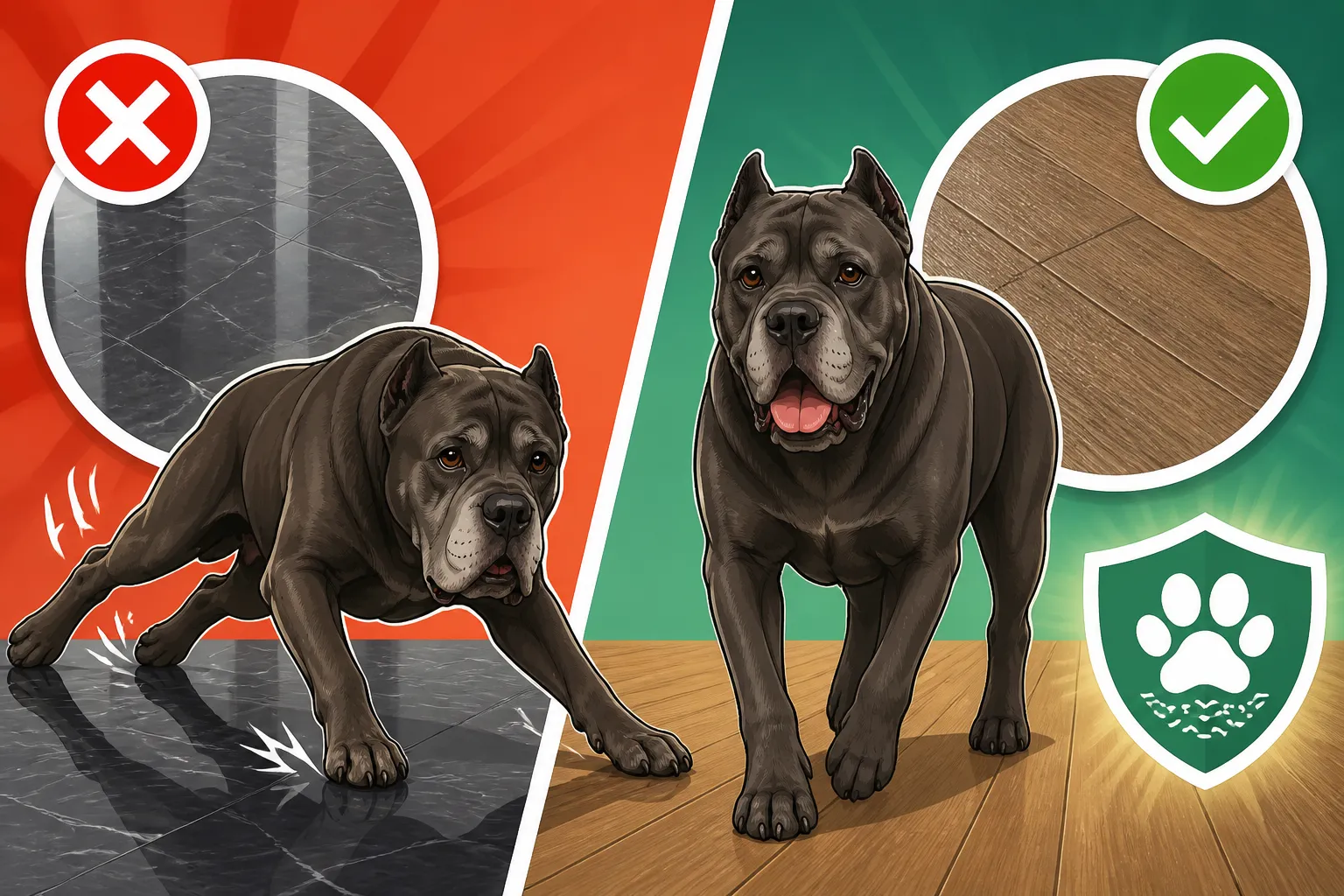
Flooring That Stops an Old Cane Corso Slipping
Watching your beloved Cane Corso start to struggle with everyday movements, especially on slippery floors, can be heartbreaking. It’s a common and frustrating reality for owners of older, heavier breeds – that once powerful, agile dog suddenly looks hesitant, their legs splaying out, and you worry every single step might lead to a painful fall. This guide is here to help you understand why slippery floors become such a hazard as your Cane Corso ages and, more importantly, what practical, effective solutions you can implement to keep them safe, comfortable, and confident in their golden years.
Why Slipping is Such a Big Deal for Senior Cane Corsos
It's easy to dismiss a little slip here and there when a dog is young, but for an older Cane Corso, these seemingly minor incidents can have serious, cascading effects. Their massive size and the natural wear and tear of age make every fall a potential catastrophe. We’re talking about a dog that can easily weigh over a hundred pounds, and that kind of weight hitting a hard floor incorrectly can cause significant injury.
The Impact of Age on Mobility
As our magnificent Cane Corsos transition into their senior years, which often begins around the age of eight, their bodies simply don't move with the same ease and grace they once did. Think about it: they've spent years carrying a substantial amount of muscle and bone, whether working or simply being a family guardian. This sustained load takes its toll on their joints, their muscles, and even their neurological systems. You might start noticing a general slowing down, a stiffness after lying down, or a reluctance to navigate stairs. This isn't just them being lazy; it's a genuine physical change.
Their gait might become less confident, with shorter, more shuffling steps. The strong, purposeful strides of their youth are replaced by a more cautious movement, especially on surfaces where they can't quite get a grip. This lack of confidence isn't just psychological; it's rooted in a real physiological decline. Their proprioception – their body's sense of its position in space – can diminish, making it harder for them to react quickly when a paw starts to slide. What was once an effortless pivot can become a dangerous misstep. For more on what changes as they age, take a look at What Changes in a Cane Corso's Care After Eight.
Understanding Joint Health Challenges
One of the biggest contributors to an older Cane Corso's slipping issues is the state of their joints. Hip and elbow dysplasia, even if managed throughout their lives, often worsen with age, leading to arthritis. Imagine trying to walk on a slick surface when your knees or hips are aching. That's essentially what your Cane Corso is facing. The pain causes them to compensate, shifting their weight, which can further destabilize them. Their muscles, which once provided powerful support, may also have atrophied, especially in their hindquarters, making them less able to recover from a slide.
This isn't just about discomfort; it's about structural integrity. When a Cane Corso's joints are compromised by conditions like arthritis, a sudden slip can exacerbate existing issues, tear ligaments, or even cause fractures. It can turn a manageable limping episode into a full-blown crisis, potentially requiring extensive vet care and recovery. Preventing these slips is paramount to maintaining their quality of life and avoiding costly, painful interventions. Understanding how to manage conditions like Managing Arthritis in a Hundred Pound Cane Corso becomes even more critical when combined with addressing slippery flooring.
Identifying Problematic Flooring Surfaces
It’s not always obvious which surfaces are the biggest culprits until you observe your Cane Corso struggling. What might seem like a perfectly fine floor to us can be a treacherous landscape for a dog with diminished mobility and heavy weight.
Common Culprits in the Home
Inside our homes, several types of flooring commonly pose a significant risk to senior Cane Corsos. Hardwood floors, especially those with a glossy finish, are probably at the top of the list. They look beautiful to us, but for a dog with worn paw pads and weakening leg muscles, they offer little to no traction. You’ll often see your dog splay out in an almost comical way, or they might try to "tiptoe" across, desperately trying to find purchase. This constant tension and fear of falling can make them anxious and reluctant to move around their own home.
Laminate flooring, while often more affordable, presents a similar challenge. It's smooth, hard, and offers very little grip for a dog's paws. Tile, especially glazed ceramic or porcelain, is another major offender. Think about how slippery a tile floor can be for us when it’s wet – now imagine that feeling all the time, for a dog whose balance isn't what it used to be. Even polished concrete in modern homes or basements can be incredibly slick. These surfaces don't provide the necessary friction, making everyday movements like standing up from a nap, turning a corner, or even just walking from one room to another a high-stakes endeavor. We love our beautiful floors, but sometimes we have to prioritize our dog's safety and comfort.
The Dangers of Outdoor Surfaces
The issues aren't confined to indoors. While outdoor surfaces might seem more "natural" for a dog, some can be just as hazardous for an older Cane Corso. Smooth concrete patios or walkways, especially after a rain or morning dew, can be extremely slick. Paved driveways, if they have any kind of sealant or are just well-worn, can also become problematic. Even certain types of flagstone or smooth pavers can offer poor traction.
Think about the impact of temperature too. Icy patches in winter are obvious dangers, but even wet leaves on a patio or a layer of fine dust on concrete can turn a stable surface into a slip-and-slide course for a heavy dog. This means that even trips to the yard for potty breaks or a short walk need careful consideration. We often don't think about these external factors, but a fall outside can be just as damaging, if not more so, than an indoor tumble, given the potential for sharp edges or uneven ground. Remember, a senior Cane Corso needs to keep moving, and addressing these dangers helps them stay active. For tips on exercise for an older dog, check out How Far an Old Cane Corso Should Still Walk.
Top Flooring Solutions for Enhanced Traction
The good news is that you don't have to rip up all your floors or sacrifice your home's aesthetics entirely to make things safer for your Cane Corso. There are many excellent solutions available, ranging from simple additions to more permanent changes.
Carpet and Rugs: A Soft Landing
One of the most immediate and effective ways to improve traction is by strategically adding carpeting or rugs. Wall-to-wall carpeting provides excellent grip and a soft, forgiving surface if a fall does occur. However, installing new carpet throughout your entire home might not be feasible or desirable. This is where area rugs and runners come in as a brilliant, versatile solution.
Large area rugs can cover significant expanses of hardwood or tile in living areas, bedrooms, and dining rooms. Opt for rugs with a dense pile and, critically, ensure they have a non-slip backing or use a high-quality rug pad underneath. Nothing is worse than a rug that slips with your dog! You can find fantastic, large, durable options on sites like Chewy or Amazon, often with reviews from other large dog owners. Choose rugs that are easy to clean, as accidents can happen with older dogs. For hallways and high-traffic pathways, long runners are invaluable. They create a continuous, safe pathway from room to room, eliminating the fear of navigating slick transitional areas. This gives your Cane Corso the confidence to move freely without hesitation.
Rubber Mats and Specialized Flooring
For areas where rugs aren't practical, such as utility rooms, kitchens, or dog-specific zones, rubber mats are an absolute game-changer. These mats are specifically designed for high-traction and durability. You can find heavy-duty rubber runners at hardware stores, or specialized anti-fatigue mats online. They often come in various thicknesses and textures, providing excellent grip even when wet. They're also relatively easy to clean and can withstand a lot of abuse from a heavy dog.
Another excellent option, particularly for dog-centric spaces like a dedicated dog room, kennel area, or even a home gym, is interlocking rubber mat flooring. These tiles fit together like puzzle pieces, creating a seamless, non-slip surface that’s also cushioning. Many dog training facilities use similar flooring for good reason. For permanent solutions, consider cork flooring or specialized pet-friendly vinyl. Cork is naturally soft, insulating, and has excellent grip, plus it's anti-microbial. Some newer vinyl plank flooring options are designed with textured surfaces specifically to provide better traction, making them both durable and safe.
Textured and Non-Slip Vinyl/Laminate
If you're considering a more significant flooring overhaul, or if you're building a new home, there are fantastic modern options that prioritize both aesthetics and safety. Forget the slick, shiny vinyl of old. Today's luxury vinyl plank (LVP) and luxury vinyl tile (LVT) products offer incredibly realistic wood or stone looks with textured surfaces that provide excellent grip. Many are waterproof and highly durable, making them ideal for homes with large dogs. Look for products specifically marketed as "pet-friendly" or "high-traction."
Similarly, some laminate flooring now comes with embossed-in-register textures that mimic the grain of wood, adding a subtle but effective amount of grip. When shopping, run your hand over the sample – if it feels smooth and slick, it's probably not the best choice. You want a surface that provides a little resistance. While these might be a bigger investment upfront than rugs or mats, they offer a permanent, aesthetically pleasing solution that benefits your Cane Corso's long-term mobility and safety.
Here's a quick comparison of popular non-slip flooring solutions:
| Flooring Type | Pros | Cons | Best Use Cases |
|---|---|---|---|
| Area Rugs/Runners | Immediate, versatile, soft, affordable | Can shift if not properly anchored, cleaning | Living areas, bedrooms, hallways, temporary solutions |
| Rubber Mats | Excellent traction, durable, easy to clean | Aesthetics can be industrial, heavy | Kitchens, utility rooms, dog-specific zones |
| Interlocking Rubber Tiles | High traction, cushioning, customizable | Installation can be time-consuming, specific use | Dog rooms, home gyms, kennel areas, garages |
| Textured LVP/LVT | Durable, waterproof, good traction, aesthetic | Higher upfront cost, professional installation | Whole-home flooring, high-traffic areas |
| Cork Flooring | Natural grip, soft, insulating, eco-friendly | Can be susceptible to scratches/dents, cost | Living areas, bedrooms, low-to-medium traffic |
Practical Tips for Implementing Non-Slip Solutions
It’s one thing to know about the solutions, but another to effectively implement them in your home. It's not just about throwing down a few rugs; it's about thinking strategically about your Cane Corso's daily life and movements.
Assessing Your Home's High-Risk Areas
Before you start buying every rug or mat you see, take some time to observe your Cane Corso. Where do they spend most of their time? Where do they eat? Where do they usually lie down and get back up? Which pathways do they use most frequently to move between rooms? The kitchen, the path from the couch to their water bowl, the hallway leading to the backyard door – these are often high-traffic, high-risk areas.
Pay particular attention to transitions between different flooring types. For example, if you have a tiled entry leading into a hardwood living room, that transition zone can be a major slipping hazard. Think about where they jump on and off furniture (though ideally, senior Cane Corsos shouldn't be jumping much at all – consider Ramps for a Cane Corso That Cannot Jump Up). The goal is to create safe, continuous pathways and "islands" of traction where they need it most. You might not need to cover every inch of your floor, but strategically placed solutions can make a world of difference. Sometimes, it's about making their core routine as safe as possible.
Maintenance and Cleaning Considerations
Adding new flooring elements means adding new cleaning considerations. This is especially true for large dogs like Cane Corsos, who can track in dirt, shed, and occasionally have accidents. When selecting rugs and mats, look for materials that are easy to vacuum, spot clean, or even machine wash (for smaller mats). For example, many pet-specific runners or mats from brands like Chewy or those found on Amazon are designed with easy-clean fabrics or waterproof layers.
Regular cleaning is key, not just for hygiene, but also for maintaining traction. Dust, pet hair, and dander can accumulate on non-slip surfaces and reduce their effectiveness. Always ensure that non-slip backings on rugs and mats are clean and dry when placed on the floor to prevent them from slipping themselves. For rubber mats, a simple wipe down with a damp cloth is usually sufficient. If you choose textured LVP or LVT, a regular sweep and damp mop will keep the surface clean and its traction intact. For tips on managing the impressive amount of hair your Cane Corso can shed, you might want to read Living With the Hair a Cane Corso Leaves Everywhere.
Training Your Cane Corso on New Surfaces
Even with the safest flooring, your senior Cane Corso might be hesitant at first. They've likely developed a learned caution around slick surfaces, and it might take some time and positive reinforcement to help them trust the new, grippy pathways. Use high-value treats and gentle encouragement to guide them across new rugs or mats. Make it a positive experience!
You can also incorporate simple exercises to help rebuild their confidence and strength. Short, slow walks on textured surfaces, or gentle "place" commands on a new mat can be beneficial. Remember that an old Cane Corso might also benefit from specific support to help them get up. Consider methods like those discussed in Helping an Old Cane Corso Off the Floor to assist them safely. Maintaining a healthy weight, as discussed in The Weight an Old Cane Corso Should Hold, will also reduce the strain on their joints, making overall movement easier. Regular vet check-ups, including discussions about supplements or medications, are crucial to support their joint health and mobility. A comprehensive approach, combining appropriate flooring with continued care, will give your old Cane Corso the best chance at comfortable, confident golden years.
Disclaimer
This article is for general informational purposes only and does not constitute professional advice. Laws, prices and regulations vary by location and change over time. Consult a qualified professional for guidance on your specific situation.