Raised Bowls and a Cane Corso’s Bloat Risk
Raised bowls and Cane Corso bloat risk connected by Purdue University research showing increased gastric dilatation volvulus danger.
Know what to watch for.
Breed-specific conditions, screening and DNA tests, what surgery actually costs, and the daily habits that stretch a healthy lifespan.
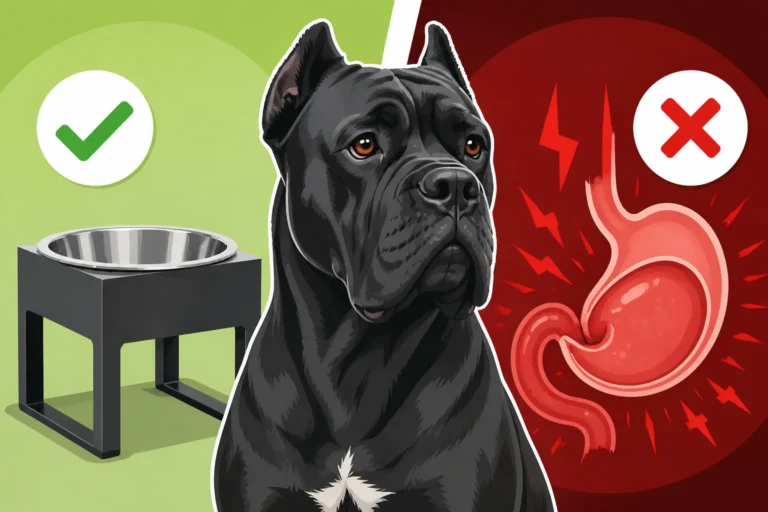
Raised bowls and Cane Corso bloat risk connected by Purdue University research showing increased gastric dilatation volvulus danger.
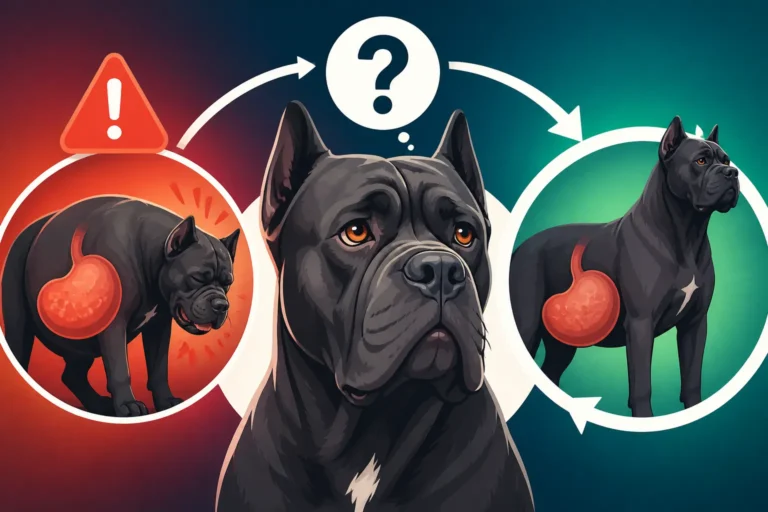
Cane Corso bloat recurrence and the high risk of a second gastric dilatation-volvulus episode without gastropexy surgery.
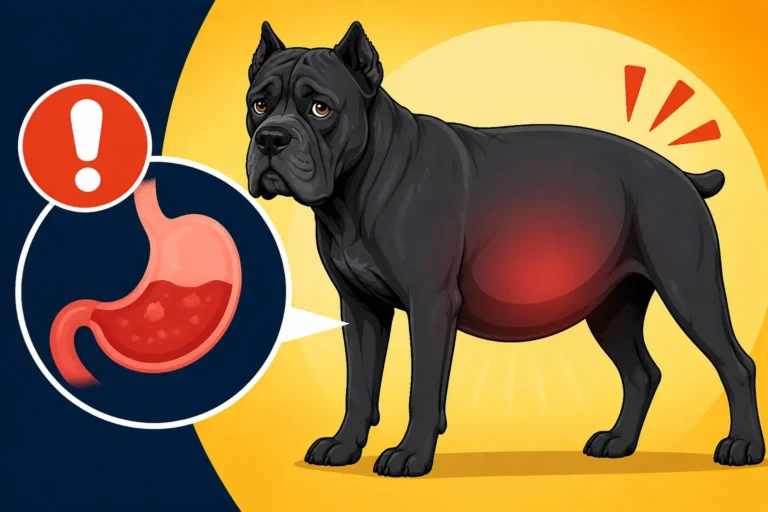
Gastric dilatation and volvulus in deep-chested Cane Corsos causes the stomach to fill with gas and twist rapidly.
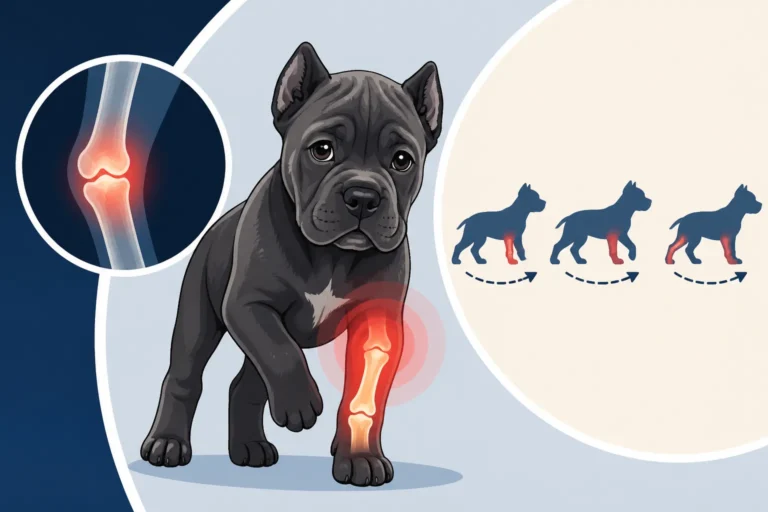
Panosteitis in growing Cane Corso puppies causes a painful shifting limp along the long bone shafts between five and eighteen months.
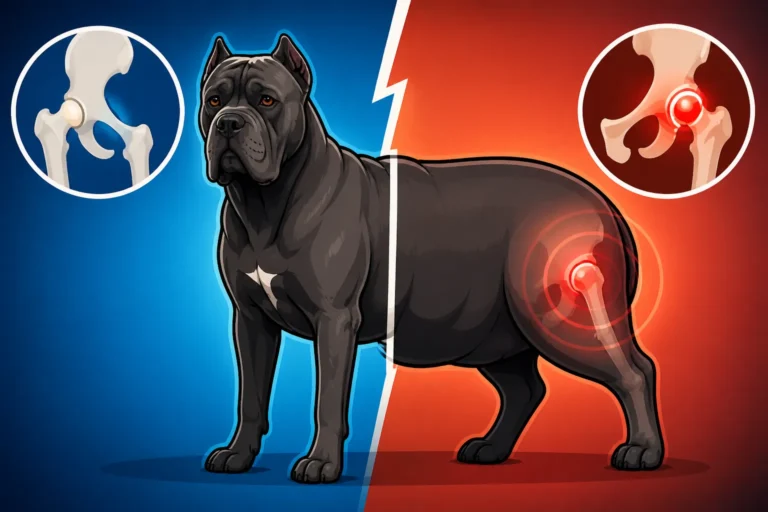
Excess body weight creates excessive joint pressure, accelerates cartilage wear, and worsens hip dysplasia in large dogs.
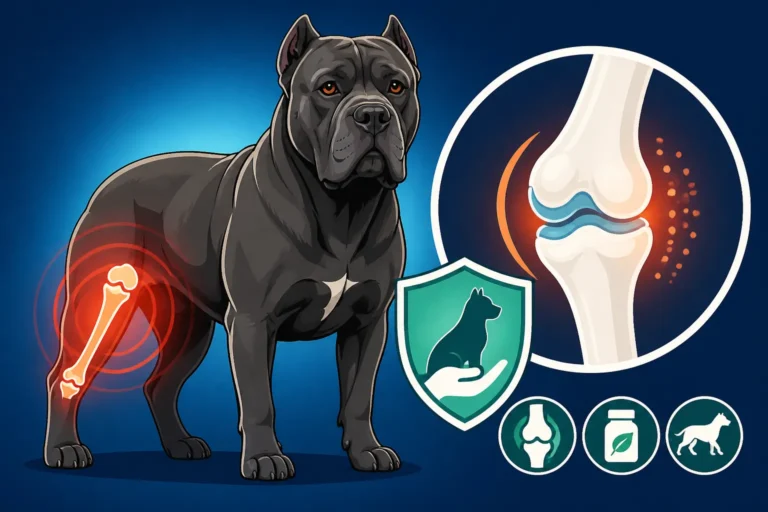
Canine osteoarthritis causes cartilage breakdown and stiffness in heavy Cane Corsos, impacting major joints like hips, elbows, and knees.
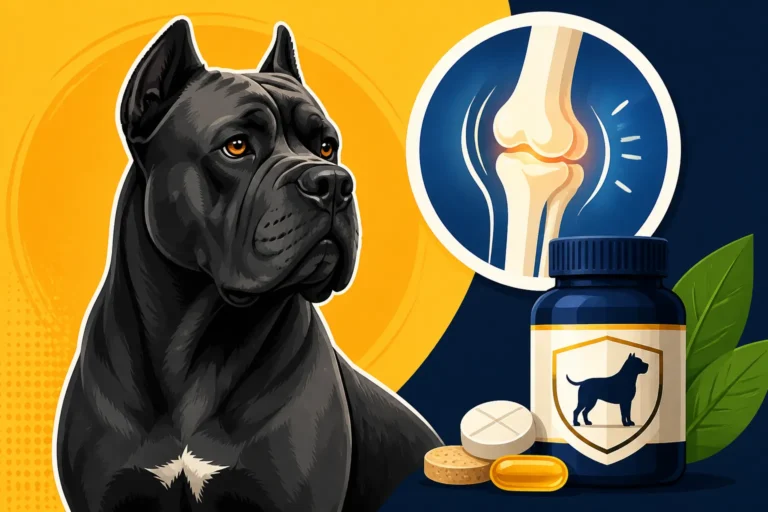
Cane Corso joint supplements and their effectiveness for large dogs experiencing stiffness, hip dysplasia, elbow dysplasia, or arthritis.
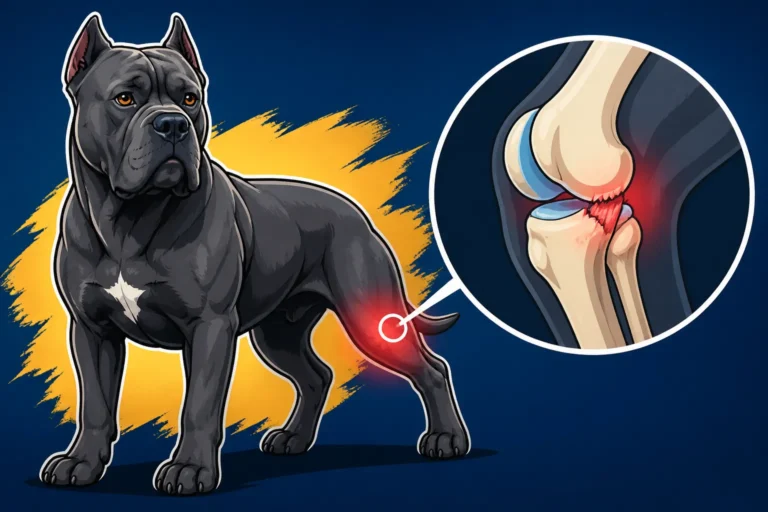
Cranial cruciate ligament tears in a hundred pound Cane Corso cause knee instability, joint pain, inflammation, and progressive cartilage damage.

Cane Corso truck jumping risks explain why a heavy dog needs controlled exits to prevent severe skeletal and joint injuries.
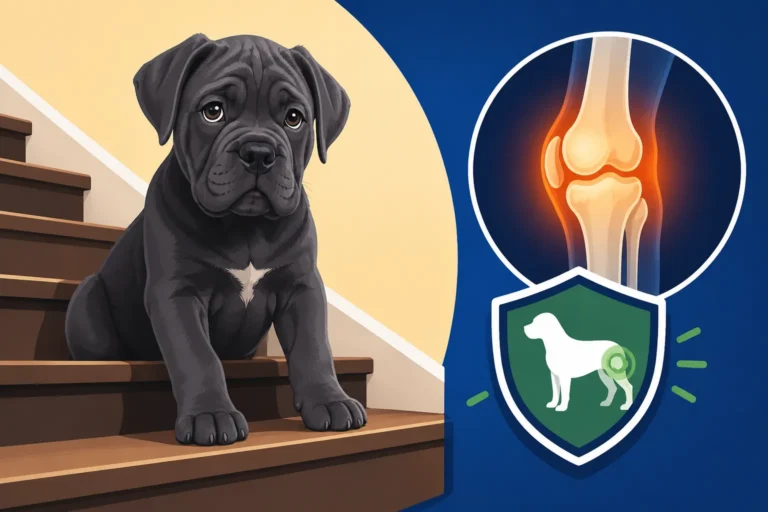
Stairs cause severe joint stress and impact soft growth plates during a Cane Corso puppy’s first twelve to eighteen months of rapid growth.