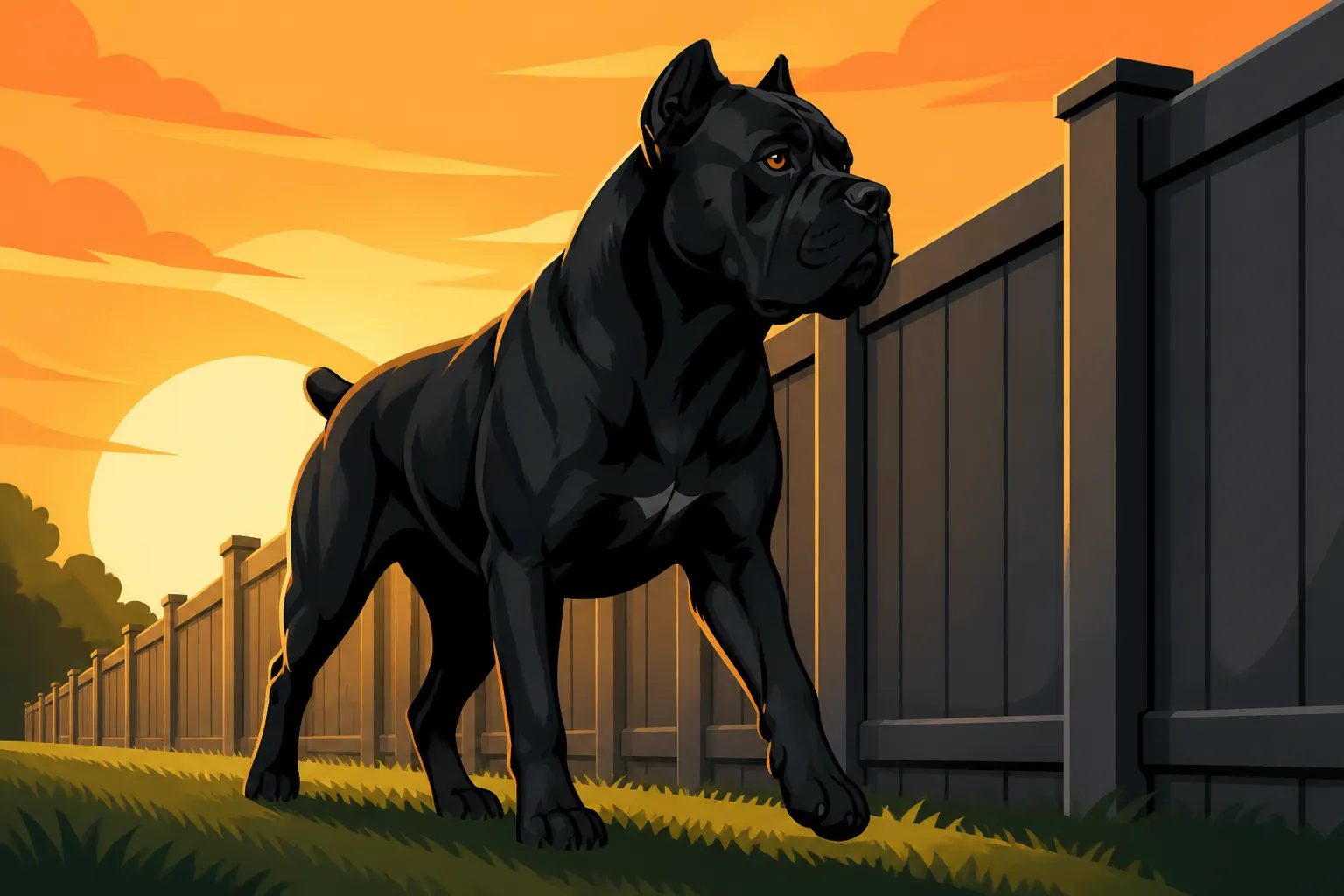
A Cane Corso That Patrols the Fence Line
It's incredibly frustrating when your powerful Cane Corso turns your peaceful yard into a perpetual patrol route, barking at every leaf, squirrel, and distant passerby. This isn't just annoying; it can be incredibly stressful for both you and your dog, leading to neighbor complaints, property damage, and even an overly anxious Cane Corso. This comprehensive guide will help you understand why your Cane Corso feels the need to patrol the fence line, how to recognize problematic behaviors, and most importantly, equip you with actionable strategies to manage and even prevent this instinct from becoming an overwhelming habit.
Understanding the Instinct Behind Fence Patrolling in Cane Corsos
When you bring a Cane Corso into your life, you're welcoming a breed steeped in centuries of guardianship. Their very essence is tied to protecting territory and family. That strong instinct, while admirable, can manifest in ways that are less than ideal in a modern suburban or even rural setting. Fence patrolling is often a direct expression of this deeply ingrained drive.
The Guardian's Nature and Territory
The Cane Corso, a descendant of Roman war dogs, was historically bred to guard property, livestock, and their human families. Their job was to observe, alert, and, if necessary, deter threats. In their minds, your yard, defined by its fence, is their kingdom to protect. Every perceived intrusion—whether it's the mail carrier, a jogger, a neighbor walking their dog, or even a leaf blowing by—is a potential threat that needs to be acknowledged and potentially challenged. This isn't naughtiness; it's them doing what they feel they were born to do.
Imagine your Cane Corso standing sentinel, muscles tensed, eyes scanning the horizon. This isn't just a casual glance; it's a deep-seated vigilance. They aren't just looking at the fence; they're analyzing the entire perimeter, processing every sight, sound, and smell. For them, the fence line isn't a barrier; it's the edge of their personal fortress, and their internal alarm system is constantly on high alert. You might notice that What a Cane Corso's Guardian Instinct Actually Is means they're not just playing in the yard; they're actively working, and that can be exhausting for them and for you.
External Stimuli and Triggers
A Cane Corso's patrol behavior is almost always triggered by something external. These triggers can be obvious, like a person or another dog walking past your property, or subtle, such as a distant siren, a rustling bush, or even just the wind. Once a trigger is identified, the patrolling often begins, characterized by pacing, staring, barking, and sometimes even lunging at the fence.
What reinforces this behavior is often the perceived success of the dog's actions. If your Cane Corso barks furiously at the mailman, and the mailman eventually moves on, your dog might interpret this as, "My barking worked! I successfully drove off the intruder!" This creates a self-reinforcing cycle, making the behavior harder to extinguish. The constant exposure to these triggers, especially without proper management or training, can lead to a state of chronic arousal and stress for your dog, turning what should be a relaxing outdoor space into a high-stress "work zone." These triggers can be overwhelming, and it’s a big part of why The Age a Cane Corso Becomes Territorial is often also the age when this patrolling starts.
Recognizing the Signs and Impact of Excessive Fence Patrolling
It’s one thing for a Cane Corso to be aware of their surroundings and give an alert bark. It’s another entirely when it becomes an obsessive, daily ritual that consumes their time outdoors. Understanding the difference and recognizing the specific signs of problematic fence patrolling is the first step toward effective management.
Behavioral Indicators of Patrol Duty
A Cane Corso engaged in fence patrolling will display a range of specific behaviors. You might notice them systematically walking the entire perimeter of your yard, often in a fixed pattern, nose to the ground, sniffing out scents, or with their head held high, eyes fixed on the distant world. They might pause at specific points, like where a neighboring dog's scent is strong or where they have a clear view of the street.
The hallmark of problematic patrolling is the escalation to barking, growling, or even lunging at the fence when triggers appear. This isn't just a single "woof" to announce a presence; it's often sustained, intense vocalization coupled with body language that clearly communicates "get out of my territory." Over time, you might see worn-down paths along the fence line, a clear indicator of their repetitive "guard duty." It's essential to understand Telling a Cane Corso's Alert Bark From Its Nuisance Bark so you can distinguish between appropriate communication and excessive, stress-induced behavior.
| Behavior Trait | Casual Observation | Obsessive Fence Patrolling |
|---|---|---|
| Pacing | Occasional, varied routes, exploration | Repetitive, fixed patterns along the perimeter, worn paths |
| Staring | Brief glances, scanning environment | Prolonged, fixed gaze at a specific point or trigger |
| Vocalization | Single alert barks, soft growls at novel sounds | Sustained, intense barking/growling at passersby or triggers |
| Body Language | Relaxed, curious, tail wagging | Tense, rigid, high tail, raised hackles, forward stance |
| Responsiveness | Easily redirected by owner | Difficult to distract, highly focused on perimeter |
| Interaction | Engages with toys/family, explores yard | Ignores toys/family, solely focused on fence line |
The Downsides for Your Cane Corso and Your Household
The impact of excessive fence patrolling stretches far beyond simple annoyance. For your Cane Corso, it can lead to chronic stress and anxiety. Imagine constantly feeling like you're "on duty," never truly relaxing in your own home. This over-arousal can manifest as restlessness, irritability, difficulty settling down, and even impact their physical health over time due to the constant adrenaline. The repeated strain of pacing and lunging can also be hard on their joints, especially for a large breed like a Cane Corso.
For your household, the constant barking is likely to become a major source of tension. Neighbors may complain, leading to legal issues or strained relationships. Your own ability to enjoy your yard will diminish, and trying to relax outside will be difficult with your dog constantly on high alert. You might find yourself dreading letting your dog out, or even avoiding your own yard to prevent the behavior. This also means you can't truly relax knowing that Neighbors Who Complain About a Cane Corso's Barking might be at your door again.
Practical Strategies for Managing and Modifying Fence Patrolling
Managing a Cane Corso that patrols the fence line requires a multi-faceted approach, combining environmental changes, consistent training, and meeting their innate needs. This isn't a quick fix, but with patience and dedication, you can significantly reduce or eliminate the behavior.
Enhancing Physical Containment and Visual Barriers
One of the most immediate and effective strategies is to change the environment to reduce the triggers. A solid, tall fence is paramount for a guardian breed. The Fencing Height a Cane Corso Needs is often higher than you might expect, typically at least six feet, and it should be sturdy enough to withstand a powerful dog. If your current fence allows visual access, consider adding privacy screens, bamboo rolls, or planting dense hedges. The goal is to make the "threats" out of sight, and thus, out of mind. Think about robust options available from retailers like Amazon that are designed to last.
It's also crucial to understand that an invisible electronic fence, while convenient for some dogs, is rarely an adequate solution for a Cane Corso's strong guardian drive. The deterrent shock may not be enough to override their instinct to protect, and it doesn't provide a physical barrier, which can lead to immense frustration and even break-throughs if the dog decides the perceived threat is greater than the momentary discomfort. This is why Whether an Invisible Fence Holds a Cane Corso is a crucial question to consider before relying on such a system. Physical containment is always the safest and most effective option. Be sure that Fencing That Actually Holds a Cane Corso is in place.
Implementing Training and Desensitization Techniques
Environmental changes are a great start, but training is essential to modify your dog's internal response to triggers. The key here is consistency and positive reinforcement. Teach your Cane Corso strong impulse control commands like "leave it," "stay," and a rock-solid recall. If they start to patrol or fixate on a trigger, you want to be able to immediately redirect their attention back to you. Use high-value treats and praise for successful disengagement.
Desensitization involves gradually exposing your dog to triggers in a controlled manner, at a distance where they remain calm, and rewarding that calm behavior. For example, if the mailman triggers them, start by practicing "watch me" or "place" indoors when the mailman is far away, then slowly move closer over many sessions. Counter-conditioning takes this a step further by changing their emotional response to the trigger. Every time the mailman approaches, give your Cane Corso their absolute favorite treat. Over time, they might start to associate the mailman with good things, rather than a threat. If you need some structured guidance, many online resources, like those offered by BAXTER & Bella, provide comprehensive training programs for impulse control and reactivity that can be incredibly helpful. You need to focus on Impulse Control Work for a Cane Corso daily.
Providing Appropriate Mental and Physical Stimulation
A bored Cane Corso is a destructive or reactive Cane Corso. If your dog isn't getting enough mental and physical stimulation, they will create their own job, and fence patrolling is an easy one for them to self-assign. Structured exercise, beyond just letting them out in the yard, is critical. This includes long, purposeful walks where they are focused on you, not just casually sniffing around. Ninety Minutes a Day and a Cane Corso's Mind is often the minimum requirement to keep these intelligent dogs engaged and satisfied.
Mental enrichment is just as important. Engage their powerful noses with scent work, hide-and-seek with treats, or puzzle toys that make them think. Teach new tricks, practice obedience commands in different environments, or enroll in a dog sport like obedience or rally. These activities tire their minds and bodies in a constructive way, reducing their drive to constantly monitor the perimeter. Remember, Scent Work and Sniff Walks for a Cane Corso are fantastic ways to fulfill their natural drives without encouraging reactivity.
Preventing Fence Patrolling from a Young Age
The best way to deal with fence patrolling is to prevent it from becoming a deeply ingrained habit in the first place. This starts with a proactive approach during puppyhood, focusing on socialization, exposure, and consistent foundation training.
Early Socialization and Exposure
The critical socialization window for puppies closes surprisingly early, around 16 weeks of age. During this time, it's vital to expose your Cane Corso puppy to a wide variety of sights, sounds, people, and calm environments. This doesn't mean letting them greet every stranger or dog; it means teaching them neutrality – to observe the world without feeling the need to react to everything. Take them to parks (before full vaccination, carry them or keep them on a clean blanket), hardware stores, busy sidewalks (from a distance), and quiet cafes. The more positive, neutral experiences they have with the outside world, the less likely they are to perceive common stimuli as threats later on. Missing The Socialization Window a Cane Corso Puppy Gets can make managing guarding instincts much harder.
Focus on creating positive associations with common triggers. For example, have friends and family approach the fence (safely!) and toss treats to your puppy, associating people approaching the boundary with good things. The goal is to build a confident, well-adjusted adult dog who understands that not everything beyond the fence is a threat to be managed.
Consistent Foundation Training and Rules
From the moment your Cane Corso puppy comes home, establish clear rules and boundaries, especially concerning the yard. Don't allow them to practice charging the fence, barking at passersby, or obsessively watching the perimeter. Every time they engage in this behavior, they are rehearsing and strengthening it.
Teach a strong "place" command, so you can send them to a designated spot when they are outside, reinforcing calm, relaxed behavior instead of vigilance. Practice this regularly in the yard. A solid recall is also paramount, allowing you to call them away from the fence if they start to focus too intently. Consistent positive reinforcement for calm behavior in the yard will lay the foundation for a well-mannered adult. Teaching a Cane Corso to Hold a Place Cot can be a game-changer for managing their focus and preventing fence line patrolling.
By being consistent, providing appropriate mental and physical outlets, and proactively addressing their guardian instincts with training and environmental management, you can help your Cane Corso be a confident, relaxed companion who understands their boundaries without feeling the need to constantly patrol them.
Disclaimer
This article is for general informational purposes only and does not constitute professional advice. Laws, prices and regulations vary by location and change over time. Consult a qualified professional for guidance on your specific situation.