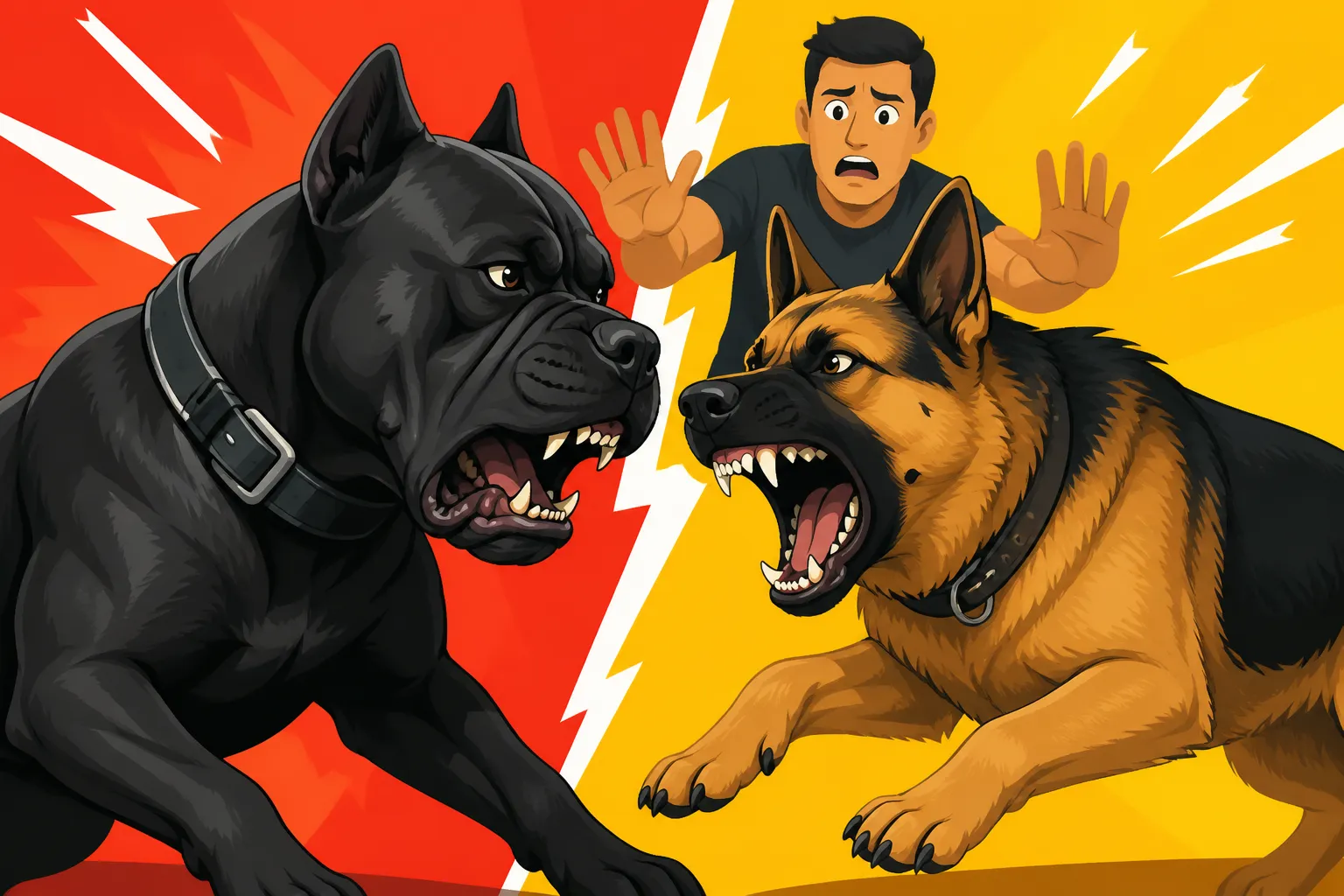
A Cane Corso That Fights With the Other Family Dog
It's an absolute nightmare scenario for any dog owner: you've got your beloved Cane Corso, perhaps a formidable presence, and then suddenly, without warning, a full-blown fight erupts with your other family dog. The sheer terror, the deafening noise, the panic as you try to separate two powerful animals – it's a deeply traumatic experience that leaves you shaken, worried about injuries, and desperate to prevent it from ever happening again. This guide is here to walk you through understanding why these conflicts occur, how to safely intervene, and crucial long-term strategies to restore peace and safety to your home.
Understanding the Roots of Conflict: Why Dogs Fight
When your dogs, especially a powerful breed like a Cane Corso, engage in a fight, it's not simply "dominance" or "they just hate each other." Canine aggression is complex, often stemming from underlying stress, fear, resource guarding, or a breakdown in communication. Pinpointing the cause is the first critical step toward resolving the issue.
Unraveling the 'Why': Common Triggers and Motivations
Dog fights don't just happen out of the blue; there's almost always a trigger, even if it's subtle to human eyes. Understanding these common motivators can help you identify what might be setting off your dogs. Often, it's a culmination of stress, unmet needs, or miscommunications. For instance, sometimes a seemingly innocent gesture, like one dog getting too close to another dog's favorite resting spot, can be the spark. Or perhaps a sudden loud noise, a visitor arriving, or even the scent of another animal from outside can elevate tension.
Another huge factor is attention. Dogs are highly social creatures, and they pay close attention to how human resources, like affection, play, and even access to their favorite person, are distributed. If one dog consistently feels overlooked or like they have to "compete" for your attention, this can build resentment and lead to altercations. Think about a scenario where you're petting one dog, and the other shoves in, seeking attention. What often happens next is a correction from the first dog, which can quickly escalate. This isn't necessarily a fault of either dog, but a natural canine response to a perceived imbalance. Your Cane Corso, being a highly attached and sensitive breed, might be particularly prone to this if they feel their bond with you is threatened.
Breed-Specific Tendencies: The Cane Corso's Role in the Dynamic
Cane Corsos are magnificent dogs, known for their loyalty, protectiveness, and often their strong opinions. They are a guardian breed, historically bred to protect property and livestock. This means they often possess an inherent seriousness, a keen awareness of their surroundings, and a strong sense of what belongs to them or their family unit. While this makes them exceptional guardians, it can also contribute to friction in a multi-dog household, especially if not managed carefully.
Their guardian instincts can sometimes translate into resource guarding, not just of food or toys, but also of space, people, or even pathways within the home. A Cane Corso might perceive another dog moving too close to you, or lying on 'their' sofa, as an infringement, even if the other dog has no ill intent. Furthermore, many Cane Corsos mature into dogs with strong personalities and can be less tolerant of rude or overly boisterous behavior from other dogs. They often prefer clear boundaries and respect. If your other dog is more playful, submissive, or, conversely, equally dominant in personality, this can create clashes. It's not about being "mean," but about a deep-seated instinct to manage their perceived territory and resources. It’s vital to acknowledge these inherent traits when Bringing a Cane Corso Home to a Dog Already There or introducing any new dog to your existing pack.
Resource Guarding and Social Hierarchy
Resource guarding is a very common cause of conflict between dogs, and it extends far beyond just food bowls. Dogs can guard toys, beds, favorite resting spots, their owner's attention, water bowls, and even specific areas of the house like a doorway or a crate. Your Cane Corso, with its protective nature, can be particularly prone to resource guarding. They often have a strong sense of "mine."
Consider a scenario: your Cane Corso is enjoying a favorite chew toy. Your other dog wanders by, perhaps just looking for attention or a drink of water. The Cane Corso might issue a stiff body, a low growl, or even a snap to warn the other dog away. If the other dog doesn't back off, or misinterprets the warning, a fight can ensue. It’s not necessarily about one dog being inherently "bad," but about deeply ingrained instincts regarding possession. Understanding A Cane Corso That Guards Its Bowl From the Family is a good first step, but remember this can extend to many other items and even people.
The concept of a "social hierarchy" or "pecking order" is often oversimplified, but dogs do have relationships where they learn who typically defers to whom in certain situations. This isn't a static, linear ladder, but a dynamic give-and-take. When these established roles become unclear, or if one dog challenges another's perceived status or access to resources, fights can erupt. This is especially true if there's Same Sex Aggression Between Two Cane Corsos or other dogs in the household, where competition for resources and attention can be heightened. Your job as the owner is to become the benevolent leader, managing resources and interactions to minimize potential conflict.
Immediate Steps: What to Do When a Fight Breaks Out
When two dogs, especially large ones like a Cane Corso, engage in a fight, it's terrifying and dangerous. Your immediate priority is to stop the fight safely, without putting yourself in harm's way. This is not the time for analysis, but for swift, calculated action.
Safe Intervention: Prioritizing Human and Animal Safety
Your first instinct will be to jump in and grab collars, but this is incredibly risky. Adrenaline is high, and even the most loving dog can redirect a bite onto you accidentally in the heat of the moment. The goal is to break the dogs apart without getting bitten yourself.
- Make Loud Noises: Often, a sudden, very loud noise can startle dogs enough to pause the fight. A sharp clap, a loud yell, dropping a metal pan, or using an air horn (if you have one readily available) can sometimes be effective.
- Physical Barriers: If safe to do so, use a physical barrier. This could be a broom, a chair, a piece of plywood, or even a water hose if you're outside. The idea is to push between them without getting your body directly involved.
- The Wheelbarrow Method (Use Extreme Caution): This is a last resort and should only be attempted with extreme caution and if you have another person to help. Each person grabs one dog by its back legs, like a wheelbarrow, and pulls them backward away from the fight simultaneously. The moment they are separated, immediately move them into different, secure rooms. This method carries a high risk of redirect bites to the person grabbing the dog's legs.
- Avoid Grabbing Collars: Resisting the urge to grab collars or get your hands in the middle is crucial. A dog's jaw can snap shut on anything it can reach, and your hand will be an easy target.
- Never Try to Break Up with Your Bare Hands Alone: This cannot be stressed enough. Many serious dog bite injuries to humans occur during attempts to break up dog fights. Your own safety is paramount, because if you're injured, you can't help either dog. For more detailed advice, read about Separating Two Cane Corsos That Have Fought.
Post-Fight Protocol: Assessing Injuries and De-escalation
Once the dogs are separated, the immediate crisis is over, but the work has just begun.
- Secure Separation: Immediately place both dogs in completely separate, secure areas where they cannot see or hear each other. This might mean one in a crate, one in a spare room, or even one outside in a secure run if the weather permits. Do not allow them to interact or even see each other for several hours, perhaps even until the next day.
- Assess Injuries: Carefully check both dogs for injuries. Even minor-looking nicks can be deeper than they appear and can become infected. Look for punctures, lacerations, limping, or any signs of pain. If you find any, contact your veterinarian immediately. Puncture wounds can be particularly deceptive as they often close on the surface but create deep pockets for infection.
- Check Yourself: Take a moment to check yourself for any nips, scratches, or bites you might have sustained. Clean any wounds thoroughly and seek medical attention if necessary.
- Emotional De-escalation: Once everyone is safe and injuries are addressed, focus on calming down. Both you and your dogs will be stressed. Avoid yelling or punishing the dogs; they likely acted on instinct. Instead, offer them comfort in their separate spaces, once they are calm, through soft voices and gentle petting. This helps them decompress and reduces future anxiety around the other dog.
Creating a Safe Separation Plan
Moving forward, you absolutely must have a safe separation plan in place to prevent further incidents. This is non-negotiable for the safety of your dogs and your family.
- Crate Training: If your dogs aren't already crate trained, this is the time to start. Crates provide a safe, personal den for each dog and are invaluable for managing multiple dogs, especially during mealtimes, when you leave the house, or when guests are over. Look for sturdy, large crates suitable for a Cane Corso; brands found on Amazon often offer options with robust construction.
- Physical Barriers: Consider installing baby gates or permanent gates to create separate living zones in your home. This allows you to control where each dog can be at any given time, preventing unsupervised encounters.
- "Rotational" Schedule: Implement a rotational schedule where dogs are never together unsupervised. This means one dog might be out with you while the other is crated or in a separate room, and then you switch. This might feel like a lot of work initially, but it's far less stressful than managing fights.
- Supervised Interactions Only: Any interactions between the dogs should be strictly supervised, short, and structured. This means both dogs on leashes, with a clear purpose (like a parallel walk), and ready to be separated at a moment's notice.
Long-Term Strategies: Preventing Future Incidents
Once you've managed the immediate aftermath, the real work begins: implementing long-term strategies to prevent future fights. This requires consistent effort, a keen eye for canine body language, and a commitment to structured living.
Redefining Management: Structured Living and Supervision
The key to preventing fights is often through meticulous management and providing a clear, predictable structure for your dogs. Without it, dogs are left to "figure it out" themselves, which can lead to conflict.
- Strict Supervision: For the foreseeable future, your dogs should never be left together unsupervised. This means if you leave the room, or even turn your back, they should be separated. This might sound extreme, but it's essential to break the cycle of fighting and reduce opportunities for conflict.
- Designated Spaces: Ensure each dog has their own clearly defined, safe space where they can retreat and be undisturbed. This might be a crate, a dog bed in a quiet corner, or a room behind a baby gate. This is especially important for a Cane Corso, who thrives on having a sense of security and personal space.
- Separate Feeding: Always feed your dogs separately. Even if they've never guarded food before, a prior fight can change dynamics. Feed them in separate rooms, or in their crates, ensuring no dog can access another's food. This also goes for high-value chews or treats.
- Controlled Entry and Exit: Manage how your dogs enter and exit rooms, go outside, or greet people at the door. Practice "wait" and "stay" commands so you can control their movement, reducing chaotic interactions that might lead to a squabble. This kind of The Structure a Cane Corso Needs Every Single Day is fundamental for preventing a myriad of behavioral issues.
Training for Harmony: Reinforcing Positive Interactions
While management prevents fights, training actively builds a more harmonious relationship between your dogs. The focus isn't on forcing them to be best friends, but on teaching them to coexist peacefully and respectfully.
- Individual Training Sessions: Continue training each dog individually, reinforcing basic obedience cues like "sit," "stay," "down," and "come." A well-trained dog is often a more confident and less anxious dog. Tools like BAXTER & Bella online dog training programs can provide structured lessons and support, which can be invaluable when dealing with complex behavioral issues, even for individual dogs.
- Parallel Walks: If your dogs can tolerate being in the same vicinity without immediate tension, start with parallel walks. Walk them separately, side-by-side, with a handler for each dog, maintaining enough distance that they are calm. The goal is for them to associate the presence of the other dog with a positive, calm experience, rather than a threat. Gradually, if they remain calm, you can decrease the distance.
- Counter-Conditioning and Desensitization: If there are specific triggers for their fights (e.g., specific toys, certain spots in the house), you can work on counter-conditioning and desensitization. This involves gradually exposing them to the trigger at a very low intensity while simultaneously creating a positive association (e.g., high-value treats). The goal is to change their emotional response from negative to positive or neutral.
- Rewarding Calmness: Heavily reward any moments of calm coexistence, no matter how brief or subtle. If both dogs are simply lying down quietly in the same room (even if separated by a gate), toss them treats. The more you reinforce calm, peaceful behavior, the more likely they are to offer it. Reading a Cane Corso's Body Language at a Distance is crucial here; you need to spot tension before it escalates and reward peace.
Environmental Adjustments: Minimizing Triggers
Sometimes, simple changes to your home environment can significantly reduce stress and potential conflict.
- Remove Trigger Objects: If specific toys, beds, or even types of food are consistently causing issues, remove them entirely. It's better to sacrifice a favorite toy than to risk another fight.
- Create Clear Pathways: Ensure there are no "bottlenecks" in your home where dogs might feel trapped or forced into close contact, such as narrow hallways or doorways. If you have a Cane Corso, they need ample space to move without feeling crowded.
- Provide Sufficient Resources: Make sure there are enough resources for everyone: multiple water bowls in different locations, enough beds so they don't have to share if they don't want to, and plenty of appropriate chew toys for individual use. The "scarcity mindset" can lead to guarding.
- Exercise and Mental Stimulation: Ensure both dogs, especially your Cane Corso, are receiving adequate physical exercise and mental stimulation individually. A bored or under-exercised dog is a stressed dog, and stress is a prime ingredient for aggression. This means 90 minutes a day of structured exercise and mental challenges. If a Cane Corso is left alone for How Many Hours a Cane Corso Can Be Left Alone without adequate enrichment, they can develop frustration that might spill over into interactions with other dogs.
Seeking Professional Guidance: When to Call in the Experts
While many owners can manage mild sibling squabbles with diligent application of the strategies above, dog fights, especially those involving powerful breeds like Cane Corsos, often require professional intervention. Don't hesitate to seek help.
Recognizing When You're Out of Your Depth
It's natural to want to fix things yourself, but knowing when to call in a professional is a sign of responsible pet ownership.
- Severity of Fights: If the fights are intense, resulting in injuries requiring veterinary care, or if you feel genuinely unsafe breaking them up, you absolutely need professional help. Your safety and your dogs' safety are paramount.
- Frequency and Escalation: If fights are becoming more frequent, more intense, or occurring over increasingly minor triggers, it's a clear sign you need an expert to intervene.
- Anxiety and Stress: If living with your dogs has become a constant source of anxiety and stress for you, or if you feel like you're walking on eggshells in your own home, a professional can provide the tools and confidence you need to manage the situation.
- Lack of Progress: If you've been diligently applying management and training techniques for several weeks or months and aren't seeing significant improvement, it's time to bring in someone with more specialized knowledge.
The Role of a Certified Professional Dog Trainer or Behaviorist
Not all dog trainers are equipped to handle inter-dog aggression. You need someone with specific expertise in canine behavior modification.
- Certified Professional Dog Trainer (CPDT-KA) with Experience in Aggression: Look for a trainer certified by organizations like the Certification Council for Professional Dog Trainers (CCPDT) or the Karen Pryor Academy (KPA), who also has specific experience working with multi-dog aggression, particularly with guardian breeds. They can help implement management strategies, teach appropriate training techniques, and guide you through behavior modification protocols.
- Veterinary Behaviorist (Dip ACVB): For severe or complex cases, especially those with underlying anxiety or fear that might benefit from medication, a board-certified veterinary behaviorist is the highest level of expertise. These individuals are veterinarians who have gone on to specialize in animal behavior and can diagnose and treat behavioral conditions, sometimes integrating medication with behavior modification. For an idea of the costs involved in such specialized care, you might want to consider What a Behaviorist Charges for a Reactive Cane Corso.
- What They Do: A professional will typically start with a thorough assessment of your dogs, their history, living situation, and the specific triggers for fights. They will then help you develop a comprehensive behavior modification plan that might include structured daily routines, specific training exercises, environmental changes, and potentially, desensitization and counter-conditioning protocols. They act as your coach, guiding you through the process and adjusting the plan as needed.
Understanding Behavior Modification Plans
Working with a professional behaviorist or trainer will involve a structured behavior modification plan. This isn't a quick fix, but a process that requires commitment and patience.
- Focus on Management First: The initial phase will always focus heavily on management to prevent further incidents. This means strict separation, supervised interactions, and controlling the environment to eliminate triggers. You can't train away aggression if the dogs are still fighting.
- Individual Work: Much of the training will initially be individual, focusing on building each dog's confidence, teaching impulse control, and reinforcing calm behavior away from the other dog.
- Gradual Reintroduction and Counter-Conditioning: Only when management is solid and individual training is progressing will a professional guide you through careful, highly controlled reintroduction exercises. This often involves parallel work at a distance, rewarding calm behavior in the presence of the other dog, and gradually decreasing distance. This process takes time, sometimes months, and should never be rushed.
- Consistency is Key: A behavior modification plan only works if it's applied consistently by every member of the household. Everyone needs to be on the same page, understanding the rules and implementing the strategies daily. This often means a complete overhaul of your daily routine and how you interact with your dogs. The good news is that with dedication and professional guidance, many multi-dog households can learn to live peacefully again.
Disclaimer
This article is for general informational purposes only and does not constitute professional advice. Laws, prices and regulations vary by location and change over time. Consult a qualified professional for guidance on your specific situation.