The Movement a Cane Corso Should Show in the Ring
It's always a treat to watch a Cane Corso move with purpose and grace, whether they're confidently striding across a show ring or patrolling their home turf. But for those looking to understand what judges are truly looking for in a Cane Corso's gait, or even just appreciating the functional beauty of this magnificent breed, it can feel like you're trying to decipher a secret code. This guide aims to pull back the curtain on what constitutes ideal movement for a Cane Corso, helping you understand the nuances that showcase their true athletic and protective nature.
Understanding the Cane Corso Standard for Movement
When we talk about how a Cane Corso should move, we're not just discussing how quickly they can run from point A to point B. We're delving into something much deeper, something that speaks to the very soul and history of the breed. The movement of a Cane Corso is a direct reflection of its ancestral purpose and the rigorous standards set to preserve its functional integrity.
The Purpose Behind the Gait
Imagine the historical tasks of the Cane Corso in the Italian countryside. They weren't just lap dogs; these were working animals, integral to managing livestock, guarding farmsteads, and even assisting with hunting large game. The Roman War Dog Behind the Cane Corso and The Farm Job the Cane Corso Was Kept For both highlight a dog built for endurance, power, and agility over varied terrain. This means their gait couldn't be clumsy or tiring. It had to be efficient, powerful, and able to cover ground with minimal wasted energy. They needed to be able to burst into action quickly, turn on a dime, and maintain a steady pace for extended periods.
When a judge observes a Cane Corso moving in the ring, they are essentially looking for echoes of this working past. Does the dog move like it could still perform these demanding tasks? Does it possess the stamina and structural soundness to do so? This historical context is paramount. A Cane Corso with a beautiful head but a poor gait is, in the eyes of the standard, less true to its heritage. The movement is the engine that drives the breed's function, and without a well-oiled engine, the vehicle isn't much good, no matter how shiny the paint job.
General Impression of Movement
The overall impression of a Cane Corso's movement should be one of power, fluidity, and effortless efficiency. They are a large, muscular breed, but their gait should never appear heavy or lumbering. Instead, you want to see a dog that covers ground with purpose, with each stride appearing deliberate and strong. Think of a powerful, well-tuned machine rather than a clunky tractor.
Judges often look for what's called a "ground-covering" gait. This means the dog's strides are long and reach both forward and backward, indicating good angulation and flexibility. Their movement should be smooth, without any choppiness, rigidity, or bouncing. The dog should appear well-balanced, with its body held together firmly. Any indication of weakness, instability, or discomfort in movement is a serious fault. What the Standard Says a Cane Corso Should Look Like encompasses more than just static appearance; it absolutely includes the dynamic picture the dog presents while in motion.
Key Descriptors from the Standard
While specific breed standards can vary slightly between kennel clubs, the core principles of Cane Corso movement remain consistent. Key descriptors usually emphasize:
- Reach and Drive: The front legs should reach well forward, and the hind legs should drive powerfully, propelling the dog with strength. This isn't just about length of stride; it's about the coordinated effort of the entire body.
- Topline Stability: As the dog moves, its topline (the line from the withers to the tail) should remain firm and level, demonstrating strong back muscles and good connection through the loin. A rolling, roaching, or dipping topline indicates weakness.
- Convergence: As a Cane Corso increases speed, its legs should converge towards a single centerline beneath its body. This is a natural efficiency mechanism in many breeds, allowing for better balance and less energy expenditure. At a slower walk, the dog might track wider, but as speed picks up, the feet should come closer together.
- Elasticity: The movement should have a certain springiness or elasticity, indicating good muscle tone and joint health, rather than a stiff or stilted gait.
These elements, when combined, create the picture of a functionally sound and aesthetically pleasing Cane Corso in motion.
Analyzing the Forequarters and Hindquarters in Motion
A Cane Corso's movement is a symphony of coordinated body parts, but the contributions of the forequarters and hindquarters are particularly critical. Each half of the dog has a specific role, and when they work together harmoniously, the result is truly magnificent.
Forequarter Movement (Reach)
The front legs are responsible for "reach" – how far forward the leg extends with each stride. In an ideal Cane Corso, the front legs should move straight and freely, extending smoothly from the shoulder. You want to see the paw pads land directly beneath the nose or even slightly beyond, indicating excellent forward reach. The action should be strong and purposeful, not tentative or restricted.
A well-laid-back shoulder and proper upper arm length are absolutely crucial for good reach. If these angles are off, the dog won't be able to extend its leg properly, leading to a short, choppy stride. You should never see the front legs "paddling" (turning out at the pastern) or "weaving" (crossing over) during movement. The elbows should remain close to the body, neither sticking out nor pinching in, ensuring the leg moves in a straight line from the shoulder down to the paw. The pasterns should show strength and flexibility, absorbing impact without collapsing.
Hindquarter Movement (Drive)
While the forequarters provide reach, the hindquarters are all about "drive"—the powerful propulsion that moves the dog forward. The rear legs should generate immense force, driving strongly from the hip through the stifle (knee) and hock joints. When a Cane Corso moves, you should see the powerful muscles of the thigh and stifle working in concert, pushing the body forward with authority.
Like the front, the hind legs should move in straight lines, free from any lateral motion or twisting. Good angulation in the stifle and hocks allows for a powerful push-off. The hocks should move in parallel, remaining strong and stable, without any tendency to turn in (cow-hocked) or out. A common fault is insufficient drive, where the rear legs seem to "mince" or take short steps, failing to contribute enough power to the gait. The rear paw pads should land in the footprints of the front paws, or slightly behind them, demonstrating a balanced stride length between front and rear. Considering The Chest and Body a Cane Corso Standard Describes, it's clear how the powerful musculature contributes directly to this drive.
Topline Stability and Tail Carriage
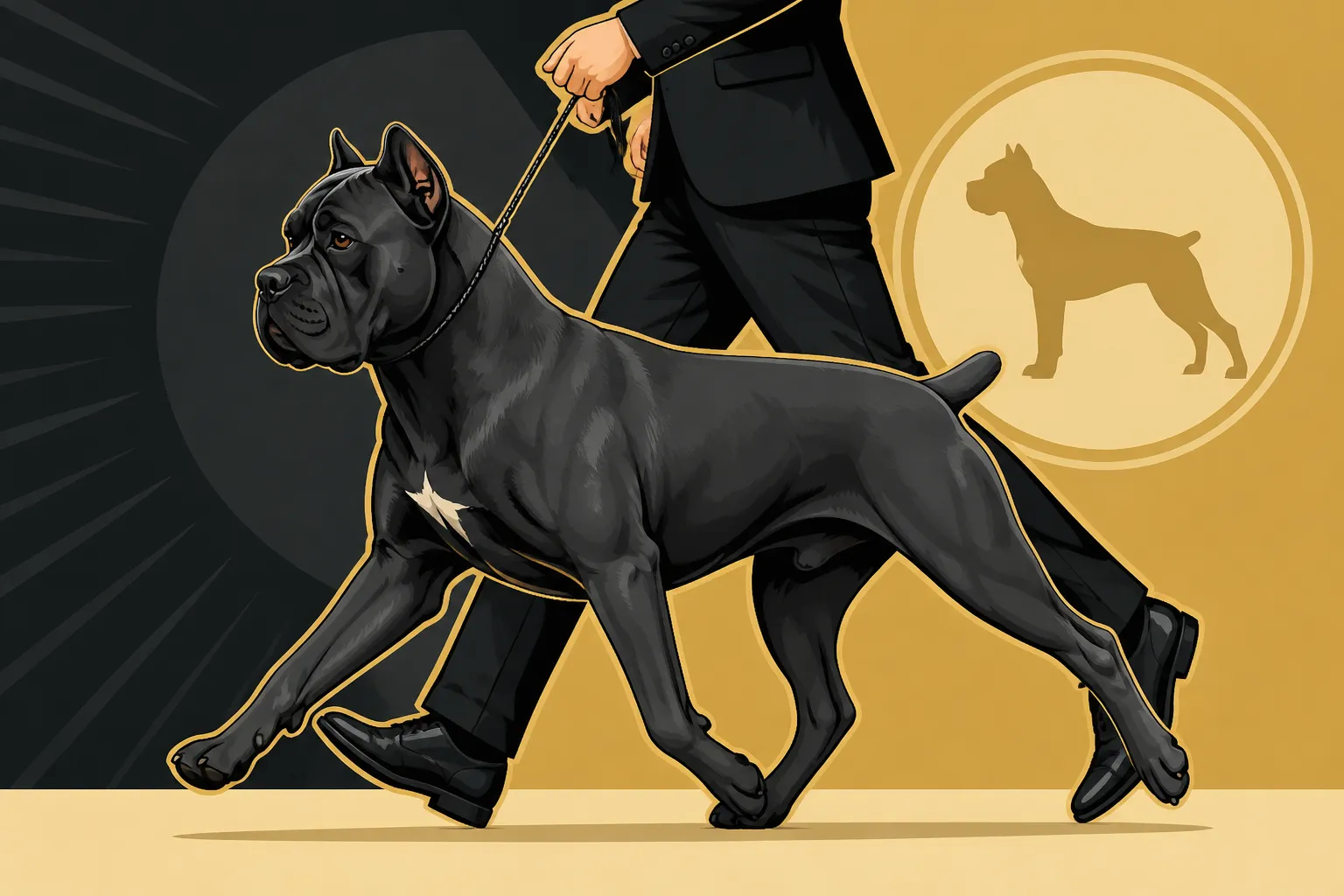
Beyond the individual limb actions, the stability of the Cane Corso's topline is a key indicator of structural soundness and core strength. As the dog moves at a trot – the gait most commonly assessed in the show ring – the topline should remain firm, level, and unwavering. It shouldn't roll from side to side, dip in the middle, or arch excessively (roach). A stable topline signifies strong back muscles, a well-set neck, and overall structural integrity that can handle the dynamic forces of movement.
The tail carriage is also an important part of the overall picture. The Cane Corso's tail, whether naturally long or traditionally docked, should be carried as a natural extension of the spine. When moving, it's typically held horizontally or slightly elevated, expressing alertness and confidence. It should never be tucked tightly between the legs (indicating fear or submission) or carried gaily over the back (which can be a fault in some breeds, though less severe for a Cane Corso unless it interferes with movement). The ideal tail carriage enhances the powerful silhouette of the moving dog.
Common Faults and Imperfections in Cane Corso Movement
Observing a Cane Corso in the show ring, or even just during a regular walk, allows you to spot both desirable traits and areas where movement falls short of the ideal. These faults aren't just cosmetic; they often point to structural issues that can impact the dog's health and longevity over time. Understanding these common imperfections helps you appreciate the incredible athleticism of a well-moving Cane Corso. Faults That End a Cane Corso's Show Career often involve significant deviations in movement.
Front End Faults
Many issues can manifest in a Cane Corso's front gait, each signaling a deviation from the desired strong, straight, and purposeful movement:
- Paddling: This occurs when the front paws swing outward like oars in a boat. It can indicate loose elbows or a lack of coordination in the front assembly.
- Weaving or Crossing Over: If the front legs cross paths as the dog moves, or if they appear to "braid," it's usually a sign of poor front assembly or an attempt by the dog to compensate for discomfort.
- Hackney Gait: Named after the high-stepping Hackney horse, this is characterized by a high lift of the front paws and an exaggerated bending of the wrist (pastern) and elbow. It's inefficient and not typical of a working guardian breed.
- Short Stride: A front end that doesn't reach sufficiently forward results in a short, choppy stride. This often points to incorrect shoulder angulation, a straight shoulder, or an overly short upper arm, all of which limit the leg's natural extension.
- Elbows Out: If the elbows stick out from the body rather than remaining close, it can cause the feet to turn inward (toe-in) and lead to an inefficient, waddling gait.
These faults can place undue stress on joints and muscles, potentially leading to pain or premature arthritis, especially in a large breed like the Cane Corso.
Rear End Faults
The power of the Cane Corso comes largely from its hindquarters, so faults here are particularly impactful:
- Cow-Hocked: This is a common fault where the hocks (ankles) turn inward, bringing the rear paws closer together, and often causing the feet to turn out. It indicates weakness in the stifles and hocks and reduces effective drive.
- Wide Tracking: Conversely, some dogs track too wide with their rear legs, almost as if they are waddling. This also diminishes power and efficiency and suggests a lack of convergence.
- Crabbing or Sidewinding: When a dog moves with its body at an angle, rather than straight, it's called crabbing. This is often a compensatory movement due to discomfort or pain, or an attempt to balance an uneven gait.
- Insufficient Drive: As mentioned earlier, this is when the hindquarters don't generate enough forward propulsion. The steps are short and weak, giving the impression that the dog is dragging its rear or struggling to push off.
- Sickle Hocks: This describes hocks that are overly angulated, giving a bent appearance even when standing. While some angulation is good for drive, excessive angulation can be structurally weak and inefficient for powerful, sustained movement.
Rear end faults significantly impair the Cane Corso's ability to perform its traditional roles and are a major concern for judges and owners alike.
Overall Gait Issues
Beyond specific limb problems, a Cane Corso can exhibit broader gait issues that detract from its overall soundness:
- Stiffness or Lack of Coordination: A stiff gait lacks the desired elasticity and fluidity. It can suggest discomfort, arthritis, or neurological issues. Poor coordination means the front and rear aren't working in harmony.
- Pacing: Instead of a diagonal gait (right front and left rear moving together, then left front and right rear), a pacing dog moves both legs on the same side together (right front and right rear, then left front and left rear). This gait is often less efficient for endurance and can be a sign of a structural imbalance or weakness.
- Rolling Topline: As discussed, a topline that rolls or sways excessively indicates weak back muscles or a poorly constructed loin. This impacts stability and efficiency.
- High-Stepping: Similar to hackneying in the front, high-stepping can occur in the rear, where the dog lifts its feet too high, wasting energy.
- Lumbering or Heavy: While a Cane Corso is a large dog, its movement should never appear ponderous or effortful. A lumbering gait suggests poor conditioning, excess weight, or significant structural deficiencies. How Many Cane Corsos Make It to Twelve and What Changes in a Cane Corso After Its Eighth Birthday both hint at how critical good structure and movement are to long-term health.
Understanding these common faults is crucial not only for evaluating a Cane Corso in a show context but also for monitoring your own dog's health and detecting potential problems early.
Training and Conditioning for Optimal Movement
Achieving optimal movement in a Cane Corso isn't just about genetics; it's also profoundly influenced by careful upbringing, appropriate exercise, and dedicated training. From puppyhood through adulthood, what you put into their physical development directly impacts how they carry themselves.
Early Development and Exercise
The foundation for excellent movement begins in puppyhood. During their rapid growth phase, it's critical to balance exercise with rest to ensure proper bone and muscle development without undue strain. Over-exercising a young Cane Corso, especially on hard surfaces, can lead to joint problems later in life, hindering their ability to move correctly. Conversely, a lack of appropriate exercise can result in weak musculature and poor coordination.
Controlled, consistent exercise is key. Short, frequent walks on soft surfaces like grass, alongside playtime that encourages natural movement (running, jumping, but not excessive impact), are ideal. Avoid forced, repetitive exercise like long runs on pavement or demanding agility courses until their growth plates have closed, usually around 18-24 months. Why a Cane Corso Puppy Should Not Grow Too Fast and Why Stairs Matter for a Cane Corso Puppy's Joints are excellent resources to understand the specific risks and best practices during this critical developmental period. Think of building a strong, flexible athlete—it's a marathon, not a sprint.
Leash Training and Ring Craft
Even the most perfectly structured Cane Corso can look awkward in the ring if not properly leash trained. A dog that pulls, lunges, or resists its handler cannot be accurately assessed for movement. Early and consistent Loose Leash Walking a Cane Corso Puppy is foundational. The goal is to teach your Cane Corso to walk confidently and smoothly beside you at various speeds, maintaining a natural, flowing gait.
For ring craft specifically, practice is vital. Your dog needs to learn to move at the judge's requested pace – usually a moderate trot – maintaining their topline and extending their legs beautifully. This involves:
- Consistent Practice: Regular practice sessions help your dog understand what's expected. Start in a quiet environment and gradually introduce distractions.
- Stacking and Free Stacking: Learning to stand still and present themselves, then transitioning smoothly into movement.
- Figure Eights and Triangles: Practicing specific patterns used in the ring to demonstrate different angles of movement.
- Handler Poise: Your own posture and energy directly influence your dog's presentation. A calm, confident handler makes the dog look better.
Many dedicated Cane Corso owners utilize high-quality training treats and durable leashes, often found at retailers like Chewy, to make these training sessions productive and enjoyable for their powerful companions.
Nutrition and Joint Support
A well-balanced, high-quality diet is absolutely fundamental for supporting healthy muscle and joint development, which are critical for optimal movement. For a large, fast-growing breed like the Cane Corso, it's particularly important to feed a diet formulated for large or giant breeds, especially during puppyhood, to ensure a controlled growth rate. Rapid growth can put undue stress on developing joints.
As Cane Corsos age, or if they have a predisposition to joint issues, supplements can play a supportive role. Glucosamine, chondroitin, MSM, and Omega-3 fatty acids are popular choices that can help maintain cartilage health and reduce inflammation. While supplements aren't a magic bullet, they can certainly contribute to joint comfort and mobility, thus enhancing overall movement. Consult with your veterinarian before adding any supplements to your dog's diet. Many reputable brands offer these joint support products, and platforms like Chewy make it easy to find a wide selection based on ingredients and formulations. Whether a Cane Corso Benefits From Joint Supplements is a topic many owners explore as their dogs mature. Maintaining a lean body condition throughout your Cane Corso's life is also crucial; excess weight places immense strain on joints, exacerbating any existing issues and making fluid movement more challenging.
Here's a quick comparison of ideal versus problematic movement characteristics:
| Characteristic | Ideal Movement | Problematic Movement |
|---|---|---|
| General Impression | Powerful, fluid, ground-covering, effortless | Lumbering, stiff, choppy, uncoordinated |
| Forequarter Reach | Long, straight, free; paw lands under nose | Short, choppy, paddling, weaving, hackneying |
| Hindquarter Drive | Strong, powerful propulsion; hocks parallel | Weak, insufficient drive, cow-hocked, wide tracking |
| Topline Stability | Firm, level, unwavering | Rolling, dipping, roaching, swaying |
| Convergence | Legs converge towards centerline at trot | Tracks wide or crosses over at speed |
| Tail Carriage | Extension of spine, carried horizontally/slightly up | Tucked, carried gaily over back, interferes with gait |
| Efficiency | Minimal wasted energy, smooth transition | High-stepping, labored, shuffling, awkward |
Disclaimer
This article is for general informational purposes only and does not constitute professional advice. Laws, prices and regulations vary by location and change over time. Consult a qualified professional for guidance on your specific situation.