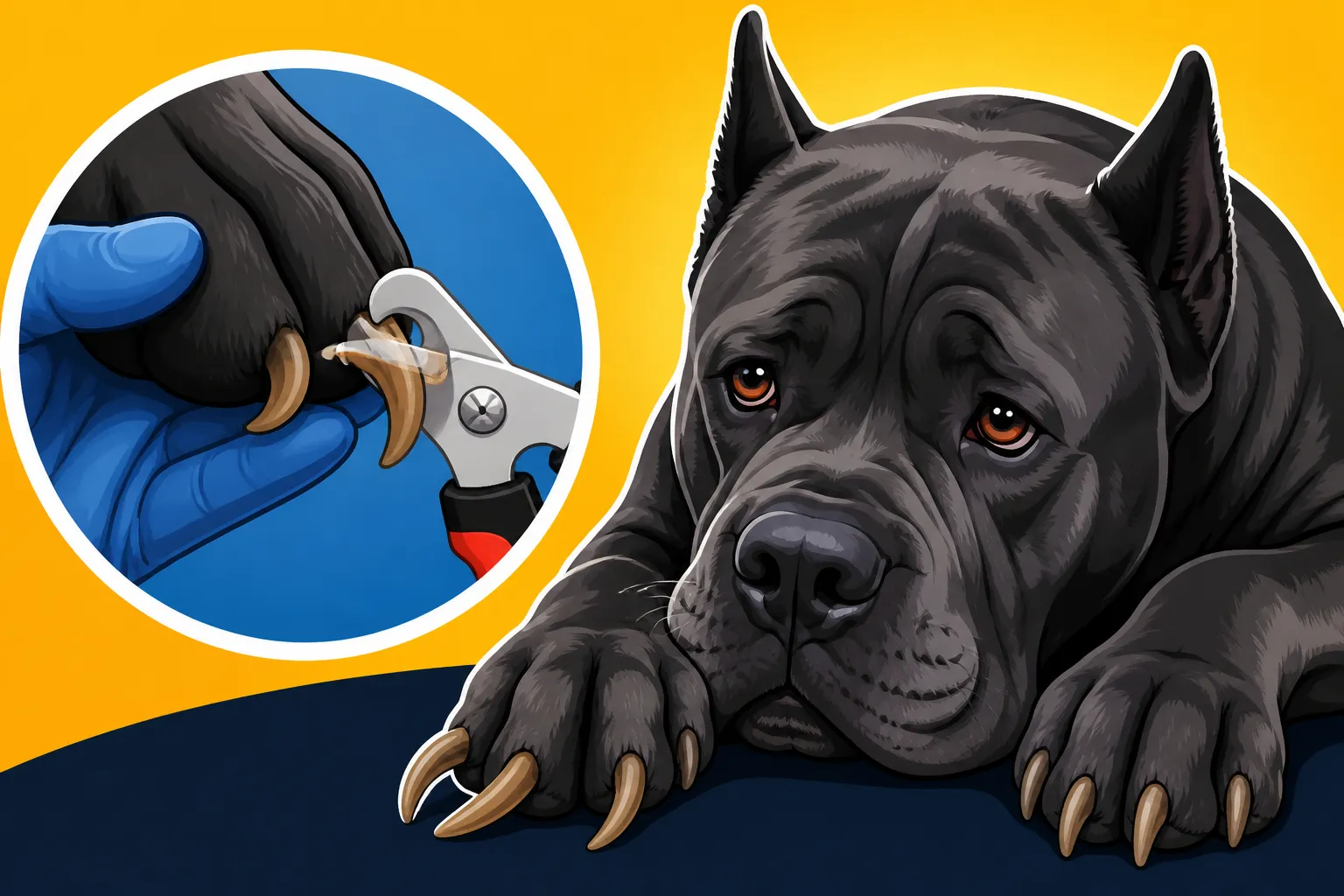
Trimming an Old Cane Corso’s Overgrown Nails
It's a familiar scenario: your once-active Cane Corso, now a dignified senior, moves a little slower, perhaps struggles to stand, and those formidable nails, which once wore down naturally on walks, have become long, thick, and intimidatingly sharp. Overgrown nails on an older Cane Corso aren't just an aesthetic problem; they can cause significant pain, affect their balance, and exacerbate existing joint issues, turning a simple walk into a painful ordeal. This guide is here to walk you through understanding why this happens, how to approach trimming those tough nails safely and with compassion, and what tools and techniques can make this essential task less stressful for both you and your beloved companion.
Why Nails Become Overgrown in Senior Cane Corsos
As our magnificent Cane Corsos age, their lives inevitably slow down. The vigorous daily runs, the long hikes, and even the energetic romps in the yard often decrease in frequency and intensity. This reduction in activity is the primary culprit behind overgrown nails, but it's compounded by several other factors that are unique to senior dogs.
Reduced Activity and Natural Wear
Think about how a young, active Cane Corso's nails are typically kept short. It's not usually from diligent clipping alone, but from the constant friction against hard surfaces: pavement, concrete, rough ground during their adventures. Every step on a hard surface acts like a natural file, slowly grinding down the nail. When a Cane Corso reaches their golden years, that natural filing process slows to a crawl. They might spend more time napping on soft beds, taking shorter, gentler strolls, or simply not engaging in the kind of vigorous exercise that naturally keeps nails in check.
This shift in lifestyle means the nails continue to grow, but they don't wear down at the same rate. What might have been a minor trim every few weeks for a young dog suddenly becomes a more pressing and frequent need for a senior. The nails can curl, twist, and grow so long that they actually touch the ground when your dog stands, putting immense pressure on their nail beds and paw structure. This isn't just uncomfortable; it can be downright painful and can even contribute to other orthopedic problems. If you notice your senior companion moving more gingerly or reluctance to walk on hard surfaces, their nails might be a contributing factor. For more insights on senior care, consider reading What Changes in a Cane Corso's Care After Eight and The Age a Cane Corso Is Treated as a Senior.
Underlying Health Conditions and Mobility Issues
Beyond just a general slowdown, senior Cane Corsos are often prone to a range of health conditions that directly impact their mobility and, by extension, their nail health. Arthritis is incredibly common, causing stiffness and pain in joints like the hips, elbows, and even the smaller joints in their paws. A dog with arthritic pain in their feet or legs will naturally try to minimize pressure on those areas, leading to an altered gait. Instead of walking with a strong, even stride that helps wear down nails, they might shuffle, drag their feet, or shift their weight, preventing proper nail abrasion.
Conditions like hip or elbow dysplasia, which might have been managed for years, can become more severe with age, making it difficult for your Cane Corso to bear weight evenly. Neurological issues, too, can cause a loss of sensation or coordination in the feet, leading to nails being dragged or not placed correctly, allowing them to grow unchecked. Sometimes, it's not just the nails themselves, but how the dog's entire body movement is affected by aging. A senior Cane Corso struggling to get up from an orthopedic bed or needing assistance to navigate stairs might also be signaling that their overgrown nails are making movement even harder. This is why addressing nail length is so crucial for their overall comfort and quality of life in their later years. Helping an Old Cane Corso Off the Floor offers more advice on supporting their mobility.
The Challenges of Trimming a Senior Cane Corso's Nails
Trimming any Cane Corso's nails can be a task that fills owners with dread, given their size and strength. But for a senior Cane Corso, the challenges are often amplified, turning what should be a routine grooming session into a stressful event for everyone involved. It’s not just about a dog being difficult; it's often a complex interplay of physical discomfort, anxiety, and the changing nature of their nails themselves.
Pain, Anxiety, and Decreased Patience
Imagine trying to hold still while someone works on your sore, stiff joints. That's often the reality for a senior Cane Corso during nail trims. Many older dogs suffer from arthritis or other orthopedic pain, making it uncomfortable or even painful to be held in certain positions. Lifting a paw, extending a leg, or even just supporting their weight awkwardly can cause a sharp twinge, leading to a strong, natural reaction to pull away. This isn't defiance; it's pain.
Compounding this is the anxiety that many dogs develop around nail trims, especially if they've had a bad experience in the past. Older dogs might have less patience for what they perceive as an uncomfortable or frightening procedure. Their senses might be dulling, making them more easily startled by the sound of clippers or grinders. What once took a few minutes of calm cooperation can become a protracted struggle, with your senior Cane Corso visibly distressed, panting, or trying to hide. It's crucial to approach these sessions with extreme patience and empathy, understanding that their reactions are often rooted in physical discomfort or fear, not malice. Recognizing these signs can help you adjust your approach and make the experience less traumatic.
Thickened Nails and Recessed Quick
One of the most significant physical challenges with senior Cane Corso nails is their tendency to become thicker and harder over time. This isn't just a slight toughening; some nails can become incredibly dense and almost woody, making them difficult for standard clippers to cut cleanly. This density can also lead to splintering or cracking if the wrong tools or too much force are used, causing pain and potential infection.
Furthermore, as nails grow long without being trimmed, the quick—the living part of the nail containing blood vessels and nerves—grows longer with it. This is a survival mechanism. If a nail is consistently overgrown, the quick recedes much more slowly than the nail grows, meaning there's less "safe" area to trim. This creates a vicious cycle: you can't trim as much as you'd like without risking cutting the quick, which is incredibly painful and causes bleeding. The quick in black or dark-colored Cane Corso nails is particularly tricky to see, making the risk even higher. For more information on this challenge, you can read Cutting the Quick on a Cane Corso's Black Nail. This recessed quick often means you can only take off very small amounts at a time, frequently, to encourage the quick to recede gradually.
Tools and Techniques for Gentle Senior Cane Corso Nail Trims
Approaching a senior Cane Corso's overgrown nails requires a thoughtful combination of the right tools and a compassionate, patient technique. The goal isn't just to get the job done, but to do it with the least amount of stress and pain possible for your aging companion.
Choosing the Right Trimming Tool
When dealing with tough, overgrown nails, the choice of tool can make a huge difference. For many large breeds, traditional scissor-style clippers or guillotine clippers might struggle with the thickness or cause discomfort due to the pressure they exert. Consider heavy-duty, sharp clippers designed for large, thick nails. Brands like Safari Professional Nail Trimmers, available on Chewy or Amazon, often offer robust options with ergonomic handles for better grip and leverage.
However, for senior Cane Corsos, an electric nail grinder can often be a superior choice. Grinders, like a Dremel, slowly file the nail down, allowing for much finer control over how much nail is removed. This significantly reduces the risk of cutting the quick and avoids the jarring pressure that clippers can create, which can be particularly sensitive for arthritic joints. While grinders do make noise and produce dust, many dogs can be desensitized to them. Some pet owners find that the slow, steady removal of the nail with a grinder is less traumatic for their senior dogs, especially if their nails are extremely thick and hard. For a deeper dive into this, check out Whether a Grinder Beats Clippers on a Cane Corso.
| Tool Type | Pros | Cons | Best For |
|---|---|---|---|
| Scissor Clippers | Fast for cooperative dogs, widely available | Can cause splintering on thick nails, higher quick risk | Dogs with thinner nails, good temperament, or those used to clipping |
| Guillotine Clippers | Good leverage, quick cuts for medium nails | Can pinch or crush if dull, less precise for very thick nails | Medium-sized dogs, nails not excessively thick, frequent trims |
| Electric Grinder | Precise control, reduces quick risk, smooth finish | Can be noisy, produces dust, takes longer, requires desensitization | Senior dogs, thick/hard nails, anxious dogs, dark nails where quick is hard to see |
Gradual Approach and Positive Reinforcement
The key to successful nail trims, especially for a senior Cane Corso, is a gradual approach coupled with consistent positive reinforcement. Don't try to do all four paws, or even all the nails on one paw, in a single session if your dog is stressed. Instead, break it down. Perhaps one nail a day, or even just touching the clippers to a paw for a moment before offering a high-value treat. Your vet or a professional groomer may use a muzzle during this process, and it's something you might consider for safety, especially if your dog has a history of nipping when in pain. Muzzle training, even for a senior, can significantly reduce stress for both of you.
Use extra-tasty treats – think small pieces of cooked chicken, cheese, or even a dollop of peanut butter on a lick mat. Pair the presence of the trimming tool with these rewards. Let your Cane Corso sniff the clippers or grinder, then give a treat. Turn the grinder on briefly, then treat. Gradually work up to touching a nail, then actually trimming a tiny bit. If your dog shows any signs of stress – panting, yawning, lip-licking, pulling away – stop immediately. You want them to associate nail trims with positive experiences, not fear or pain. It's a marathon, not a sprint. Remember, consistency is more important than speed, and building trust will pay off immensely in the long run.
Making Nail Care a Positive Experience for Your Aging Cane Corso
Ensuring nail care is a positive experience for your senior Cane Corso goes beyond just the act of trimming. It involves a holistic approach that considers their comfort, addresses their fears, and leverages professional help when needed. The goal is to minimize stress and prevent these essential grooming sessions from becoming a source of dread for your beloved companion.
Desensitization and Counter-Conditioning
For senior Cane Corsos who have developed a strong aversion to nail trims, desensitization and counter-conditioning are powerful tools. This means slowly exposing them to the nail trimming process in a way that creates positive associations. Start by simply having the clippers or grinder in the room while you're giving them treats or affection. Don't even touch their feet yet. The sound of the grinder can be particularly startling, so gradually introduce it from a distance, rewarding your dog for remaining calm.
Over days or weeks, slowly decrease the distance and increase the intensity. Touch the tool to their paw, then reward. Lift a paw, then reward. Eventually, you'll work towards actual trimming. If using a grinder, aim for brief touches to the nail for just a second or two, then stop and reward. The key is to go at your dog's pace and never push them past their comfort zone. If they show signs of fear or stress, you've gone too far too fast. This methodical approach might seem slow, but it builds trust and changes your dog's emotional response to the process over time. Many owners find a comfortable, quiet spot, perhaps with their dog on a soft blanket or Orthopedic Beds Rated for a Cane Corso's Weight, to make the experience as relaxing as possible.
Seeking Professional Assistance
Sometimes, despite your best efforts, trimming a senior Cane Corso's nails at home remains a battle. This is where professional assistance becomes invaluable. Your veterinarian or a certified professional groomer has specialized tools, techniques, and experience with large, strong, and sometimes uncooperative dogs. They can often get the job done quickly and efficiently, minimizing the stress for your dog.
A veterinary clinic can also offer options like sedation if your Cane Corso's anxiety or pain is severe. This isn't a first resort, but for dogs with extreme fear or debilitating arthritis, a light sedative can allow for a stress-free trim, preventing further trauma and ensuring their nails are kept at a healthy length. Discussing this option with your vet is crucial to weigh the benefits against any potential risks for your senior dog. They can also check for Cracked Pads on a Working Cane Corso or other foot issues during the visit. Don't feel like a failure if you need to enlist help; ensuring your Cane Corso's comfort and health is the ultimate goal.
Consistency and Regularity for Optimal Health
Once you've managed to get your senior Cane Corso's nails to a manageable length, the most important step is maintaining that length through consistent and regular trimming. The quick will slowly recede if the nail is kept short, making future trims easier and less risky. Waiting too long between trims allows the quick to grow out again, restarting the cycle of long, painful nails.
Establish a routine that works for both of you. This might mean trimming a few nails every few days, or a full trim every 2-3 weeks, depending on how quickly their nails grow and their activity level. Remember, even short, gentle walks contribute to nail wear, so keep your senior moving within their comfort level. If your Cane Corso is primarily indoors or on soft surfaces, more frequent trims will be necessary. Just as you monitor their diet—perhaps looking into senior-specific food options available from brands like Ollie for optimal nutrition—you must monitor their nails. Regularity is the key to preventing pain, maintaining good paw health, and ensuring your cherished senior Cane Corso can move about their world with as much comfort and dignity as possible. You might find that integrating some joint supplements, which can be found on Chewy or Amazon, can also contribute to their overall comfort, making nail trims less painful if arthritis is a factor.
Disclaimer
This article is for general informational purposes only and does not constitute professional advice. Laws, prices and regulations vary by location and change over time. Consult a qualified professional for guidance on your specific situation.