Whether a Cane Corso Steals Food From a Toddler
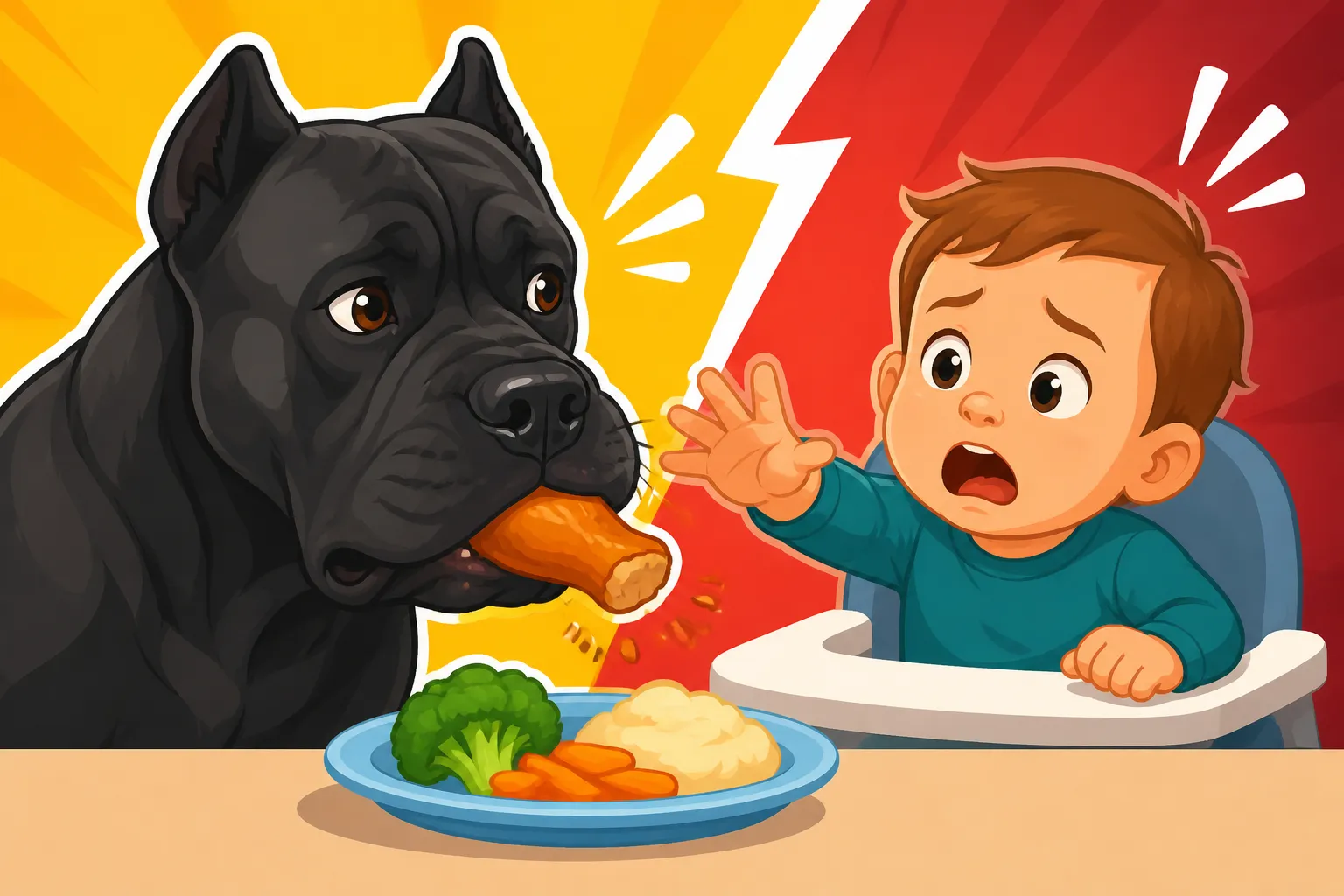
The scene is almost a cliché: a precious toddler, beaming with sticky hands, holding a cracker or a piece of fruit, and then, in a flash, a large dog swoops in and snatches it. For any parent with a Cane Corso, this isn't just a minor annoyance; it’s a deeply unsettling thought that brings up real fears about safety, resource guarding, and potential injury to a small child. This guide is here to tackle that very specific concern, offering practical insights and actionable strategies to ensure peaceful coexistence and prevent food-related incidents between your majestic Cane Corso and your little ones.
Understanding the Cane Corso's Instincts and Food Drive
Let's be honest, our Cane Corsos are magnificent, powerful animals, and they were originally bred for serious work – guarding property, hunting wild boar, and driving livestock. Part of that inherent genetic blueprint includes a strong drive to acquire and protect resources, and food is absolutely at the top of that list. It's not about malice; it's about instinct.
The Natural Drive to Acquire Resources
From the moment they are puppies, dogs are driven by survival instincts. Food is a high-value resource, and the quicker they can get it, the better. For a Cane Corso, a breed known for its impressive size, strength, and decisiveness, this instinct can be particularly pronounced. They aren't going to politely ask for a share of that dropped toast; they're going to use their size and speed to get it before anyone else can. This quick snatching is often less about aggression and more about pure opportunism and a deep-seated drive to secure sustenance. They don't differentiate between food left on the counter, food dropped on the floor, or food held by a small, slow-moving human. To them, it's just food, and it's fair game if not clearly designated as off-limits.
Imagine a scenario: your toddler is toddling around with a piece of banana. To the Cane Corso, that's a prime target. Their keen sense of smell picks up the scent immediately, and their natural instincts kick in. It’s not personal, it’s just business. This is why understanding The Prey Drive Behind a Cane Corso's Boar Hunting Past is so crucial, as it helps explain some of their drive.
Resource Guarding: A More Serious Concern
While opportunistic food stealing is one thing, true resource guarding is another entirely, and it's a far more serious concern when toddlers are involved. Resource guarding is when a dog exhibits behaviors like growling, snapping, barking, or even biting to protect an item they perceive as valuable – be it a toy, a bed, or, most critically, food. A Cane Corso with a history of resource guarding, even if it's never been directed at a human before, is a significant risk, especially around unpredictable children.
Consider this: your Cane Corso snatches a dropped cookie from the floor. Your toddler, seeing their treat gone, reaches out to try and retrieve it. In a dog that resource guards, this could be perceived as a challenge, and the dog might react defensively to protect its newly acquired treasure. This is where innocent food stealing can escalate into a dangerous situation. It's vital to differentiate between a dog that merely cleans up dropped food and one that actively defends it. Any sign of guarding, even subtle body language changes like a stiff posture, a hard stare, or a low growl when near food, should be taken extremely seriously and addressed immediately by a professional trainer. Ignoring these signs is like ignoring The First Sign a Cane Corso Is Bloating – it can have severe consequences.
Why Food Stealing is More Than Just "Bad Manners"
When you have a Cane Corso, especially one of considerable size and power, "bad manners" can quickly become a safety hazard. What might be an annoying habit in a smaller dog can be genuinely dangerous with a large, strong breed like ours.
Risk of Accidental Injury
Even if your Cane Corso has no aggressive intent, their sheer size and enthusiasm when going for food can accidentally injure a toddler. A Cane Corso can weigh well over 100 pounds, and a sudden lunge or bump from such a powerful animal can easily knock a small child off their feet. Imagine a 30-pound toddler being bowled over by a surging 120-pound dog eager for a dropped chicken nugget. This isn't just a fall; it could lead to head injuries, broken bones, or severe fright, traumatizing the child and potentially damaging their relationship with the dog.
Beyond the physical impact, there's the psychological impact. A child who has had food snatched from their hand or been knocked over by a dog might develop a fear of dogs, or specifically of your Cane Corso, leading to a strained home environment. This is why even seemingly harmless behaviors must be managed with a breed of this magnitude. We want our Cane Corsos to be guardians, not accidental intimidators.
Escalation to Resource Guarding or Aggression
As discussed, unchecked food stealing can pave the way for more serious issues like resource guarding. If a dog learns that they can successfully take food from a child without consequence, they may begin to feel entitled to it. This sense of entitlement can quickly morph into possessiveness if the child tries to intervene. It's a slippery slope. A dog that has successfully "won" a food item from a child might generalize that behavior to other items or even to the child's presence near any of the dog's resources.
Moreover, if the child is consistently frustrated or scared by the dog's behavior, they might react by hitting or yelling at the dog. This, in turn, can provoke a defensive reaction from the dog, potentially leading to a bite. It becomes a vicious cycle that no one wants to see. Early intervention and consistent management are key to preventing these dangerous escalations. Teaching your Cane Corso Impulse Control Work for a Cane Corso is not just for good manners; it's a fundamental safety measure.
Proactive Training and Management Strategies for Food Safety
The good news is that with diligence, consistency, and the right approach, you absolutely can create a safe environment where your Cane Corso and your toddler can coexist peacefully around food. It requires a multi-pronged strategy focusing on prevention, training, and supervision.
Creating Clear Boundaries and Safe Zones
The most effective strategy is prevention. This means setting up physical barriers and strict rules that remove the opportunity for food stealing.
- Baby Gates and Pens: These are your best friends. Invest in sturdy, tall baby gates that your Cane Corso cannot easily jump over or push through. Use them to create a clear barrier between your dog and your toddler, especially during meal times or when the toddler is snacking. A large playpen for the toddler can also create a secure eating zone. This isn't about punishing your dog; it's about managing the environment to prevent problems from ever arising. You can find excellent, heavy-duty options for gates and crates on Amazon that will stand up to a determined Cane Corso.
- Designated Eating Areas: Teach your Cane Corso that certain areas are "off-limits" when food is out. A "place" command, where your dog goes to a designated mat or bed and stays there until released, is invaluable. Practice this command regularly, rewarding calm duration. This teaches your dog self-control and respect for boundaries. The Place Command That Saves a Cane Corso Household can truly transform your home environment.
- Supervision is Non-Negotiable: Never, ever leave your Cane Corso unsupervised with your toddler, especially if food is involved. Even well-trained dogs can have a moment of weakness, and a child's unpredictable movements or dropped food can create an irresistible temptation. Active, vigilant supervision means you are constantly aware of both your dog's and your child's proximity and interactions.
Training for Impulse Control and "Leave It"
Beyond managing the environment, structured training is essential. Your Cane Corso needs to understand what is and isn't theirs, and to have solid impulse control.
- "Leave It" Command: This command is critical. Start practicing "leave it" in low-distraction environments with low-value items, gradually increasing the difficulty to high-value food items and more distracting settings. The goal is for your dog to turn away from a desired item (like a dropped piece of food) on command. Reward heavily when they succeed.
- "Drop It" Command: This is equally important. Teach your Cane Corso to willingly release anything they have in their mouth. This is particularly useful if they do manage to snatch something. Again, start with low-value items and build up, always trading for something even better when they release the item. Teaching a Cane Corso Puppy to Give Things Up is a foundational skill that can literally save lives.
- Structured Obedience Training: A well-rounded obedience program builds a strong foundation for impulse control. Commands like "sit," "stay," and "down" performed reliably under distraction help your Cane Corso learn to control their urges. Consider enrolling in an online program like those offered by BAXTER & Bella. Their structured approach can guide you through the process of teaching these crucial life skills, even for powerful breeds like the Cane Corso. Their emphasis on positive reinforcement makes it clear what behaviors you want to see.
- Feeding Schedule and Designated Meal Times: Feed your Cane Corso on a consistent schedule, in their own bowl, in a quiet, undisturbed location. This helps them understand that their food comes from you, at specific times, and not from the toddler's plate. Never free-feed a Cane Corso, especially in a household with children. Why a Cane Corso Should Never Have a Bowl Left Down is a fundamental rule for both health and behavior.
| Strategy | Description | Benefits |
|---|---|---|
| Physical Barriers | Using baby gates, pens, or crates to separate dog and child, especially during food times. | Prevents opportunistic stealing, reduces accidental contact, clearly defines boundaries. |
| "Place" Command | Teaching the dog to go to and stay on a specific mat or bed when food is present or during family meals. | Builds impulse control, provides a safe, calm alternative for the dog, keeps the dog out of the toddler's immediate space. |
| "Leave It" Command | Training the dog to ignore tempting items (food, dropped toys) on command. | Essential for preventing snatching and developing self-control in tempting situations. |
| "Drop It" Command | Teaching the dog to release an item from their mouth willingly, often in exchange for a higher-value treat. | Crucial for safe retrieval of snatched items, prevents resource guarding over objects already acquired. |
| Supervised Snacking | Always having an adult actively watching when a toddler is eating, especially if the dog is in the same room (even with barriers). | Ensures immediate intervention if rules are broken or an incident occurs, reinforces consistent management. |
Consulting with Professionals
If you are struggling or observing any signs of resource guarding, do not hesitate to seek professional help. A certified professional dog trainer or a veterinary behaviorist can assess your specific situation and provide tailored guidance. This is not a sign of failure but a responsible choice to ensure the safety of everyone in your home. Sometimes, the complexities of a Cane Corso's guarding instincts require an expert eye, and getting that help is far more valuable than trying to navigate it alone. Think of it like getting advice on Whether a Cane Corso Benefits From Joint Supplements – sometimes you need an expert to truly understand what's best.
What to Do When It Happens: Immediate Steps and Long-Term Fixes
Even with the best intentions and proactive measures, life happens. A piece of food might drop, or your Cane Corso might get a little too close to your toddler's snack. Knowing how to react in the moment and what to do afterward is crucial.
In the Moment: Prioritize Safety, Not Punishment
If your Cane Corso manages to snatch food from your toddler or the floor, your immediate priority is the safety of your child, not correcting the dog in that instant.
- Separate Immediately: The very first thing to do is to calmly but swiftly remove your toddler from the immediate vicinity of the dog and the snatched food. If the dog has the food, don't try to pry it out of their mouth, especially if you suspect resource guarding. This can provoke a defensive reaction. Focus on getting the child to safety.
- "Drop It" If Safe: If your Cane Corso has a solid "drop it" command and shows no signs of guarding, you can try to calmly ask them to drop the item, offering a higher-value treat in exchange. However, if there's any hesitation or guarding behavior, disengage.
- No Punishment: Yelling at, hitting, or punishing your Cane Corso in the moment will likely backfire. It can increase their anxiety around food, potentially escalate resource guarding, and damage your bond. They might become sneakier about stealing food or more defensive if they fear punishment. Punishment teaches fear, not understanding. Instead, the goal is to prevent the situation from recurring.
Long-Term Adjustments: Reinforce Boundaries and Training
An incident, even a minor one, is a wake-up call to re-evaluate your management and training strategies.
- Intensify Management: If an incident occurs, it means your current management system has a loophole. Double down on your use of physical barriers. Is your baby gate strong enough? Is your toddler being left unsupervised even for a second? Consider using a crate more consistently for your Cane Corso during meal times, especially for the child. Crate Training a Cane Corso That Outgrows Every Crate can be a challenge, but a well-implemented crate routine is a powerful management tool.
- Revisit Training Basics: Go back to basics with "leave it," "drop it," and "place" commands. Practice them even more frequently, in various settings, and with increasing distractions. Make sure everyone in the household is consistent with these commands. Reward success generously so your dog understands that listening to you brings good things. You want to make sure Whether Food Motivates a Cane Corso is always a "yes" for training.
- Desensitize and Counter-Condition: For a dog that shows even mild resource guarding, work on desensitization and counter-conditioning, ideally with a professional trainer. This involves gradually exposing the dog to the "trigger" (e.g., a person approaching their food bowl) while pairing it with positive experiences (e.g., dropping high-value treats into the bowl). The goal is to change the dog's emotional response from "I need to protect this" to "Yay, good things happen when people are near my food!"
- Educate the Toddler (Age Appropriately): As your toddler grows, teach them age-appropriate rules about interacting with the dog, especially around food. Simple rules like "Don't bother the dog when it's eating" or "Always give food to Mommy or Daddy to give to the dog" can be helpful. However, remember that a toddler's understanding and impulse control are limited, so management by adults remains paramount.
Ultimately, preventing a Cane Corso from stealing food from a toddler is about creating a structured, safe environment where the dog's natural instincts are managed, and clear boundaries are established. It’s about building a trusting relationship through consistent training and vigilant supervision, ensuring peace and safety for every member of your family. It requires commitment, but the payoff of a harmonious household is absolutely worth it.
Disclaimer
This article is for general informational purposes only and does not constitute professional advice. Laws, prices and regulations vary by location and change over time. Consult a qualified professional for guidance on your specific situation.