Whether a Cane Corso Should Have a Preventive Gastropexy
The sudden, terrifying onset of bloat, medically known as Gastric Dilatation-Volvulus (GDV), is a nightmare scenario for any Cane Corso owner, turning a healthy dog into an emergency in mere minutes. This comprehensive guide is here to walk you through the painful realities of GDV and explore whether a preventive gastropexy is the right proactive step to safeguard your beloved giant breed companion.
What is Bloat (GDV) and Why it's a Cane Corso Owner's Nightmare
If you own a Cane Corso, you’ve likely heard the word "bloat" uttered with a shudder. It’s not just an upset stomach; it's a rapidly progressing, life-threatening condition that ranks high on the list of fears for owners of deep-chested breeds. The sheer speed and severity with which it strikes are what make it so terrifying, demanding immediate, often costly, emergency intervention.
The Terrifying Reality of Gastric Dilatation-Volvulus
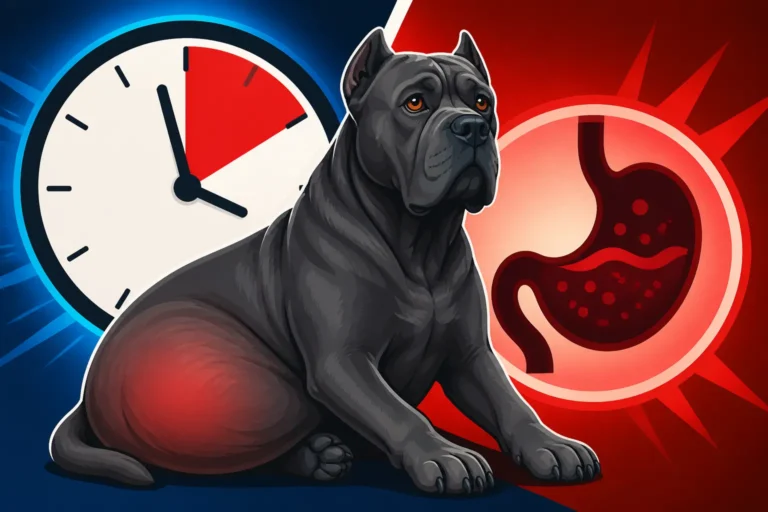
Imagine this: one moment your magnificent Cane Corso is happily trotting around the yard after dinner, and the next, they're pacing, drooling excessively, retching non-productively, and their abdomen is visibly distending. This isn't just discomfort; it's a medical catastrophe. GDV occurs when your dog's stomach fills with gas, food, or fluid, then twists on its axis. This twisting cuts off blood supply to the stomach and often the spleen, trapping gas and putting immense pressure on internal organs. Without blood flow, the stomach tissue starts to die, toxins build up, and the dog can rapidly go into shock, leading to multi-organ failure and death, often within hours. It’s a race against time, where every minute counts, and even with prompt surgery, the mortality rate remains significant. Knowing The Hours That Decide a Bloated Cane Corso's Outcome can be critical for survival.
The stress of witnessing this unfold is indescribable. You’re watching your powerful, stoic companion succumb to agonizing pain, and you feel utterly helpless. The urgent trip to the emergency vet, the terrifying uncertainty, and the potential for a devastating outcome are deeply traumatic experiences. Many owners describe the feeling of powerlessness as one of the worst parts, wishing they could have done something, anything, to prevent it. This profound fear drives many to consider preventive measures.
Why Deep-Chested Breeds Like the Cane Corso Are So Vulnerable
It’s not just a cruel twist of fate that our giant breeds are more susceptible to GDV. The very anatomy that gives the Cane Corso its impressive presence – that deep, broad chest – is also a major risk factor. Breeds like the Cane Corso, Great Danes, Weimaraners, German Shepherds, and others with deep chests and narrow waists have more room for their stomach to move and twist. This anatomical predisposition, combined with specific eating habits and genetic factors, creates a perfect storm for bloat. It's a cruel irony that the very conformation we admire can be a hidden vulnerability.
Cane Corsos often eat quickly, gulping down air with their food. Add to that their tendency to be active immediately before or after meals, or drinking large quantities of water rapidly, and you have a recipe for disaster. The combination of a large stomach, plenty of room to swing, and these behaviors significantly increases their risk. It's a constant worry for owners, monitoring every meal, every drink, every burst of playful energy. Understanding Bloat and What a Cane Corso's Deep Chest Costs is essential for responsible ownership.
Understanding the Risk Factors for Bloat in Cane Corsos
While all deep-chested dogs are at risk, not every Cane Corso will develop bloat. However, several factors can increase the likelihood. Being aware of these can help you have a more informed discussion with your vet and make decisions about preventive strategies.
Genetic Predisposition and Family History
Genetics play a significant role in a Cane Corso’s susceptibility to bloat. If your dog comes from a lineage where GDV has been reported, their risk is inherently higher. Breeders who prioritize health clearances will often track instances of bloat in their lines, offering a degree of transparency that can be invaluable. However, even with diligent breeding practices, GDV can appear spontaneously. It's not always neatly inherited, but a family history absolutely flags an individual as being at greater risk.
This genetic component means that even if you do everything "right" in terms of feeding and exercise, your Cane Corso could still be vulnerable. It's one of the most frustrating aspects for owners – feeling like you're walking a tightrope, knowing that some factors are simply beyond your control. When looking at your Cane Corso's pedigree, or even considering a puppy, asking about bloat in the immediate family (parents, grandparents, siblings) is a crucial step that far too many people overlook. It should be as routine as asking about hip and elbow clearances.
Environmental and Dietary Triggers
Beyond genetics, certain environmental and dietary factors can act as catalysts for bloat. Rapid eating is a huge one – dogs that inhale their food swallow a lot of air, which then gets trapped in the stomach. Stress can also contribute; an anxious or highly excitable dog might be more prone to GDV. Some studies suggest that certain kibble types, particularly those with smaller particle sizes or those using citric acid as a preservative, might play a role, though this is still debated among researchers. However, the connection between feeding habits and bloat is widely accepted.
Preventative measures often focus on these triggers: feeding multiple smaller meals instead of one large one, using slow-feeder bowls, avoiding exercise an hour before or after eating, and ensuring calm meal times. While these measures are vital, they aren't foolproof. You can do everything right, and still, bloat can strike. For instance, timing your Cane Corso's meal around its walk is often recommended, giving plenty of time for digestion before any strenuous activity. It's this persistent, underlying vulnerability that makes many owners seek more definitive solutions like a gastropexy.
Age and Activity Level Considerations
While bloat can occur at any age, older dogs tend to have a higher incidence. The tissues and ligaments that hold the stomach in place can become lax over time, increasing the chances of it twisting. Additionally, extremely active dogs, or those with high-strung temperaments, might be at a slightly elevated risk due to more vigorous movements or increased stress. However, even a calm, middle-aged Cane Corso can bloat without warning.
Young, rapidly growing Cane Corso puppies are generally at a lower risk than adults, but it's not unheard of. The risk generally increases as they mature into adulthood, typically after two years of age. Owners often start to feel a heightened sense of vigilance as their dog approaches this age range. It’s important to remember that these are risk factors, not guarantees, but understanding them empowers you to consider all your options for prevention.
What a Preventive Gastropexy Actually Involves
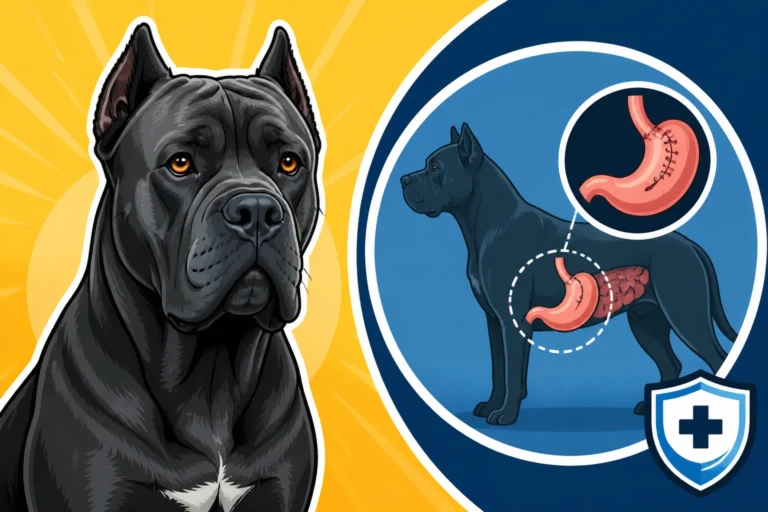
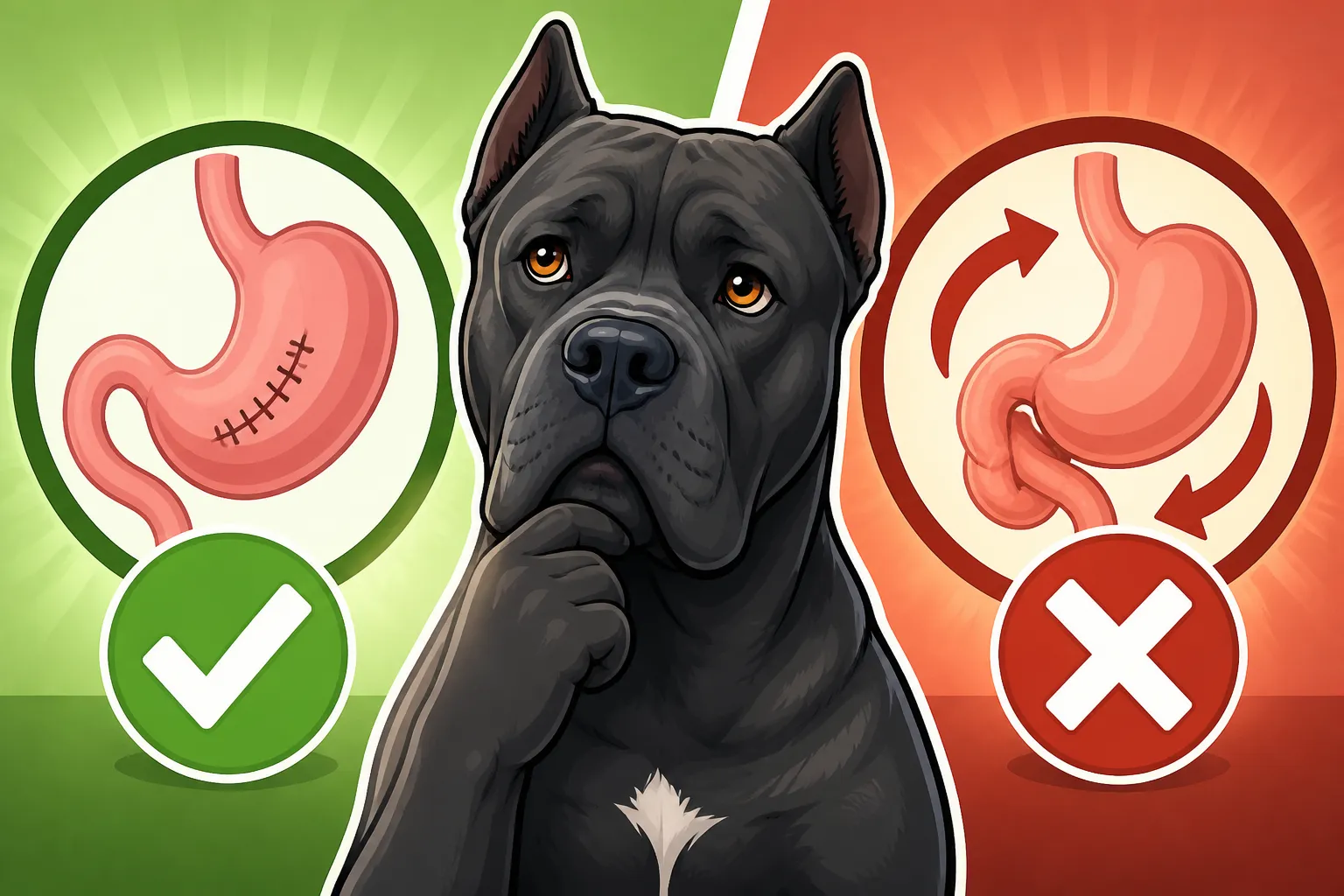
Given the life-threatening nature of bloat, many Cane Corso owners turn to preventive gastropexy. This surgical procedure permanently attaches the stomach to the abdominal wall, preventing it from twisting – though it won't prevent the stomach from dilating (filling with gas). It's a powerful tool in mitigating the most dangerous aspect of GDV.
The Surgical Procedure Explained
A gastropexy, at its core, is a relatively straightforward procedure designed to tether the stomach. The vet makes an incision, typically on the right side of the abdomen, exposes a portion of the stomach (specifically the pylorus, the lower part of the stomach), and sutures it securely to the inner lining of the abdominal wall. This permanent attachment effectively prevents the stomach from rotating or twisting, which is the "volvulus" part of GDV. While the stomach can still fill with gas (dilatation), it can't twist, meaning the critical blood supply remains intact, and the gas can usually be relieved by the dog or through veterinary intervention (such as a tube passed down the throat).
This procedure takes away the "panic button" scenario where you're racing to the emergency vet with a twisted stomach. It doesn't eliminate bloat entirely, but it takes away its most lethal consequence. The peace of mind this offers many Cane Corso owners is immense. It's a proactive step that can drastically improve the chances of survival should your dog ever experience a severe gastric distension.
Laparoscopic vs. Open Gastropexy
There are two primary ways a gastropexy can be performed:
- Open Gastropexy: This is the traditional method, requiring a larger incision in the abdomen. It allows the surgeon full visualization and access to the stomach and abdominal wall. While it's a more invasive surgery, it's highly effective and often more accessible, as not all veterinary clinics are equipped for laparoscopic procedures. The recovery time is typically a bit longer due to the larger incision.
- Laparoscopic (Keyhole) Gastropexy: This minimally invasive technique uses a small incision (or a few small incisions) through which a camera and specialized instruments are inserted. The stomach is then tacked to the abdominal wall using these tools. Laparoscopic surgery generally results in less pain, smaller scars, and a faster recovery time for the dog. However, it requires specialized equipment and training, meaning it might be more expensive and only available at certain veterinary specialty clinics. Many vets will discuss these options with you, weighing the benefits against the availability and cost.
Both methods are effective at preventing stomach torsion. The choice often comes down to your vet's recommendation, the availability of equipment, and your budget.
Combining Gastropexy with Spay/Neuter Procedures
One of the most common and practical approaches to preventive gastropexy is to combine it with another scheduled abdominal surgery, such as spaying or neutering. This makes a lot of sense for several reasons:
- Single Anesthesia Event: Your Cane Corso only undergoes anesthesia once, reducing the overall Anesthesia Risk in a Deep Chested Cane Corso. This is a huge benefit, especially for large breeds.
- Cost Efficiency: Performing both procedures at the same time often reduces the overall cost, as you're only paying for one surgical suite setup, one round of anesthesia, and one recovery period.
- Ideal Timing: Spaying and neutering are typically done when dogs are young (though for Cane Corsos, waiting until at least 18-24 months is often recommended for optimal joint development). This timing is often perfect for a preventive gastropexy, as the dog is healthy and resilient.
Many veterinarians actively recommend this combined approach, especially for breeds at high risk for GDV. If you're planning to spay or neuter your Cane Corso, it's definitely worth having an in-depth conversation with your vet about adding a gastropexy. The decision to perform Booking a Cane Corso's Stomach Tack With Its Neuter is one that many informed owners are making.
The Pros and Cons of Opting for a Prophylactic Gastropexy
Deciding whether to pursue a preventive gastropexy is a significant choice. There are compelling arguments for it, but also factors to consider carefully. It's about weighing the benefits against the risks for your individual dog and your peace of mind.
The Undeniable Benefits of Prevention
The most significant benefit of a prophylactic gastropexy is the dramatic reduction in the risk of fatal bloat. While your dog could still experience gastric dilation (a gassy, distended stomach), the life-threatening twist is prevented. This means that if bloat occurs, it’s much more likely to be managed medically, without emergency surgery, and with a significantly higher survival rate. This peace of mind is truly invaluable for owners who live with the constant worry of GDV. You know you've done everything in your power to protect your beloved companion from a potentially devastating event.
Consider the alternative: rushing to an emergency vet in the middle of the night, facing a frantic diagnosis, and a costly, high-risk surgery with a guarded prognosis. The thought alone is enough to make many owners opt for prevention. A gastropexy translates to less stress for you, and ultimately, a safer life for your Cane Corso. It’s an investment in their future health and your emotional well-being.
Potential Risks and Drawbacks to Consider
Like any surgical procedure, a gastropexy carries some inherent risks. Anesthesia, while generally safe, always has a small risk of complications, especially for large breeds or those with underlying health issues. Post-surgical pain, infection at the incision site, or internal bleeding are also possibilities, though rare. While serious complications are uncommon, they are not impossible, and it's essential to discuss these thoroughly with your veterinarian.
Another point to remember is that a gastropexy does not prevent the stomach from dilating. Your dog could still experience a gassy, uncomfortable stomach. However, without the twist, it's far less immediately dangerous. Also, the cost can be a factor. While combining it with spay/neuter can reduce expenses, a standalone laparoscopic gastropexy can still be a significant investment, especially if you haven't budgeted for such a procedure. Some owners might also be hesitant to put a healthy dog through elective surgery, which is a perfectly valid feeling.
Financial and Emotional Investment
The financial aspect of a gastropexy can range widely depending on whether it's an open or laparoscopic procedure, whether it's combined with another surgery, and where you live. Prices can vary from a few hundred dollars to well over a thousand. When considering the initial cost, it's crucial to compare it to the potential cost of emergency bloat surgery, which can easily run into thousands of dollars, plus follow-up care. Many pet insurance providers, like Healthy Paws, will cover gastropexy if it's considered medically necessary or recommended by a vet for high-risk breeds, but it’s always best to check your specific policy terms.
Beyond the monetary cost, there's an emotional investment. Making the decision for elective surgery on a healthy dog can be tough. You're weighing the 'what ifs' against the realities of surgery and recovery. However, the emotional relief and peace of mind that comes from knowing you've significantly reduced the risk of a fatal bloat episode are often cited as priceless by owners who’ve gone through with it. It allows you to enjoy your Cane Corso without that constant, nagging fear lurking in the back of your mind.
Making an Informed Decision for Your Cane Corso
The decision for a preventive gastropexy is deeply personal and should be based on a thorough understanding of your Cane Corso's individual circumstances and your comfort level. It’s not a one-size-fits-all answer.
Consulting with Your Veterinarian
Your veterinarian is your best resource for making this decision. They know your Cane Corso's health history, temperament, and can assess their specific risk factors. During your consultation, don't hesitate to ask every question swirling in your mind:
- What is my Cane Corso's individual risk for bloat?
- What are the specific surgical techniques available at their clinic or a specialty clinic they recommend?
- What are the potential complications, and how are they managed?
- What is the estimated cost, and what does it include?
- What is the recovery like, and what can I expect?
They can also give you realistic expectations about the procedure and recovery. Take notes, get second opinions if you feel necessary, and ensure you feel completely comfortable with the plan before proceeding. This is a critical discussion, much like deciding on The Cardiac Clearance on a Cane Corso's Papers or other major health screenings.
Assessing Your Dog's Individual Risk Profile
Beyond breed predisposition, consider these factors for your Cane Corso:
- Family History of Bloat: If parents or close relatives have bloated, your dog's risk is higher.
- Temperament: Anxious, stressed, or highly excitable dogs may be at slightly increased risk.
- Eating Habits: Does your Cane Corso gulp food and water? Are they prone to eating large meals quickly?
- Previous Bloat Episode: If your dog has experienced a bloat episode that resolved on its own (a rare occurrence for a full GDV, but possible for milder dilation), the risk of recurrence is very high without a gastropexy. Whether a Cane Corso Can Bloat a Second Time is a serious concern.
- Age: Older Cane Corsos generally have a higher risk.
Create a mental checklist of these factors. A young, calm Cane Corso who eats slowly and has no known family history might be a lower priority for gastropexy than an older, anxious dog from a bloat-prone line. Pet insurance plans, like those offered by Healthy Paws, often consider these risk factors when discussing coverage for such procedures, so understanding your individual dog's profile can also help you plan financially.
The Role of Lifestyle and Management in Bloat Prevention
Even if you opt for a gastropexy, or if you decide against it, smart lifestyle and management choices remain crucial for your Cane Corso's health. These aren't mutually exclusive strategies but rather complementary approaches to minimize risk.
- Slow Feeding: Use slow-feeder bowls or puzzle feeders to encourage slower eating and reduce air intake.
- Multiple Small Meals: Break up daily food rations into two or three smaller meals rather than one large one.
- Rest Before and After Meals: Ensure your Cane Corso rests calmly for at least an hour before and after eating and drinking. Avoid strenuous exercise or highly exciting activities during these times.
- Water Management: Provide fresh water but try to prevent rapid, excessive drinking, especially after exercise.
- Minimize Stress: A calm home environment contributes to overall health and can reduce stress-related risk factors.
While these measures cannot prevent torsion on their own in a predisposed dog, they certainly contribute to digestive health and reduce the chances of simple gastric dilation. The ideal approach often involves both proactive management and, for many, the added security of a preventive gastropexy.
Post-Gastropexy Care and What to Expect
The decision is made, the surgery is done – what now? Recovery from a gastropexy, whether open or laparoscopic, requires careful management to ensure proper healing and minimize complications.
Immediate Recovery and Hospital Stay
Immediately following the gastropexy, your Cane Corso will be carefully monitored at the veterinary clinic. This typically involves an overnight stay, sometimes two, depending on the type of surgery and your dog's individual recovery speed. During this time, the vet team will manage pain, monitor vital signs, check the incision site for any swelling or discharge, and ensure your dog is comfortable and stable. They’ll also check that your Cane Corso is willing to eat and drink small amounts.
Your vet will likely send your dog home with clear instructions for pain management, which usually includes oral medications. You might also receive specific dietary recommendations for the first few days post-op, often small, bland meals to ease digestion as the stomach heals. It's a critical period where patience and adherence to vet instructions are paramount. You want that tack to heal strong and secure.
Home Care and Activity Restrictions
Once your Cane Corso is home, your role in their recovery becomes even more important. Here’s what you can generally expect:
- Restrict Activity: This is perhaps the most crucial instruction. For at least 10-14 days, your Cane Corso will need to be on strict leash rest. No jumping, no running, no stairs if possible, and definitely no rough play. Short, controlled leash walks for potty breaks are usually allowed. This restriction is vital to allow the surgical site to heal without strain, preventing sutures from tearing or the stomach attachment from being compromised.
- Wound Care: You'll need to monitor the incision site daily for redness, swelling, heat, or discharge. Your vet might provide an Elizabethan collar (cone of shame) to prevent your Cane Corso from licking or chewing the incision, which could lead to infection or reopening. This can be challenging with a large, strong dog, but it's non-negotiable for proper healing.
- Medication: Administer all prescribed medications, typically pain relievers and possibly antibiotics, exactly as directed by your vet.
- Diet: Stick to the recommended diet, often bland food in small, frequent meals, gradually transitioning back to their regular food as advised.
- Follow-Up: A follow-up appointment, usually around 10-14 days post-op, will be scheduled to check the incision and remove any external sutures.
The recovery period demands dedication and vigilance. While your Cane Corso might seem to bounce back quickly, internal healing takes time. Overdoing it too soon can have serious consequences.
Long-Term Outlook After a Successful Gastropexy
The long-term outlook after a successful preventive gastropexy is excellent. The procedure is highly effective at preventing stomach torsion, meaning your Cane Corso is largely protected from the most dangerous aspect of GDV. While they can still experience gastric dilation, it's typically a much less severe and more manageable condition, allowing for medical intervention rather than emergency surgery.
Many owners report a significant reduction in anxiety after their Cane Corso has undergone a gastropexy. It offers a profound sense of security, knowing that one of the breed's most feared health risks has been addressed. It doesn't mean you can throw caution to the wind regarding feeding habits, but it certainly eases the burden of constant worry. With a successful gastropexy, your Cane Corso can continue to live a full, active life, and you can both enjoy more peace of mind.
| Feature | Open Gastropexy | Laparoscopic Gastropexy | Emergency GDV Surgery |
|---|---|---|---|
| Invasiveness | More invasive (large incision) | Minimally invasive (small incisions) | Highly invasive (large incision) |
| Recovery Time | Moderate to longer (2-4 weeks) | Shorter (1-2 weeks) | Extended, complex (4-8+ weeks) |
| Pain Level | Moderate to high | Low to moderate | Very high |
| Cost (Elective) | Moderate ($800 – $2,000) | Higher ($1,500 – $4,000) | Very high ($3,000 – $10,000+) |
| Prevents Torsion | Yes | Yes | Attempts to correct |
| Prevents Dilation | No | No | No |
| Anesthesia Risk | Standard for elective surgery | Standard for elective surgery | High, due to critical condition |
| Ideal Timing | With spay/neuter or adult | With spay/neuter or adult | Immediate, life-saving |
| Peace of Mind | High | High | None (after initial survival) |
Disclaimer
This article is intended for informational purposes only and does not constitute veterinary medical advice. Always consult with a qualified veterinarian for any health concerns or before making any decisions about your Cane Corso's care, including surgical procedures. Individual outcomes can vary.