Dry Eye in a Cane Corso After Lid Surgery
It’s a truly disheartening experience when you’ve gone through the stress and expense of correcting your Cane Corso's eyelid issues, breathing a sigh of relief that their eyes will finally be comfortable, only to notice new problems emerging. That persistent squint, the gooey discharge, the redness that just won't quit – it can feel like you've traded one eye problem for another. This guide is here to walk you through what dry eye, or Keratoconjunctivitis Sicca (KCS), can look like in a Cane Corso after lid surgery, why it happens, and how to manage it so your big companion can get back to seeing clearly and comfortably.
Understanding Dry Eye in Cane Corsos After Eyelid Surgery
You bring your beloved Cane Corso in for eyelid surgery, perhaps to correct entropion where the lid rolls inward, causing eyelashes to scratch the cornea, or ectropion, where the lid sags outward, leaving the eye exposed. The surgery goes well, your vet reassures you, and you think you’ve put those eye worries behind you. But sometimes, a new, equally frustrating issue can pop up: dry eye. It’s not just a minor irritation; it’s a chronic condition that, if left unmanaged, can lead to serious complications and persistent discomfort for your dog.
What is Keratoconjunctivitis Sicca KCS?
Keratoconjunctivitis Sicca, or KCS, is a fancy medical term for what we commonly call dry eye. It occurs when your dog’s eyes don't produce enough tears, or the tears they do produce aren't of the right quality. Tears are more than just water; they're a complex film made of three layers: a watery layer (produced by the lacrimal glands), an oily layer (from meibomian glands along the lid margins), and a mucous layer (from goblet cells in the conjunctiva). This intricate balance works together to keep the eye lubricated, nourished, and protected from dust and pathogens.
When any part of this tear film is deficient, the eye essentially dries out. Imagine trying to blink with sandpaper in your eye – that’s a bit how it feels for a dog with KCS. The surface of the eye, particularly the cornea and conjunctiva, becomes inflamed, leading to redness, pain, and sometimes even ulceration. While KCS can happen for many reasons, including autoimmune disease, certain medications, or congenital issues, its appearance after eyelid surgery can be particularly confusing for owners.
Why Lid Surgery Can Predispose to Dry Eye
It seems counterintuitive, doesn't it? You fix one eye problem, and another one arises. But there are a few reasons why a Cane Corso might develop or exacerbate KCS after eyelid surgery. First, the delicate nature of the eye and its surrounding structures means that any surgical intervention, no matter how carefully performed, can sometimes impact nerve function or the tiny ducts that deliver tears. The lacrimal glands, responsible for much of the watery tear production, can be subtly affected by swelling or scarring in the surgical area, leading to a temporary or even permanent reduction in tear output.
Secondly, lid surgery, especially if it significantly alters the shape or tension of the eyelids, can change how the tear film spreads across the eye. If the lid no longer distributes tears effectively with each blink, or if the eye surface is exposed more than intended, evaporation can increase, leading to functional dry eye even if tear production is technically adequate. Think of it like a faulty windshield wiper on a car – the fluid might be there, but it's not being spread properly. This can be particularly true if the surgery over-corrects ectropion, making the lids a bit too tight, or if there's any residual compromise in lid function. It's a complex balance, and sometimes fixing one mechanical issue can inadvertently tip the scales on another. Owners often describe a look that’s "better but still not right" after surgery, and KCS could be the culprit. If your Cane Corso has had surgery for conditions like Entropion in a Cane Corso's Lower Lid or The Sagging Lower Lid on a Cane Corso, this potential complication is definitely something to be aware of.
Recognizing the Signs of KCS Post-Surgery
The signs of KCS can sometimes be subtle, especially in the initial stages or if you're still recovering from the eyelid surgery. However, with a watchful eye, you can often pick up on the cues your Cane Corso is giving you. The most common signs include:
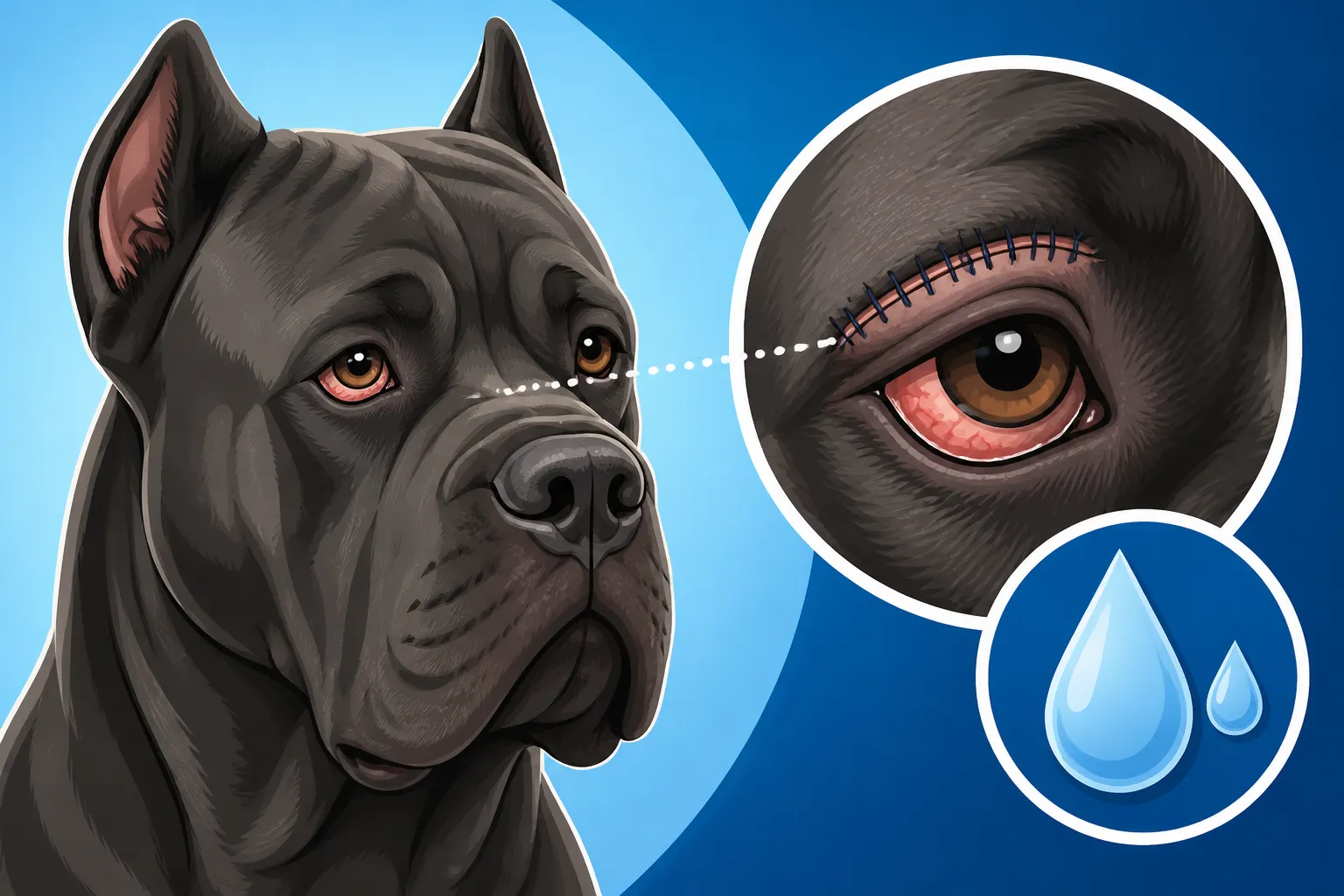
- Chronic Redness: The whites of the eyes (conjunctiva) will appear consistently red or inflamed, not just after exertion or a dusty walk.
- Thick, Mucus-like Discharge: This is often the most tell-tale sign. Instead of clear, watery tears, you'll see stringy, yellowish-white, or greenish discharge accumulating in the corners of the eyes or even smeared on the fur beneath. This discharge is the eye trying to protect itself with compensatory mucous.
- Frequent Blinking or Squinting: Your Cane Corso might seem uncomfortable, blinking more than usual, or partially closing their eyes in an attempt to relieve the irritation. They might even rub their eyes with a paw or against furniture.
- Dull, Cloudy Eyes: Over time, if KCS is left untreated, the cornea can lose its healthy, shiny appearance. It might look dull, hazy, or develop a bluish-white opacity. In severe, chronic cases, blood vessels can grow into the cornea, and pigmentation (dark spots) can occur, further affecting vision.
- Sensitivity to Light: Dogs with dry eye might be noticeably more sensitive to bright light, preferring dimmer areas.
- Reluctance to Open Eyes Fully: Upon waking, they might keep their eyes partially closed or struggle to open them completely due to crusting or discomfort.
It’s easy to dismiss some of these symptoms as normal post-surgical irritation, but if they persist beyond the expected recovery period, or if the discharge changes in character, it’s definitely time to revisit your veterinarian. You may have noticed some of these signs even before surgery if your Cane Corso was suffering from chronic irritation, and that's often because How Loose Lids Give a Cane Corso Chronic Eye Infections can also lead to a secondary KCS or ongoing irritation that mimics it.
Diagnosing and Managing Post-Surgical Dry Eye
Once you suspect KCS after your Cane Corso's lid surgery, getting a definitive diagnosis is crucial. While the symptoms are often quite indicative, confirming KCS requires a specific test. From there, management becomes a long-term commitment, but one that can significantly improve your dog's comfort and preserve their vision.
The Schirmer Tear Test How it Works and What it Means
The gold standard for diagnosing KCS is the Schirmer Tear Test (STT). This simple, quick, and relatively inexpensive test measures the amount of tears your dog's eyes produce over a specific period. Here's how it works:
Your vet will take a small, specially calibrated strip of filter paper, folded at one end. This folded end is then gently placed into the lower eyelid margin of each eye, usually near the outer corner. The dog will need to hold still for about 60 seconds (or sometimes less if tear production is extremely low). As tears are produced, they wick up the filter paper strip.
After one minute, the strips are removed, and your vet measures how many millimeters of the strip have become wet. The results provide a clear picture of tear production:
- Normal: Generally, 15 mm or more of wetting in one minute indicates healthy tear production.
- Borderline KCS: Readings between 10-14 mm might suggest mild KCS or a predisposition, especially if clinical signs are present.
- Definitive KCS: Readings below 10 mm are usually diagnostic for KCS. Severe cases can show as little as 0-5 mm of wetting.
This test is often performed before applying any eye drops, as medications can affect the results. If your Cane Corso has already undergone eyelid surgery, your vet will compare the STT results with the observed clinical signs. A low STT reading combined with mucus discharge and corneal changes confirms the diagnosis. It’s a vital step, as the treatment for dry eye is very different from, say, a simple bacterial infection. Sometimes, if there's any question whether Whether a Cane Corso's Entropion Returns After Surgery is causing new issues, this test can help clarify if KCS is an additional problem.
Treatment Options Lifelong Commitment
Once KCS is diagnosed, it's important to understand that it’s typically a lifelong condition requiring consistent management. The goal of treatment is to stimulate natural tear production, reduce inflammation, and supplement existing tears. The most common and effective treatments involve topical medications:
- Immunomodulatory Drugs: These are the cornerstone of KCS treatment. The most common are cyclosporine (e.g., Optimmune, Cyclosporine Ophthalmic Ointment) and tacrolimus (e.g., Tacrolimus Ophthalmic Solution). These medications work by suppressing the immune response in the lacrimal glands, which is often the underlying cause of tear deficiency in KCS. By reducing inflammation, they allow the glands to produce more natural tears. They usually need to be applied once or twice daily, indefinitely. It can take several weeks to see the full effect, so patience and consistent application are key.
- Artificial Tears and Lubricants: These are used to provide immediate relief, moisten the eye, and help flush out irritants and mucus. They don't stimulate tear production but offer crucial supportive care. They come in drops or thicker gels/ointments (e.g., Genteal, Refresh Optive, Viscotears). Your vet might recommend applying these several times a day, especially in conjunction with the immunomodulatory drugs.
- Anti-inflammatory Medications: In some cases, especially initially, your vet might prescribe a short course of topical corticosteroids (e.g., dexamethasone) to quickly reduce inflammation. However, these are generally not used long-term due to potential side effects like increasing intraocular pressure or delaying corneal healing if an ulcer is present.
- Antibiotics: If a secondary bacterial infection is present (which is common because dry eyes are more susceptible), a topical antibiotic might be prescribed to clear it up.
The key to successful management is consistency. Missing doses can set back progress and lead to flare-ups. This is why it’s so important to incorporate it into your daily routine. Finding a pet insurance provider that understands the financial implications of chronic conditions can be a huge relief. Companies like Healthy Paws are well-regarded for covering ongoing treatments for conditions like KCS, which can quickly add up.
Environmental Factors and Supportive Care
Beyond medication, managing your Cane Corso's environment and providing diligent supportive care can make a big difference in their comfort and the effectiveness of treatment.
- Regular Cleaning: That thick, gooey discharge needs to be gently wiped away throughout the day. Use a soft, damp cloth or a sterile eye wash. Accumulation of mucus can harbor bacteria and worsen irritation.
- Humidity: Dry environments can exacerbate KCS. If you live in an arid climate or use a lot of heating/AC, consider using a humidifier in the rooms where your Cane Corso spends the most time.
- Avoid Irritants: Keep your Cane Corso away from strong winds, dust, smoke, and harsh cleaning chemicals, all of which can further dry out or irritate their eyes. If you live in an area with high pollen counts, try to keep windows closed during peak season.
- Protective Eyewear: For some active Cane Corsos, especially those working outdoors or prone to being in dusty environments, dog-specific goggles (like Doggles) can provide a physical barrier against wind and debris.
- Hydration: Ensure your Cane Corso always has access to fresh water. While this won't directly impact tear production, overall hydration is important for general health.
- Regular Exercise and Mental Stimulation: While not directly related to KCS, a happy, well-exercised Cane Corso is generally more resilient and less prone to stress, which can sometimes indirectly affect health. Remember that even with a medical condition, a Cane Corso still needs Ninety Minutes a Day and a Cane Corso's Mind.
By combining medication with thoughtful environmental management, you can create the best possible conditions for your Cane Corso's eyes to heal and stay comfortable.
Long-Term Outlook and Preventing Complications
Living with a Cane Corso that has KCS can be challenging, but with proper, consistent care, many dogs lead full, comfortable lives. The long-term outlook largely depends on early diagnosis, adherence to the treatment plan, and regular monitoring.
Potential Complications of Untreated KCS
Ignoring KCS, or being inconsistent with treatment, can lead to serious and often irreversible complications for your Cane Corso:
- Chronic Pain and Discomfort: The constant dryness and inflammation cause ongoing pain, leading to a reduced quality of life for your dog. They might become withdrawn, less active, or irritable due to persistent discomfort.
- Corneal Ulcers: A dry cornea is a fragile cornea. Without the protective tear film, the surface of the eye is highly susceptible to abrasions, scratches, and bacterial infections, leading to painful corneal ulcers. These can be shallow or deep, and some can even perforate the eye, requiring emergency surgery and potentially leading to permanent vision loss.
- Vision Impairment or Blindness: Long-standing, untreated KCS leads to progressive corneal changes. This includes neovascularization (blood vessel growth into the cornea), fibrosis (scarring), and melanosis (pigmentation). These changes make the cornea opaque, significantly blocking light and ultimately leading to partial or complete blindness in the affected eye(s). This is why managing a condition like How DSRA Takes a Cane Corso's Sight is so crucial – any loss of vision can be devastating for a working breed.
- Secondary Infections: The dry eye environment is a perfect breeding ground for bacteria. Without the cleansing and antibacterial properties of a healthy tear film, recurrent bacterial conjunctivitis becomes a common and frustrating problem.
- Conjunctival Hyperplasia: The conjunctiva can become thickened and bumpy as a chronic response to inflammation, further contributing to discomfort and affecting tear distribution.
These complications are why early and aggressive management of KCS is so important. It's not just about comfort, but about preserving your Cane Corso's precious sight and overall well-being.
The Importance of Regular Vet Check-ups
Even once your Cane Corso is on a stable treatment plan for KCS, regular follow-up appointments with your veterinarian or a veterinary ophthalmologist are absolutely essential. These check-ups allow your vet to:
- Monitor Tear Production: They will repeat the Schirmer Tear Test to assess how well the medication is working and if tear production is improving or maintaining.
- Evaluate Corneal Health: Your vet will examine the cornea for any signs of ulcers, neovascularization, pigmentation, or scarring, using special stains like fluorescein if an ulcer is suspected.
- Assess for Secondary Infections: They will check for any signs of bacterial or fungal infections that might require additional treatment.
- Adjust Medication: Based on the clinical signs and STT results, your vet might adjust the dosage or type of medication, or add other supportive therapies. What works today might need tweaking in six months.
- Address Owner Concerns: These appointments are a crucial opportunity for you to voice any new concerns, discuss challenges with medication administration, or ask questions about your Cane Corso's progress.
Typically, initial follow-ups might be every few weeks to months, and once stable, they might be spaced out to every 6-12 months. However, if you notice any sudden worsening of symptoms, don't wait for the next scheduled appointment; contact your vet immediately. Regular vet visits are also crucial for other health clearances, such as The Yearly Eye Exam a Breeding Cane Corso Needs for breeders, which underscores the importance of ongoing eye health monitoring.
Financial Considerations and Pet Insurance
Dealing with a chronic condition like KCS, especially after already incurring the costs of eyelid surgery, can definitely strain the budget. The ongoing medication costs, coupled with regular veterinary visits and potential specialist consultations, can add up significantly over your Cane Corso's lifespan.
This is where pet insurance can be an absolute lifesaver. While most policies won't cover pre-existing conditions (so if KCS was diagnosed before you got insurance, it might not be covered), if your Cane Corso developed KCS after you enrolled in a policy, it would generally be covered as a new condition. A robust accident and illness plan, like those offered by Healthy Paws, can help mitigate these costs, covering a significant percentage of eligible vet bills after your deductible is met. This peace of mind allows you to focus on getting your dog the best possible care without constant worry about the financial burden.
When choosing a policy, look at what’s covered for chronic conditions, the reimbursement percentage, and the deductible options. It's often beneficial to have pet insurance in place from puppyhood, specifically for Cane Corsos, because they are prone to several health issues, and you never know what might arise. Understanding The Deductible That Suits a Cane Corso's Risks and comparing different plans is a smart move for any Cane Corso owner.
| Condition | Primary Symptoms | Common Treatments | Potential Outcome (Untreated) |
|---|---|---|---|
| Keratoconjunctivitis Sicca (KCS) | Redness, thick discharge, squinting, dull cornea | Immunomodulators (cyclosporine), artificial tears | Corneal ulcers, blindness, chronic pain |
| Entropion | Inward rolling eyelid, tearing, eye rubbing, conjunctivitis | Surgical correction (tucking/stapling) | Corneal ulcers, scarring, pain |
| Ectropion | Outward rolling eyelid, visible conjunctiva, discharge | Surgical correction (tightening/lifting) | Chronic conjunctivitis, dry eye, foreign body irritation |
| Conjunctivitis (Bacterial) | Redness, pus-like discharge, swelling | Topical antibiotics, anti-inflammatories | Persistent discomfort, corneal involvement |
| Corneal Ulcer | Squinting, pain, watery discharge, visible defect on cornea | Topical antibiotics, pain relief, possibly surgery | Vision loss, eye rupture, chronic scarring |
Disclaimer
This article is for general informational purposes only and does not constitute professional advice. Laws, prices and regulations vary by location and change over time. Consult a qualified professional for guidance on your specific situation.