The Cane Corso That Knocks Small Children Over
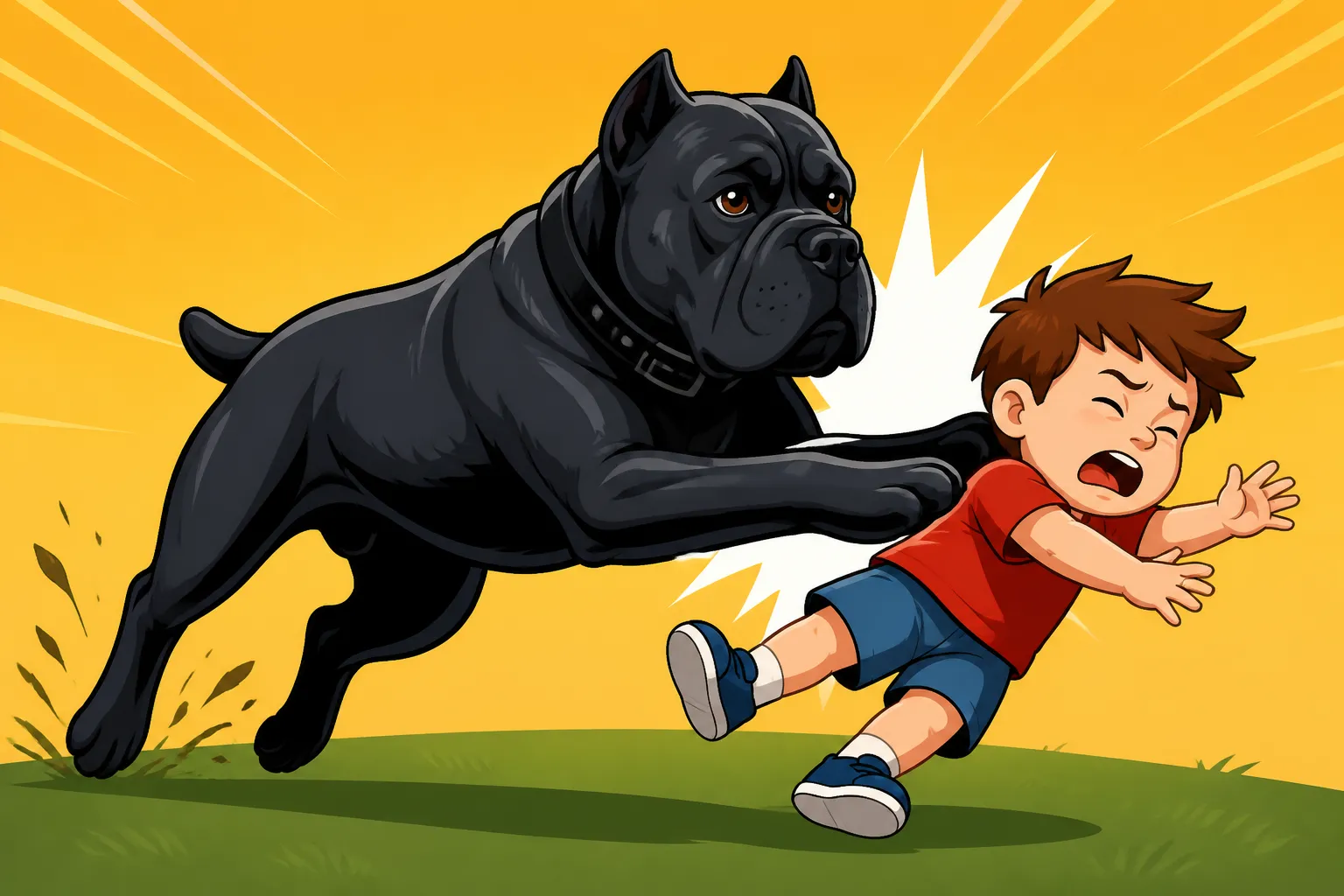
It's a scene many Cane Corso owners have experienced with a heart-stopping lurch: your beloved, giant dog, full of playful energy, barrels through the house and, without meaning a single bit of harm, knocks a small child right off their feet. This isn't about aggression or ill-intent; it's simply the reality of a powerful, often oblivious, large breed in a space with tiny humans. This guide will walk you through understanding why these accidents happen and, more importantly, equip you with practical strategies and training tips to minimize the risk and ensure a safe, harmonious home for everyone.
Understanding Your Cane Corso's Physicality Around Small Children
Let's be real, a Cane Corso isn't a fluffy little lap dog. They are magnificent, powerful animals, often weighing well over 100 pounds, with an incredible amount of kinetic energy. What feels like a gentle nudge from them can send a small human flying, and what's a minor stumble for them can be a serious fall for a toddler. It's not about malice; it's pure physics. Their size and muscle mass mean that even their most innocent movements can have significant impact.
The Power of Playful Ignorance
Imagine a playful puppy, all gangly legs and boundless enthusiasm. Now, scale that up to the size of a small pony. That's often what you're dealing with when a Cane Corso gets excited, especially around the high-pitched sounds and quick movements of children. They might not fully grasp the fragility of a child compared to themselves or another adult dog. A happy tail wag can be a forceful sweep, a casual turn can be a body check, and a sudden burst of zoomies can quickly become a bowling ball effect. This "playful ignorance" is a key factor in why accidents happen, and it's on us, as responsible owners, to bridge that gap in understanding through consistent training and management. They aren't trying to be rough; they simply don't have the same spatial awareness for tiny humans that they might for another adult.
Growth Spurts and Clumsy Phases
Cane Corsos grow incredibly fast, especially during their puppy and adolescent stages. While you might think of a "puppy" as small, a Cane Corso puppy can easily be 50-70 pounds by six months old, and they're still often uncoordinated. They're still learning to manage their rapidly changing bodies, which often leads to clumsy movements. They might trip over their own feet, misjudge distances, or simply be less graceful than an adult dog. This period, roughly from 4 months to 18 months, is particularly challenging for interactions with small children because the dog is gaining significant size and power while still lacking full body control and impulse management. The Growth Curve a Cane Corso Follows to Nineteen Months is a good read to understand this rapid development. During these months, extra vigilance and strict rules are paramount to prevent accidental collisions.
Why Accidents Happen: Unintended Collisions and Excitement Overload
Accidents don't usually stem from a Cane Corso intending to harm a child. Instead, they typically arise from situations where the dog's natural behaviors, combined with its sheer size and strength, intersect with a child's vulnerability. Understanding these common scenarios is the first step in preventing them.
The "Body Slam" and Enthusiastic Greetings
One of the most common ways a Cane Corso inadvertently knocks a child over is through an over-enthusiastic greeting or a sudden burst of excitement. Picture this: you walk in the door with your toddler, and your Cane Corso, thrilled to see you, bounds over. Instead of a gentle lean, they might "body slam" into the child with their chest or shoulder, simply out of excitement. This isn't aggression; it's just a lack of understanding boundaries and personal space, especially when emotions run high. Similarly, if a child squeals and runs, the dog's chase instinct might kick in, leading to a tackle that's all play from the dog's perspective but dangerous for the child. This is why Teaching a Cane Corso Not to Body Slam is such a critical piece of their training from a young age.
Zoomies, Tight Spaces, and Blind Corners
Another common scenario involves "zoomies" – those sudden, frantic bursts of energy where dogs race around, often in circles. In a large breed like a Cane Corso, zoomies can turn your living room into a canine demolition derby. If a child is in the path, even inadvertently, they can easily be knocked over. Similarly, tight hallways, doorways, or blind corners in the house present hazards. A child might turn a corner just as the Cane Corso is coming through, leading to an unavoidable collision. These situations highlight the importance of teaching your Cane Corso to be aware of its surroundings and to move calmly indoors, especially in areas where children play.
Resource Guarding and Startle Responses
While less common for accidental bumps, it's crucial to acknowledge situations like resource guarding or startle responses. If a Cane Corso is resting with a favorite toy or bone, and a child unexpectedly approaches or tries to take it, the dog might react by quickly moving or startling, again potentially knocking the child over. This isn't about the dog trying to be aggressive toward the child, but rather a sudden, instinctual reaction that could result in an accidental bump. Similarly, a sleeping Cane Corso might be startled awake by a child's sudden noise or touch, causing them to jump up quickly and potentially collide with the child. These situations underscore the need for strict rules around the dog's space and clear communication for children about when and how to approach the dog.
Proactive Training to Prevent Bumps and Tumbles
Preventing accidental collisions isn't about stifling your Cane Corso's personality or energy, but about channeling it responsibly through consistent, positive training. You want a dog that can be calm and respectful around children, understanding boundaries and impulse control.
Teaching "Off" and Four on the Floor Manners
One of the most fundamental commands for a large dog around children is "off." This command teaches your Cane Corso that jumping up, even in excitement, is not allowed. Start practicing "off" when your dog is a puppy, long before they're large enough to cause problems. Reward them heavily for keeping four paws on the floor when greeting people. You can also teach a "place" command, instructing your dog to go to a designated spot, like a dog bed or cot, and stay there calmly. This is invaluable when children are active in the room or when guests arrive. The Place Command That Saves a Cane Corso Household can walk you through the steps. A sturdy, comfortable place cot, perhaps found on Amazon, can become their safe haven and a consistent expectation for calm behavior.
Another crucial aspect is teaching them to navigate spaces gently. A simple "slow" or "easy" cue can be used when approaching children, walking through doorways, or coming down stairs. Practice having your Cane Corso walk beside you, not push ahead, using a secure leash even indoors for practice sessions if necessary.
Impulse Control: Wait, Stay, and Leave It
Impulse control is paramount for a Cane Corso living with small children. Commands like "wait," "stay," and "leave it" build a dog's ability to control its immediate urges.
- "Wait" can be used before going through a door, getting out of the car, or approaching a person. It teaches patience and prevents them from charging ahead.
- "Stay" reinforces holding a position, which is excellent for keeping them a safe distance from playing children.
- "Leave It" is crucial for preventing them from snatching a dropped toy or food item from a child, or chasing after a running child.
Start these commands in low-distraction environments and gradually increase the challenge. Use high-value treats and praise to reward success. Resources like online puppy schools, such as BAXTER & Bella, offer structured programs that can guide you through these crucial impulse control exercises. The goal is a dog that can pause, think, and respond to your direction, rather than acting purely on instinct. This dedicated Impulse Control Work for a Cane Corso pays dividends in a home with kids.
Recall and Emergency Stop
Even with the best intentions, a Cane Corso can get excited. A strong recall, where your dog immediately comes back to you when called, is an absolute lifesaver. Practice this constantly, using a happy, enthusiastic tone and generous rewards. Start in a quiet area, then gradually introduce distractions. For a dog that might not always respond when highly stimulated, an "emergency stop" or "down" from a distance can be invaluable. This means teaching your dog to drop to the ground and stay there, no matter what, when you give a specific, urgent command. This could prevent them from reaching a running child or charging into an area where a child is playing. Consistency is key here; every family member should use the same cues and expectations to avoid confusion.
Managing the Environment: Supervision and Safe Spaces
Training is foundational, but environmental management is your immediate safety net. No matter how well-trained your Cane Corso is, active supervision and strategically designed safe spaces are non-negotiable when children are present.
Active Supervision and Redirection
You simply cannot leave a Cane Corso and a small child unsupervised. Even for a moment. This breed, due to its size and guarding instincts, requires constant vigilance. Active supervision means being fully present, not just in the same room. Your eyes should be on both the dog and the child, anticipating potential interactions. If you see your Cane Corso getting too close, or if the child starts to get too boisterous, immediately redirect the dog with a calm command like "place" or "come" to you. Use toys or treats to divert their attention away from the child. Remember, Supervising a Cane Corso With Children on the Floor needs your undivided attention. It's about preventing the situation before it escalates, not reacting after a bump occurs.
Teach children Rules a Child Living With a Cane Corso Must Know, such as never approaching a dog that is sleeping, eating, or chewing a toy. They should also understand to never pull the dog's tail or ears, or climb on the dog. These rules are for both the child's safety and the dog's comfort.
Creating Safe Zones and Physical Barriers
Just as children need their own safe spaces, so does your Cane Corso. This might be a sturdy crate in a quiet room, or a designated "place" mat or bed away from the main activity. Teach your dog that this is their sanctuary, a place where they can retreat and won't be bothered. Investing in high-quality baby gates or sturdy indoor barriers, easily found on Amazon, can be incredibly helpful. These allow you to separate the dog from the children temporarily when you can't offer full supervision, or when the energy levels in the room are getting too high. This is particularly useful during meal times, when children are playing with small toys that could be a choking hazard for the dog, or when the Cane Corso needs a quiet break.
A strong, secure crate is not just for puppies. It can be a vital tool for older Cane Corsos, providing a secure, comfortable den for rest and a safe boundary when you need to focus on children or other tasks. Make sure the crate is appropriately sized for your large breed and introduce it positively.
Understanding Boundaries and Body Language
Both children and adults in the household need to understand the nuances of canine body language, especially for a powerful breed like the Cane Corso. Learn to recognize signs of stress or discomfort in your dog, such as lip licking, yawning, turning away, stiffness, or a low growl. These are not signs of aggression initially, but rather requests for space. Teach children to respect these signals and to give the dog space when they see them. Conversely, teach your dog to respect personal space around children. By fostering mutual respect and understanding, you create a safer environment where everyone knows their boundaries, reducing the likelihood of accidental collisions. A consistent routine and clear The Structure a Cane Corso Needs Every Single Day helps them feel secure and less prone to unexpected bursts of energy.
| Strategy | Description | Why it Helps Prevent Bumps |
|---|---|---|
| "Off" Command | Teaches the dog not to jump on people, keeping paws on the floor. | Directly prevents jumping, a common cause of knocking children over. |
| "Place" Command | Directs the dog to a specific spot to settle calmly. | Creates a calm, designated safe zone for the dog away from active children. |
| Impulse Control | Commands like "Wait," "Stay," "Leave It" develop self-control. | Curbs sudden movements, chasing, or charging, reducing accidental collisions. |
| Active Supervision | Constant, hands-on monitoring of dog and child interactions. | Allows for immediate redirection and prevents situations from escalating. |
| Physical Barriers | Gates, crates, or separate rooms to divide space. | Ensures separation when direct supervision isn't possible, eliminating collision opportunities. |
| Body Language Literacy | Understanding dog's stress signals and teaching children boundaries. | Fosters mutual respect, reduces child intrusions, and prevents startled reactions from the dog. |
The bond between a Cane Corso and the children in its family can be incredibly special, a true testament to the breed's loyal and protective nature. By proactively training, consistently supervising, and thoughtfully managing their environment, you can foster a home where this magnificent dog and your little ones can coexist safely and happily, without the fear of accidental tumbles. It takes effort, dedication, and realistic expectations, but the rewards are immeasurable.
Disclaimer
This article is for general informational purposes only and does not constitute professional advice. Laws, prices and regulations vary by location and change over time. Consult a qualified professional for guidance on your specific situation.