Why Dominance Methods Backfire on a Cane Corso
It’s a frustrating reality that many Cane Corso owners, especially those new to the breed, often encounter advice rooted in outdated "dominance" theories. You’re told to be the "alpha," to show your dog "who's boss," and to use corrections that feel harsh and often don't actually work. This guide is here to explain why these methods not only fall short with a strong, intelligent breed like the Cane Corso but can actually damage the incredible bond you're trying to build, and what genuinely effective alternatives exist.
The Roots of Dominance Theory and Why It's Misguided for Cane Corsos
The idea of "dominance" in dog training has been around for a long time, often passed down through generations of dog owners and even some trainers. It sounds logical on the surface – dogs live in packs, packs have alphas, therefore you must be the alpha to control your dog. The problem is, this whole concept is built on a shaky foundation of misunderstanding.
Outdated Science and the "Alpha Wolf" Myth
The primary source of dominance theory in dog training stems from observations of captive wolves in the 1940s. Researchers witnessed aggressive interactions and rigid hierarchies, concluding that wolves constantly fought to establish dominance, with an "alpha" at the top. This idea was then incorrectly extrapolated to domestic dogs, suggesting that dog owners needed to mimic this "alpha" role to prevent their dogs from trying to take over the household.
However, subsequent research, particularly studies of wild wolf packs, completely debunked this. Wild wolf packs are typically family units, with the "alpha" being the parent. Their interactions are cooperative, not constantly combative. The leadership is inherent, not something achieved through brute force or constant assertion. Domestic dogs, while distantly related to wolves, are even further removed from this ancestral behavior pattern. They have evolved alongside humans for thousands of years, developing unique ways of communicating and interacting that are far more about cooperation and understanding than a never-ending struggle for power. Applying outdated wolf science to your Cane Corso is like trying to fix a modern computer with tools designed for a typewriter – it just doesn't compute.
The Cane Corso's Natural Temperament and Guarding Instinct
Cane Corsos are magnificent dogs, known for their intelligence, loyalty, and protective instincts. They are naturally watchful, confident, and bond deeply with their families. This isn't a breed that's looking to "dominate" you; they're looking for clear, consistent leadership and a secure place within their family unit. Their guarding instincts are innate, not a sign that they are trying to be the "alpha." They were historically bred to protect property and livestock, making decisions in the absence of direct human instruction. This means they are intelligent problem-solvers who thrive on clear direction and mutual respect, not subjugation.
When you approach a Cane Corso with a dominance mindset, you misunderstand their core nature. You might interpret their natural assertiveness or confidence as a challenge to your authority, when in reality, they are simply being a Cane Corso. Their natural inclination is to form a strong partnership, a relationship built on trust and clear communication, where they understand their role and yours. The Roman War Dog Behind the Cane Corso gives a good historical overview of what these dogs were bred for, and it's not about being a household tyrant.
How Dominance-Based Training Can Harm Your Cane Corso
Using dominance-based training with a Cane Corso is particularly risky due to their size, strength, and inherent protective nature. What might seem like a quick fix can often lead to long-term behavioral issues, eroding the very foundation of trust you need with such a powerful breed.
Eroding Trust and Creating Fear
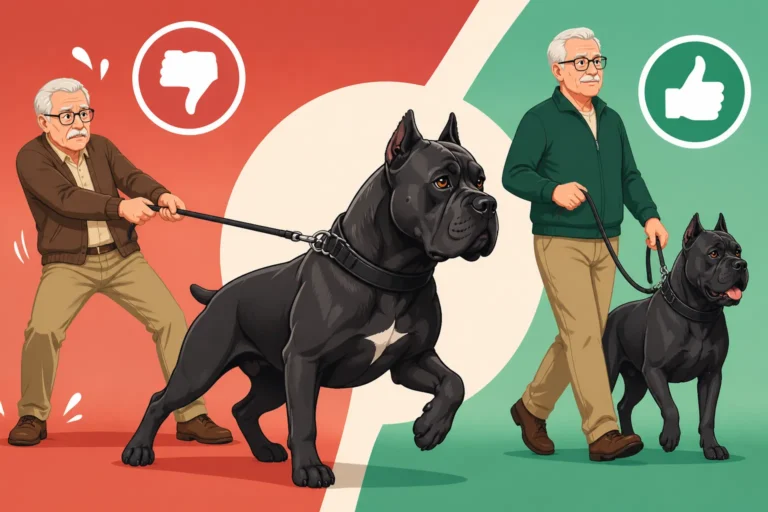
Imagine trying to communicate with someone who constantly yells at you, physically pushes you around, or punishes you for actions you don't understand. How long would it take before you stopped trusting them, or even started to fear them? That's what dominance-based training can feel like for your Cane Corso. Methods like alpha rolls, forced submissions, leash corrections with choke or prong collars meant to "assert control," or stare-downs are designed to intimidate.
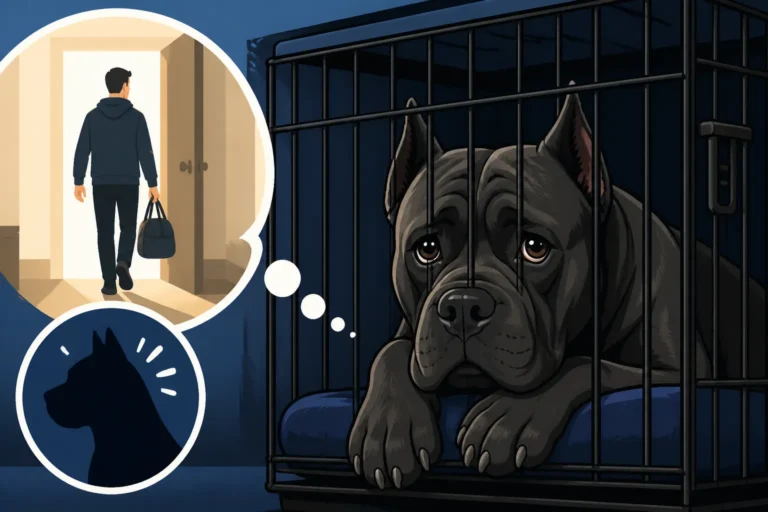
For a sensitive and intelligent breed, these tactics don't teach them what you want them to do; they teach them to be wary of you. Your Cane Corso learns that you are unpredictable, potentially harmful, and not a safe source of guidance. This can be especially damaging for a breed whose confidence and loyalty are paramount. Instead of looking to you for direction, they might become hesitant, avoid eye contact, or even try to escape situations where they anticipate punishment. This erosion of trust makes genuine training, where your dog is a willing participant, incredibly difficult. What an Anxious Cane Corso Looks Like can shed light on some of the signs your dog might be showing if they're experiencing fear or stress.
Escalating Conflict and Aggression
A common and dangerous backfire of dominance training is the escalation of conflict and, in some cases, the creation of aggression. When a dog is constantly challenged or forced into submission, their natural instinct is often to defend themselves. If they perceive a threat from their owner – whether it's a harsh physical correction, a frightening growl, or an intimidating posture – they may respond with fear-based aggression.
For a Cane Corso, a breed capable of immense power, this is a serious concern. A dog that feels cornered or threatened may snap, bite, or lunge in an attempt to protect itself. This isn't "dominance" on their part; it's a desperate cry for safety. Such incidents can be incredibly dangerous and severely strain the owner-dog relationship, leading to a breakdown in communication and a potentially dangerous situation. It's a vicious cycle: the owner interprets the dog's defensive reaction as further proof of "dominance" and doubles down on harsh methods, only to provoke more aggressive responses.
Suppressing Natural Behaviors Instead of Guiding Them
Dominance methods often aim to suppress unwanted behaviors rather than teaching appropriate alternatives. For example, if your Cane Corso jumps up, a dominance-based trainer might recommend kneeing them in the chest or physically pushing them down. While this might stop the jumping in the moment, it doesn't teach your dog what to do instead. They haven't learned to keep four paws on the floor, or to greet politely. They've only learned that interacting with you in that way results in pain or discomfort.
This suppression can lead to other problems. The underlying reason for the behavior (perhaps excitement, lack of impulse control, or a need for attention) is never addressed. The dog might simply replace the suppressed behavior with another undesirable one, or worse, internalize the stress, leading to a "fear freeze" or a dog that appears compliant but is actually emotionally shut down. For a working breed like the Cane Corso, suppressing their natural drives and curiosity is counterproductive. We want to guide their powerful instincts into constructive channels, not crush their spirit. Think about teaching Impulse Control Work for a Cane Corso rather than just punishing reactions.
Building a Stronger Bond with Positive Reinforcement
Instead of engaging in a power struggle with your Cane Corso, focus on building a strong, cooperative relationship based on trust, clear communication, and positive reinforcement. This approach is not about being permissive; it's about being an effective, consistent leader who guides their dog with kindness and clarity.
Understanding Your Cane Corso's Motivations
The first step in positive reinforcement training is understanding what truly motivates your Cane Corso. Just like people, dogs have different things they value. For some, it's a tasty treat. For others, it's a favorite squeaky toy, a good game of tug, or enthusiastic verbal praise and petting. Many Cane Corsos are highly food-motivated, which makes training a breeze when you have high-value treats on hand. Others might be more driven by play or affection.
Observe your dog closely. What do they really get excited about? Once you identify their motivators, you can use them as powerful rewards for desired behaviors. This turns training into a fun game where your Cane Corso wants to participate because good things happen when they do what you ask. This also means understanding their physical and mental needs; a bored or under-exercised Cane Corso will be more prone to misbehavior, regardless of your training method. Ninety minutes of engaging activity a day, including mental stimulation, can make a huge difference, as outlined in Ninety Minutes a Day and a Cane Corso's Mind.
Establishing Clear Communication and Boundaries
Positive reinforcement isn't about letting your dog run wild; it's about communicating your expectations clearly and consistently. This involves teaching specific cues (commands) and rewarding your Cane Corso when they perform them correctly. When teaching a new behavior, keep sessions short, fun, and free of distractions. Break down complex tasks into small, achievable steps. For example, teaching "sit" involves luring your dog into the position, marking the moment their rear touches the ground (with a verbal marker like "yes!" or a clicker), and immediately rewarding them.
Boundaries are also crucial. Your Cane Corso needs to understand the rules of the house. This might mean teaching them to stay on their "place" mat when guests arrive, or waiting patiently at the door before going outside. The Place Command That Saves a Cane Corso Household details how critical this can be. These aren't established through punishment, but through teaching and rewarding the correct behavior within those boundaries. For instance, if your Cane Corso jumps on the couch, instead of yelling, you can teach them to lie on their bed instead and reward them for staying there. Consistency is key across all family members.
Practical Positive Reinforcement Techniques
There are many effective positive reinforcement techniques you can use with your Cane Corso. Here are a few to get you started:
- Luring: Use a treat to guide your dog into the desired position (e.g., holding a treat over their head to get them to sit). Once they're in position, mark and reward.
- Capturing: Reward your dog when they spontaneously offer a behavior you like. If they lie down calmly, say "yes!" and give them a treat. They'll start to offer that behavior more often.
- Shaping: For more complex behaviors, reward successive approximations. If you're teaching them to touch a target, first reward them for looking at it, then for moving towards it, then for sniffing it, and finally for touching it.
- Clicker Training: A clicker acts as a precise marker, telling your dog exactly when they've done something right. It's incredibly effective for clear communication. You can find excellent clickers and training pouches on platforms like Amazon.
- Rewarding Good Choices: Actively look for opportunities to reward your Cane Corso for doing things you like. If they walk nicely on the leash, periodically reward them. If they ignore a distraction, reward them. Loose Leash Walking a Cane Corso Puppy covers techniques that benefit greatly from positive reinforcement.
Many online resources, like the programs offered by BAXTER & Bella, are built entirely on positive reinforcement principles and can provide structured guidance for owners.
| Training Approach | Focus | Primary Tools | Relationship Impact | Typical Outcomes |
|---|---|---|---|---|
| Dominance-Based | Establishing "alpha" status, asserting control | Physical corrections, intimidation, force | Fear, distrust, potential aggression | Suppressed behaviors, learned helplessness, reactivity |
| Positive Reinforcement | Teaching desired behaviors, building cooperation | Treats, toys, praise, clicker | Trust, strong bond, willing participation, joy | Confident, enthusiastic learner, reliable behaviors |
When to Seek Professional Help
Even with the best intentions and knowledge of positive reinforcement, raising a Cane Corso can present unique challenges. Sometimes, behaviors emerge that are beyond the scope of a basic guide, or you might feel overwhelmed and unsure how to proceed. That's when professional help becomes invaluable.
Recognizing the Signs of Behavioral Challenges
It's important to differentiate between typical puppy shenanigans or adolescent pushiness and genuine behavioral challenges that require expert intervention. Signs that you might need a professional trainer or behaviorist include:
- Persistent aggression: This includes growling, snapping, lunging, or biting at people or other animals, especially if it's escalating or occurring frequently.
- Severe anxiety: Excessive panting, drooling, pacing, destruction, or self-harm when left alone (separation anxiety) or in specific situations (noise phobias).
- Extreme fear: Your Cane Corso is consistently terrified of new people, places, or objects, to the point where it impacts their quality of life.
- Unmanageable reactivity: Lunging and barking intensely at triggers (dogs, people, cars) that makes walks or public outings impossible. What to Do When a Cane Corso Lunges at a Dog is a good resource here.
- Obsessive-compulsive behaviors: Repetitive behaviors like tail chasing, flank sucking, or excessive licking that seem beyond their control.
- Sudden changes in behavior: A previously well-adjusted Cane Corso suddenly becomes withdrawn, aggressive, or fearful.
Don't wait until a problem becomes severe. Early intervention can make a significant difference in the outcome for your Cane Corso.
Finding a Qualified, Modern Trainer
Choosing the right professional is critical. Avoid trainers who advocate for "pack leader" or "dominance" methods, use fear-based tools like shock collars, or promise quick fixes without addressing the underlying issues. Instead, look for trainers who:
- Are certified and use positive reinforcement: Look for certifications from reputable organizations. These trainers focus on rewarding desired behaviors and managing the environment to prevent unwanted ones.
- Have experience with large, powerful breeds: A Cane Corso is not a Golden Retriever. Their size, strength, and guarding instincts require a trainer who understands these specific breed characteristics.
- Focus on teaching you as much as your dog: A good trainer empowers you with the knowledge and skills to continue training effectively after their sessions are over.
- Offer transparent methods: They should be able to clearly explain why they do what they do and demonstrate their techniques.
- Prioritize safety and welfare: The dog's physical and emotional well-being should always come first.
Interview potential trainers, ask for references, and watch them work with other dogs if possible. A good relationship with your trainer is just as important as the relationship with your dog. What to Look For in a Cane Corso Trainer provides further guidance on this crucial decision.
Tools and Resources for Positive Training
The world of positive reinforcement training offers a plethora of helpful tools and resources designed to make learning enjoyable and effective for both you and your Cane Corso. These aren't meant to replace good training, but to support it.
- Long Lines: Essential for teaching recall in a safe, controlled environment. You can find durable long lines in various lengths, often 20-30 feet, on Amazon. This allows your Cane Corso to explore while you maintain a safety connection. Using a Long Line With a Cane Corso explains the benefits.
- Interactive Toys: Puzzle toys, sniff mats, and durable chew toys (also readily available on Amazon) provide mental stimulation and can help channel your Cane Corso's energy and drive constructively.
- Management Tools: Baby gates, crates, and durable playpens can help manage your Cane Corso's environment, preventing them from practicing unwanted behaviors when you can't supervise directly.
- Online Courses and Communities: Platforms like BAXTER & Bella offer comprehensive online puppy and dog training programs that guide you step-by-step through positive reinforcement techniques from the comfort of your home. These are often great for consistent learning and provide access to a community of like-minded owners and expert support.
- High-Value Treats: Keep a variety of small, soft, and smelly treats on hand. These are your primary currency in positive reinforcement. Experiment to find what your Cane Corso considers truly high-value.
Remember, every Cane Corso is an individual. What works for one might need slight adjustments for another. The key is to be patient, consistent, and always approach your training with kindness and understanding.
Disclaimer
This article is for general informational purposes only and does not constitute professional advice. Laws, prices and regulations vary by location and change over time. Consult a qualified professional for guidance on your specific situation.