How DSRA Takes a Cane Corso’s Sight
It's truly heartbreaking to witness any dog slowly lose their most vital senses, but when it happens to a powerful, intelligent breed like the Cane Corso, the impact feels especially profound. The fear of seeing your loyal companion struggle with something as fundamental as sight is a real and valid concern for many owners. This comprehensive guide will delve into Distichiasis and Stargardt-like Retinal Atrophy (DSRA), a devastating genetic eye disease, explaining precisely how it robs a Cane Corso of its vision and what responsible owners and breeders need to know.
Understanding DSRA and Its Impact
DSRA, or Distichiasis and Stargardt-like Retinal Atrophy, sounds complex, and in many ways, it is, but understanding its core mechanisms is crucial for any Cane Corso owner or enthusiast. This inherited condition targets the retina, the light-sensitive tissue at the back of the eye, progressively deteriorating it and ultimately leading to blindness. It's a cruel twist of fate for dogs often relied upon for their keen senses and protective instincts.
What is DSRA?
To break it down, DSRA encompasses two primary issues, though the "Stargardt-like Retinal Atrophy" is the major player in vision loss. Distichiasis refers to the presence of extra eyelashes that grow from the oil glands in the eyelid margin, often rubbing against the cornea and causing irritation, pain, and sometimes secondary corneal damage. While uncomfortable and requiring veterinary attention, distichiasis itself is generally not the primary cause of blindness. It's the "Stargardt-like Retinal Atrophy" part that truly devastates a Cane Corso's sight. This is a form of progressive retinal atrophy (PRA), which describes a group of genetic disorders that cause the degeneration of the photoreceptor cells (rods and cones) in the retina. Stargardt disease in humans is a similar condition, hence the "Stargardt-like" classification. Essentially, the cells responsible for detecting light start to die off, meaning the eye loses its ability to convert light into signals the brain can interpret.
How Does It Steal Sight?
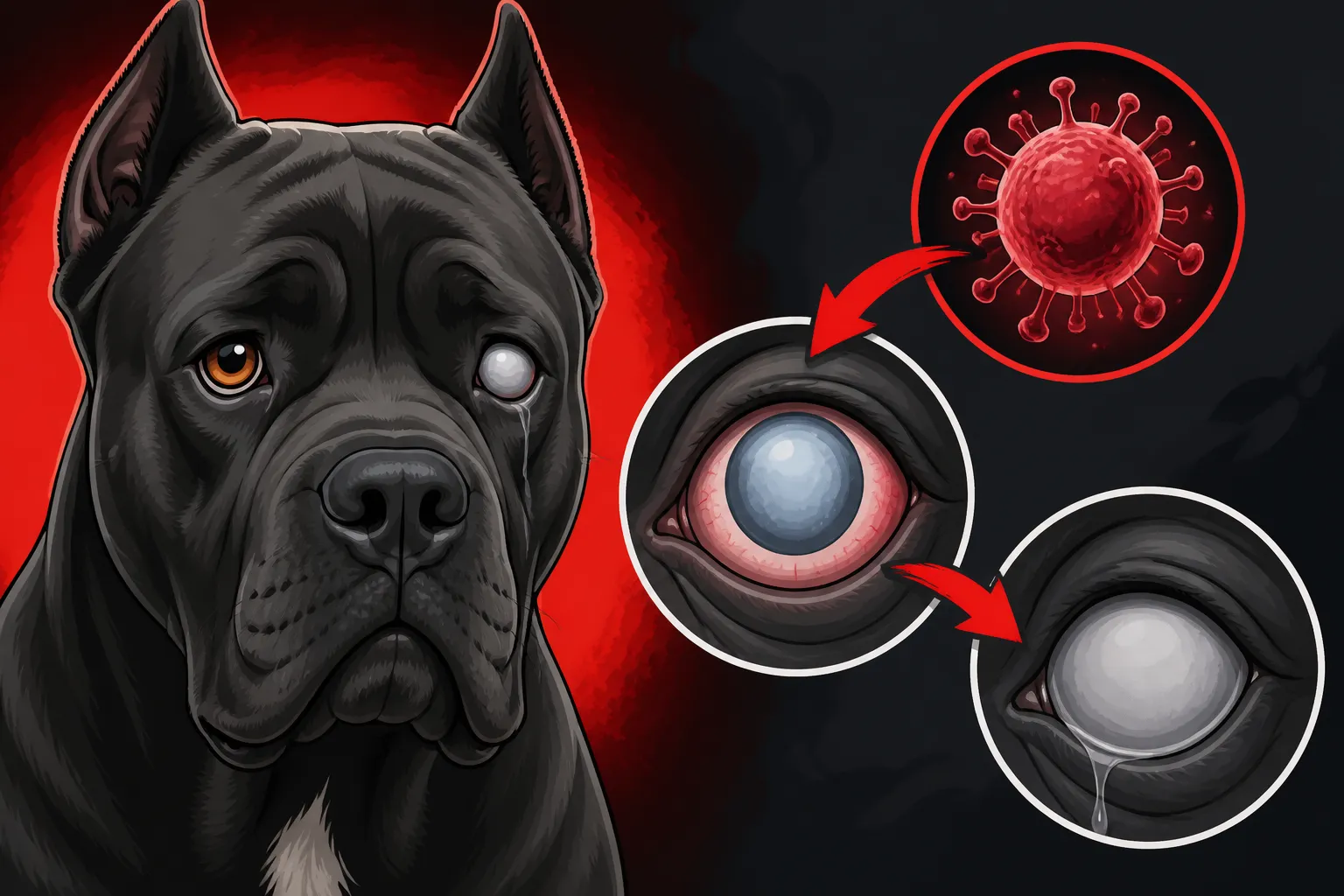
The progression of DSRA is typically insidious, starting subtly and worsening over time. It primarily affects the rod cells first, which are responsible for vision in low light conditions. This means one of the earliest signs you might notice is your Cane Corso struggling with night blindness. They might become hesitant to navigate familiar spaces in the dark, bump into furniture after sunset, or be reluctant to go outside when the light fades. This can be particularly alarming in a breed known for its confidence and spatial awareness. As the disease advances, the cone cells, responsible for daylight and color vision, also begin to degenerate. Eventually, this leads to complete daytime blindness. The timeline for this progressive loss varies between individuals, but the outcome is, unfortunately, irreversible. Imagine a powerful, athletic dog suddenly unable to track a toy, navigate a staircase, or even recognize your hand in front of their face. It's a profound loss that significantly alters their world and your life together.
Recognizing the Early Signs
Catching DSRA early can help you prepare and manage the condition, even though there's no cure. Beyond the initial signs of night blindness, other indicators might start to emerge. You might notice your Cane Corso's pupils appearing unusually dilated, even in bright light, as the eye tries to let in as much light as possible to compensate for the failing retina. Their eyes might also develop a cloudy or reflective appearance in certain lighting conditions, sometimes described as a "tapetal glow." More broadly, behavioral changes can be telling. A previously confident dog might become more tentative, start bumping into objects, or become startled easily because they can't see approaching threats or people. They might become more reliant on their other senses, such as smell and hearing, to navigate their environment. If you're observing any of these subtle shifts, especially if your Cane Corso has known carriers in their lineage, it's absolutely vital to schedule an appointment with a veterinary ophthalmologist for a thorough eye exam. Early diagnosis allows you to start adapting their environment sooner rather than later.
The Genetic Link and Testing
Understanding the hereditary nature of DSRA is paramount for anyone involved with Cane Corsos, from future owners to dedicated breeders. This isn't a disease that just appears out of nowhere; it's passed down through generations. The good news is that science has given us the tools to identify and, ultimately, prevent its spread.
The Hereditary Factor
DSRA is an autosomal recessive inherited disorder. What does "autosomal recessive" actually mean in practical terms for your Cane Corso? It means that a dog must inherit two copies of the defective gene – one from each parent – to actually develop the disease and be "affected." If a dog inherits only one copy of the defective gene and one normal gene, they won't show symptoms of the disease themselves; they'll be a "carrier." Carriers are healthy but can pass the defective gene on to their offspring. This is why the disease can sometimes seem to skip generations, reappearing unexpectedly if two carriers are bred together. This intricate dance of genetics highlights why understanding the full genetic health of a Cane Corso, not just their physical appearance, is so crucial, especially for breeding. The disease is quite literally embedded in The Two DNA Diseases in Cane Corso Pedigrees.
Why Both Cane Corso Parents Need the DNA Panel
Given the recessive nature of DSRA, testing only one parent isn't enough. For a breeder to responsibly plan a litter, both prospective parents must undergo DNA testing for DSRA. If you breed a "clear" dog (meaning they have two normal copies of the gene) with another "clear" dog, all puppies will be clear. If you breed a clear dog with a carrier, some puppies might be clear, and others might be carriers, but none will be affected. The real risk comes when two carriers are bred together. In this scenario, statistically, 25% of the puppies could be affected by DSRA, 50% would be carriers, and 25% would be clear. This is a devastating outcome for both the puppies and their future owners. Therefore, comprehensive DNA screening for both parents is not just a recommendation; it's an ethical imperative to ensure the health and welfare of the Cane Corso breed. When considering a puppy, asking a breeder to see Reading a Cane Corso's DNA Results Before You Buy is a non-negotiable step.
Interpreting DNA Results
Once you get a DNA test back for DSRA, you'll typically see one of three results:
- Clear: This means the dog has two normal copies of the gene and will not develop DSRA, nor will they pass the defective gene on to their offspring. These dogs are ideal for breeding, assuming all other health clearances are met.
- Carrier: This dog has one normal copy of the gene and one defective copy. They will not develop DSRA themselves. However, they can pass the defective gene to approximately 50% of their offspring. A carrier can be bred to a "clear" dog, but never to another carrier, to ensure no affected puppies are produced.
- Affected: This dog has two copies of the defective gene. They will develop DSRA and will pass the defective gene to 100% of their offspring. Affected dogs should never be bred.
Understanding these results allows breeders to make informed decisions that protect the health of future generations. It’s also important for prospective owners to understand these terms when evaluating a puppy's pedigree and the health testing done by the breeder. Insurers like Healthy Paws often look favorably upon proactive health testing, as it demonstrates responsible ownership and breeding practices, potentially influencing coverage for genetic conditions.
Here's a quick summary of what those results mean for breeding:
| Parent 1 Result | Parent 2 Result | Offspring Chance: Clear | Offspring Chance: Carrier | Offspring Chance: Affected | Breeding Recommendation |
|---|---|---|---|---|---|
| Clear | Clear | 100% | 0% | 0% | Recommended |
| Clear | Carrier | 50% | 50% | 0% | Recommended (with caution) |
| Carrier | Carrier | 25% | 50% | 25% | Not Recommended |
| Clear | Affected | 0% | 100% | 0% | Not Recommended |
| Carrier | Affected | 0% | 50% | 50% | Not Recommended |
| Affected | Affected | 0% | 0% | 100% | Never Recommended |
Living with a DSRA-Affected Cane Corso
Discovering your Cane Corso has DSRA can be devastating, but it's not a death sentence for their quality of life. While their vision will deteriorate, these resilient dogs can adapt remarkably well with the right support and adjustments. It means a shift in your approach, but the bond remains, and their happiness is still achievable.
Adapting Your Home Environment
The key to helping a blind or vision-impaired Cane Corso is consistency and safety. Once they start losing their sight, their world becomes a map they need to memorize using their other senses. Avoid rearranging furniture or leaving clutter in unexpected places. Keep food and water bowls, beds, and toys in fixed locations. Consider placing different textures of mats or rugs near doorways or steps to act as sensory markers. For stairs, baby gates or ramps can prevent accidents. Cushion sharp corners on furniture. If you have outdoor access, ensure your yard is securely fenced and free of hazards like exposed roots or gardening tools. Consistency is their guiding light, giving them confidence to navigate their familiar surroundings. Remember that even though their eyes are failing, their minds are still sharp, and they rely heavily on their sense of smell and hearing.
Maintaining Quality of Life
A Cane Corso losing its sight still needs mental and physical stimulation. Just because they can't see doesn't mean they stop being intelligent, active dogs. Scent work is an incredible outlet; hide treats around the house or yard and let their powerful nose do the work. Interactive puzzle toys that dispense food can keep them engaged. Verbal cues become even more important – use clear, consistent commands for everything from "step up" to "watch out." Leash walks can continue, but perhaps on quieter routes, using a shorter lead to give you more control and a consistent pace. Always announce your presence before touching them to avoid startling them. While their vision fades, their emotional connection to you remains strong. Continuing to engage them in activities they love, adapting as necessary, will help them thrive. For long walks, remember that How Far an Old Cane Corso Should Still Walk applies, and for general care, ensure to perform The Yearly Eye Exam a Breeding Cane Corso Needs.
Financial and Emotional Toll
There's no sugarcoating it: living with a dog with a progressive disease like DSRA carries both a financial and emotional burden. While there's no cure, there will be veterinary visits, regular eye check-ups to monitor progression, and possibly medications for secondary issues like the distichiasis component or managing discomfort. The cost of adaptive equipment, such as harnesses with "blind dog" patches or specialized toys, can add up. This is where a robust pet insurance policy, perhaps from providers like Healthy Paws, can be a lifesaver, helping to offset some of the veterinary expenses that can quickly accumulate. Emotionally, it's tough. Watching your strong, confident Cane Corso become more vulnerable can be heartbreaking. It's okay to grieve the loss of what once was, but remember your dog is still the same loving companion. Seek support from online communities or your vet, and focus on celebrating every good day you have together. Understanding How Many Years a Cane Corso Owner Usually Gets can help you cherish the time even more.
Preventative Measures and Responsible Breeding
The most powerful tool we have against genetic diseases like DSRA is responsible breeding. It’s a commitment to the future of the Cane Corso breed and to preventing unnecessary suffering for individual dogs and their families.
The Role of Responsible Breeders
Responsible breeders are the cornerstone of a healthy breed. Their commitment goes far beyond simply producing puppies. It involves extensive health testing of all breeding stock, meticulous record-keeping, and a deep understanding of canine genetics. For a Cane Corso, this means not only clearing for orthopedic issues like hips and elbows but also performing comprehensive DNA panels that include DSRA. A truly responsible breeder will be transparent about their testing protocols and readily provide documentation of health clearances for both parents. They will actively work to eliminate genetic diseases from their lines, even if it means making tough decisions about which dogs to breed. This dedication ultimately saves future owners from the heartbreak and financial strain of managing preventable conditions. Breeders are the first line of defense against diseases like DSRA, ensuring that the puppies they produce have the best possible start in life. The rigorous screening for various conditions also encompasses The Tooth and Retina Disease in Cane Corso Lines.
Why a Cane Corso Breeder Should Show Both Parents
When you're looking for a Cane Corso puppy, seeing both parents isn't just about temperament; it's about seeing living proof of health and responsible breeding. While DNA tests are critical, observing the parents gives you insight into their physical condition, their movement, their general demeanor, and how they interact with their environment. A breeder who proudly displays both parents (or at least the dam, with documentation for the sire if he’s off-site) demonstrates transparency and confidence in their breeding program. This visual assessment, combined with verifiable health certificates for DSRA, hip and elbow evaluations, and cardiac clearances, offers a comprehensive picture of the genetic health and quality of the lineage. This level of transparency is a hallmark of a breeder who prioritizes the long-term well-being of their dogs over profit.
What a Cane Corso CHIC Number Actually Certifies
The Canine Health Information Center (CHIC) program, a collaborative effort between the Orthopedic Foundation for Animals (OFA) and the AKC Canine Health Foundation, is an excellent resource for anyone interested in responsible breeding. A CHIC number signifies that a dog has undergone all the health screenings recommended by their breed's parent club – in this case, the Cane Corso Association of America. For Cane Corsos, these typically include hip, elbow, cardiac, and eye examinations, along with specific DNA tests like DSRA. Having a CHIC number doesn't guarantee a dog is entirely free of all health issues, but it certifies that they've been screened for the most prevalent genetic conditions in the breed according to expert recommendations. It’s a strong indicator of a breeder's commitment to verifiable health testing and a valuable tool for prospective buyers to verify the health claims of a puppy's parents. This full battery of tests helps predict What Most Cane Corsos Actually Die Of and provides a comprehensive picture of longevity.
Disclaimer
Please remember that the information provided in this article is intended for educational purposes only and should not be considered a substitute for professional veterinary advice. Always consult with a qualified veterinarian or a board-certified veterinary ophthalmologist for any health concerns or before making any decisions about your Cane Corso's care or treatment.