The Coat Texture a Cane Corso Standard Describes
A Cane Corso’s coat is supposed to be short, dense, shiny, and somewhat stiff to the touch—not silky, fluffy, or long. Yet real coats vary with age, season, health, and grooming, which can make it hard to tell normal variation from a coat that does not match the breed standard. This guide explains what the standard means and how to assess coat texture realistically.
What the Cane Corso coat standard describes
Short, dense, and stiff rather than soft or silky
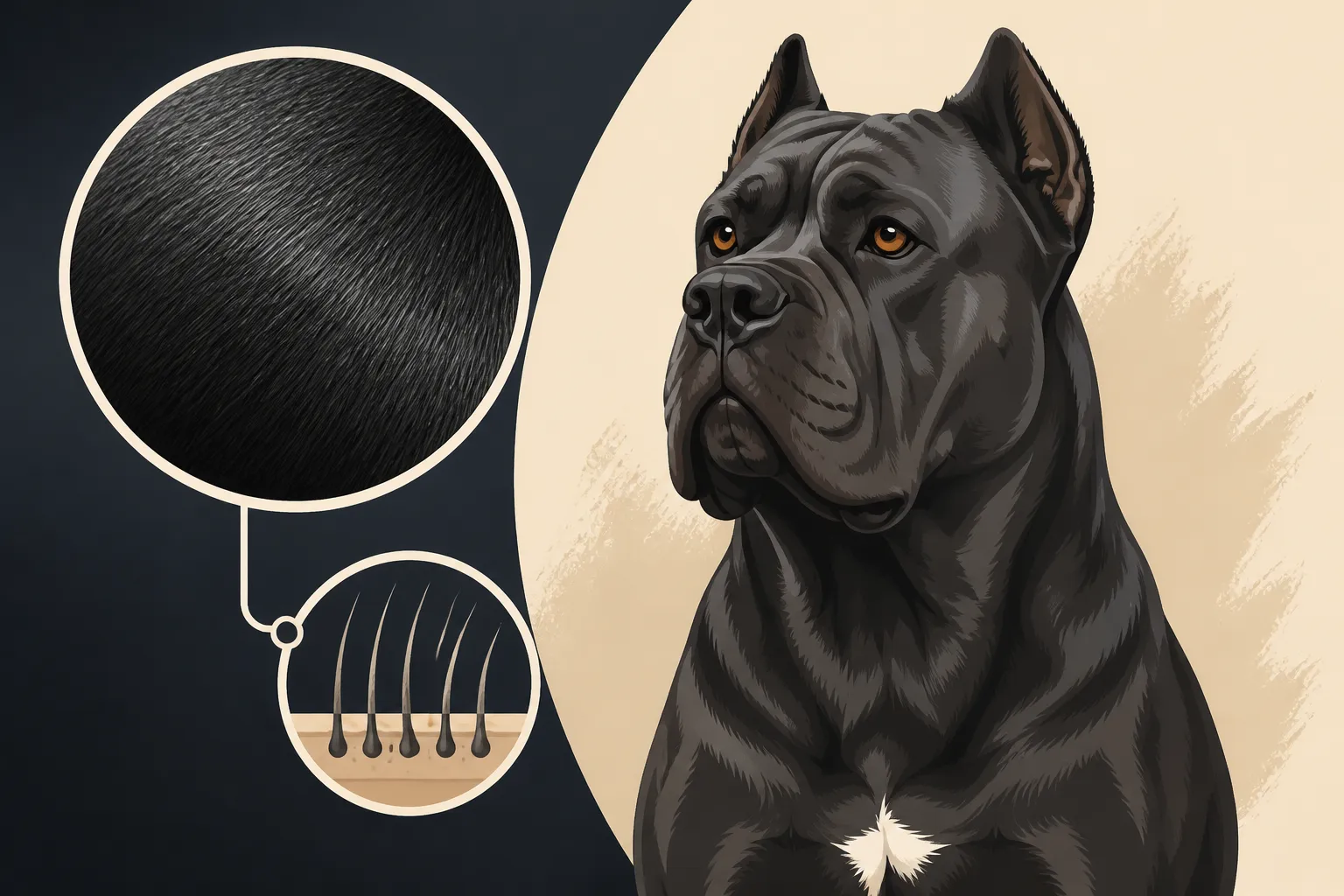
The Cane Corso standard describes a coat that is short, stiff, shiny, and dense, with a light undercoat. These words work together: “short” refers to the outer hair’s length, “dense” to how closely the hair covers the body, and “stiff” to its feel compared with a fine, silky coat. A healthy coat often looks sleek and close-fitting without looking sparse.
“Stiff” does not mean brittle, rough enough to hurt, or unpleasant to touch. It means the guard hairs have some firmness rather than falling in soft waves. If you run your hand over a typical coat, you may notice a smooth surface with a slightly coarse feel. The hair should not resemble a long, soft, feathered coat.
The light undercoat sits beneath the visible outer coat. It can be more noticeable at certain times of year, particularly when seasonal shedding changes how much loose hair is present. This does not mean the dog has developed a different coat type. It is part of how a double-coated dog’s coat can respond to the season.
Why standards mention coat length and texture separately
Coat length and coat texture are related, but they are not interchangeable. A Cane Corso can have short hair that still feels unusually soft, or dense hair that looks dull. When assessing the coat, consider its overall structure rather than judging it by one feature alone.
Some standards give more detail about the coat’s length than others. If you are preparing for a conformation show, use the standard for the registry and competition you plan to enter. For general breed identification, the shared description—short, dense, shiny, with a firm outer coat and light undercoat—is a useful starting point.
A coat that looks different in a photograph may also be affected by lighting, camera settings, shedding, or recent bathing. A black coat in bright sunlight can show highlights that make it look glossier, while a dusty coat may appear flat. Seeing the dog in person, and looking at the coat over the shoulders, back, and sides, gives you a more useful impression than relying on a single image.
Normal variation in a Cane Corso’s coat
Age, season, and everyday condition
Puppy coats can feel softer than the coats adults develop. As a young Cane Corso matures, the hair may become more defined and firm. It is usually more helpful to consider the dog’s age and overall condition than to decide that a puppy’s coat should already feel exactly like an adult’s.
Seasonal changes can affect the way the coat looks and feels, too. During a heavier shed, loose undercoat may lift away from the body, making the coat seem less even until it is brushed out. A dog that spends time outdoors may also collect dust or debris that dulls the shine. These changes do not necessarily indicate a fault in the coat.
Nutrition and general health matter to coat condition, but texture alone cannot diagnose a health problem. A sudden change, patchy hair loss, persistent itching, or irritated skin deserves more attention than ordinary seasonal shedding. If you are trying to understand how shedding normally changes through the year, see How Much a Cane Corso Sheds Twice a Year and Getting a Brush Through a Cane Corso's Dense Undercoat.
Coat color is not coat texture
Color and texture are separate traits. A black, gray, fawn, red, or brindle Cane Corso can have a coat that fits the standard’s general description. A particular color does not, by itself, prove that the hair should be softer, thicker, or shinier.
This distinction matters because coat color can attract more attention than coat quality. Someone looking at a gray dog may focus on the color and overlook whether the coat is dense and healthy. Conversely, a glossy black coat does not automatically mean the dog has a better coat than a brindle or fawn dog. For related background, read Every Color a Cane Corso Is Allowed to Be and What Colors a Cane Corso Litter Can Throw.
If a coat appears unusually thin or the skin is irritated, consider the dog’s health and care routine rather than blaming its color. Changes in coat and skin can have different causes, and a veterinarian is the right person to assess persistent symptoms. The article Why a Gray Cane Corso Gets More Skin Trouble discusses skin concerns associated with gray coats without treating color alone as a diagnosis.
| Coat feature | What is generally expected | What may be normal variation |
|---|---|---|
| Length | Short, close-fitting hair | A puppy’s hair may feel softer before the adult coat develops |
| Texture | Firm or somewhat stiff outer hair | Individual dogs may feel slightly softer or coarser |
| Density | Dense coverage with a light undercoat | Seasonal shedding can make the coat look temporarily uneven |
| Appearance | Shiny when clean and in good condition | Dust, shedding, or lighting can reduce visible shine |
| Feathering | Not a long, feathered coat | Loose hairs may stand out during a shed |
Caring for the coat without overdoing it
Brushing and shedding
A short coat still needs basic grooming. Brushing helps lift loose hair and dirt, gives you a chance to check the skin, and can make the coat look tidier. It does not need elaborate styling or frequent salon work, but a quick routine can prevent loose hairs from spreading through the house.
Choose a grooming tool that suits the coat and use light pressure. A rubber curry brush or a soft-to-medium bristle brush may work for routine grooming, while a tool intended to remove undercoat should be used carefully. Pressing hard or repeatedly scraping the same area can irritate the skin and make grooming unpleasant. For tool comparisons, see Which Tool Pulls a Cane Corso's Undercoat Out and Whether a Cane Corso's Short Coat Takes a Deshedding Blade.
If you are choosing a brush, Chewy can be one place to compare grooming-tool descriptions and customer feedback, but focus on whether the tool is suitable for short coats and whether it feels comfortable in your hand. Start with a few gentle strokes and watch the dog’s response. If the skin turns red or the dog tries to avoid the brush, stop and reassess the tool or technique.
Bathing and keeping the coat comfortable
A Cane Corso does not need frequent baths simply because the coat is short. Bathing too often can leave some dogs’ skin dry or irritated, particularly if the shampoo is harsh or the rinse is incomplete. Bathe when the dog is dirty or has an odor that does not resolve with brushing, and use a dog-appropriate product.
When comparing shampoos, product listings at Chewy may help you check whether a formula is intended for dogs and whether it is fragrance-free or designed for sensitive skin. The label matters more than claims about making a coat extra glossy. Rinse thoroughly, since leftover shampoo can bother the skin, and dry the dog well—especially after a bath in cool weather.
A coat that looks clean and shiny usually does not need oils, sprays, or repeated washing to meet the standard. If you notice a persistent odor, flaking, greasy areas, redness, or a change in hair growth, avoid simply covering it with fragrance. Consider whether there is an underlying skin or ear issue and ask a veterinarian if the problem continues. For more on wash frequency, see How Rarely a Cane Corso's Short Coat Needs Washing.
Evaluating coat quality and recognizing concerns
What to look for when meeting a Cane Corso
When meeting a puppy or adult, look at the coat across several areas rather than judging one small patch. Check the shoulders, back, sides, and hindquarters for reasonably even coverage. Notice whether the hair lies close to the body and has a firm, short appearance, while remembering that age, season, and grooming can all affect how it looks that day.
Ask the breeder or current owner about the dog’s usual grooming routine and whether the coat changes seasonally. A coat that is shedding may look less polished than one that has just been brushed, and that alone is not a reason to assume something is wrong. If you are considering a puppy, assess the whole dog—skin, body condition, behavior, and health history—not just how shiny the coat appears in a particular light.
For a show prospect, ask which registry’s standard the breeder is using and how they evaluate the coat alongside structure and temperament. A standard describes a breed ideal; it is not a promise that every dog will have identical hair. If a seller makes a strong claim based only on coat color, ask for clearer information about the dog’s health, parentage, and care.
When a coat change deserves attention
Normal shedding is different from bald patches, inflamed skin, or persistent scratching. Keep an eye out for hair loss in distinct areas, sores, scabs, recurring irritation, or a sudden change in coat texture. These signs are not proof of one specific condition, but they are good reasons to seek veterinary guidance rather than trying several grooming products at random.
A coat can also look dull when the dog is dirty, shedding, or not being brushed regularly. Start with straightforward care: check the skin, brush gently, and use an appropriate bath only when needed. If the coat still looks abnormal or the dog seems uncomfortable, a veterinarian can help determine whether the issue is related to skin, parasites, nutrition, or another cause.
Chewy may offer basic grooming supplies, but a product cannot substitute for an examination when the dog has ongoing skin symptoms. Choose products cautiously, follow their directions, and avoid applying human treatments or home remedies without veterinary advice. For a short-coated Cane Corso, good care is usually about maintaining comfort and checking the skin—not trying to force the coat into a particular look.
Disclaimer
This article is for general informational purposes only and does not constitute professional advice. Laws, prices and regulations vary by location and change over time. Consult a qualified professional for guidance on your specific situation.