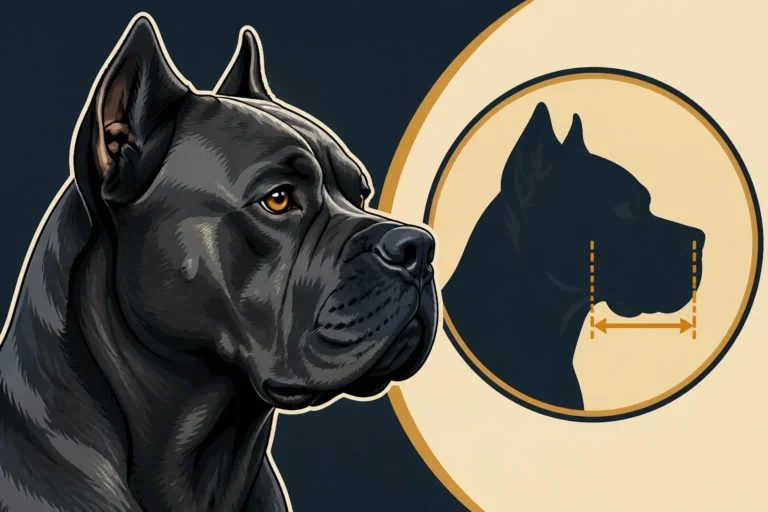
Whether the Cane Corso Standard Requires Cropped Ears
A Cane Corso’s ears may look cropped in photos, but that does not mean cropping is required by the breed standard. The answer depends on which kennel club’s rules you mean, and on local laws where the dog lives or competes. This guide explains what the standard says, how natural ears affect showing, and what to consider before making an ear-care or breeding decision.
Does the Cane Corso standard require cropped ears
What the standard means by cropped or natural ears
A breed standard describes the physical traits and overall appearance expected of a breed. It is used to assess dogs in conformation shows; it is not, by itself, a requirement that every pet owner arrange surgery. For Cane Corsos, the answer depends on the particular registry and the version of the standard used at an event.
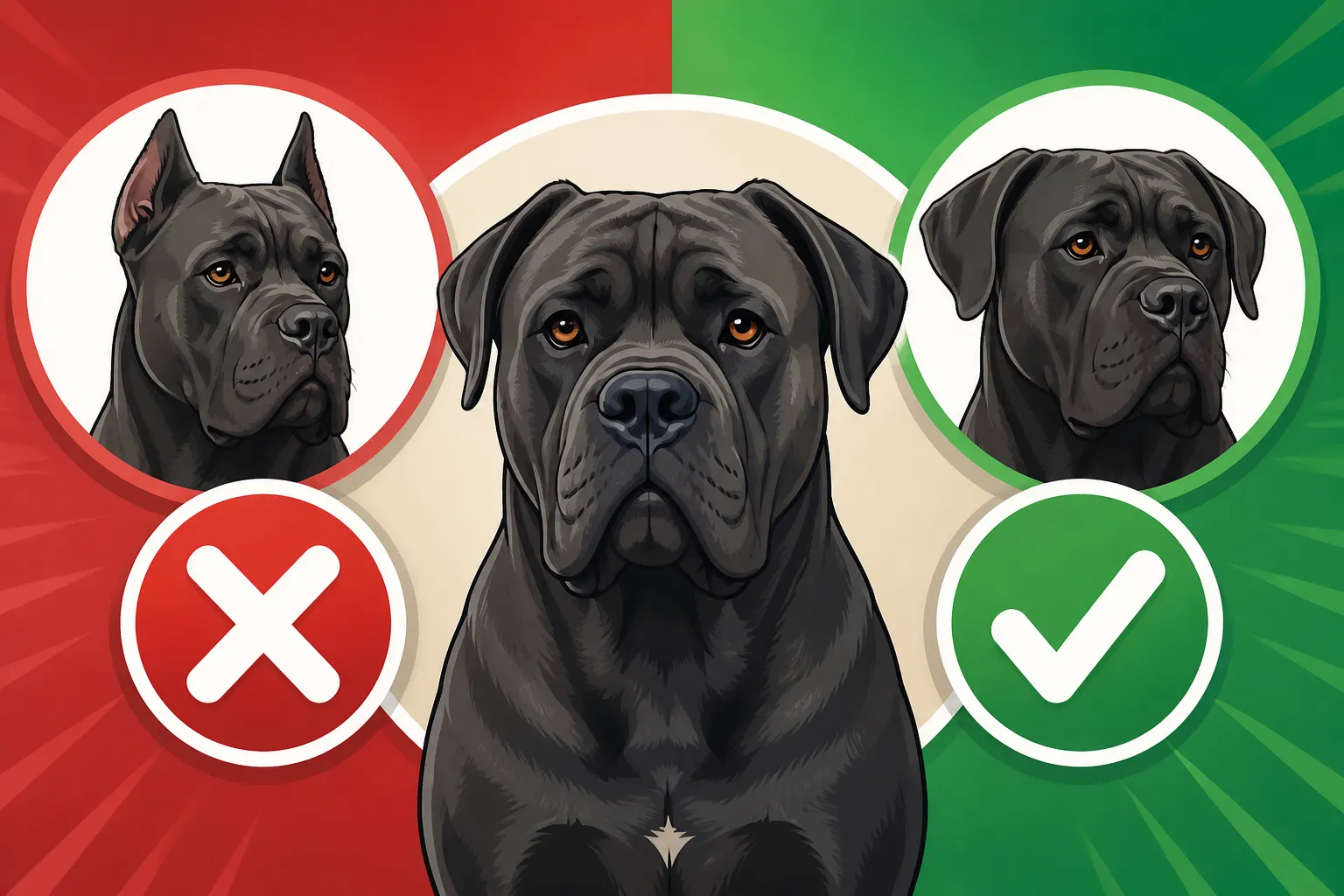
Under the American Kennel Club breed standard, Cane Corsos may have cropped or uncropped ears. In other words, cropping is not a requirement for an AKC-registered Cane Corso to fit the standard. Natural ears are accepted, and a dog does not automatically become disqualified from conformation competition simply because its ears have not been cropped. If you are showing in another country or under another registry, check that organization’s current standard and show rules rather than assuming the AKC rule applies.
It helps to separate three things that are often bundled together: a breed standard, a show’s entry rules, and the law. A breed standard describes desired or acceptable features. A show organizer applies its registry’s rules. A country, state, province, or municipality may separately regulate ear cropping or the exhibition of dogs that have had the procedure. One set of rules does not automatically answer the other two.
That distinction matters if you are choosing a puppy, planning to show your dog, or deciding whether a crop is appropriate. Ask the breeder which registry they use, request the relevant written standard, and confirm the rules with the show organizer. For background on how the breed’s organization and registry fit together, see What the Cane Corso Association of America Does.
How to check the rule for your registry
Start with the official breed standard published by the registry you expect to use. Look specifically for the section describing the ears and any language about cropping, natural ears, faults, or disqualification. A casual statement on a breeder’s social media page—or a photo of a champion with cropped ears—is not a substitute for the written rule.
Then check the requirements for the actual event. A dog may meet its breed standard but still be affected by local laws or event-specific rules. If you are considering an international show, confirm requirements for both the place where the dog was altered and the place where it will compete. When the wording is unclear, contact the registry or event secretary and ask for an answer in writing.
Here is a practical way to keep the different questions straight:
| Question | What to check | Why it matters |
|---|---|---|
| Does the breed standard allow natural ears? | The current standard from the dog’s registry | Standards can differ between registries |
| Can this dog enter a particular show? | The event’s rules and entry guidance | Local requirements may affect eligibility |
| Is cropping permitted where the dog lives? | Local animal-welfare law and veterinary rules | A standard does not override local law |
| Is a crop medically appropriate for this dog? | A licensed veterinarian familiar with the dog | Appearance standards are not medical advice |
For the broader history and motivations behind the practice, Why Cane Corso Ears Are Cropped in the First Place gives useful context. If you are comparing the different looks people mean by a “crop,” Which Crop Styles a Cane Corso Is Given explains the terminology.
Can an uncropped Cane Corso compete in shows
Natural ears do not automatically rule a dog out
For an AKC show, an uncropped Cane Corso can compete. The standard accepts uncropped ears, so owners do not need to crop their dog’s ears merely to make the dog eligible under that standard. Individual show rules and local laws still deserve a check, especially if the event is outside the United States or governed by a different organization.
Show eligibility and show judging are also not identical questions. A dog can be eligible to enter without being guaranteed a particular placement. Judges assess the dog against the full standard, including structure, movement, temperament, and other breed characteristics. Ear presentation is only one part of that larger picture, and the judge’s role is not the same as a rule requiring every dog to have a particular surgical alteration.
If you are planning to show an uncropped dog, contact the registry or a reputable Cane Corso club and ask how the ears are described in the standard. A local conformation mentor can also help you understand how the written language is applied in the ring. Keep the conversation focused on the exact registry and event rather than on broad claims such as “all show dogs must be cropped.”
The article Whether an Uncropped Cane Corso Can Win in the Ring focuses on that show question. If you are looking beyond one registry, Countries Where a Cropped Cane Corso Cannot Be Shown is a useful reminder that local restrictions can affect where cropped dogs may be exhibited.
Appearance preferences are not the same as a requirement
People often see cropped ears in breed photos and conclude that the look is mandatory. That impression can be especially strong when online images show only dogs with erect ears. But a common appearance is not proof of a requirement. Plenty of Cane Corsos have natural, hanging ears, and their appearance can be quite different from the sharply outlined silhouette associated with a crop.
Personal preference can still matter to an owner. Some people prefer the natural look; others are drawn to the cropped outline. That preference should be weighed honestly alongside the dog’s welfare, applicable law, veterinary advice, and any actual showing plans. It should not be treated as a medical benefit or as a shortcut to good temperament, responsible ownership, or correct training.
Natural ears do require ordinary attention, just like the rest of a dog’s skin and coat. Check them routinely for redness, odor, discharge, tenderness, or persistent head shaking, and ask a veterinarian about symptoms rather than trying to diagnose an ear problem at home. For a simple routine, see The Weekly Ear Check a Cane Corso Owner Should Do and Whether an Uncropped Cane Corso Needs More Ear Cleaning.
What to consider before choosing ear cropping
It is a surgical decision, not a grooming choice
Ear cropping is a surgical procedure performed on the ear flap. It is not the same as trimming hair or shaping a coat, and it involves anesthesia, recovery, and follow-up care. If you are considering it, talk with a licensed veterinarian about the procedure, risks, aftercare, and whether it is lawful where you live. A breeder’s preference or a hoped-for show look should not replace that discussion.
Be cautious of anyone who minimizes recovery or suggests handling a crop at home. A puppy’s healing and the appearance of the ears can depend on individual factors, and complications can require veterinary attention. Before making a decision, ask who would perform the surgery, what aftercare involves, what warning signs need prompt attention, and what happens if the ears do not heal as expected.
It is also worth asking yourself why you want the procedure. If your answer is “because the standard requires it,” verify that claim against the standard for your registry. If your answer is “because I like the look,” weigh that preference against the surgery and recovery involved. If your answer is based on a belief that cropping improves hearing, prevents routine ear disease, or makes a dog safer, ask your veterinarian for a clear explanation rather than relying on repeated online claims.
Plan for aftercare and the dog’s comfort
When a veterinarian performs a procedure, follow that clinic’s instructions rather than a generic internet schedule. Keep follow-up appointments, monitor the surgical area as directed, and contact the clinic if you notice concerning changes. Do not use cleaners, ointments, or dressings unless the veterinarian tells you they are appropriate for your dog.
Some owners are surprised by how much follow-up a crop can involve. Taping or posting may be part of the plan for certain crops, and the timing and method should come from the veterinarian or qualified professional responsible for the dog’s care. The details are not one-size-fits-all. The Posting Routine After a Cane Corso Is Cropped and How Long a Cane Corso's Ears Stay Taped cover common aftercare questions, but your dog’s own veterinary instructions take priority.
For routine, non-surgical ear care, ask your veterinarian which products—if any—are suitable. If the clinic recommends basic supplies, a retailer such as Chewy may be one place to look for them; confirm that any item matches the vet’s instructions before using it. Chewy can also be useful when you need to compare ordinary pet-care supplies, but shopping guidance should never replace advice about a healing incision or a possible infection. If you need to restock a vet-approved cleaner or other basic supplies later, Chewy may be convenient, while the clinic remains the right place to ask about symptoms or treatment.
Making a decision that fits your dog and your plans
Use a short checklist before committing
If you are still weighing the question, slow it down and verify the practical details before deciding. This is especially helpful when a breeder, family member, or online group presents cropping as an automatic requirement. A few direct questions can reveal whether the decision is actually about rules, show plans, local law, or personal appearance preference.
- Name the registry. Find out which organization’s breed standard matters for your plans.
- Read the ear section. Confirm whether natural ears are accepted and whether the text includes any relevant qualifications.
- Check the event and local rules. Ask the show organizer and check applicable law rather than relying on assumptions.
- Talk with a veterinarian. Discuss the procedure, welfare considerations, and aftercare before agreeing to anything.
- Consider the dog’s lifetime care. Ask whether the expected appearance is worth the surgical and follow-up responsibilities for you.
- Keep records. Save the standard, event guidance, veterinary instructions, and any required documentation.
This checklist can also help when buying a puppy. Ask the breeder what they expect, but remember that a breeder’s preference is not necessarily a registry rule. A responsible conversation should leave room for questions about health, temperament, and care—not only the dog’s appearance.
The practical answer
For the American Kennel Club standard, Cane Corso ears do not have to be cropped: natural ears are accepted. That does not mean every registry or show in every location follows identical rules, so check the exact standard and event requirements that apply to your situation. And because cropping is surgery, treat it as a veterinary and welfare decision—not as a routine grooming step or an assumed condition of owning a Cane Corso.
Disclaimer
This article is for general informational purposes only and does not constitute professional advice. Laws, prices and regulations vary by location and change over time. Consult a qualified professional for guidance on your specific situation.