Whether a Grinder Beats Clippers on a Cane Corso
The struggle is real when it comes to keeping your Cane Corso's nails in check. Those big, strong paws come with equally substantial claws that, if left untrimmed, can cause discomfort, alter their gait, and even lead to painful issues. Many owners find themselves caught between the traditional clippers and the increasingly popular electric grinder, wondering which method is truly best for their powerful companion. This guide will walk you through the pros and cons of each, helping you decide whether a grinder beats clippers for your Cane Corso, or if a combination of both might be your ultimate solution.
The Battle of the Tools: Clippers Versus Grinders for Your Cane Corso
When you bring a Cane Corso into your home, you quickly realize that everything about them is more. More love, more loyalty, and yes, more significant nails that need regular attention. The sheer size and strength of these dogs mean that nail care isn't just a cosmetic concern; it's a fundamental part of their health and comfort. Deciding which tool to use is often the first hurdle, and it's a choice many owners grapple with as they face those formidable paws.
Understanding Traditional Nail Clippers
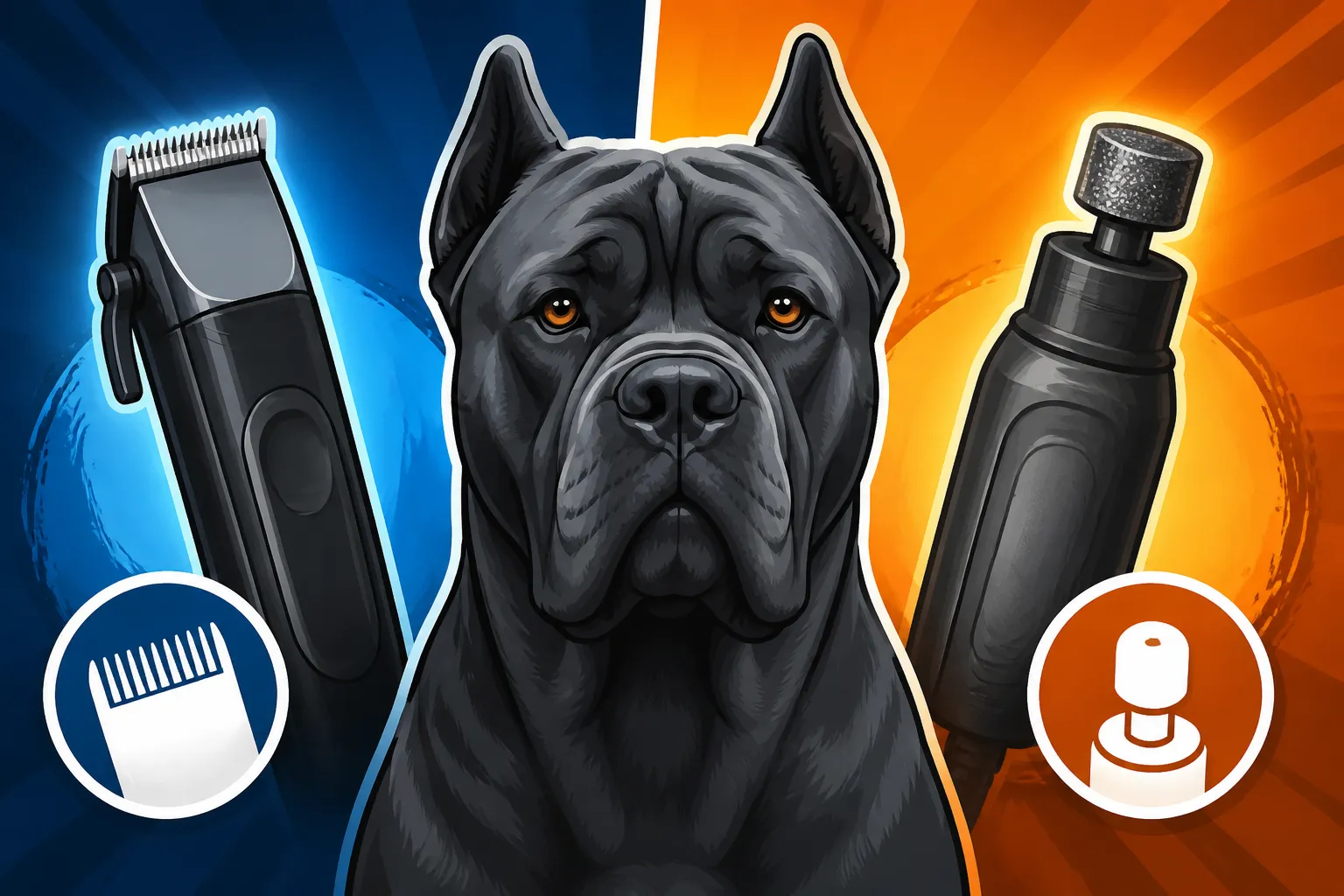
Clippers are probably what first comes to mind when you think about dog nail trims. They’re the old standard, the go-to tool for generations of dog owners and veterinarians. There are generally two main types you'll encounter: guillotine-style clippers, which have a hole you thread the nail through, and scissor-style clippers, which work much like a pair of heavy-duty scissors.
For many, clippers represent speed and efficiency. A quick snip and you're done, especially if your Cane Corso has lighter colored nails where the quick (the pink, sensitive part containing blood vessels and nerves) is easily visible. When you have a squirmy puppy, getting the job done fast can feel like a victory. You can find quality clippers at most pet supply stores, or online retailers like Chewy and Amazon, making them highly accessible. They are often less expensive upfront than a good quality grinder, which can be an initial draw for new owners.
However, the "quick snip" isn't always so quick or easy. One of the biggest fears for any dog owner, especially with a large breed like a Cane Corso, is cutting into the quick. This is incredibly painful for your dog, causes bleeding, and can instantly create a negative association with nail trims that can be incredibly difficult to overcome. Imagine a Cane Corso who has had a bad experience; the mere sight of the clippers can send them into a full-blown panic. Their nails are often thick and dark, making the quick notoriously hard to see. This dramatically increases the risk of an accidental quicking, even for experienced owners. If you're dealing with a young, fast-growing Cane Corso, managing those tough nails with clippers can feel like a high-stakes game every time. The Growth Curve a Cane Corso Follows to Nineteen Months is rapid, meaning frequent trims are a must. Moreover, clippers can sometimes leave sharp edges or even crack the nail if they aren't sharp or properly used, which isn't ideal for a dog that's constantly on its feet.
Embracing the Electric Nail Grinder
Enter the electric nail grinder, a tool that has gained significant popularity over the last few decades. Instead of snipping, a grinder uses a rotating abrasive band or stone to gradually file the nail down. Think of it like a Dremel tool, specifically designed for pet nails.
The primary advantage of a grinder, especially for a Cane Corso, is the control it offers. You remove small layers of the nail at a time, allowing you to stop and check your progress frequently. This is an absolute game-changer, particularly for those dark, thick nails where the quick is invisible. Instead of guessing, you can slowly work your way down, observing for the small dark dot that indicates you're getting close to the quick. This significantly reduces the risk of painful accidents, which in turn helps build a more positive association with nail care for your dog. Grinders also leave a much smoother, rounded finish on the nail, which is great for preventing snags on carpets or scratches on hardwood floors. They are particularly effective for shaping the nails and can even "push back" the quick over time with consistent, careful use, allowing you to achieve shorter, healthier nails. Many reputable brands offer quiet, powerful grinders that you can find on platforms like Amazon or Chewy, and even some specialty pet stores.
Of course, grinders aren't without their challenges. The main hurdle for many dogs is the noise and vibration. While modern grinders are often designed to be quieter, they still produce a whirring sound and a vibrating sensation that can be alarming to some Cane Corsos. A dog that is already anxious about having their paws handled might react strongly to this new sensory input. Another consideration is the time it takes. Grinding is a slower process than clipping, requiring patience from both you and your dog. You'll also encounter fine nail dust, which can get messy, and a distinct smell of ground bone and keratin. Battery life can be a factor with cordless models, so ensuring your grinder is charged before a session is crucial. For a breed like the Cane Corso, Restraining a Cane Corso That Fights Nail Trims can be a significant undertaking, so any tool that prolongs the process can feel daunting.
Which One Suits Your Cane Corso Best? Factors to Consider
Choosing between clippers and a grinder isn't about one being inherently "better" than the other in every situation. It's deeply personal, depending on a combination of your dog's unique personality, their nail structure, and your own comfort and skill level. What works perfectly for your neighbor's tiny poodle might be a disaster for your hundred-pound Cane Corso, and vice versa. It’s about finding the right fit for your specific team.
Your Dog's Temperament and Tolerance
This is perhaps the most critical factor. Every Cane Corso is an individual, and their past experiences with nail trims, or even just general handling, will heavily influence their reaction to either tool. A Cane Corso puppy introduced to regular paw handling and positive, gentle nail trims from a young age might be completely unfazed by clippers. In fact, for a squirmy, energetic puppy, a quick clip might be preferable to a longer grinding session. The Age a Cane Corso Puppy Starts Formal Training is also the ideal time to introduce consistent grooming routines.
However, if you've got a rescue Cane Corso who arrived with a history of neglect, or if an accidental quicking incident has made nail trims a nightmare, their temperament will likely lean towards fear and avoidance. For these dogs, the gradual approach of a grinder can be a godsend. While the noise might be a hurdle initially, the absence of the sudden, sharp pressure and the ability to control the pace can help rebuild trust. Slowly desensitizing them to the sound and vibration, paired with high-value treats (perhaps some delicious freeze-dried salmon from Ollie!), can transform a terrifying ordeal into a tolerable, even positive, experience. Remember, a fearful dog will often associate the tool with the pain, not necessarily the person. Switching tools can sometimes offer a fresh start.
The Thickness and Color of Your Cane Corso's Nails
Cane Corsos are known for their strong, often very dark nails. This presents a unique challenge when using clippers. With light-colored nails, you can usually see the pink quick through the translucent nail, giving you a clear guideline of where to stop. But with black or very dark nails, that roadmap is entirely absent. Owners are forced to make educated guesses, looking for the fleshy V-shape on the underside of the nail or relying on the sheer act of faith. This significantly increases the risk of hitting the quick, even for the most careful owner.
This is where grinders truly shine for Cane Corsos. Because you're taking off tiny layers, you can watch the nail's cross-section. As you grind, you'll see a white, dusty center appear, and then, as you get closer to the quick, a small, darker circle will emerge in the center of that white. This dark circle is your warning sign—stop grinding! This visual cue provides a level of precision and safety that clippers simply cannot offer for dark nails. If your Cane Corso has those notoriously dense, dark nails, a grinder often provides a safer, less stressful experience for both of you.
Your Comfort Level and Skill
Let’s be honest: taking sharp clippers to the nails of a hundred-pound, potentially squirming Cane Corso can be intimidating. The pressure to get it right, the fear of causing pain, and the sheer physical effort required to hold still a strong dog while manipulating a sharp tool can be overwhelming. Many owners feel more confident using a grinder because it feels less invasive and offers a higher degree of control. There's no sudden "snip" that could go wrong; instead, it's a gradual, controlled filing.
If you're a new Cane Corso owner, or perhaps new to large breeds in general, you might find the grinder less daunting. It allows for a more incremental approach, which can help build your confidence alongside your dog's tolerance. On the other hand, if you've had years of experience clipping dog nails and feel perfectly comfortable and proficient with clippers, and your Cane Corso tolerates them well, then there's no inherent reason to switch. Some people find the noise and vibration of a grinder irritating, or simply prefer the speed of clippers. It truly boils down to what feels right and safe in your hands, and what elicits the calmest response from your dog. Don't feel pressured to use a tool that makes you anxious, as your dog will certainly pick up on that energy.
| Feature / Tool | Traditional Nail Clippers | Electric Nail Grinder |
|---|---|---|
| Speed | Generally faster | Slower, more gradual |
| Control | Less precise for dark nails | High precision, especially for dark nails |
| Risk of Quicking | Higher, especially with dark nails | Lower, due to gradual removal |
| Finish | Can leave sharp edges | Smooth, rounded finish |
| Noise/Vibration | Quiet (scissor-style), click (guillotine) | Whirring motor, vibration |
| Dog's Reaction | Fear of quicking, sharp sensation | Aversion to noise/vibration, dust |
| Cost | Generally lower upfront | Higher upfront |
| Maintenance | Keep blades sharp, replace when dull | Replace grinding bands/stones, charge battery |
| Best For | Light-colored nails, calm dogs, quick trims | Dark nails, fearful dogs (with desensitization), shaping |
Tips for Success, No Matter Your Choice
Regardless of whether you choose clippers, a grinder, or a combination of both for your Cane Corso, the underlying principles for successful and stress-free nail trims remain the same. It's all about consistency, patience, and making the experience as positive as possible for your formidable companion. Remember, a Cane Corso's guarding instinct means they're very sensitive to tension and discomfort, so a calm approach is key. The Structure a Cane Corso Needs Every Single Day includes regular grooming, so make it a predictable part of their routine.
Desensitization and Positive Reinforcement
This is the golden rule for any grooming procedure, but especially for nail trims with a large, strong breed like the Cane Corso. You need to introduce the tool and the process gradually, pairing every step with something wonderful.
For Clippers:
- Introduce the tool: Let your Cane Corso sniff the clippers. Give a treat. Repeat.
- Touch the paws: Gently touch their paws, one by one. Treat. Praise.
- Touch the clippers to the paws: Without actually clipping, touch the clippers to a nail. Treat.
- Practice the motion: Mimic the clipping motion without actually cutting, just tapping the clipper on the nail. Treat.
- Small snips: Start with just the very tip of one nail. Make it incredibly quick, give a huge reward, and then stop. Build up slowly, maybe just one nail per session initially.
For Grinders:
- Introduce the tool (off): Let your Cane Corso sniff the grinder while it's off. Treat.
- Introduce the sound (away): Turn the grinder on in another room or far away. Treat when they remain calm. Gradually move closer over several sessions.
- Introduce the sound (near): Turn the grinder on near them, but don't touch them. Treat.
- Touch the grinder (off) to the paws: Touch the grinder (still off) to their nails to get them used to the sensation. Treat.
- Quick touches (on): Briefly touch the running grinder to just one nail. Immediately remove, treat heavily, and praise. Keep these initial touches incredibly short.
- Gradual grinding: As they tolerate it, slowly increase the duration of grinding on each nail, always stopping before they get stressed.
Use high-value treats – something truly irresistible, not just their everyday kibble. Think bits of cheese, cooked chicken, or even a lick of peanut butter on a spoon. Ollie offers fresh, human-grade dog food that can be broken into perfect, high-value training treats. Keep sessions short and positive. Always end on a good note, even if you only managed one nail. The goal is to build positive associations, not just to get the job done. The Reward a Cane Corso Actually Values is key to making this a successful routine.
Proper Technique and Safety First
Knowing how to use your chosen tool correctly is paramount to avoiding injury and maintaining your Cane Corso's trust.
With Clippers:
- Sharp Blades: Always use sharp, good-quality clippers. Dull blades can crush and crack the nail, causing pain.
- Identify the Quick: If your Cane Corso has light nails, visually locate the quick. For dark nails, only take tiny slivers at a time. The underside of the nail often shows a softer, lighter core near the quick.
- Angle: Cut the nail at a slight angle, following the natural curve of the nail.
- Styptic Powder: Always have styptic powder (like Kwik Stop) on hand. Even with the best intentions, accidents happen, and this will quickly stop any bleeding.
With Grinders:
- Short Bursts: Use the grinder in short, one-to-three-second bursts, rather than holding it on the nail for too long. This prevents heat buildup, which can be uncomfortable or even burn the quick.
- Angle and Shape: Aim to grind the bottom of the nail first, then round off the sides and top, creating a smooth, blunt edge. This can also help to recede the quick over time.
- Rotate the Nail: Gently rotate your Cane Corso's nail as you grind to create an even, rounded shape.
- Check Frequently: After each short burst, lift the grinder and examine the nail for the dark dot indicating the quick.
- Hair Safety: Be mindful of long hair or dewclaws, which can easily get caught in the rotating grinder. Gently push hair back or have someone assist.
If you are ever unsure, don't hesitate to consult a professional groomer or your veterinarian. They can demonstrate the proper technique, give you hands-on guidance, and even do the initial trims until you feel more confident. A vet visit is also a good idea if your Cane Corso has nails that are severely overgrown or have specific medical conditions.
Where to Find Quality Tools and Supplies
Investing in good quality tools can make a significant difference in the ease and safety of your Cane Corso's nail care. Cheap, flimsy tools often do more harm than good and can break or become dull quickly, leading to frustration for you and pain for your dog.
For nail clippers, look for brands known for their durability and sharpness. Scissor-style clippers often give more control for very thick nails. Brands like Safari, Resco, or Miller's Forge are popular choices and can be found on online retailers like Amazon and Chewy, or at most local pet stores. Make sure they are specifically designed for large breeds; regular clippers simply won't cut it for a Cane Corso.
For electric grinders, consider models that are powerful enough for thick nails but also prioritize quiet operation to minimize anxiety. Look for grinders with adjustable speeds and good battery life if you prefer cordless. Brands like Dremel (which offers specific pet grooming kits), Casfuy, or LuckyTail are often recommended. Again, these are readily available through online platforms like Amazon and Chewy. Reading reviews from other large breed owners can be incredibly helpful in making a decision. You might also want to pick up some replacement grinding bands or stones when you purchase the unit, as they do wear down over time. And don't forget the styptic powder – it's an absolute must-have for either method.
Ultimately, the choice between a grinder and clippers for your Cane Corso isn't a one-size-fits-all answer. It's about understanding your dog, assessing their individual needs, and finding the tool that allows both of you to navigate nail trims with the least amount of stress and the most confidence. With patience, positive reinforcement, and the right technique, you can ensure your powerful companion keeps their paws healthy and happy.
Disclaimer
This article is for general informational purposes only and does not constitute professional advice. Laws, prices and regulations vary by location and change over time. Consult a qualified professional for guidance on your specific situation.